
A vivid green mix may leave the freezer pale, gritty or slow to harden. Manufacturers need to test spirulina powder in the actual frozen dessert base and process, not judge a warm beaker alone. Spirulina powder frozen dessert pilot trials follow the ingredient from wetting through mix treatment, freezing, filling and storage. An original ice cream formulation study examined formulations containing Spirulina and related ingredients; its results show why texture and consumer response deserve measurement, while its recipes cannot define an industrial limit for another product.
Contents
- What should the frozen dessert pilot decide?
- Which base and control should be used?
- How should dose be screened?
- When should powder enter the mix?
- How should wetting and aging be checked?
- What should be measured during freezing?
- How should color and flavor be assessed?
- Which melt and texture tests matter?
- How should hardening and storage be studied?
- When is the formula ready for scale-up?
1. What should the frozen dessert pilot decide?
Define a consumer-facing target and a plant limit
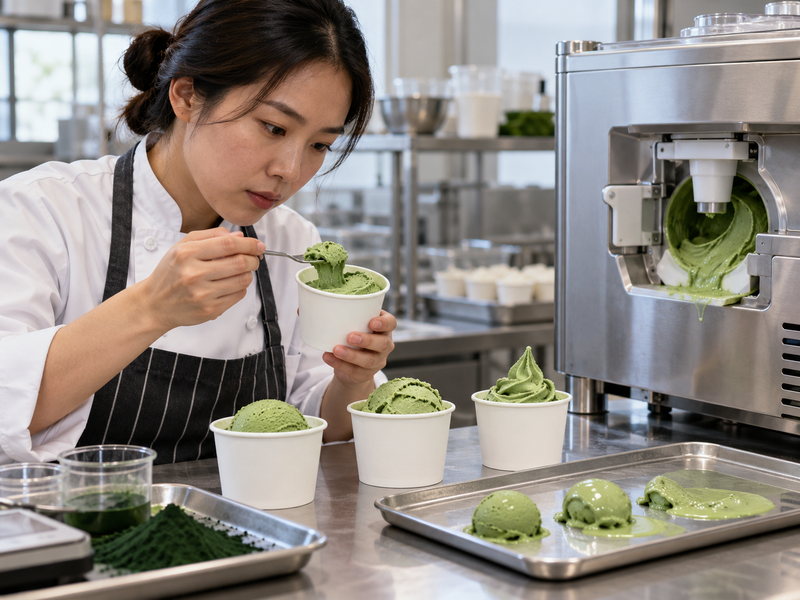
State whether spirulina supplies visual identity, ingredient positioning or part of a nutritional formula. Write an acceptable finished color, flavor profile, particle feel, scoopability and melt behavior before testing dose. The real product is frozen: evaluate at intended serving temperature, not only as liquid mix. Also set plant measures such as fill weight, overrun range, acceptable line loss and cleaning burden. A product that tastes good in a laboratory cup may still fail on a continuous freezer.
Choose the product category and destination market before making labeling assumptions. Dairy ice cream, plant frozen dessert and water-based sorbet differ in fat, protein, solids and legal names. Spirulina biomass powder is not interchangeable with blue spirulina extract; the latter is a separate ingredient with different color and handling behavior. The site’s blue spirulina ice-cream article may help teams contrast concepts, but green powder needs its own pilot. Keep safety release criteria separate from appearance and texture preferences.
2. Which base and control should be used?
Hold the recipe constant while powder changes
Produce a control from the same base, process day, pasteurization or other validated treatment, aging condition and freezer settings. Add a graded powder series without silently changing sugar, water, stabilizer or fat. If a slurry introduces water, deduct it from the main formula. Keep the comparison fair: a thinner green mix might arise from dilution, while a harder frozen product might arise from a solids change rather than a special spirulina effect. Record total solids and formulation mass balance.
If development includes both dairy and plant bases, run separate controls. Fat and protein structure affect air incorporation and mouthfeel, while water-rich bases can expose particles and freezing effects more strongly. Use a released supplier lot in real packaging and retain a sample. The ice cream formulation research studied Spirulina alongside changes in sugar, fat or inulin, so its observed outcomes cannot isolate the ingredient for an unchanged commercial formula. Your pilot should isolate it as far as practical and label any unavoidable co-changes.
| Pilot arm | Comparison purpose | Fixed conditions |
|---|---|---|
| Plain base | Baseline | Process and package |
| Low powder | Sensory detection | Base recipe |
| Mid powder | Candidate color | Freezer settings |
| High powder | Stress response | Assessment schedule |
3. How should dose be screened?
Find the smallest amount that meets the objective
Select several inclusion levels from bench observations and express them as powder mass per final mix mass. Keep the percentage basis consistent through the report. Do not chase saturation: deeper green may come with a stronger marine note or gritty feel, and color may change after freezing. Blind-code samples and compare both fresh-frozen and stored product. Record whether the powder adds enough solids to alter sweetness or freezing behavior, especially in a water-based dessert.
Published research can suggest measures, not a universal dose. A study of Spirulina-containing ice cream assessed physicochemical and sensory outcomes in its own formulas. A separate spirulina ice cream experiment examined overrun and melting across test formulations. Neither establishes a commercial target for every base. If the lowest trial level already shifts flavor beyond the brief, consider a different flavor architecture or ingredient specification rather than masking the problem with an unplanned sugar change.
4. When should powder enter the mix?
Compare feasible addition points and exposure
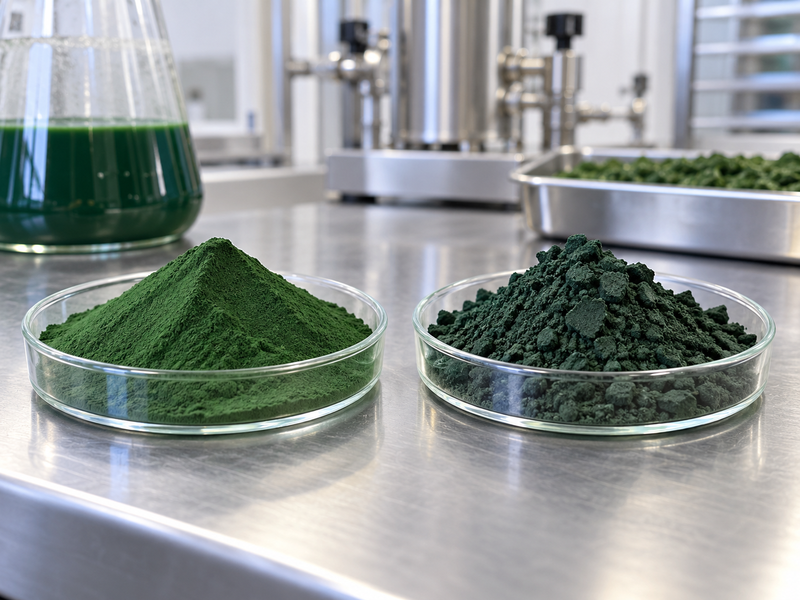
Powder may enter during base blending, after heat treatment under controlled hygienic conditions or through a prepared slurry. Each route changes dispersion, heat exposure and safety controls. Map the actual line: a pilot beaker added after heating may be easy, while an industrial tank after a validated kill step may have a stricter hygiene design. Decide with quality and operations which routes are possible before running an attractive but unscalable sample.
For each route, log liquid temperature, addition time, mixer setting, pH and time before freezing. Inspect the mix immediately and after aging for floating powder or bottom sediment. If powder is added before pasteurization, confirm the actual processing path and assess color and aroma after heat. If added later, the plant’s hazard analysis must address the ingredient and equipment exposure. The Codex General Principles of Food Hygiene support validating controls for the actual process, not assuming one addition point suits every product.
| Addition route | Technical question | Required check |
|---|---|---|
| Before heat | Does color or odor change? | Pre/post-process samples |
| Hygienic post-heat | Can safety controls support it? | Hazard review and sanitation |
| Premix slurry | Does it prevent clumps? | Sieve and heel check |
| Fruit or variegate | Is distribution intentional? | Portion-to-portion uniformity |
5. How should wetting and aging be checked?
Observe the mix before the freezer
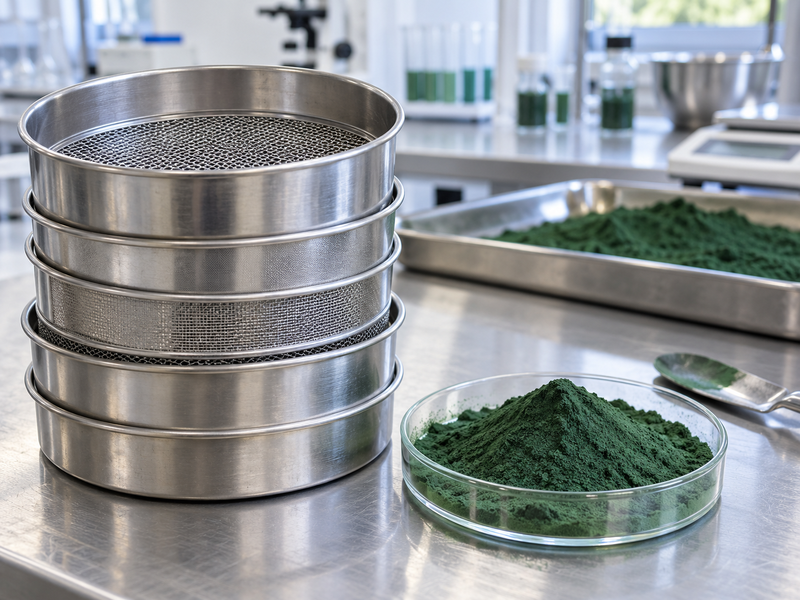
Whole spirulina powder is particulate. Test wetting by adding it at a defined rate to a measured liquid portion, then check for floating powder, dry cores and sieve residue. A high-shear step can break lumps but may also add air or alter mix structure. Sample after the wait: aging can expose settling or viscosity changes that were invisible directly after blending. Record mix temperature, duration and agitation during the hold.
The original spirulina powder agglomeration study measured wetting and flow changes in treated powder; it does not prove any frozen dessert will disperse automatically. Compare candidate powder grades with the same base and procedure. For thick dairy mixes, evaluate whether powder remains evenly distributed after an aging tank is partially emptied. For a low-solids sorbet mix, sediment may be more visible. Measure transfer heel and inspect pipes, screens and freezer inlet. Powder trapped upstream changes both intended dose and ingredient cost.
6. What should be measured during freezing?
Follow mix through air incorporation and discharge
Record mix feed temperature, draw temperature, freezer pressure or speed where available, throughput and overrun. Use the same method and sampling time for control and green treatments. Watch the transition: a powder can change viscosity enough to alter freezer load or air incorporation even when the liquid mix seemed acceptable. Weigh a fixed volume of mix and frozen product under a controlled procedure to estimate overrun, then compare fill weights and variation across the run.
Do not treat a study’s overrun value as a universal goal. The spirulina ice cream experiment reported formulation-dependent overrun and melt outcomes; its equipment and recipe limit transferability. At plant scale, sample startup, stable running and end of run. Note stops, restarts and any concentrated green slug after the aging tank settles. If the powder affects freezer performance, a new setting may be justified, but repeat the control at that setting before attributing the entire difference to spirulina.
| Freezer measure | Method | Interpretation |
|---|---|---|
| Draw temperature | Calibrated probe | Compare thermal state |
| Overrun | Fixed-volume mass comparison | Air incorporation |
| Fill weight | In-line or sampled weigh | Pack consistency |
| Motor load | Equipment trend | Process response |
7. How should color and flavor be assessed?
Judge the finished serving at a fixed age
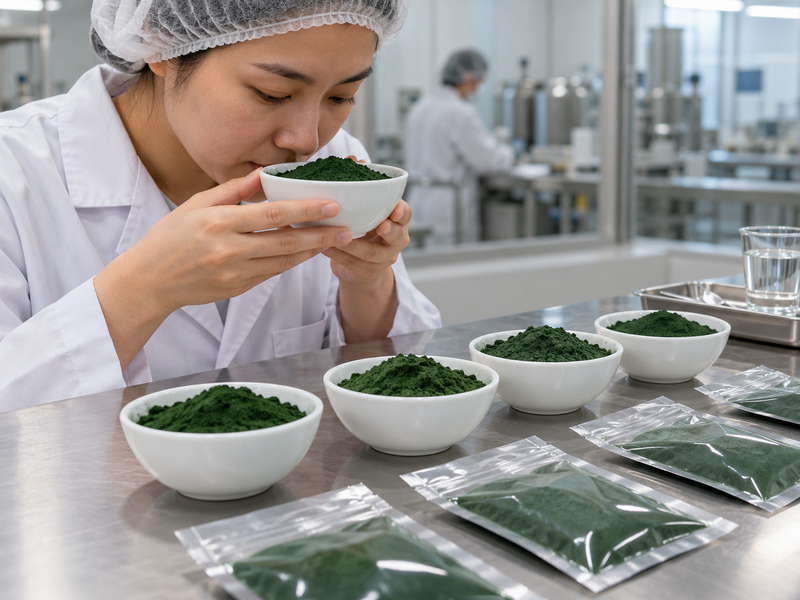
Compare frozen product under consistent lighting and in the actual pack depth. Green shades can appear different when ice crystals and air scatter light. Assess aroma, first taste, aftertaste and any gritty finish at the intended serving temperature. A good warm mix can mislead: cold temperature changes flavor perception, and a product may show specks only after freezing. Use blind codes and a plain control, then ask panelists to rate attributes separately instead of only giving one overall score.
Record storage age and thaw history. A sample repeatedly softened for tasting may not represent saleable product. If mint, fruit or cocoa is used, test whether flavor complements spirulina without hiding a defective powder lot. Keep the same flavor dose across the initial powder series. A separate test can later optimize flavor. The ice cream formulation study included sensory assessment; its consumer response belongs to its own recipes and panel. The buyer’s target audience and package presentation determine acceptance here.
8. Which melt and texture tests matter?
Match measurements to how customers use the product
Measure hardness or scoop force at a defined product temperature. For melt testing, use identical sample mass, shape, starting temperature and room condition, then record first drip and mass melted over time. Control the setup: a warmer sample can appear to have a poor melt profile even if its formulation is sound. Include observations of iciness, gumminess, sandiness and visible particles. For a stick or sandwich format, test structural integrity and drip under expected handling conditions.
Research on Spirulina ice cream with different formulations and a separate experimental report shows why melt and overrun belong in a pilot, but results vary with stabilizer and base. If a green treatment melts differently from control, check solids, overrun and draw temperature before blaming powder alone. Run repeats because a single scoop can be distorted by size or position in the tub. Treat texture as a time-dependent property; test again after storage.
| Attribute | Controlled test | Consumer issue |
|---|---|---|
| Hardness | Probe at fixed temperature | Scoopability |
| First drip | Same shape and room condition | Handling |
| Melt mass | Time-series collection | Consumption experience |
| Graininess | Blind sensory and microscopy if useful | Mouthfeel |
9. How should hardening and storage be studied?
Follow the cold chain in the intended pack
Record time from freezer discharge to hardening, pack position, hardening temperature and core-temperature trend where feasible. Compare control and treatment in the same loading pattern. Storage can change the answer: ice crystal growth, color drift, odor shift or hardening differences may emerge after a fresh sample passed. Plan checkpoints across the proposed shelf life and document any temperature excursions. Use the actual cup, tub, wrapper or multilayer package because light and oxygen exposure can differ.
Quality should set microbiological and process controls for the actual frozen dessert, including the intended addition point. Freezing does not replace a validated food safety program. The Codex hygiene guidance supports product-specific hazard assessment and records. Do not claim a universal shelf life from a short pilot or from a paper on another recipe. Keep retained samples from the powder lot and finished batch so a later storage change can be traced to material or process.
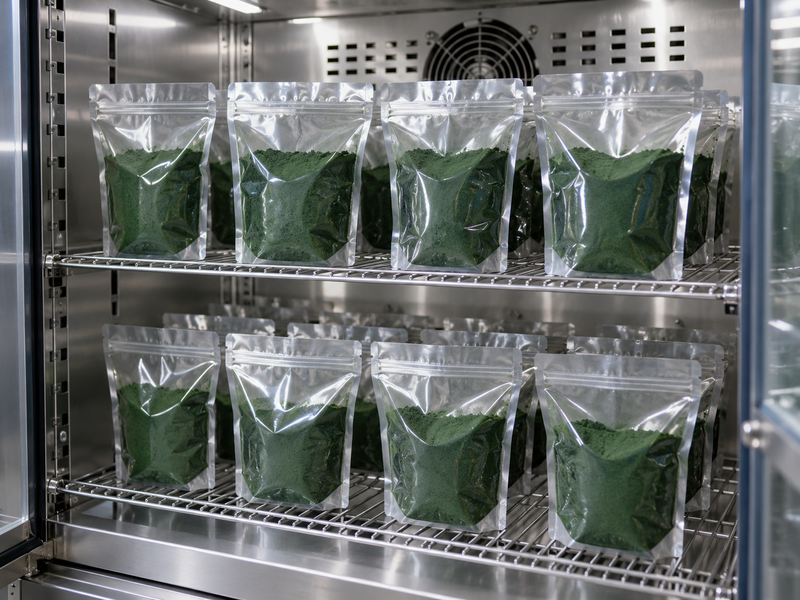
10. When is the formula ready for scale-up?
Approve the process, not only the sample
The pilot report should identify powder lot and specification, target dose, addition method, mix conditions, aging time, freezer settings, overrun, fill weights, sensory result, melt behavior and storage plan. Compare good-unit yield with control and document any extra cleaning. Ask the operations question: can the plant reproduce the accepted product without manual correction at every freezer stop? If not, refine the procedure and challenge the weak step again.
Plan a first commercial run with startup, stable and end samples. Keep powder supplier and package details in the batch record. If a new supplier lot, base, stabilizer or freezer changes, review whether the pilot still applies. Complete labeling and market-specific review separately; an ingredient’s presence does not automatically permit a claim. The site’s powder color and odor guide can support incoming-lot checks, while finished-product criteria must come from the approved frozen dessert. A signed decision record should state both accepted conditions and work still open.
| Scale-up gate | Evidence | Decision owner |
|---|---|---|
| Ingredient grade | Released specification and retained lot | Quality |
| Mix and freezer | Recorded pilot window | Operations |
| Product acceptance | Blind sensory and physical tests | Development |
| Storage and labeling | Study and market review | Quality and regulatory |
FAQ
Q1: Is whole spirulina powder a blue color extract? No. Whole green biomass has particles and a different formulation profile.
Q2: Can overrun be judged by appearance? Use a repeatable mass and volume method under controlled conditions.
Q3: Does freezing eliminate the need for hygienic handling? No. Food safety controls still apply to ingredients and processing.
Q4: How can grittiness be checked? Compare blind sensory results with sieve residue and particle observations.
Q5: When can a pilot support launch? After process, sensory, physical, safety and planned storage evidence meet the product brief.
Next step
Run a plain control and graded powder series through the intended mix and freezing process. Select the candidate that meets serving quality and plant performance, then verify it again in the real pack across storage.