
Green powder tipped straight into a full beverage tank can float, form dry-centered clumps and leave uneven color after filling. Spirulina powder beverage predispersion uses a smaller, controlled liquid phase to wet biomass before it reaches the main batch. It is a process trial, not a claim that whole spirulina dissolves. An original study of spirulina powder agglomeration treated wetting and dispersion as measurable behavior. The steps below turn those distinctions into a plant-ready wetting plan.
Contents
- Why does direct addition create clumps?
- What should a predispersion trial measure?
- Which liquid should wet the powder?
- How should powder enter the liquid?
- How much mixing energy is appropriate?
- When should the premix enter the main tank?
- How can clumps and sediment be measured?
- What changes at factory scale?
- How should microbiological and hold controls work?
- What makes the procedure repeatable?
1. Why does direct addition create clumps?
Separate wetting, sinking and dispersion
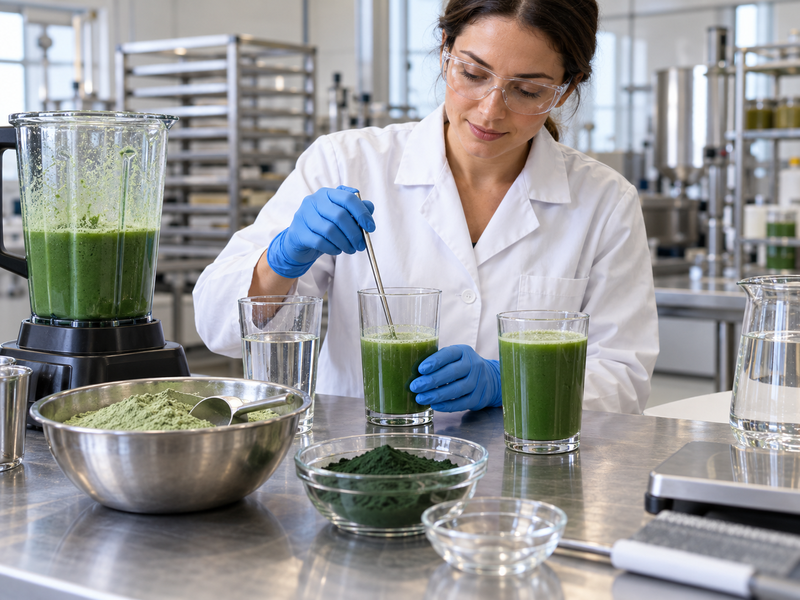
Dry powder placed on a liquid surface may remain buoyant while its outside wets faster than its core. Agitation can circulate these lumps without breaking them. Whole spirulina biomass contains particles, so a smooth-looking liquid is a suspension rather than a true solution. Watch the surface: a mound that takes minutes to sink, green streaks on the vessel wall and dry centers exposed by breaking a lump each point to a different process problem. Record which one occurs before choosing a stronger mixer.
The spirulina agglomeration research distinguishes wetting, immersion, dispersion and dissolution stages. Its laboratory result does not prescribe a single beverage recipe. In practice, powder grade, particle form, base-liquid composition and addition rate affect the result. A high-viscosity syrup may hold powder at the surface; a very thin liquid may disperse readily but settle during a long hold. A predispersion step narrows the problem to a manageable vessel where staff can see and sample the mixture before dilution.
2. What should a predispersion trial measure?
Define an observable endpoint
Set a trial target such as absence of dry-core agglomerates above a plant-defined size, acceptable sieve residue, even color after a defined mix time and no excessive sediment during the expected hold. State the powder-to-liquid ratio, liquid temperature, agitator type, addition duration and sampling method. A quick visual pass is weak: a premix can look uniform at the surface but contain dense deposits at the bottom. Sample top, middle and bottom where the vessel design allows.
Keep a control made by the current direct-addition process. Compare both methods using the same powder lot and final beverage formula. If the predispersion requires extra water, subtract it from the main batch so finished concentration stays equal. Note pumpability and tank heel, because a very thick premix may wet well yet transfer poorly. The site’s beverage sediment-control guide covers related finished-product checks. This trial should distinguish the premix’s immediate clump reduction from the beverage’s longer-term suspension behavior.
| Trial endpoint | Method | Why it matters |
|---|---|---|
| Dry-core clumps | Break retained sieve material | Wetting failure |
| Premix uniformity | Multi-depth samples | Vessel mixing |
| Transfer heel | Weigh or volume estimate | Delivered dose |
| Sediment after hold | Fixed bottle and time | Suspension behavior |
3. Which liquid should wet the powder?
Test the base under real formulation conditions
Water can be a convenient trial liquid, but a production beverage may contain sugar, protein, acid, stabilizer or fat. Each changes wetting and viscosity. Test a small set of meaningful conditions: plain process water, a low-viscosity portion of the base and the proposed production liquid. Choose the simplest workable option: an extra ingredient or processing aid may complicate labeling and cleaning. If a liquid already present in the recipe works, allocate a defined portion to the premix.
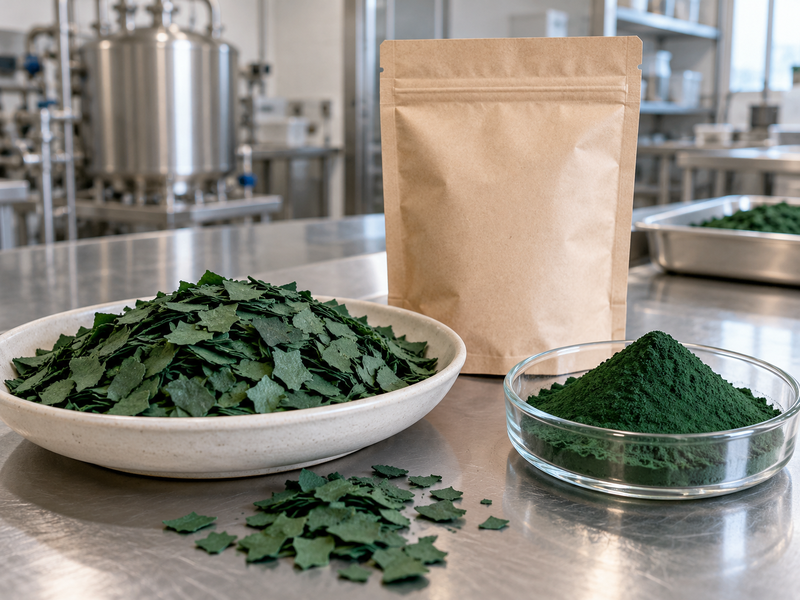
Control pH and temperature during comparisons. A result in neutral water may not transfer to an acidic beverage, and heating the premix to speed wetting may alter color or aroma. Do not assume research about isolated phycocyanin pigment applies directly to green whole biomass. The material contains more than that pigment, and its particulate behavior matters. Record whether the powder is added before or after acidification and any heat step. If the final beverage is acidic, assess color and flavor at the finished pH and after the intended processing path, not just immediately after premixing.
4. How should powder enter the liquid?
Control addition rate and contact area
Add powder gradually into a moving liquid rather than dumping a bag into one location. The feed point should bring particles into the active circulation zone without drawing excessive air. A covered induction system may reduce dust, but it still needs a test for wall buildup and incomplete intake. Try two rates: a slow addition that operators can maintain and the fastest rate the production schedule requires. Compare clump count and actual charge delivery at both conditions.
If powder is preblended with another dry ingredient, document its ratio and mixing method. A dry premix may separate before addition, especially when particle sizes or densities differ. If an inline powder induction unit is used, check its minimum liquid flow, pressure behavior and cleaning access with the real formula. The original powder wetting study supports measuring wetting as its own property; it does not mean any particular induction device will work. Weigh unused powder and clean-out residue to confirm actual delivered dose.
| Addition route | Main risk | Trial observation |
|---|---|---|
| Manual gradual feed | Variable operator rate | Time and surface lumps |
| Dry carrier premix | Segregation | Blend and discharge samples |
| Inline induction | Intake or fouling | Pressure and residue |
| Direct tank dump | Dry-core agglomerates | Sieve residue |
5. How much mixing energy is appropriate?
Optimize for wetting without unnecessary damage
Increase energy only after identifying what remains wrong. A low-speed impeller may distribute powder once wetted but fail to break dry cores. A high-shear head may break lumps, though it can introduce air, heat or unexpected viscosity changes in some beverage bases. Measure the outcome, not the motor setting alone: record mixer speed, time, product temperature, appearance, foam and sieve residue. Compare the same final beverage after downstream pumping and any thermal treatment.
Bench and plant mixers do not scale by revolutions per minute alone. Impeller diameter, tank geometry, fill level and circulation pattern all matter. Use a practical plant trial with the intended equipment. If a premix becomes smooth only after a long high-shear cycle, calculate line time and energy cost before choosing it. Check whether foam affects filling or dissolved oxygen. Note that improved short-term appearance does not guarantee stability: whole biomass particles may still settle. The site’s smoothie powder premix guide offers a related dry-format view, while this beverage method needs liquid-line evidence.
6. When should the premix enter the main tank?
Preserve the result during transfer
Add the premix when the main tank has enough liquid and circulation to dilute it without leaving a dense green layer. Record whether it enters before stabilizer hydration, acid adjustment, homogenization or heat treatment. Each sequence can change texture or visible particles. Look at the transfer line: a vessel that appears uniform may leave concentrated material in its heel or at the pump inlet. Flush with a measured portion of recipe liquid if the process permits, and count that liquid in the batch formula.
Keep a defined maximum hold time between premix completion and main-tank transfer. Sample at the end of the hold to see whether settling or agglomeration returns. If operators must remix before transfer, specify the exact action. A long hold can create process and food safety questions, particularly when a nutrient-rich liquid sits outside controlled conditions. The Codex General Principles of Food Hygiene support process-specific time and temperature controls where hazards demand them. The site’s plan determines its actual limits.
| Transfer question | Record | Action if weak |
|---|---|---|
| Premix hold | Start and transfer times | Shorten or control hold |
| Tank circulation | Flow or mixer state | Adjust entry point |
| Vessel heel | Measured residue | Controlled recipe-liquid flush |
| Post-transfer color | Multi-point samples | More mixing or revised sequence |
7. How can clumps and sediment be measured?
Use a repeatable challenge
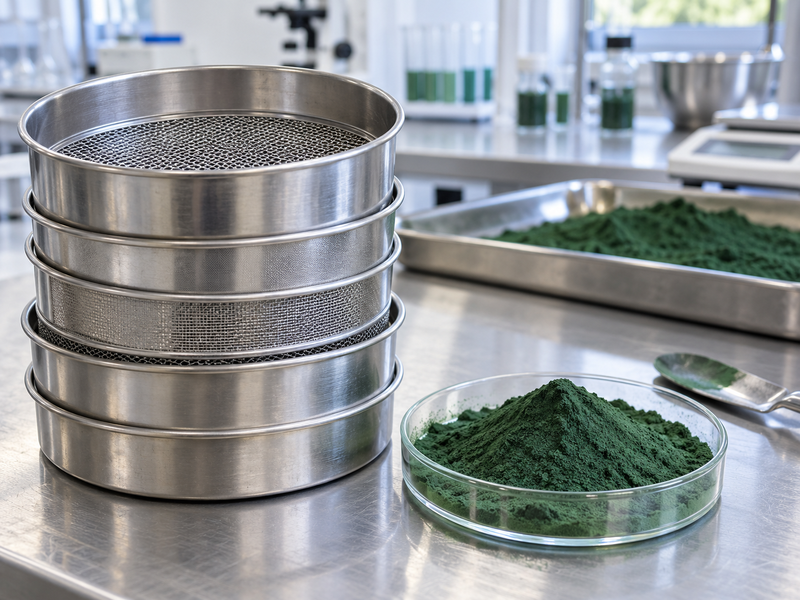
Pass a defined premix volume through an agreed sieve and weigh or photograph retained material under standard conditions. Break a representative clump to see whether its center stayed dry. For sediment, fill identical transparent containers, hold them at the same temperature and duration, then measure settled layer or resuspendability. Do not combine the findings: a clump-free premix may still sediment because fine biomass remains suspended only temporarily. Conversely, a stabilizer can slow sediment while hiding large wetting defects.
Use several timepoints relevant to the product: immediately after mixing, at the longest expected tank hold, after filling and during storage. Record bottle orientation and light exposure for color comparisons. Set pass criteria from the intended consumer experience and plant capability rather than borrowing another beverage’s number. If the product will be shaken before use, assess both the as-sold appearance and the ease of resuspension after the intended motion. The site’s beverage sediment-control article provides companion questions for finished bottles.
8. What changes at factory scale?
Recheck geometry, time and cleaning
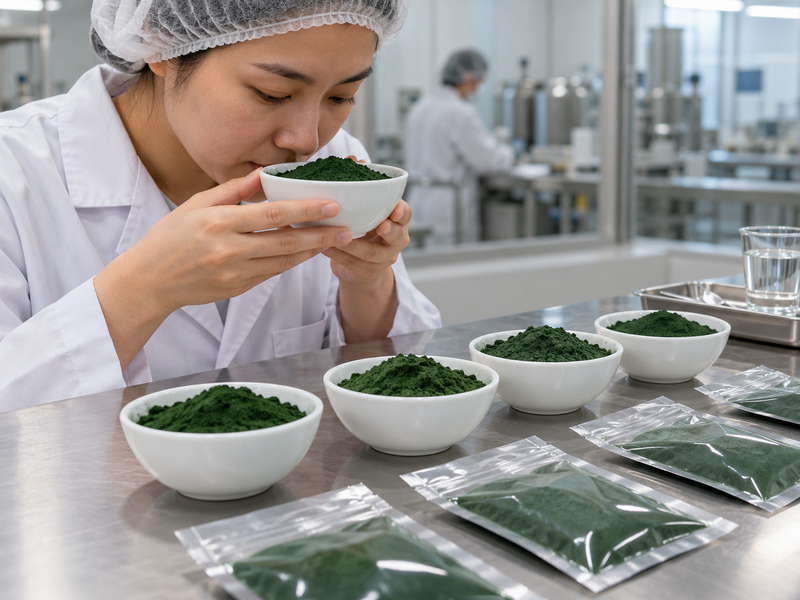
A small laboratory vessel has a different circulation pattern, powder feed rate and surface-area ratio from a production tank. Directly multiplying batch size may produce longer wetting time or a dead zone. Map the full path: powder reception, charging, premix, pump, main tank and filler. Run a representative batch: record the first bag, a middle bag and the last bag, then inspect line residue after discharge. A plant-scale solution must satisfy throughput as well as appearance.
Sample after a stop and restart. During downtime, particles may settle in the premix vessel or piping, giving a concentrated slug at restart. Define how operators recirculate or purge before filling. Verify clean-in-place access where relevant; green deposits in gaskets or dead legs can cause carryover to the next product. Count the added process time and water consumption. A predispersion step that cuts clumps but adds unmanageable cleanup may need a different vessel or a supplier powder form with better wetting. Keep the process comparison tied to the same final product specification.
| Scale-up factor | Bench assumption | Plant check |
|---|---|---|
| Circulation | Uniform small vortex | Multi-depth sample |
| Powder feed | Hand-held scoop | Actual bag addition rate |
| Transfer | Pour entire beaker | Pump and pipe residue |
| Cleaning | Manual rinse | Full line inspection |
9. How should microbiological and hold controls work?
Keep predispersion inside the food safety plan
Use released ingredient and hygienic liquid. Clean and verify the premix vessel and transfer system under the site’s procedures. Record temperature and elapsed time from wetting through further processing or filling. A green premix is still food: its appearance says nothing about microbiological control. If the beverage relies on a subsequent kill step, validate that step for the actual product and process. If no such step exists, receiving and environmental controls may carry greater weight.
Do not invent a universal maximum hold time for spirulina slurries. The acceptable duration depends on formulation, temperature, process and hazard analysis. The Codex hygiene guidance asks operators to validate relevant controls and document monitoring. During the trial, record any unplanned delay and disposition the affected premix according to the plant plan. Include open-package exposure and shared scoops in the review. A failed wetting trial should never become an uncontrolled extended storage experiment.
10. What makes the procedure repeatable?
Write a short operating recipe with limits
The approved instruction should specify powder grade, lot release, liquid identity and mass, target ratio, temperature range, addition rate, mixer settings, endpoint test, hold control and transfer sequence. Include a line for actual readings and a clear response when clumps or excess residue appear. Test the handoff: ask another trained operator to run the procedure using the document alone, then compare its result with the developer’s trial. If performance depends on an undocumented visual judgment, define that judgment with a reference sample or measurable check.
Keep samples from the approved run and from later supplier lots. Review the procedure when powder particle form, equipment, beverage acidity or packaging changes. Finished-product stability still needs its own study after the predispersion step passes. Summarize the gain in terms of clump reduction, yield, line time and product acceptability. A method that works on the main batch but fails after a pump restart needs further work before routine production. Treat the written procedure as an operating envelope rather than a one-time demonstration.
| Operating element | Control | Verification |
|---|---|---|
| Powder addition | Rate and feed point | Actual time and residue |
| Mixing | Equipment setting and duration | Endpoint sample |
| Hold | Time and temperature | Pre-transfer sample |
| Transfer | Flush and sequence | Heel and final-tank check |
FAQ
Q1: Does spirulina powder dissolve in a beverage? Whole biomass generally behaves as suspended particles; predispersion improves wetting and distribution.
Q2: Can more shear always remove clumps? No. It may add air or heat, and poorly wetted cores can persist.
Q3: Is a water premix always best? Test it against the actual beverage base and process sequence.
Q4: Does clump reduction prevent sediment? No. Sediment and wetting need separate tests.
Q5: When should a new powder lot trigger a trial? Recheck when material properties shift enough to affect the approved wetting window.
Next step
Compare direct addition with a controlled small-vessel predispersion using the same powder lot and beverage formula. Approve the method only after clump, sediment, transfer and hold results meet the product’s written targets.