
Blue spirulina yogurt manufacturing adds acidification and cold storage to the color decision. A yogurt can look bright blue at filling and less appealing after fermentation, fruit addition or refrigerated storage. Its acidity, protein gel and any separated whey all affect the shade a buyer sees in the cup. Commercial production adds another question: where can the color be added without undermining the validated dairy process? A recipe answer does not resolve that line decision.
The Spirulina CN Blue Spirulina page lists yogurt and frozen desserts among candidate applications and calls for real formula tests. This article lays out a manufacturing trial for plain, flavored and plant-based yogurt products. The grade, dose and shelf-life outcome remain product specific. Published yogurt experiments are evidence for what to measure, not a promise that the site’s powder will reproduce their results.
Contents
- What makes yogurt a difficult blue matrix?
- Which product and ingredient details should be fixed first?
- Where could the blue ingredient enter the line?
- How should acidification be recorded?
- What does the protein gel do to color?
- How should fruit and flavor layers be tested?
- What does a pilot run need to measure?
- How should cold storage and syneresis be reviewed?
- What quality and label checks belong to the launch file?
- When is a yogurt color ready for routine production?
1. What makes yogurt a difficult blue matrix?
Color and texture change together
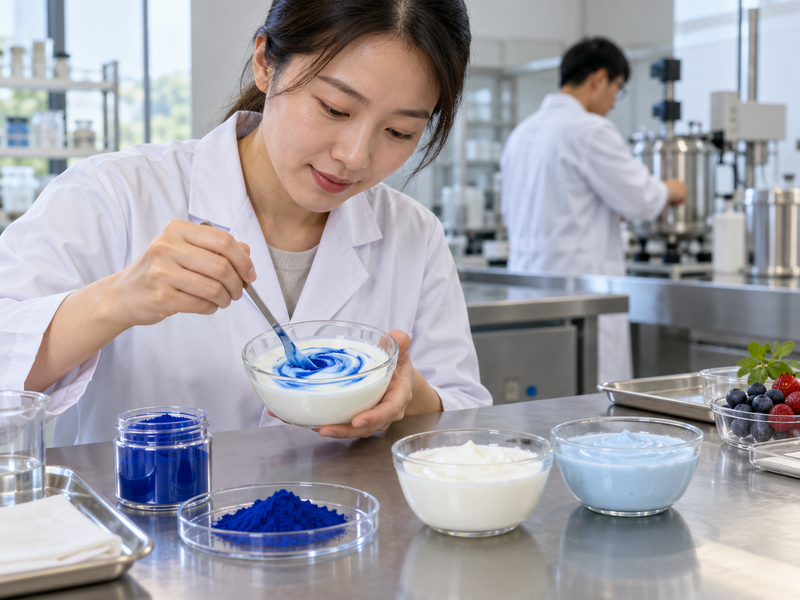
Yogurt is a protein gel that develops acidity and can release whey during storage. Blue phycocyanin may be added before fermentation, after cooling, into a fruit preparation or as a separate layer. Those choices expose it to different pH, mixing and heat histories. An original set-yogurt study published in 2026 found that its phycocyanin-rich powders produced different color and syneresis outcomes. The result belongs to the tested powders and recipes; it shows why color and texture should be evaluated together.
Define the product type first. A stirred yogurt, set yogurt, drinkable yogurt and plant-based cultured product need different handling plans. The brand should approve a shade reference in the final cup, not only a blue beaker of extract. Record whether the product contains fruit acids, visible pieces or a white layer that might mix at consumption. If the base itself changes color or separates, a phycocyanin dose adjustment may not solve the real problem. Include an uncolored control through the whole pilot.
| Yogurt format | Trial priority |
|---|---|
| Set cup | Gel formation and surface color |
| Stirred cup | Mixing uniformity and viscosity |
| Drinkable yogurt | Sediment and flow |
| Fruit-layer cup | Migration and acid contact |
| Plant-based cultured cup | Base-specific protein and fat behavior |
2. Which product and ingredient details should be fixed first?
Identify the exact food and exact color grade
Record the yogurt formula, milk or plant base, culture, target pH, heat treatment, fruit system, package and refrigeration plan. Ask the color supplier for the proposed SKU, carrier statement, current specification, test method and matching lot COA. A generic E grade is insufficient because carriers and composition may differ. The Spirulina CN product page says selection depends on the actual product and process. Freeze the pilot formula while comparing grades so a shade change can be attributed to the ingredient rather than an unnoticed base revision.
Quality and regulatory teams should review the product category and destination market early. In the United States, current 21 CFR 73.530 lists yogurt and non-dairy yogurt alternatives among spirulina extract coloring uses, subject to its conditions and other applicable rules. That listing does not approve a particular supplier lot or label. Review the exact composition, including any carrier. Put the tested sample lot and document revision in the trial record so the purchase order can name the same material.
| Item to freeze | Example of useful record |
|---|---|
| Base formula | Revision and batch sheet |
| Culture and target endpoint | Culture ID and pH target |
| Blue ingredient | SKU, lot, carrier and COA |
| Fruit or flavor | Supplier and addition stage |
| Cup and closure | Final artwork and barrier format |
3. Where could the blue ingredient enter the line?
Compare feasible points without changing food safety controls
Candidate addition points may include the mix before fermentation, the cooled cultured base during stirring, a separate fruit preparation or a post-culture swirl. Each creates different exposure and sanitation requirements. Do not move an addition point past a validated heat or hygienic barrier solely to preserve color. Process engineering and food safety staff must approve any change in when and how the ingredient enters. The trial should record the exact time, temperature, mixing energy and holding period at each candidate point.
Start with small, controlled pilots that reflect the real plant sequence. Check how quickly the powder wets and whether it forms blue specks or foam. Compare color before and after the step that adds the most acid or heat. Research on phycocyanin-enriched yogurt during refrigerated storage examined one particular formulation and storage period; its result cannot choose the best addition point for a different factory. Keep the chosen step in the final batch instruction and define how production will verify complete mixing.

4. How should acidification be recorded?
Follow the actual pH path
A single final pH value hides the route the pigment experienced. Log pH before color addition, during fermentation or fruit blending, at filling and through storage. Measure the full product and any separate fruit phase. A locally concentrated acid stream can expose pigment to a condition that the final mixed cup does not show. Sampling should therefore include the addition stage, not only a homogenized finished cup. Record temperature alongside pH because pigment behavior can depend on both.
An experimental phycocyanin study compared stability under different pH and heat conditions; it supports a controlled yogurt test without assigning a universal cutoff. If a blue layer fades, check whether it contacts an acidic fruit layer or separated whey. Hold a control cup without blue to see whether the base itself changes. Compare candidates at a fixed color dose first, then optimize dose only after the process window is understood. This avoids using more powder to mask a preventable handling problem.
| Sampling point | Record |
|---|---|
| Before addition | Base pH and temperature |
| After mixing | Local and bulk pH, shade |
| Fermentation endpoint | pH, time and cup appearance |
| After fruit addition | Fruit pH and interface color |
| During storage | pH and color trend |
5. What does the protein gel do to color?
Measure appearance and texture together
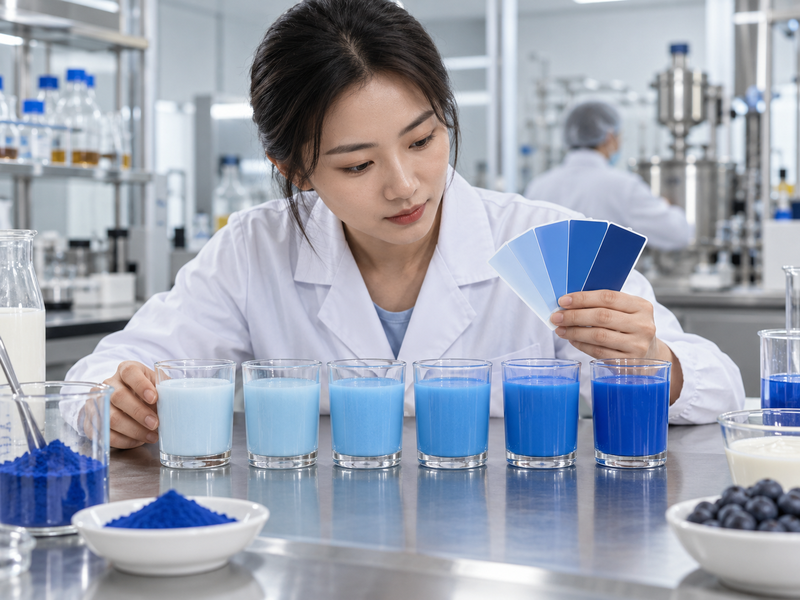
Yogurt’s gel scatters light, so the same pigment dose may look lighter than it does in water. Protein and water distribution can also change as the gel sets or is stirred. A blue sample may appear patchy if the ingredient was not dispersed before gel formation. Use a fixed visual method and, where useful, color coordinates on a standardized sample surface. The CIE color-difference framework offers a measurement language; the brand sets its own acceptable shade range.
Texture deserves equal attention. The 2026 set-yogurt experiment found the powder with strongest color also had greater syneresis in its formulation. That does not mean stronger blue always causes whey separation. It means a color trial should record gel firmness, viscosity and released whey rather than selecting the brightest cup alone. Compare the blue sample with an uncolored control made from the same base batch. If texture changes, investigate carrier, addition method and total solids before attributing the effect to phycocyanin itself.
6. How should fruit and flavor layers be tested?
Keep the layers the customer will actually mix
Fruit preparations introduce their own color, acidity and water activity. A blueberry or mango layer can shift the final visual impression even before it physically mixes with the blue yogurt. Prepare the commercial cup architecture: bottom fruit, swirl, top flavor or uniform blend. Judge the unopened cup, a spoonful of each layer and the mixed serving if that is how customers eat it. A plain blue yogurt trial cannot approve a fruit-layer launch.
Record whether color migrates across the interface during storage. Test fruit acidity and any local treatment temperature before the layers meet. Flavor can influence the acceptable blue dose because a higher addition may change taste or aroma. Keep the fruit and yogurt lots constant during the first grade comparison. If the interface fades while the bulk yogurt remains blue, investigate contact and mixing rather than raising the entire formula’s dose. The final batch sheet should specify the order and temperature of layer deposition so production can reproduce the tested cup.
| Layer question | Inspection method |
|---|---|
| Color migration | Cross-section at planned intervals |
| Interface fading | Compare with plain yogurt control |
| Fruit acidity | Measure fruit and mixed pH |
| Serving appearance | Standardized stirred-cup review |
7. What does a pilot run need to measure?
Make the trial reproducible at line speed
A useful pilot includes the actual mixing vessel, pump, filling operation and target cup. Record ingredient dose as grams of as-sold powder per kilogram of product and reconcile issued powder with filled units. Observe clumps, streaks, foam, line hold-up and color variation from the first to the last cup. If a premix is used, state its liquid, concentration, mixing time and maximum hold. An operator should be able to repeat the sequence without a verbal instruction such as “blend until blue.”
Sample cups from beginning, middle and end of filling. Measure color, pH, texture and weight using the plant’s normal quality methods. Retain unopened cups from each point for cold storage. Document deviations in process temperature or hold time; those may explain a later shade difference. A bench cup confirms feasibility, but line-scale shear and residence time can change both appearance and gel behavior. The pilot result should define the practical control points that go into the commercial work instruction.

| Pilot measure | Why it matters |
|---|---|
| Powder issued | Confirms actual dose and yield |
| Beginning/middle/end color | Detects mixing drift |
| pH and temperature | Explains process exposure |
| Viscosity or gel check | Protects product texture |
| Retained cups | Supports storage evaluation |
8. How should cold storage and syneresis be reviewed?
Inspect unopened cups across the intended life
Store the final sealed cups under the proposed refrigerated route. At planned intervals, review shade, uniformity, whey release, texture, flavor and package integrity. Use new unopened cups at each time point. Repeatedly opening one cup changes exposure and can disturb a gel or fruit interface. Photograph the top surface and a controlled cross-section. Weigh or measure separated whey using a defined method if syneresis is a commercial concern.
The phycocyanin-enriched yogurt study followed a particular refrigerated product, and the 2026 set-yogurt work documented formulation-dependent texture effects. Neither result assigns shelf life to a new brand’s yogurt. Include a control made without color and, if useful, a second packaging option. Compare the color customers see through the lid or cup as well as the opened serving. Finish with a signed decision against pre-set limits rather than a day-zero photograph.
9. What quality and label checks belong to the launch file?
Keep color approval and product safety separate
Quality should verify the ingredient’s lot COA, full composition, microbiological and contaminant records, storage instructions and change-notification terms. The finished yogurt must also meet the plant’s own food-safety plan. A blue color trial does not validate fermentation, sanitation or the cold chain. Regulatory staff should review the proposed ingredient declaration and coloring use in the destination market, including any carrier. In the US, 21 CFR 73.530 names yogurt and non-dairy yogurt alternatives among permitted uses for spirulina extract under stated conditions.
The approval file should link the exact blue SKU to the formula and pilot cups. If the supplier changes carrier or site, quality and R&D need to decide whether the line trial remains representative. Avoid implying health benefits from the blue pigment or whole spirulina in the product name or marketing copy without separate evidence and market review. Spirulina CN’s page offers sample and document coordination; request the current records for the actual lot before procurement treats the ingredient as approved.

10. When is a yogurt color ready for routine production?
Approve the cup that passed the pilot
The color is ready when the chosen SKU, addition point, dose range and mixing procedure produce an acceptable shade without unacceptable texture or whey separation through the planned cold-storage period. The record should identify the exact formula, culture, fruit system, cup, process profile and acceptance methods. If the product is a stirred yogurt, include a dispersion and viscosity check. If it is set in the cup, include surface and cross-section appearance. Do not extend one result to a different format without testing.
Production should have a written response to color drift: which measurement to repeat, when to hold a batch and who may approve a dose adjustment. Procurement should order the same SKU and carrier system that the pilot used. Regulatory and food safety sign-offs should be complete before artwork or production release. The Spirulina CN product page can guide sample selection, but the buyer’s sealed-cup evidence is what supports a commercial yogurt decision.
Frequently asked questions
Q1. Can phycocyanin be added before fermentation? It is a testable option, but compare it with other feasible points and keep validated food-safety controls intact.
Q2. Does a bright day-zero cup prove shelf stability? No. Review shade, whey release and texture across the intended cold-storage interval.
Q3. Can a plain yogurt trial approve a fruit-layer product? No. Test the actual fruit system and layer design.
Q4. Is the highest E grade always best? No. Dose, carrier, texture and cost matter in the specific yogurt.
Q5. What should a supplier sample include? Exact SKU, full ingredient statement, current specification and a matching lot COA.
Request yogurt application samples
Share the yogurt format, culture endpoint, fruit system, addition options, pack and market with Spirulina CN through its Blue Spirulina page. Request candidate grades with current documents, then run a line-representative pilot and refrigerated cup study before setting the purchase specification.