
Spirulina powder microbiological specifications define which organisms or counts a buyer will accept in a named lot of dried whole biomass. A “microbiology: pass” claim is hard to use when it omits organisms, methods, sample portions, and limits. This guide shows how to write a practical spec, read a COA, and link testing to process hygiene and finished-product risk. The FDA Bacteriological Analytical Manual supplies primary method references; the buyer still needs a product- and market-specific hazard review.
Contents
- Why does dry spirulina need microbial controls?
- Which organisms should a buyer consider?
- How should presence and count criteria be written?
- What does the intended finished product change?
- How should the lot be sampled?
- Which analytical methods deserve review?
- How do drying and packing controls fit the spec?
- What can trends reveal beyond a pass?
- What should happen after a positive or high count?
- How can the buyer turn results into release rules?
1. Why does dry spirulina need microbial controls?
Separate survival from growth
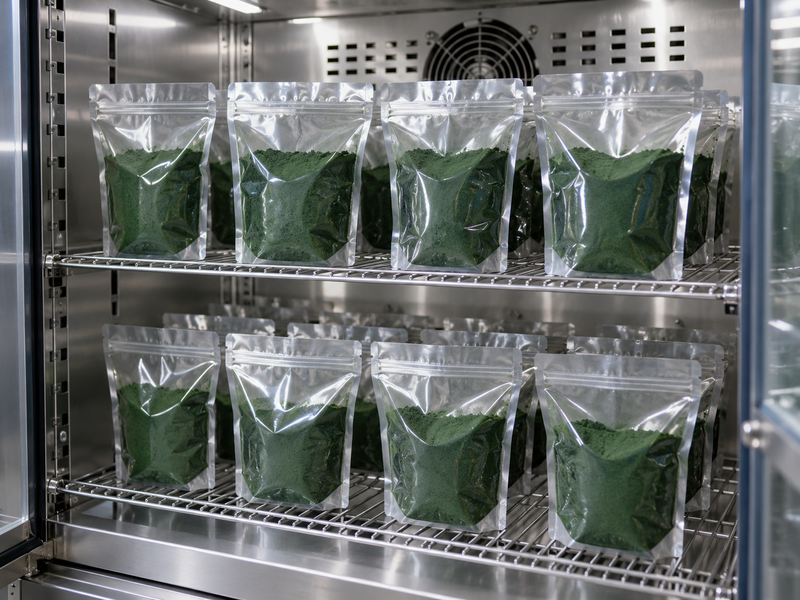
Dry does not mean sterile. Lower moisture and water activity can restrict microbial growth, yet organisms introduced before or after drying may survive in low-moisture food. Whole spirulina passes through harvest, dewatering, drying, milling, and packing; every contact point can affect the final microbial profile. Ask how the supplier controls water, cleaning, employee practices, equipment sanitation, and post-drying exposure. A tidy production photograph is not a record of hygienic performance for the quoted lot.
The FDA water-activity explanation describes water availability for microbial growth. It does not suggest that every powder below a chosen aw is free of pathogens. A buyer planning a raw smoothie mix should treat a ready-to-use powder differently from an ingredient that will pass through a validated kill step. In both cases, set receiving criteria and require a supplier control program. Testing acts as verification within that program rather than a substitute for sanitation or process design.
| Process stage | Microbial question | Evidence |
|---|---|---|
| Harvest | Was water or culture contaminated? | Monitoring records |
| Drying | Was time and process controlled? | Batch log |
| Packing | Was recontamination prevented? | Hygiene and environmental records |
2. Which organisms should a buyer consider?
Build a panel from hazard analysis
Do not copy a generic five-line COA. Common buyer panels may include aerobic plate count, yeast and mold, coliforms or Enterobacteriaceae, E. coli, and Salmonella. Other organisms may be relevant to a particular process, geography, or finished use. A total aerobic count is a broad hygiene indicator; it cannot prove absence of a particular pathogen. An E. coli criterion serves a different purpose from a coliform count. Write down why each entry belongs in the panel and which party is responsible for control.
FDA’s BAM index lists separate chapters for aerobic counts, E. coli, Salmonella, yeast and molds, and several other organisms. That separation illustrates why “microbiological pass” lacks usable detail. A buyer should ask for the exact test portion, method version, units, and acceptance criterion for each. Review destination-market requirements and customer contracts before finalizing a panel. Avoid stating that one numeric limit applies to all spirulina products worldwide; the right decision depends on the ingredient’s role and the final food.
3. How should presence and count criteria be written?
Include the sample mass and reporting unit
A unit changes the meaning. A pathogen criterion should state the organism, absence or permitted finding, and tested mass, such as “not detected in the specified test portion,” with the actual portion defined in the contract. A count criterion should state CFU/g, its numerical limit, and the laboratory method. “Negative” without a portion and “<10” without a unit are incomplete. Ask whether the lab reports estimated counts below its standard countable range and how it treats an inconclusive screen.
The FDA’s Salmonella BAM chapter explains screening and confirmation, with a 2026 edition listed. An initial molecular screen and final culture confirmation may have different reporting times. Define whether shipment waits for a final result and who can lift a hold. An RFQ should also indicate how many sample units from each lot will be examined and whether they are composited. Without a sampling rule, two suppliers can both claim “pass” using sharply different examination plans, making a price comparison misleading.

| Specification element | Example wording to define | Why |
|---|---|---|
| Target | Named organism or count | Avoid vague panel |
| Portion | Grams examined | Interpret absence |
| Method | Identifier and version | Compare results |
4. What does the intended finished product change?
Evaluate ready-to-eat use and later processing
Ask what happens after receipt. A supplement capsule may contain essentially unheated powder, while a baked snack may undergo a validated thermal process. A smoothie blend mixed cold offers another exposure route. These differences influence the hazard analysis and acceptance criteria. Yet buyers should not assume a later heating step solves every problem: cross-contamination after heat, uneven processing, and pathogens in other ingredients can remain relevant. Treat the process design and the incoming powder specification as linked controls.
FDA’s preventive-controls overview describes hazard analysis and verification for covered human-food facilities. U.S. dietary supplement manufacturers have their own Part 111 CGMP framework. Determine the applicable regime for your product rather than blending their requirements into one checklist. For a private-label customer, document who owns the incoming material decision, process validation, and final-product release. That division prevents an ingredient supplier from implying that a COA alone certifies the finished brand’s safety.
5. How should the lot be sampled?
Draw a plan around production reality
One jar rarely represents a pallet. Define the lot as a particular production and packing population, not simply a month printed on a sales sheet. Select containers across the stack and record the draw method, tools, test portions, seals, and transport conditions. A composite may be useful for some indicators, but pooling can hide a localized pathogen signal; let qualified microbiology staff set that choice. Keep sample units distinct when the chosen method or regulation requires distinct analysis. Retain sealed commercial packs for investigation.
FDA’s BAM Chapter 1 describes sample receipt, container condition, and individual identification for official microbiological work. Commercial protocols can differ, yet a broken seal or mislabeled unit still weakens a buyer’s evidence. Coordinate sampling with the planned shipment: if the supplier later blends or repacks material, ask whether the original test still describes the goods. A quality agreement should define who draws samples and whether an independent inspection is used for a new supplier or a problem lot.

| Sampling choice | Record | Potential issue |
|---|---|---|
| Container selection | Bag numbers | Biased draw |
| Composite method | Increments and mixing | Localized signal diluted |
| Sample custody | Seal and transfer times | Identity dispute |
6. Which analytical methods deserve review?
Confirm validation for the matrix and target
The result is only as clear as its method. Ask whether the laboratory used a BAM method, an AOAC-validated alternative, or another scientifically valid procedure. Record method identifier, version, food matrix, dilution, incubation, and confirmatory step where relevant. A rapid molecular screen may give a prompt presumptive result, but a positive can require confirmation before final reporting. A plate count may have an upper and lower countable range, so a reported “less than” entry needs the method’s limit.
The FDA BAM provides chapters and revision histories; the buyer can use it to ask informed questions, not to insist that one published procedure fits every commercial matrix without validation. Check whether an independent lab’s ISO/IEC 17025 accreditation scope covers the particular assay. Compare supplier and buyer reports only after aligning sample mass and method. If powder pigmentation or other matrix features interfere with a test, ask how the lab demonstrated suitability or adapted preparation. Keep the original report when a supplier issues a simplified COA.
7. How do drying and packing controls fit the spec?
Ask what prevents recontamination
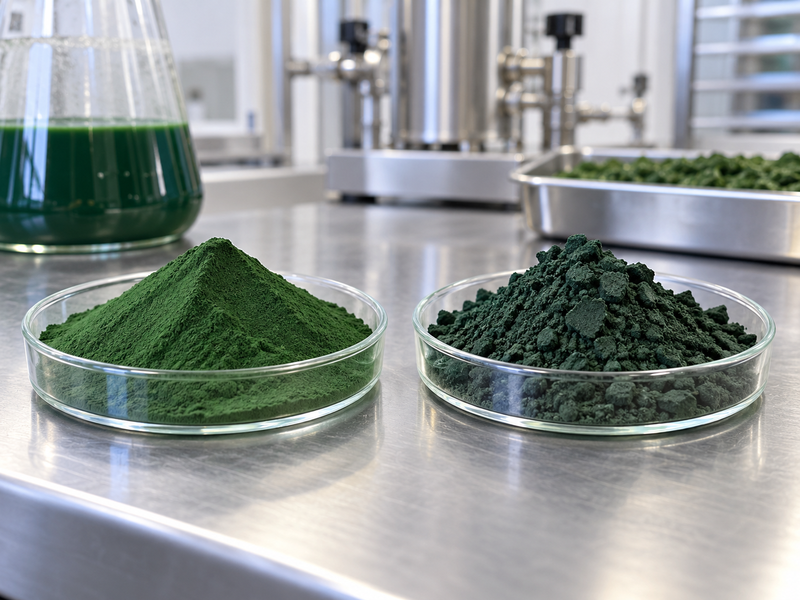
A clean end test is one snapshot. Review the flow from wet biomass through drying, milling, sieving, and sealing. Ask what temperatures and residence times are monitored, how equipment is cleaned, and where product becomes exposed after drying. A manufacturer should distinguish a drying step that removes water from a validated kill step. If it claims a lethality process, request validation for the relevant organism and worst-case product rather than assuming heat equals sterilization. Post-drying hygiene matters because a later contamination event bypasses earlier controls.
Request a redacted environmental monitoring plan if the facility uses one, plus action rules for positive findings and affected lots. Ask how rework is controlled and how long powder waits before packing. The FDA preventive-controls overview describes environmental monitoring and product testing as possible verification activities according to the food, facility, and control. These programs are context-specific. A buyer need not receive every proprietary record, but it should receive enough to evaluate whether the supplier can detect and contain a sanitation failure.
| Control | Ask the supplier | Buyer use |
|---|---|---|
| Drying | Process record and validation claim | Understand hazard reduction |
| Milling | Cleaning and changeover | Assess cross-contamination |
| Packing | Environmental and seal checks | Assess recontamination |
8. What can trends reveal beyond a pass?
Watch movement before a specification is breached
A pass can still be a warning. Plot counts from sequential commercial lots using the same method, units, and sampling design. A steady rise in yeast and mold or aerobic count may point to changing drying, storage, or hygiene even when each result remains below its contractual limit. Note seasonal or site changes. Compare with moisture and water activity, but remember that correlation does not identify the cause. Ask the supplier for its own trend review and the action level it uses before a formal limit is crossed.
Avoid ranking suppliers solely by one low number. A result below a reporting limit may say more about method capability than process quality. An unusually pristine series deserves a check of sample provenance and actual laboratory reports. Trend analysis works best when the buyer also logs complaints, damaged bags, seal failures, and application observations. If a process change interrupts comparability, mark that date and re-establish a baseline. This turns a specification into a living supplier-control tool rather than a document revisited only when a customer rejects goods.
9. What should happen after a positive or high count?
Hold, confirm, investigate, then decide
Do not release on a verbal retest promise. Quarantine the implicated inventory and map all finished packs from the same production and drying run. Confirm test identity, sample integrity, method, and whether the reported result is final or presumptive. Follow the prewritten deviation rule for repeat sampling or confirmation, retaining the initial result. If a pathogen is confirmed, the buyer’s quality team should determine rejection, notification, and any downstream action under applicable law and contracts.
The supplier’s root-cause review should inspect source water, drying controls, post-drying areas, packaging, and recent environmental findings. Ask what changed and how effectiveness of corrective action will be measured on later lots. Do not simply blend a high-count lot with cleaner powder or relabel it as another grade without a lawful, documented disposition. A marginal indicator result may lead to a different response than a pathogen finding, but both need a signed decision. Clear escalation routes protect customers and keep purchasing from accepting stock that quality has not released.
10. How can the buyer turn results into release rules?
Build a one-page acceptance matrix
Make approval easy to audit. Put each organism or indicator in a table with method, sample size, units, limit, required frequency, and action for missing or nonconforming results. Attach the current lot COA and original laboratory report where required. At receipt, match product code and bag labels with the tested lot, inspect pack integrity, and record accept, hold, or reject with a named reviewer. A supplier may release goods under its own specification; your receiving decision still belongs to your approved buyer rule.
The Spirulina CN site describes available products, but buyers should request present whole-biomass specifications and lot-specific reports rather than infer microbial performance from website text. In the RFQ, state whether the ingredient enters a ready-to-eat formulation or later validated process. Ask for methods and portion sizes, not just a “pass” column. This creates a fair comparison between suppliers and gives both sides an agreed response if one value falls outside the rule.

| Finding | Immediate step | Final authority |
|---|---|---|
| Complete compliant report | Match goods and release | Buyer quality |
| Missing result | Hold and request evidence | Buyer quality |
| Positive or high result | Quarantine and investigate | Buyer quality leadership |
FAQ
Q1: Does a low aerobic count prove there is no Salmonella? No. Pathogen testing answers a separate question.
Q2: Does a dry powder need testing? Dryness can restrict growth but does not demonstrate absence of surviving organisms.
Q3: Why state “in 25 g” or another portion? Presence-or-absence results are meaningful only with the tested mass and method.
Q4: Can a supplier’s generic micro panel be accepted? Only after it is compared with your approved hazard analysis, destination, and intended use.
Q5: Who decides a disputed result? The buyer’s designated quality authority should apply a written investigation and release procedure.
Spirulina powder microbiological specifications work when they name the question each test answers and connect that answer with a real lot. Set organisms, portions, methods, and actions before the order. Request the next supplier’s process controls and full lot report; a clear record protects the brand far better than an undated “micro pass” badge.