
Spirulina powder taste masking for food products is a formulation problem that starts with sensory diagnosis. Sweetness can hide bitterness while leaving a marine aroma obvious; a strong flavor can conceal a defect in a bench cup but fail after processing. This guide gives product teams a controlled screen across grades, food matrices and serving sizes. The spirulina processing-odor study provides the applicable starting point for product review; the commercial decision still needs lot and application evidence.
Contents
- What taste problem needs masking?
- How should supplier grades be screened?
- Which food matrix helps or hurts?
- Which masking ingredients deserve trials?
- Can process changes improve the result?
- What limits should protect quality?
- How should the panel be run?
- How does masking change cost and claims?
- What should a production pilot prove?
- When is masking good enough?
1. What taste problem needs masking?
Name the sensory attribute
Panelists may describe spirulina as marine, earthy, grassy, bitter, roasted or sulfurous, and the balance changes with the material and process. Do not bundle every response into “algae taste.” Use a small trained panel with a common vocabulary and a blind reference sample. Separate aroma before tasting from flavor during eating and aftertaste.
Write the proposed ingredient identity and intended technical function on the first line of the trial brief. A sales name alone cannot settle how purchasing, quality and label teams classify it. Keep a retained sample of the first acceptable lot so later comparisons use the same reference, not a memory of its appearance.
Buyer action: Write the dominant defect and its intensity at the intended ingredient dose before changing the formula.
Before requesting a sample, ask the team to put the intended product, consumer-facing promise and disqualifying conditions in writing. This makes the first supplier conversation specific enough to yield comparable information.
2. How should supplier grades be screened?
Compare equal doses
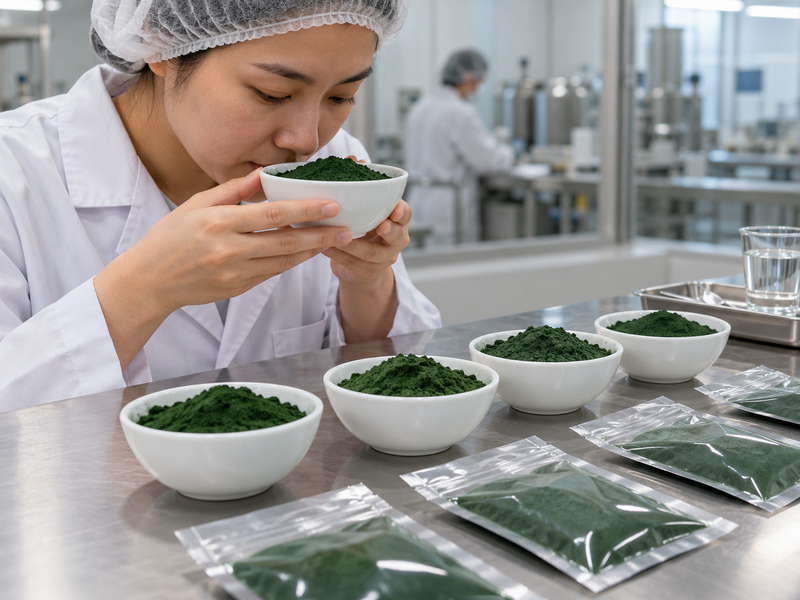
Ask for representative commercial lots of plausible grades. Prepare the same mass in the same base, using controlled hydration and temperature. A low-odor sales claim is meaningful only if the grade still meets nutrition, color, safety and supply requirements. Code samples to reduce expectation bias.
Ask two candidates to answer the same written request, including test method, units, sample age and package format. Differences in reported numbers can be caused by method or dilution rather than useful performance. When figures are not directly comparable, run the candidates side by side in one laboratory and do not average away a failed criterion.
Buyer action: Retain the reference lot and repeat the screen with a second lot before qualifying a supplier.
If one candidate looks better, repeat the measurement under the same conditions before changing the specification. A small difference can disappear when samples, instruments or operators change.
| Attribute | Example description | Measure |
|---|---|---|
| Aroma | Marine or earthy | Smell before tasting |
| Taste | Bitter | In-mouth score |
| Aftertaste | Lingering note | Delayed score |
3. Which food matrix helps or hurts?
Test real products
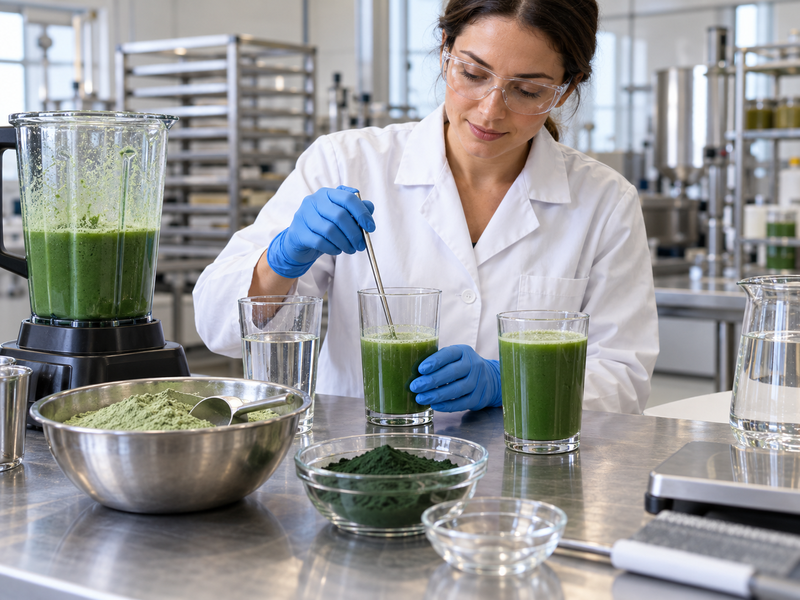
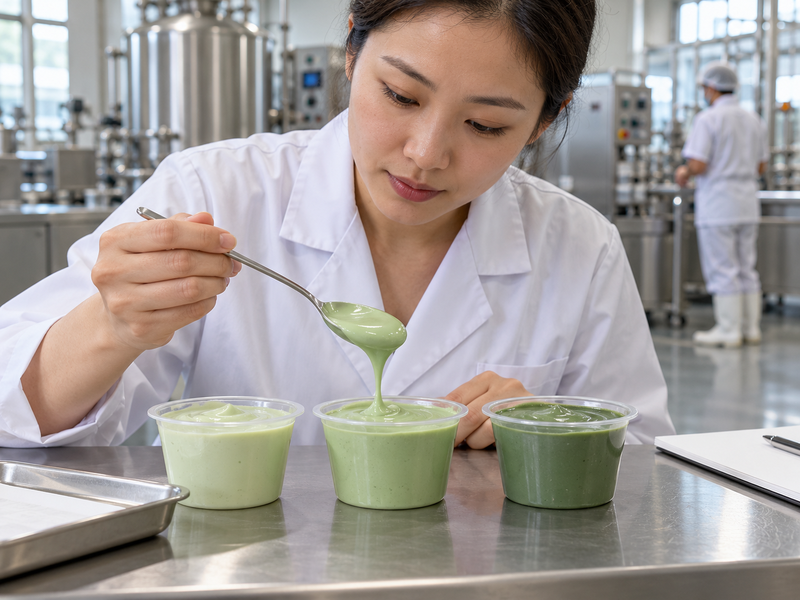
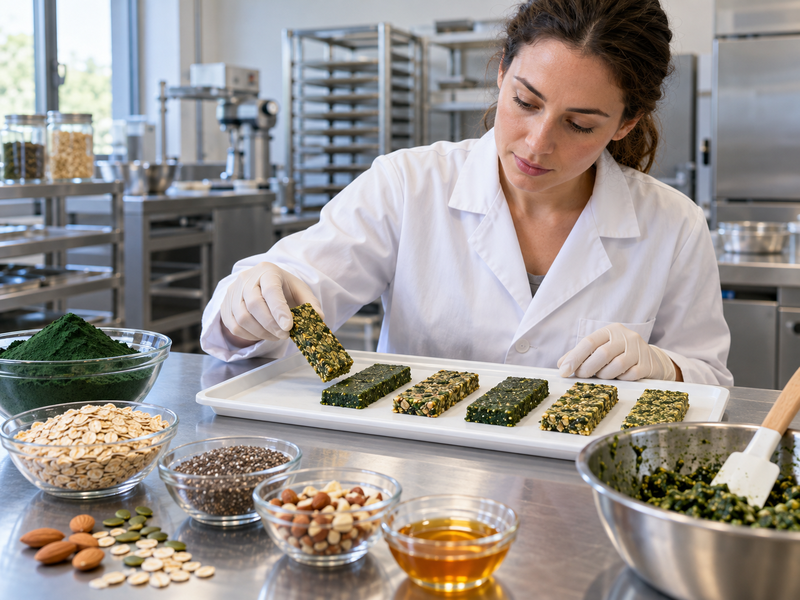
A fruit bar, yogurt, savory cracker and clear beverage expose different notes. Fat, sugar, acidity, viscosity and background flavors change perception; visual color also affects expectation. A masking system selected in water can fail in a finished food. Test the planned serving size and processing history.
Split the evaluation into ingredient screening and an actual finished-product trial. Prepare both candidates at controlled mass, mixing time and temperature; use coded samples and record the base formula. A favorable jar photograph is only a starting point. The saleable product must survive its real process, packaging and expected storage conditions.
Buyer action: Use the actual base formula and include a no-spirulina control and an unmasked spirulina control.
For a related supplier-side workflow, see the SpirulinaCN guide to spirulina powder color and odor specification. Use its questions alongside this product-specific acceptance plan.
The trial record should identify who prepared each sample and whether the sample represents routine commercial output. Archive the base formula and a dated photograph under controlled lighting.
4. Which masking ingredients deserve trials?
Build a small designed screen
Fruit, cocoa, coffee, spices, mint and savory seasonings can redirect perception in suitable products, but each brings its own label, cost and consumer expectations. Sweeteners may soften bitterness yet do little for odor. Acids can brighten a fruit profile while altering color and texture. Screen a few logically paired flavors at controlled levels rather than adding everything at once.
Set a target, an acceptable band and a failure definition before the next formulation round. Include flavor, color, texture and label effect where relevant. Record the uncolored or unfortified control. If a blend changes, document the new ingredient addition and its cost, because an apparently better ingredient can simply be receiving more help from the formula.
Buyer action: Record what each trial is intended to mask and reject combinations that only overpower the whole product.
Choose flavor candidates by the product concept. Cocoa and coffee can be logical in a bar, while citrus may fit a fruit beverage; neither is a general cure for spirulina. At each level, score the original defect, the added flavor intensity and overall balance. A sample that receives a lower marine score but also tastes overwhelmingly minty has traded one failure for another. Preserve the intended product identity as the main acceptance criterion.
Keep any formulation change small enough to explain. Changing color, flavor, texture and process together prevents the team from learning which adjustment solved the problem.
| Matrix | Likely leverage | Watchout |
|---|---|---|
| Fruit bar | Strong fruit and texture | Storage shift |
| Yogurt | Acid and fat | Color shift |
| Savory cracker | Seasoning | Heat notes |
5. Can process changes improve the result?
Observe before and after heat
Drying and later food processing can alter volatile compounds; published odor studies show several distinct odorants, not one universal culprit. Heating may create or intensify notes even when a cold mixture is acceptable. Oxygen exposure and hold time also belong in the trial record.
This technical issue is illustrated by the spirulina odorant analysis. Its conditions are evidence for a risk to test, not a universal prediction for another formula.
Map the ingredient addition to the actual plant sequence: receiving, staging, weighing, premixing, addition, heat treatment, fill and cleaning. Note which steps expose it to water, air, light or temperature. A bench mixture that skips the limiting factory step cannot support a release decision. Preserve process settings with each retained sample.
Buyer action: Sample at mixing, after processing and after storage, with the panel blind to treatment.
Where a process step is difficult to reproduce on the bench, flag the uncertainty explicitly and move that question into the pilot. Do not convert a convenient laboratory shortcut into a production claim.
6. What limits should protect quality?
Set sensory and safety gates
Define maximum acceptable intensity for the target attribute, overall liking target if consumer-tested, and a maximum spirulina dose consistent with the product brief. Masking must not conceal spoilage or a lot that fails quality criteria. Run identity, microbiological and contaminant review independently from flavor work.
For the relevant rule or evidence context, consult the spirulina cereal-bar formulation study; confirm the current requirements for the destination and exact product.
Separate legal permission, identity and contaminant evidence from desirable commercial attributes. Require the lot certificate, agreed analytical methods and an escalation route for results near limits. Build a risk-based incoming check for the actual use and market. A supplier assurance letter can start the conversation but cannot replace product-specific review.
Buyer action: If a candidate needs excessive flavor, sweetener or cost to pass, reduce the spirulina level or choose another grade.
For a related supplier-side workflow, see the SpirulinaCN guide to spirulina powder yogurt pilot trials. Use its questions alongside this product-specific acceptance plan.
Quality should set the disposition for missing documents before purchasing creates a shipment commitment. Written acceptance criteria make later discussions with a supplier faster and less subjective.
| Stage | Sample | Reason |
|---|---|---|
| Before heat | Wet mix | Starting profile |
| After heat | Finished food | Process effect |
| After storage | Retail pack | Shelf profile |
7. How should the panel be run?
Make results interpretable
Randomize sample order, use coded cups or portions and control serving temperature. Provide a palate break, then score defined attributes on a consistent scale. Include duplicates to reveal panel noise. Avoid telling testers which sample has “improved” spirulina. For consumer work, test the final packaged product rather than just a laboratory mixture.
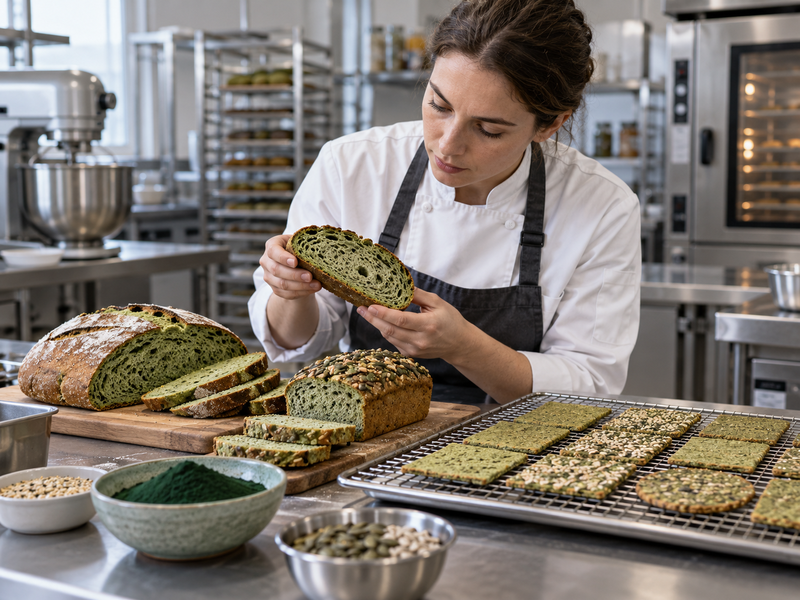
The spirulina bread sensory study adds another check relevant to this decision, but the buyer must verify the offered grade and process.
Put the buyer, supplier technical contact, formulation lead, quality reviewer and regulatory reviewer on one document register. Record the exact grade, version date and any change notice obligation. If a proposed substitution changes carriers, preservatives, extraction method or source, reopen the relevant approval steps before material goes to the line.
Buyer action: Report medians or distributions, not only an average that hides strong negative reactions.
Include substitutes and second-source proposals in the change-control rule. A different trade name can have the same technical function but a different composition or production history.
8. How does masking change cost and claims?
Count the complete recipe
Calculate the cost of flavors, sweeteners, stabilizers and extra process steps per serving. Review ingredient declaration and any allergen or organic implications. A flavor system that requires a lower spirulina dose may weaken a proposed nutrition claim; verify the finished serving before using it in copy.
Normalize every offer to delivered usable output, including preparation labor, line loss, rejected material and storage. Request written assumptions for minimum order, lead time, freight basis, pack size and remaining shelf life at receipt. A lower invoice price is useful only if the accepted finished-product yield and schedule also work.
Buyer action: Compare accepted sensory performance at the same commercial serving, not at arbitrary lab concentrations.
A masking cost calculation should include the ingredients needed to make the spirulina formula acceptable, not just the powder. If a flavor system adds sugar or a strong botanical, the product team may also need to change nutrition labeling or marketing language. Compare complete recipes at the same serving size and sensory score. This prevents a supposedly inexpensive powder from becoming costly once all corrections are priced.
Report the economics as a range when consumption, line loss or demand is uncertain. That is more useful than a single precise-looking number built from assumptions.
| Cost item | Record | Decision |
|---|---|---|
| Flavor | Cost per serving | Benefit |
| Sweetener | Dose and label | Tradeoff |
| Powder | Accepted dose | Claim review |
9. What should a production pilot prove?
Validate taste at scale
Pilot with the actual mixing order, dwell times, thermal steps and package. Sample across the run for powder distribution and flavor consistency. Evaluate both fresh and stored product because an aroma can emerge after storage or flavors can fade. Log any color or texture tradeoff.
Run at least one pilot or production-scale lot with the proposed addition point and normal equipment. Sample early, middle and late output, then review uniformity and retained samples after a defined storage interval. Record line stoppages and cleaning work; these are part of qualification, even when color or flavor meets its target.
Buyer action: Use a locked sensory protocol and retain samples so later batches can be compared objectively.
For a related supplier-side workflow, see the SpirulinaCN guide to spirulina powder frozen dessert pilot trials. Use its questions alongside this product-specific acceptance plan.
A scale trial is also a training test. Ask operators to record whether the written instructions were usable and which steps required improvised decisions.
10. When is masking good enough?
Approve with a stop rule
Approve the formula when its sensory profile fits the target audience, the spirulina lot meets safety controls and the complete recipe meets cost and label requirements. A formula that hides odor only in one batch needs a wider grade and lot check. Keep a rejection threshold for new incoming material.
Close the decision with a signed specification, approved sample reference, conditional market review, change-control contact and first-order acceptance plan. Name the measurements that would trigger a hold, further trial or supplier discussion. A clear no-go outcome is valuable: it prevents an attractive sample from becoming an uncontrolled routine purchase.
Buyer action: Document the approved powder grade, dose, flavor system and panel reference; rerun targeted trials after any meaningful supplier change.
The approved file should be understandable to a colleague who did not attend the trial. Include the rationale for rejection as well as the chosen option.
| Release gate | Evidence | Owner |
|---|---|---|
| Sensory | Blind score | Product lead |
| Safety | Lot file | Quality |
| Commercial | Cost and label | Buyer |
Frequently asked questions
Can sugar alone mask spirulina?
It may soften bitterness but may not solve aroma or aftertaste; test the complete sensory profile.
Is low-odor powder always better?
Only if it passes the same grade, safety, supply and formula checks at the intended dose.
Should panelists know the supplier?
No. Blind codes help reduce expectation effects.
Can process heating improve taste?
It can change odor, sometimes adversely. Evaluate before and after the actual process.
When is reducing the dose the right answer?
When masking costs or residual notes remain unacceptable at the proposed serving.
Conclusion
A good masking plan diagnoses a specific note, compares lots blindly and tests the real matrix over shelf life. The accepted formula should taste right because the whole system works, not because a bench sample was heavily flavored.