
A spirulina powder color and odor specification defines how a buyer accepts the appearance and aroma of whole dried biomass. “Dark green” and “typical odor” sound clear until two people disagree over the same shipment.
The solution is a retained reference, a repeatable viewing and smelling method, and measurable limits where instruments add value. Research on Spirulina odor compounds found processing-stage differences, while ISO/CIE colorimetry provides a defined coordinate system. Neither replaces a product-specific acceptance decision.
Contents: 1 · 2 · 3 · 4 · 5 · 6 · 7 · 8 · 9 · 10
1. Why are color and odor part of a buying specification?
Connect sensory variation to customer experience
Whole spirulina powder brings visible green color and a characteristic aroma to many finished foods. A change may alter a smoothie, bar or supplement experience even when protein and contaminant results stay within limits. Buyers need a way to distinguish normal biological variation from an unacceptable shift.
Start with the use case: a faint change in a dark chocolate bar may be harmless, while the same change could be obvious in a pale drink mix.
Define whether the specification governs dry powder only or also performance at an agreed inclusion level. A dry reference sample can anchor receiving inspection, but the application test shows what customers will notice. Ask the supplier for several lots to establish normal variation before writing narrow limits.
The FAO review treats processing and quality as connected; a one-word sensory line cannot capture that connection. A good specification creates a fair decision for both seller and buyer when a future shipment looks different.
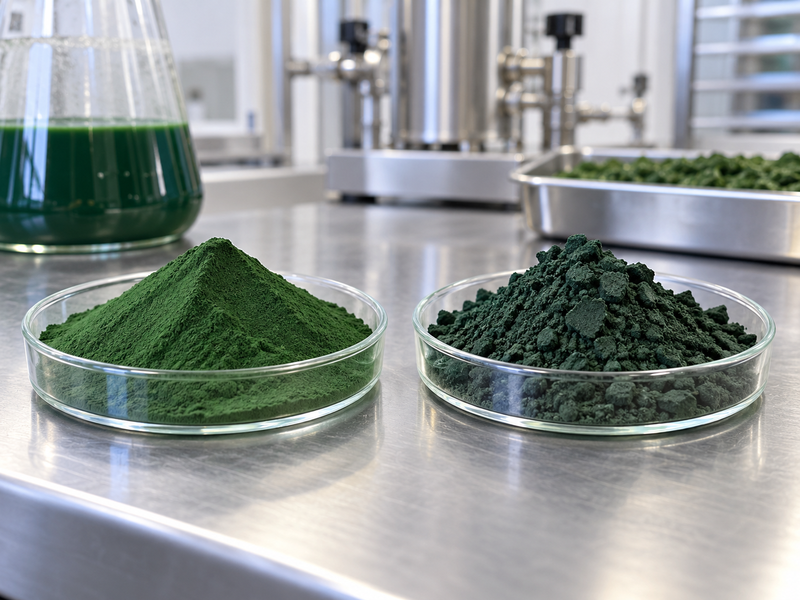
| Attribute | Weak description | Better control |
|---|---|---|
| Color | Green | Reference and method |
| Odor | Typical | Named descriptors and reject notes |
| Uniformity | Good | No visible streaks or foreign specks |
| Application | Suitable | Trial at agreed dose |
2. What causes normal green color differences?
Separate growth, processing and age
Strain, light, nutrients, harvest timing, drying and storage can affect the pigment mixture and perceived shade. A 2025 primary study of spray-dried Spirulina formulations measured color changes under its experimental conditions. A heat-pump drying study also examined color parameters. These results show that process history matters, but they do not establish a universal shade for every supplier.
Ask for the process and age of the proposed lot before interpreting a difference. Compare samples from the same product form and pack type. A fine powder can reflect light differently from a flake, so visual darkness alone may change without an identical chemical change.
A useful investigation: review instrument color, moisture, odor and storage records together when a lot deviates. If the supplier changed a dryer or mill, request comparability samples. The buyer’s standard should distinguish an acceptable natural range from changes that disrupt the finished product.
3. How should dry color be viewed consistently?
Fix lighting, container and sample depth
Visual inspection should use a defined light source, neutral background, sample vessel and viewing distance. Compare equal depths of gently leveled powder because a thin layer over white paper can look different from a full cup. Avoid direct sunlight or phone screens as reference tools.
Store the approved sample in suitable packaging and replace it under change control when age affects its color. Make the method teachable: two trained people should reach the same decision on an ordinary borderline lot.
Photographs can document a complaint, but automatic camera exposure and white balance shift color. If photos are used, include a color card, fixed lighting and the same camera setup. Never make a shipment decision from an uncontrolled email photo alone. A visual method can identify foreign flecks, streaks and gross discoloration that an average instrument reading may miss. Use both approaches where the risk warrants it, and record which observation governs release.
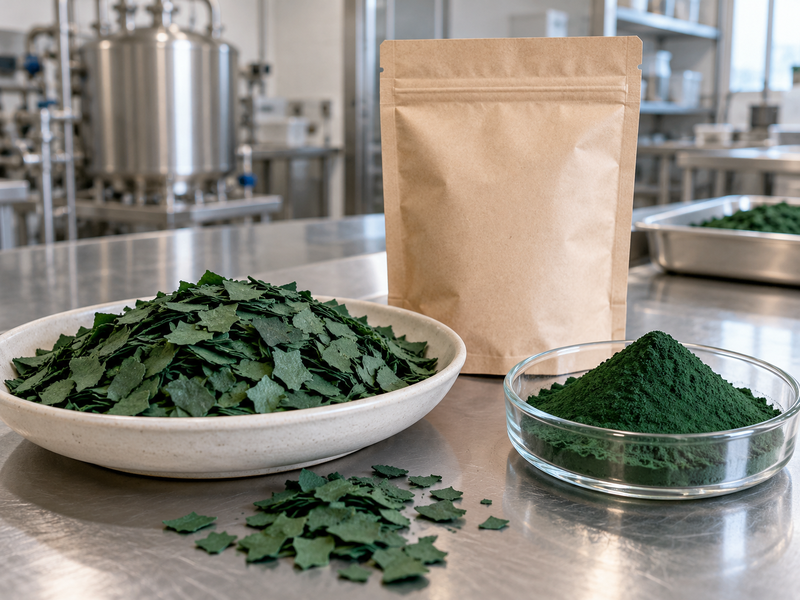
| Viewing factor | Set in procedure | Why it matters |
|---|---|---|
| Light | Type and intensity | Hue perception |
| Vessel | Shape and color | Background effect |
| Sample depth | Defined fill | Apparent darkness |
| Reference | Approved lot and date | Stable comparison |
4. When does instrument color measurement help?
Use coordinates with a reproducible setup
An instrument can report color coordinates such as L, a and b under a defined method. ISO/CIE 11664-4 specifies calculation of CIE Lab coordinates. The supplier still needs to state illuminant, observer setting, aperture, calibration, sample cup, packing procedure and number of readings. Do not accept an orphan number: L* without a method or acceptance range cannot settle a quality dispute.
Build limits from approved lots and finished-product tolerance, not from an arbitrary online chart. Consider both average color and within-sample variation. A drum containing a few brown clumps might average acceptably while failing visual inspection. If buyer and supplier instruments differ, arrange a common reference or independent laboratory comparison.
Use actual ΔE or coordinate limits only after agreement on calculation and relevance; one numerical color difference does not always correspond to the same commercial impact in every product.
5. Which odor descriptions are useful for whole spirulina?
Define both expected notes and defects
A controlled panel can describe expected grassy, earthy or marine notes without promising that every acceptable lot smells identical. Defect language should be more specific: rancid, musty, burnt, chemical or putrid are useful flags that trigger investigation.
A primary sensomics paper identified odor-active compounds across processing stages, supporting the idea that odor reflects more than the organism name. Do not treat that study’s compounds as a routine lot test unless you have a validated reason.
Specify whether inspectors smell dry powder immediately after opening or after a fixed equilibration time. Use clean, identical containers and a defined sample amount. Keep the decision fair: trained assessors should compare a coded candidate with an approved reference, not read the supplier name before smelling. If the formula masks mild notes, test at the target dose.
A powder can smell acceptable dry but become objectionable after hydration or heating. The finished-product trial helps set a realistic receiving limit.
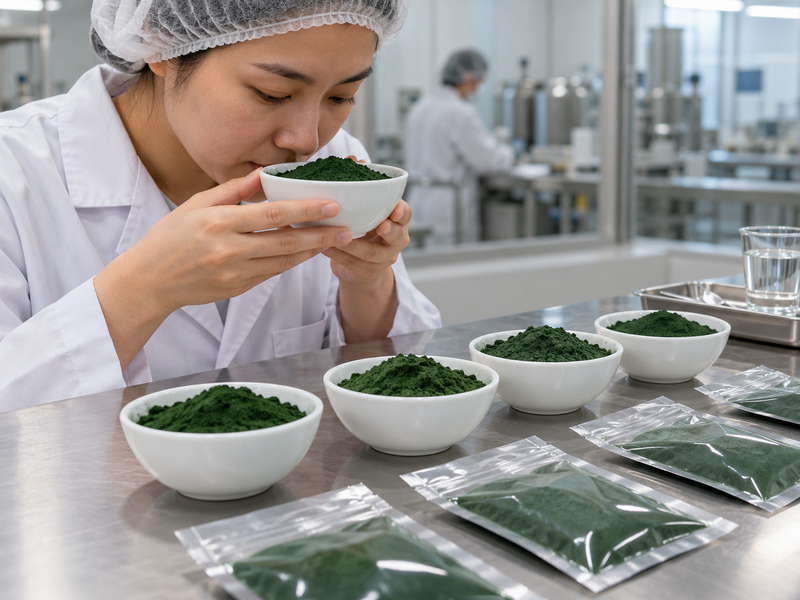
| Odor term | Use in specification | Follow-up |
|---|---|---|
| Expected green note | Reference intensity range | Compare approved sample |
| Musty | Reject or investigate | Check storage and moisture |
| Rancid | Reject or investigate | Review age and pack |
| Chemical | Reject or investigate | Review cleaning and contact |
6. How do drying and storage affect odor?
Keep process and package history with the result
Drying method and cultivation environment can influence volatile profiles. A primary comparison of spray- and freeze-dried Spirulina examined odorants from several growing environments, so the effect cannot be reduced to one universal dryer ranking. Storage introduces further opportunities for change through oxygen, light, moisture ingress and time. Ask for pack material, sealing control and the age of the sample being evaluated.
If a complaint arrives, compare the retained production sample with an unopened customer pack and a current reference. The pattern can locate the cause: only the customer pack changing suggests transport or storage exposure; both retained and customer packs changing suggests shelf-life assumptions need review. This is an inference that requires investigation, not an automatic verdict.
Record exact lot, packaging date and sensory method. A supplier’s claim that a powder is “low odor” needs a stated comparison method and actual lot evidence.
7. What role should a reference sample play?
Preserve a shared physical anchor
Choose a representative approved lot after pilot testing, then seal enough reference material for supplier and buyer under controlled conditions. Label it with lot code, date, storage instructions and review or replacement date. The reference should represent acceptable appearance and aroma, not merely the most attractive one-off sample. Agree on the boundary: note whether a candidate may be slightly lighter or more earthy and still pass.
References age. Color and odor may shift even inside a good pack, so compare retained samples at planned intervals and replace the master by a controlled decision. Keep photographs and instrument readings as supporting records. If an old reference becomes stale, do not silently redefine quality around it.
A new reference should link to an approved commercial lot and a documented application trial. This prevents disputes in which each side holds a different “typical” powder.

| Reference field | Purpose |
|---|---|
| Lot code | Trace to production record |
| Approval date | Show version in force |
| Storage condition | Reduce drift |
| Replacement rule | Prevent stale comparison |
8. How should a receiving team handle a borderline lot?
Hold, retest and document disposition
Do not release a questionable lot from a quick glance or one person’s impression. Put it on hold, check seal condition and compare representative packages with the reference under the agreed method. If instrument readings and visual judgment disagree, use the dispute procedure in the specification. Review moisture, water activity, age and transport exposure. A structured response: record what differed, how widely it appears and whether a finished-product trial remains acceptable.
The decision may be release, restricted use, rework under control or rejection. Each route needs buyer approval if the purchase specification changes. If a lot smells musty or chemical, a passing color value cannot clear it. Also, a mild natural color shift may be acceptable after documented assessment.
Keep supplier and buyer retains in sealed condition for joint review. A fast, evidence-based disposition avoids both needless waste and uncontrolled use of a questionable ingredient.
For an unresolved sensory dispute, prepare coded duplicates of the questioned lot and the approved reference in identical containers. Have trained assessors record descriptors and intensity independently before they see prior scores or supplier identity.
Compare disagreement within the same sample with disagreement between lots; wide variation within a duplicate pair suggests the method or sample preparation needs work. Check more than one sealed package, because a damaged seal can create an isolated defect.
If the result remains borderline, make a small batch of the intended food under fixed conditions and evaluate it against the approved product. Record the panel decision, instrument values, pack condition and commercial disposition together. This leaves a clear audit trail and avoids silently changing the reference whenever an awkward lot arrives.
9. How do color and odor results enter an application trial?
Test at the dose customers experience
Make the intended product with a defined inclusion level, mixing order and process. Compare the candidate lot with the approved reference and a blank formula if possible. Record color immediately and after storage, then assess odor or flavor at normal serving temperature.
The surprising result can matter: a darker powder may create an unwanted olive shade in a pale matrix, while a lighter one may give the desired look. Dry powder appearance alone cannot settle the decision.
For heated foods, evaluate after the real heat step. For powders sold for reconstitution, test the consumer preparation instructions. A primary bread study used sensory and instrumental observations in a specific food application, illustrating why matrix and process matter. Its findings should not be copied as limits for another recipe. Use your own trial to choose tolerance, then check whether the supplier’s multi-lot range can meet it.

| Application check | Record |
|---|---|
| Dose | Percentage and basis |
| Process | Heat, mixing and pH |
| Color | Lighting and time point |
| Sensory | Panel and serving condition |
10. When is a color and odor specification ready?
Turn subjective words into release decisions
It is ready when buyer and supplier share a current reference, defined test methods, realistic limits and a dispute route. Review several production lots, including natural variation, and verify that all acceptable candidates work in the intended formula. Link each lot’s result to its COA or inspection record. Keep one principle: color and odor are quality attributes, not stand-ins for identity or contaminant tests.
Write change notification for drying, milling, packaging or raw culture changes that may shift sensory profile. Retain a sample from each commercial shipment when justified by risk. Site descriptions at Spirulina CN can introduce an offered grade, but current specification, batch documents and a buyer’s trial must support any claim about the shipment. Clear limits save production time and give both parties a fair basis for resolving variation.
FAQ
Q1: Is darker green always better? No. The preferred shade depends on the formula and approved reference.
Q2: Can a colorimeter replace visual inspection? No. It can quantify average color, while visual review catches specks and streaks.
Q3: Is an earthy note automatically a defect? Not necessarily. Define acceptable character and intensity for the grade.
Q4: How often should a reference sample change? Set a review date based on its stability and replace it through controlled approval.
Q5: What if an odor is unclear? Hold the lot, use trained comparison and investigate pack, age and analytical results before disposition.
Agree on a sample both sides can recognize
Build the specification from real lots and finished-product trials. Fix viewing and smelling methods, retain a shared reference and write a clear hold procedure. Then color and odor checks can protect the brand without turning normal variation into an endless argument.