
An approved spirulina sample can perform well in a bench formula and still fail during the first factory run. Buyers need a controlled handoff from supplier review through first-lot release. This spirulina powder supplier onboarding plan ties documents, physical samples, production settings and decision owners together. The FDA supply-chain guidance illustrates why supplier verification must relate to actual hazards and receiving controls where US rules apply.
Contents
- What should onboarding accomplish?
- Who owns each approval decision?
- Which documents belong in the handoff packet?
- How should a commercial lot match the approved sample?
- Which specifications need methods and decision limits?
- How should receiving and quarantine work?
- What must production know before the first run?
- How are changes and deviations escalated?
- What evidence closes the first production lot?
- When is the supplier ready for routine orders?
1. What should spirulina powder supplier onboarding accomplish?
Define the handoff as a controlled process
Supplier approval answers whether a source may be used. Onboarding asks whether a particular powder, shipment and plant process can work together repeatedly. Start with intended finished products, the markets where they will be sold, expected annual volume and the production line that will receive powder. A beverage team may care about wetting and sediment; a tablet line may care about flow and compression. Both need identity, safety and traceability. The handoff test: take one proposed commercial lot and follow it from supplier specification through receiving, formulation, processing and finished-product release. Each step needs an owner and a recorded acceptance decision.
Treat food safety review as a separate gate from desirable appearance or handling properties. The Codex General Principles of Food Hygiene call for controls, verification and records suited to the operation. A green powder that meets sensory targets still needs the receiving controls identified by the manufacturer’s hazard analysis. Write measurable exit criteria before purchase orders create schedule pressure. Record open items with a date and accountable person; silence should never count as approval.

2. Who owns each approval decision?
Assign authority before material arrives
Procurement can negotiate terms and confirm capacity, but it should not silently waive a microbiological condition. Quality decides whether a receiving lot meets agreed specifications. Product development decides whether color, flavor and dispersion fit the formula. Operations determines whether packaging and feeding suit the line. Regulatory staff check intended use, market-specific claims and labeling. Put those roles in a short approval matrix and give one person responsibility for the final release status in the purchasing system. A practical scenario: if the first shipment reaches the dock before an agreed test result, warehouse staff can receive it into quarantine while quality decides whether testing or rejection applies.
Specify who may approve conditional trials. Such approval should identify quantity, segregated storage, permitted line, extra sampling and disposal if the trial fails. It should never be confused with routine unrestricted release. If the manufacturer uses a co-packer, include its plant quality lead in the handoff because powder behavior will be judged on that equipment. A supplier contact who can retrieve original batch records, not just a sales quotation, shortens investigations. Record deputies for absences and escalation times for production-threatening issues.
| Decision | Accountable owner | Evidence before sign-off |
|---|---|---|
| Supplier status | Quality and procurement | Approved source record |
| Formula suitability | Product development | Comparative trial report |
| Receiving release | Quality | Lot results and identity check |
| Line readiness | Operations | Trial instruction and operator briefing |
3. Which documents belong in the handoff packet?
Request records that the plant can actually use
The packet should contain the current product specification, test methods or method references, a representative certificate of analysis, ingredient composition, manufacturing site identity, packaging details, storage advice and lot coding logic. Ask for the supplier’s change-notification route and the contact for traceability exercises. Depending on the receiving company’s hazard analysis and destination market, request relevant microbial, contaminant and allergen information. Documents must carry version dates and approval status. Read one page closely: if “green color” appears without a measurement method, standard sample or judgment conditions, two teams may approve different shades.
Check whether a certificate reports the actual production lot rather than generic brochure data. Compare its analytes and units against the signed specification; a result cannot be evaluated when methods or units differ. For deeper checks, the supplier’s certificate of analysis can help buyers build a line-by-line review. Request a sample label that links directly to source batch, production date and retained reference. Commercial terms should identify who pays for an investigation or replacement, but technical release criteria belong in controlled quality documents where people on the factory floor can find them.

4. How should a commercial lot match the approved sample?
Compare like with like under recorded conditions
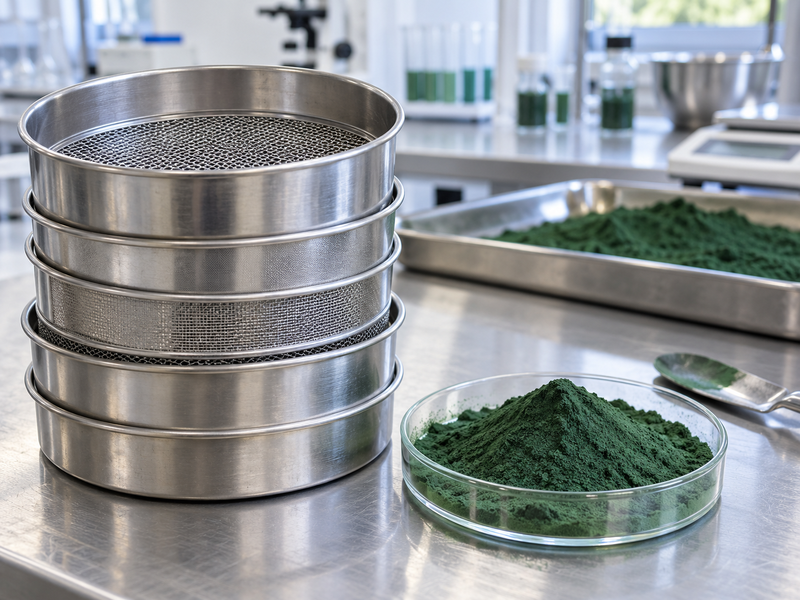
Keep a sealed retained sample of the powder that passed application tests. Label its lot, opening date, storage conditions and remaining quantity. At first delivery, take a representative sample under a defined plan and compare appearance, odor, particle handling and specified lab results. Use the same instrument settings, container and lighting for color checks; photographs alone vary too much. Also run the same small formulation or predispersion test that qualified the original sample. Here is the hidden gap: a supplier may replace a development batch with a different production lot that meets broad certificate limits but wets more slowly or changes flavor.
Document both similarity and meaningful differences. A discrepancy may require a controlled trial rather than outright rejection if food safety conditions remain satisfied; let the agreement define that path. Keep shipping and storage history visible, since transit moisture or a damaged liner can alter powder condition after production. When comparing data, include measurement variation. A tiny numerical difference near instrument repeatability is less informative than a consistent change seen in duplicate application tests. Save aliquots from the received lot for later root-cause work.
| Comparison point | Controlled method | Possible action |
|---|---|---|
| Color | Same vessel and light or colorimeter | Review application impact |
| Odor | Blind paired sample | Sensory investigation |
| Wetting | Fixed liquid, dose and mixing | Adjust trial, then approve or reject |
| Lot tests | Agreed method and units | Release, retest or hold |
5. Which specifications need methods and decision limits?
Build a release sheet from the product’s use
Identity, microbiological and contaminant criteria should follow the manufacturer’s risk assessment and applicable destination-market requirements. Moisture or water activity, particle size, color and sensory attributes may also control performance. List each attribute with sampling method, analytical method, units, limit or agreed reference, test frequency and decision owner. The question behind every number: will a shift affect safety, labeling, dosing or the finished product? Do not copy a generic spirulina limit merely because another supplier printed it. A beverage plant and a dry blend plant may need different performance windows even when both buy food-grade powder.
Where results sit near a boundary, specify whether the team may retest, how many units it may sample and who assesses measurement uncertainty. Do not average away an individual safety failure without a justified procedure. Review microbiological specification design alongside the site’s heavy-metal testing guide when setting a supplier agreement. Those resources inform questions; the buying plant still needs to establish its own controls for its product and market. Attach a finished-product implication to each critical parameter so operators understand why it is checked.
6. How should receiving and quarantine work?
Design the dock check before the truck arrives
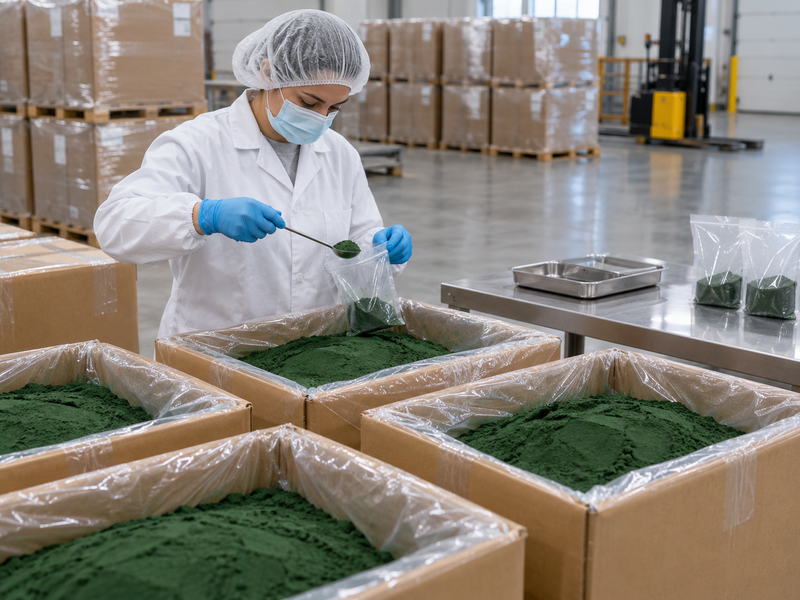
Receiving staff need a purchase order, approved supplier and item code, expected package count, pallet condition criteria, lot identity and required paperwork. Check external damage, moisture exposure, liner integrity and seal condition before unloading into storage. Record discrepancies at receipt and photograph damage with shipment identity. Put incoming stock into a blocked location or electronic status until quality review finishes. Follow the physical bags: an electronic hold is weak if a fork truck can place them beside released materials with no visible distinction.
Sampling must avoid cross-contact and should use clean equipment suitable for the package format. Trace sample containers back to specific bags or composite plan. Quality then reconciles certificate values, required confirmatory tests and exceptions. If an urgent plant trial uses held stock, issue a controlled trial release that specifies quantity and prevents sale of finished product until final disposition. The Codex hygiene guidance supports documented monitoring and corrective action as general practice; exact receiving controls must reflect the site’s hazard analysis.
| Receiving check | Record | Hold trigger example |
|---|---|---|
| Identity | PO, item and lot scan | Unrecognized lot code |
| Packaging | Bag and liner inspection | Torn moisture barrier |
| Documents | Current lot certificate | Missing required result |
| Sampling | Bag IDs and sample plan | Untraceable sample |
7. What must production know before the first run?
Convert the approved sample into line instructions
Give operators the approved ingredient code, target addition rate, tolerances established by trial, order of addition, sieve or premix requirements and cleaning procedure. State whether powder enters through a manual station, vacuum transfer or feeder. A bench beaker does not reveal dusting, hopper bridging or retained material in a transfer line. Run a short preflight: confirm the lot is released, the scale is checked, labels match the formula, and a retained reference sits with quality. Reserve enough material for startup loss and finished-product testing without silently changing the nominal dose.
Observe the first run at the points where powder can disappear or concentrate: bag emptying, screens, corners of the blender and feed-line bends. Log actual charged mass, spills, filter residue and any rework. Capture finished product from startup, steady operation and end of run. A visually even tank may still deliver variable fill-to-fill solids. Design samples around the line’s flow pattern. Escalate any change in ingredient lot or addition sequence through the same owner who approved the trial; the original development result may no longer apply.

8. How are changes and deviations escalated?
Separate routine variation from a material change
Ask the supplier to notify the buyer before changes in manufacturing site, drying method, particle-size process, packaging construction or analytical method. Define which changes require documentation review, fresh samples or a new production trial. A new bag supplier may affect moisture protection; a new mill screen may alter dispersion. Make the decision traceable: record the change, affected lots, technical assessment, approved action and effective date. Procurement should not learn about a change only when invoice descriptions shift.
When a lot fails, quarantine it and identify any already-consumed material through batch genealogy. Investigate the specific observation, not a broad label such as “quality issue.” Compare supplier and buyer methods before declaring a test disagreement. Request corrective action with evidence of root cause and effectiveness check when warranted. The site’s supplier corrective-action article gives a useful companion checklist. Release of an affected lot requires the buyer’s documented decision under its food safety plan; a supplier promise alone does not close a deviation.
| Change or deviation | Immediate owner | Needed evidence |
|---|---|---|
| Packaging revision | Supplier and buyer quality | Barrier comparison and trial need |
| New production site | Buyer quality | Site review and lot qualification |
| Failed color check | Product development | Retest and finished-product effect |
| Missing certificate result | Buyer quality | Verified result before release |
9. What evidence closes the first production lot?
Reconcile material, process and finished output
The closeout report should identify supplier lot, purchase order, receiving status, sample comparison, production batch, charged quantity and finished units. Include yield, scrap, rework and deviations. Compare startup and steady-state product for color and sensory consistency; inspect any application-specific concern such as sediment or blending uniformity. A clean closeout answers two questions: did this batch meet requirements, and can the team repeat the result with another lot? One attractive photograph does not answer either. Record measurements and the conditions under which they were made.
Review the first commercial lot against the bench-approved sample and a previous control if available. Explain any changed dose or process step. If the team makes a last-minute formula adjustment, revise the recipe and labeling review before routine sale. Have quality, operations and product development sign off their distinct findings. The FAO validation and verification guidance distinguishes evidence that a control can work from ongoing checks that it continues to work. Use that distinction when designing routine checks after the first run.
10. When is the supplier ready for routine orders?
Close gaps before increasing volume
Routine status should follow an approved specification, complete document packet, satisfactory first-lot comparison, successful plant trial and agreed change-notification process. Close deviations or record justified controls with owners and review dates. Check the supplier’s ability to deliver the planned quantity without shifting equipment or site outside the approved scope. The next-order test: could a new buyer, warehouse colleague and line operator repeat the process using the controlled records? If they must rely on one person’s memory, onboarding remains incomplete.
Set a monitoring rhythm proportional to risk and supplier history: certificate review every lot, confirmatory tests where the hazard analysis calls for them, and periodic application checks against a retained standard. Track complaint rate, delivery accuracy and deviation closure separately. A low price does not compensate for an unreliable lot release path. Revisit approval after meaningful changes or repeated variation. Share a concise scorecard with the supplier so corrective work targets measurable gaps rather than vague requests for “better quality.”
| Readiness gate | Minimum record | Next action if open |
|---|---|---|
| Specification | Signed revision | Resolve method or limit |
| First-lot match | Retained-sample comparison | Controlled re-trial |
| Plant run | Yield and quality report | Adjust process and repeat |
| Supplier change control | Named contacts and triggers | Add agreement clause |
FAQ
Q1: Is a certificate of analysis enough for onboarding? No. It supports lot review but cannot demonstrate line handling, sensory fit or shipment integrity.
Q2: Can a first shipment be used before all tests return? Only under a documented site decision that controls material and any finished product pending disposition.
Q3: Who keeps the approved sample? The buyer should retain a sealed, traceable reference under defined storage conditions.
Q4: Should every supplier change trigger a plant trial? Assess technical impact. Site, process or material changes may justify one; minor document edits may not.
Q5: What closes the project? A signed first-lot review and routine monitoring plan, with no unowned open items.
Next step
Build one shared handoff file for quality, operations, procurement and development. Use the first commercial lot to test its completeness, then place only approved versions into routine purchasing and production systems. A reliable first run gives customers the same product your team approved on the bench.