
A failed chlorella lot can interrupt production while both companies argue over a certificate, sample or deadline. Chlorella supplier corrective action gives them a shared sequence: contain affected material, establish a cause, correct the process and test whether the fix lasts. Buyers should request evidence for each stage rather than a short apology letter. The FDA dietary-supplement CGMP guide explains material review and disposition duties for covered supplement operations; food ingredient arrangements may follow a different applicable framework.
Contents
- When should a supplier corrective action start?
- What should be contained immediately?
- How should the failed result be verified?
- How can the true exposure scope be found?
- What makes a root cause credible?
- How should actions be chosen and owned?
- What evidence proves the change works?
- How should buyer and supplier communicate?
- When may a held lot be released?
- How can future supplier performance be reviewed?
1. When should a supplier corrective action start?
Trigger a formal record when risk or recurrence warrants it
A failed identity, contaminant, microbiological or physical-quality result can start the process. So can a damaged pouch, repeated delivery of the wrong grade or an unexplained production deviation. Not every clerical correction needs the same investigation depth. The trigger rule should consider product risk, whether material has been used, prior events and customer impact. Define who opens the record and who may close it. Purchasing can raise the issue, but quality should decide technical disposition.
Name the event precisely. “Bad chlorella” gives the supplier no useful target. State lot code, specification version, method, actual result, sample condition and date. Preserve evidence before retesting or returning goods. A brand using powder in a dietary supplement should check applicable 21 CFR part 111 duties; a food manufacturer should review its applicable part 117 controls. These frameworks support documented quality decisions, while the exact response still depends on product, hazard and contract. Do not claim that every deviation automatically requires the same regulatory CAPA form.
2. What should be contained immediately?
Secure material before debating cause
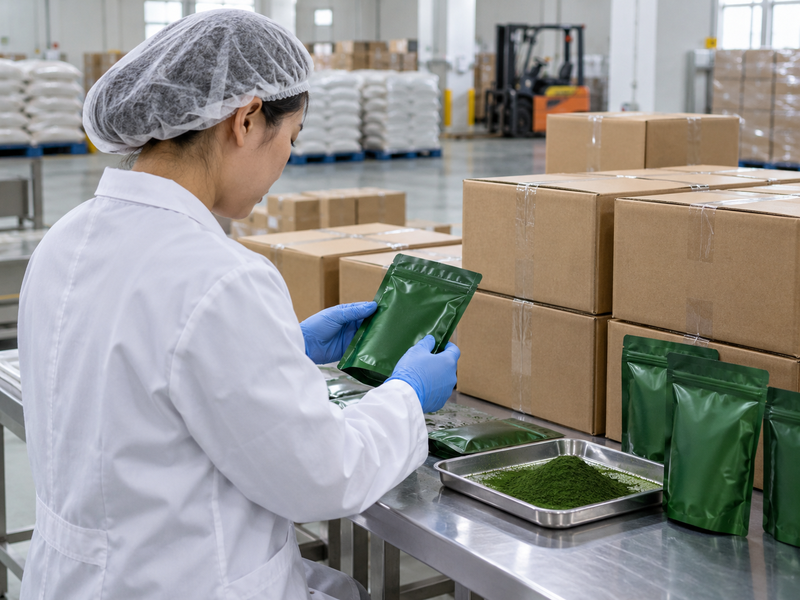
Place the suspect lot under a clear physical or electronic hold at the supplier and buyer sites. Identify raw powder, work in process, finished capsules or tablets, retained samples and shipments that could share the exposure. Stop consumption of the material while quality reviews risk. If a buyer has already blended the lot, hold those downstream batches too. Preserve original packaging, seals and transport records because they may explain a failed incoming result. Record quantities and locations at the moment of containment.
The clock matters. A hold entered after the next shift has begun may leave more material exposed. Assign one contact at each company and send a concise initial notice with lot, problem, current stock and known shipments. Avoid speculating about root cause in that notice. For U.S. dietary supplements, 21 CFR 111.113 identifies circumstances requiring quality-control material review and disposition. Where a covered human-food preventive control fails, 21 CFR 117.150 addresses affected-food evaluation. The supplier’s quality team should map these obligations to the actual product and facility.
| Material location | Immediate status | Record to capture |
|---|---|---|
| Supplier warehouse | Quarantine | Pallets and bag count |
| Buyer receiving | Stop use | Receipt and sample IDs |
| Work in process | Hold linked batches | Blend or press records |
| Shipped stock | Trace and assess | Customers and dispatch |
3. How should the failed result be verified?
Check method and sample identity without erasing failure
Confirm the product specification, test method, laboratory status, chain of custody and sample condition. If a buyer reports a high microbial count, review when the pouch was opened, how the sample was collected and whether both labs used comparable methods. For foreign matter, preserve the actual object and pack. If it is a nutrient or moisture result, compare units and calculation basis before declaring a conflict. A data transcription mistake can happen, but it must be documented with the original result retained.
A favorable retest is information, not a verdict. Decide in advance how retests are authorized and interpreted. One good scoop may coexist with a local pocket of contamination or uneven blending. Review original sampling maps, individual values and remaining retains. 21 CFR 111.75 describes determining whether dietary-supplement specifications are met. The key buyer question is whether the investigation explains the discrepancy under the applicable method, not whether enough repeats eventually produced a passing number. Keep the lot held until quality decides otherwise.

4. How can the true exposure scope be found?
Trace shared process conditions, not only a printed lot code
List all lots made with the same culture, dryer run, mill, packaging film, cleaning cycle or supplier ingredient as the failed material. Compare production times and equipment histories. A failure caused by a torn screen can affect product since the last intact inspection, even if several lot codes were assigned. A failure caused by a mislabeled shipment may span only a labeling interval. Use records to narrow or widen the hold, then reconcile quantities through production, storage and dispatch.
Follow the material both ways. Trace upstream to source and process inputs, then downstream into customer batches and shipments. Our chlorella lot traceability guide sets out the basic chain. Mark each related lot as confirmed affected, plausibly exposed or ruled out with a reason. If records are missing, do not assume the unrecorded stock is safe. The buyer should receive a clear exposure map and update when new evidence changes it. A supplier that only says “one batch affected” without showing shared-line checks has not fully answered the question.
| Shared factor | Scope question | Evidence |
|---|---|---|
| Dryer or mill | Which lots passed since last check? | Run and inspection logs |
| Raw source | Which batches used the material? | Ingredient issue records |
| Package roll | Which bags were sealed with it? | Packing times |
| Shipment | Which buyers received stock? | Dispatch trace |
5. What makes a root cause credible?
Link an observed mechanism to the failure
A cause statement should explain how a specific process condition produced the observed defect and why existing controls missed it. “Operator error” or “supplier issue” usually stops short. For a high-moisture powder, compare dryer settings, feed solids, hold times and package integrity. When a metal fragment appears, match its material and shape to a worn component and inspect the component itself. For a wrong grade, trace purchasing, labeling and warehouse selection steps. Use photos, trend records, interviews and controlled trials as appropriate.
Test competing explanations. Suppose a buyer finds caked powder. Humid storage, wet powder at pack-off and a leaking pouch can all contribute. Check retained samples, water-activity history, seal tests and transport conditions before selecting one story. Our chlorella caking guide covers the relevant material behavior. A credible root cause also identifies a detection gap. If a broken screen caused metal contamination, why did the pre-start or end check miss the damage? Addressing only the broken part leaves the control gap in place.

6. How should actions be chosen and owned?
Separate correction from prevention of recurrence
Correction handles the immediate problem: isolate product, repair a machine, replace a label or rework material where allowed. Corrective action changes the system that let the problem happen or escape detection. For example, replacing a torn sieve is a correction; redesigning inspection access and adding a check tied to machine wear may prevent recurrence. Each action needs an owner, deadline, evidence and approval. Avoid filling a CAPA with training alone when the process still invites the same error.
Make the action testable. “Improve sealing” is vague; “qualify a revised fill-head timing and check top seals after each roll change” can be verified. Evaluate whether a change affects other quality attributes. A different dryer setting could alter color or nutrients; a new pouch film could alter shelf life. Use formal change control for such actions. The FDA small-entity supplement guide summarizes requirements for quality review and corrective action plans under part 111. The buyer may request an action summary while respecting confidential process details.
| Failure mechanism | Immediate correction | System action |
|---|---|---|
| Torn screen | Replace and hold stock | Improve wear checks |
| Wrong label | Quarantine cartons | Add line-clearance verification |
| Wet powder | Segregate lot | Qualify dryer response to feed variation |
| Leaky pouch | Hold affected packs | Rework dust control and seal checks |
7. What evidence proves the change works?
Set an effectiveness check before closure
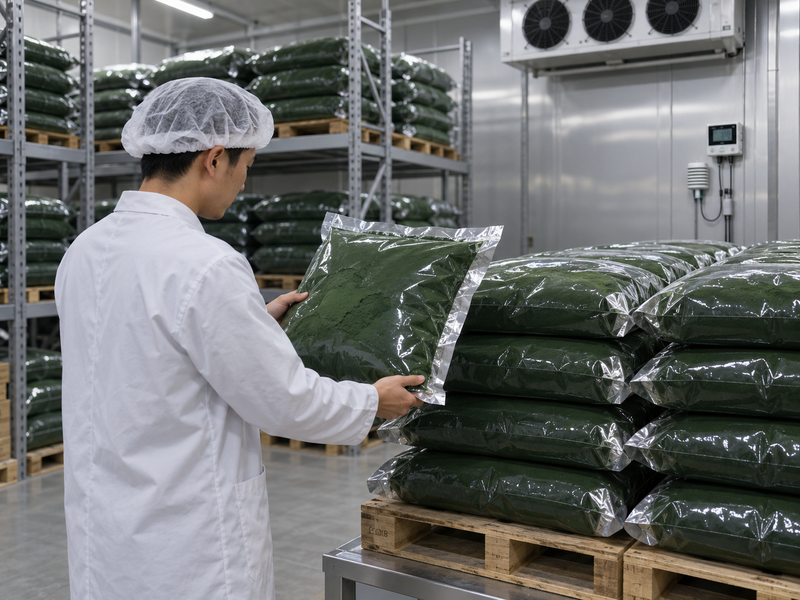
Choose a measure tied directly to the cause. After a screen failure, inspect the new component over several production cycles and review captured material. For a moisture excursion, compare dryer trends and finished results on representative lots under approved operating conditions. After a labeling mix-up, challenge the revised line-clearance process during a real changeover. The check should have a defined observation period, acceptance rule and person independent enough to review results honestly.
One passing lot may be insufficient. A rare problem may need repeated opportunities before confidence improves. Decide the number of cycles from risk and process frequency, then document the reasoning. Keep any failures found during effectiveness review and reopen the action if necessary. In a buyer relationship, share a summary with dates, lot IDs and results. A supplier promise that “staff were retrained” proves only that training occurred. It does not show that a faulty sealer, confusing label rack or weak inspection point stopped causing failures.
8. How should buyer and supplier communicate?
Agree on facts, milestones and decision owners
Set an initial notice deadline, scheduled updates and a final report format in the quality agreement. Early messages should state known facts, material on hold, immediate risk decision and information still being gathered. Later updates can refine scope and cause. Mark hypotheses as hypotheses. Keep a single version of the lot list so procurement, warehouse and customer service do not act on different numbers. If a buyer has used the ingredient, coordinate downstream evaluation with its own quality team.
Use a shared evidence list. Request the failed result, test method, retained sample status, production history, exposure map, disposition and action plan. Ask the supplier to explain any redactions that prevent technical review. Keep commercial negotiation separate from safety decisions; a credit note does not release a quarantined lot. When the affected material is a supplement component, the FDA CGMP guide emphasizes documented quality-control decisions. Buyers should similarly record who accepted or rejected the supplier’s technical answer.
| Update stage | Minimum message | Buyer response |
|---|---|---|
| Initial | Lot, defect, stock hold | Stop use and trace |
| Scope | Related lots and shipments | Expand or narrow hold |
| Cause | Evidence and mechanism | Review adequacy |
| Closure | Actions and effectiveness | Approve or request more work |
9. When may a held lot be released?
Require a documented product-specific disposition
Release depends on the actual defect and evidence. A clerical certificate correction may be resolvable with source records. A failed identity test, confirmed hard fragment or unresolved microbial result may demand rejection or other formal action. Reprocessing is not automatically permitted, and a test result after rework does not excuse weak traceability. Quality should document the method, result, safety review and approval for every affected lot. Buyer acceptance may require its own review under the supply agreement.
Do not release by deadline. Separate the decision about current material from the decision that future production can resume. A repaired machine might be ready while earlier bags remain unsafe or unaccounted for. 21 CFR 111.113 requires documented material review and disposition for specified supplement deviations. For covered food preventive-control failures, 21 CFR 117.150 includes affected-food evaluation. Use the applicable rule and contract, then record the decision on the lot. A passing retest alone should not silently release inventory.

10. How can future supplier performance be reviewed?
Turn completed cases into sourcing evidence
Review repeat defects by type, cause, lot, plant and time. Measure whether the supplier notified promptly, contained the right material, found a plausible mechanism and completed effectiveness checks. A low complaint count can hide weak detection or under-reporting, so read case quality alongside rates. Audit recurrence after a change rather than accepting closure in a database as proof. Update the supplier risk profile when defects recur or a site changes equipment, ownership or source material.
Use the next purchase order wisely. A provisional approval can require enhanced receiving checks and evidence from the next production cycles. Relax those checks only after performance supports it. Our chlorella supplier-change guide helps buyers manage major process or source changes alongside CAPA. If a supplier repeatedly cannot explain lot scope, consider a qualified alternate source rather than forcing purchasing to absorb the uncertainty. A good corrective-action system should make future orders more predictable and give both parties a factual way to address new problems.
| Review signal | Strong evidence | Concern |
|---|---|---|
| Response | Timely hold and notice | Stock keeps moving |
| Scope | Traceable affected lots | Unsupported narrow claim |
| Cause | Observed mechanism | Blame without evidence |
| Effectiveness | Passing repeated checks | Training record only |
FAQ
Q1. Is a complaint the same as a CAPA? A complaint can trigger CAPA when risk or recurrence calls for deeper work.
Q2. Can a passing retest release a failed lot? Not by itself. Quality must resolve the original failure and exposure.
Q3. Who owns disposition? The responsible quality unit, with buyer review where the agreement requires it.
Q4. What makes a root cause useful? An evidence-based mechanism that also explains why controls missed the defect.
Q5. When can CAPA close? After actions are implemented and their effectiveness is checked against preset criteria.
Chlorella supplier corrective action should produce a defensible lot decision and a verified change in the process. Ask for the containment list, cause evidence and effectiveness results before closing a supplier case. That discipline helps protect your production schedule while giving the supplier a clear route back to dependable supply.