
Spirulina packaging seal integrity testing checks whether a filled pouch or liner remains closed through storage and distribution. Bulk buyers may receive good powder in a bag with a weak corner seal, trapped powder in the seam or a tiny channel that admits moisture. A practical program combines visual inspection, a justified leak method and process records tied to each packing lot. ASTM F88/F88M describes seal-strength measurement; its scope alone does not prove a package has no leak.
Contents
- What can fail in a spirulina powder seal?
- How should the package format be specified?
- What does visual inspection catch?
- What does seal-strength testing measure?
- Which leak test fits a powder pouch?
- How is the sealing process window set?
- Where and when should samples be taken?
- How should transport be challenged?
- What happens after a failed seal test?
- Which records should buyers request?
1. What can fail in a spirulina powder seal?
Separate weak seams from open paths
A heat seal can fail through low bond strength, a channel across the seam, pinholes beside it or a tear created during handling. Powder caught between seal layers can prevent fusion. Wrinkles, film misalignment and overfilled bags may create stressed corners. A strong strip pulled from one area does not rule out a channel elsewhere. Begin with the failure shape: does the package peel open under load, leak at rest or split after a drop? Each pattern calls for different evidence.
Spirulina adds practical demands. Fine powder can dust the seal area during filling. Moisture exposure can drive clumping and color change, so the buyer should review seal quality alongside the oxygen-barrier packaging design and caking controls. Those pages address related risks, but a barrier-film claim does not prove closure quality. Document defect type, side, location, time and machine lane before adjusting settings; otherwise repeated failures look unrelated.
2. How should the package format be specified?
Fix the design before measuring performance
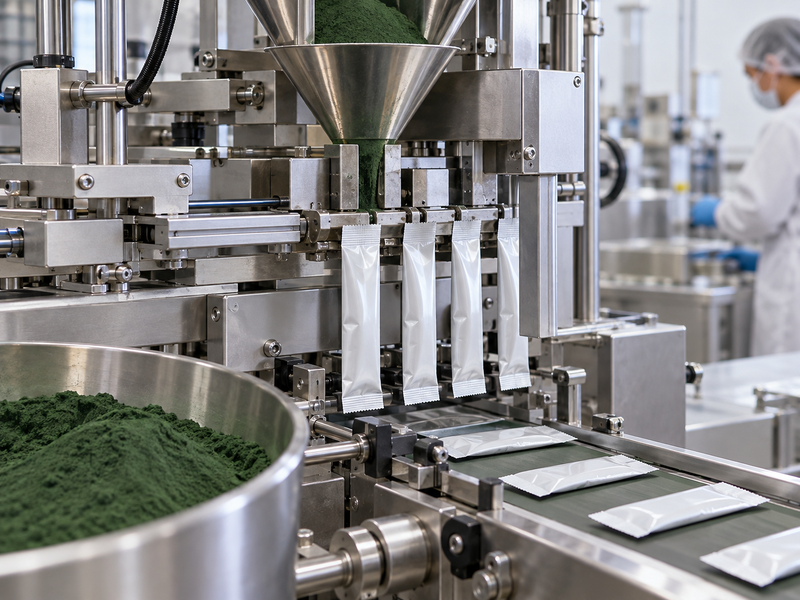
The drawing should identify film construction, thickness range, pouch dimensions, intended fill weight, seal width and location, closure type and any inner liner or outer drum. Ask whether the powder contacts the pouch directly or sits inside a separate liner. A method proven on a flat laboratory laminate may behave differently on a wide, filled industrial bag. Check the corners: gussets and folds create multiple film layers, often making them harder to seal consistently than a straight edge.
Specify how bags will be closed after sampling by the buyer, if sampling is expected. A supplier seal and a manually reclosed sampling liner have different control needs. Document roll change, artwork revision and film supplier change rules. If a alternative packaging supplier offers “equivalent” film, request a comparison of sealant layer, barrier properties and machine performance rather than only nominal thickness. The completed package must protect powder through the promised logistics route, not only through a short bench test at the factory.
| Specification item | Why it affects sealing | Buyer evidence |
|---|---|---|
| Film and sealant layer | Sets heat-seal behavior | Approved material record |
| Pouch geometry | Creates folds and corners | Drawing and sample |
| Fill weight | Changes seam stress | Pack record |
| Inner/outer pack | Defines actual barrier | Full pack description |
3. What does visual inspection catch?
Make the inspection repeatable
Inspect both faces of the seal under suitable lighting. Look for powder in the seam, wrinkles, skips, scorching, uneven width, folded edges and open channels. Compare the result with approved examples of acceptable and rejectable defects. An operator who checks only the top face may miss a fold at the back gusset. ASTM’s visual inspection method notes that visible seal characteristics and defects can indicate integrity problems; users still need a method suitable for their own pouch and detection conditions.
Here is the limitation: a neat-looking seam can contain a small leak that visual inspection misses. Conversely, a cosmetic line may not be a through-channel. Combine visual checks with a leak or strength method suited to the risk. Retain photos of actual failures with lot and machine identifiers, rather than relying on vague notes such as “bad seal.” Train staff at each machine and compare their decisions periodically. The buyer should be able to see how a defect is classified and when production is stopped.
4. What does seal-strength testing measure?
Interpret force with failure mode
Seal-strength testing pulls a defined strip of joined material apart and records the force. ASTM F88/F88M-23 also identifies how the specimen fails. Force can differ with strip width, pull setup, conditioning and whether a peel or film tear occurs. A buyer comparing two suppliers should ask for the same specimen preparation and reporting convention, not just a single number. A high result from film tearing may tell a different story from a consistent peel across the heat seal.
The plant needs a target range derived from pack design and trials. A low seal force may threaten closure; excessive heat can make a seam brittle or distort material. Do not confuse strength with continuity. A test strip samples a narrow portion and cannot establish that the entire bag lacks a leak. Pair it with visual and leak evidence. Retain raw curves or a clear summary of individual results, including failures; an average alone can hide an occasional weak corner.
| Test output | Useful interpretation | What it cannot prove |
|---|---|---|
| Peak or average force | Process consistency | Full-seam continuity |
| Failure mode | Peel, tear or delamination | Absence of pinholes |
| Position result | Local seam behavior | Every bag in a lot |
5. Which leak test fits a powder pouch?
Select a method that works with the pack
Options include vacuum bubble observation, pressure-based methods and other package-specific leak checks. The choice depends on pouch size, headspace, film, product and required defect sensitivity. ASTM D3078 covers gross leaks in flexible packs containing headspace gas and notes that product can block a small opening. That limitation is relevant to fine spirulina powder. A wet immersion test may destroy the sampled pack and cannot be applied uncritically to sellable stock.
Trials should include known defect samples, intact controls and filled production pouches. Determine what size or type of channel the chosen procedure can actually find under realistic conditions. A pass means only what the method can detect. If powder plugs an opening, a different method or inspection strategy may be needed. Record vacuum or pressure settings, test duration, orientation and the number of samples. Do not borrow medical sterile-barrier acceptance language for a food ingredient without an explicit basis.

6. How is the sealing process window set?
Challenge machine settings together
Heat, pressure and dwell time work together, while film speed, jaw alignment and surface cleanliness also affect the result. Trials should cover the weakest credible combinations within proposed settings, not only the neatest pouch from one run. Test after start-up, a film-roll change, a jaw cleaning and a planned stop. Record actual temperatures at relevant points; a displayed setpoint may differ from the sealing surface. Ask the film supplier for guidance, then confirm performance on the production line with filled bags.
Define an acceptable window using visual results, seal strength and an appropriate leak method. A window that passes empty pouches but fails with airborne powder near the seam is incomplete. Make failure visible to operators: the instruction should state what happens when temperature drifts, powder reaches the jaw or one lane shows repeated defects. Include calibration and preventive maintenance of sensors, pressure controls and jaws. The ASTM heat-seal laboratory practice describes starting relationships for materials while noting that commercial equipment may need additional work.
| Process variable | Failure pathway | Routine check |
|---|---|---|
| Jaw temperature | Weak or damaged film | Independent verification |
| Dwell and speed | Incomplete fusion | Machine trend |
| Jaw alignment | Uneven width | Visual and maintenance |
| Powder at seam | Channel | Fill and dust control |
7. Where and when should samples be taken?
Cover the run, not only the beginning
Sampling should include start-up, steady production, changeovers, after a stoppage and end of run. Take bags from each relevant machine lane and from locations most likely to fail, such as gussets or corners. The frequency needs a documented rationale based on past defects, machine stability, lot size and how quickly a problem can be detected. A sample every hour may be too sparse for a fast process with many bags between checks; a universal interval cannot be set without line data. Ask the containment question: if this sample fails, how many bags must be held?
Each result should identify time, machine, operator, film roll, product lot and pouch position. Retain enough individual data to see a gradual decline, not just pass/fail totals. Destructive test bags must be removed from saleable stock and accounted for. A buyer can request a packing-run summary showing checks and deviations without receiving every raw form. Sampling is useful only if the plant can link its failure back to a defined segment of production.
8. How should transport be challenged?
Test the whole packed unit
A pouch that passes at the sealer can fail after compression in a drum, vibration in a truck or handling at a distribution center. Create a trial that reflects the actual case count, outer carton or drum, pallet pattern and route. Inspect seals before and after the challenge and record visible damage, leaks and changes in seal strength where relevant. A laboratory shipping simulation is useful when its conditions are explained, but actual trial shipments can reveal folding or pallet pressure that a standard sequence misses.
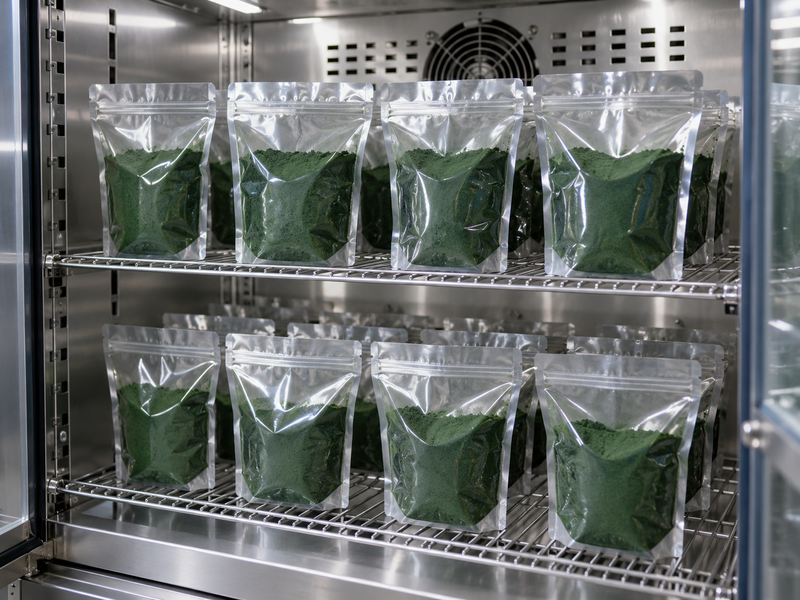
Include realistic storage conditions for the product and film. A humid warehouse may not break a seam directly, yet it magnifies the effect of a small leak on powder quality. Work backward from complaints: if caking appears in bags at a pallet edge, inspect punctures, seal folds and stacking pressure before blaming the powder. The buyer’s receiving inspection should record outer-pack damage and intact inner liners before opening. That evidence helps separate factory sealing problems from downstream handling.
| Challenge | What to inspect afterward | Why it matters |
|---|---|---|
| Filled-pack compression | Corner and gusset seal | Stack stress |
| Handling or drop | Tears and seam opening | Transfer damage |
| Humid storage | Leak signs and powder condition | Moisture exposure |
9. What happens after a failed seal test?
Define the suspect interval immediately
Stop the affected line or lane and hold bags made since the last acceptable check. Reconcile film roll, equipment status and time stamps. Inspect retained failing samples before changing settings; a powder-filled seam calls for a different fix from a cold jaw. If packages are reworked, define whether they are resealed, repacked or rejected, then verify the rework method. A passing retest on one new pouch does not by itself release hundreds of earlier bags.
Set a documented sampling and disposition plan for the held interval. Consider any product that was already cased or shipped, using the same lot links as spirulina powder shelf-life testing records. Close the loop: identify the cause, restore control, challenge the initial new production bags and review later runs for recurrence. If a film supplier defect is suspected, save roll identifiers and untouched samples for joint investigation. Buyers should receive notice under the quality agreement when shipped units may be affected.

10. Which records should buyers request?
Request proof tied to one shipment
For a trial order, ask for the approved pack specification, film identity, sealing-window study and method summary. For each shipment, request the packing lot, film roll, line, routine inspection outcome and any exception disposition. When a supplier reports “leak test passed,” ask what method, pack condition and defect sensitivity that phrase represents. Review a sample of individual results around changeovers, not only a single release signature. That reveals whether the program catches the time when settings move.
Make the decision useful: agree acceptable defect categories, buyer receiving checks and notification triggers before issuing a large order. Spirulina packaging seal integrity testing works when visual appearance, seal strength, leak behavior and transit performance point in the same direction. If one conflicts with another, investigate before shipping. A sturdy outer drum cannot compensate for a weak primary pouch. Request a filled production sample from the intended line and review it against the written specification before approving routine supply.
| Buyer request | Purpose | Red flag |
|---|---|---|
| Pack drawing | Fixes design | Uncontrolled film swap |
| Method summary | Shows test scope | “Leakproof” without method |
| Run log | Links result to lot | Missing changeover check |
| Deviation record | Shows containment | Retest without hold |
FAQ
Q1: Does high seal strength prove a pouch is leak-free? No. A strong sampled strip may coexist with a channel elsewhere.
Q2: Is a visual check enough for bulk powder bags? It catches visible defects but needs support from a suitable leak or strength check.
Q3: Can a vacuum bubble test miss a small leak? Yes. Fine product may plug openings, and method sensitivity depends on the pack and settings.
Q4: Which bags are held after a failure? At minimum, review bags made since the last accepted check on the affected line or lane.
Q5: What should accompany a buyer sample? The exact production film, fill weight, closure and relevant packing-run identification.