
A supplier’s clean finished-powder certificate cannot show what happened in a cultivation pond weeks earlier. Spirulina cultivation contamination monitoring connects routine culture observations with documented escalation and lot release. Buyers can use this guide to request evidence that follows a harvest through drying and packing. The WHO guide to toxic cyanobacteria explains why contamination of cyanobacterial food supplements deserves attention, while FDA human-food CGMP guidance provides a broader manufacturing-control framework.
Contents
- What counts as a cultivation contamination signal?
- Which culture records should a buyer request?
- How are pond and reactor observations made comparable?
- When should a culture or harvest be held?
- What can microscopy and other screening show?
- How should toxin testing be specified?
- How does the supplier preserve lot identity?
- What happens after an abnormal result?
- How should a buyer review monitoring trends?
- What belongs in a release decision?
1. What counts as a cultivation contamination signal?
Start with a documented normal state
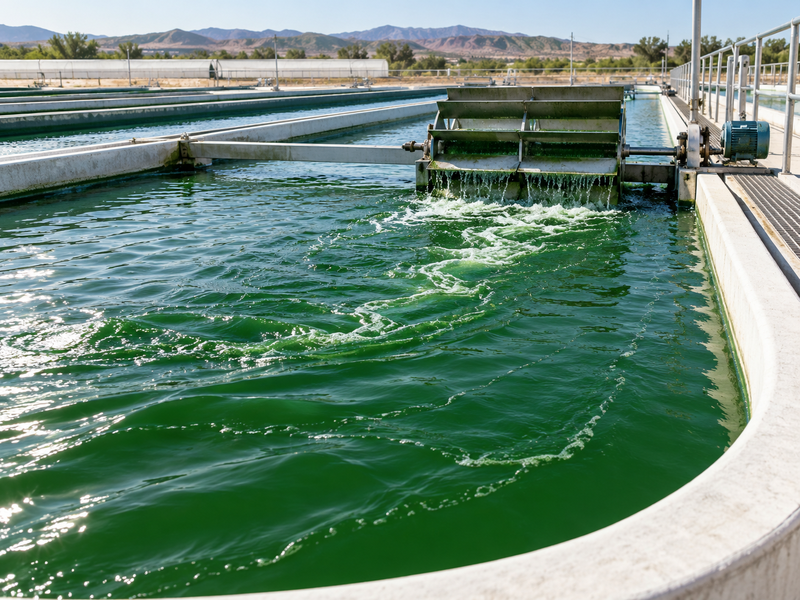
A culture can change because of weather, feed, equipment or an unwanted organism. Monitoring begins by defining what a healthy culture looks like for that site and process, then comparing each observation with that baseline. Operators may record appearance, odor, visible debris, microscopy findings and process conditions. A single unusual color does not identify a toxin. It does justify a closer look before biomass moves forward. The distinction matters for buyers: a supplier should explain which observations trigger an investigation, not merely say staff “watch the ponds.”
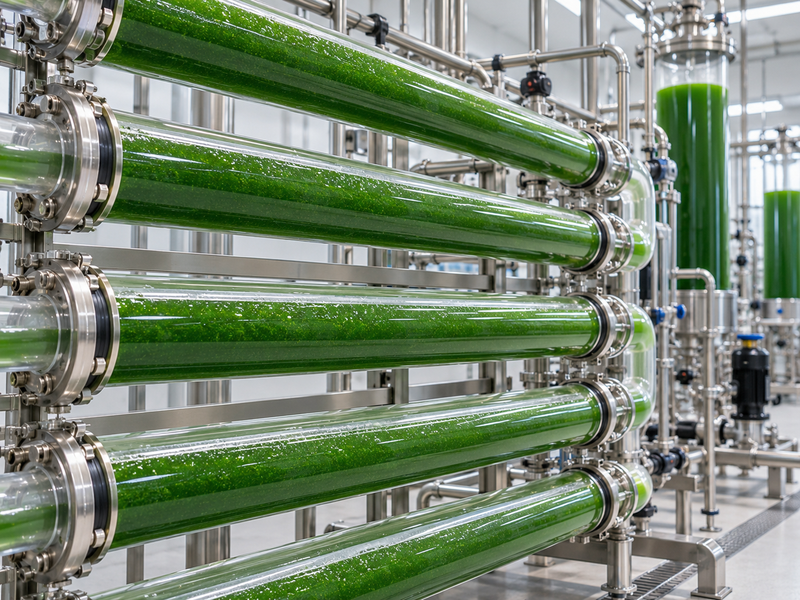
Here is the useful question: who can stop a harvest when a signal appears? Ask for a written limit or decision rule, an owner and a record that shows how the decision was made. If the operator takes a sample, its collection point and time should appear in the log. A photograph without a dated sample ID is weak evidence. For a closed reactor, the same principle applies although visual access and sampling points differ. Monitor the actual process configuration rather than copying a pond checklist into a reactor procedure. A good program treats observations as prompts for investigation while analytical testing answers narrower, defined questions.
2. Which culture records should a buyer request?
Follow one harvest instead of collecting loose screenshots
Request a sample monitoring record tied to a recent commercial harvest. It should identify the vessel or pond, date, operator, culture batch, observations, sample IDs and any action taken. The supplier may also track process-specific measures such as temperature, pH or salinity. Ask how instruments are checked and who reviews the entries. A blank template tells you what staff intend to record; a completed record shows what they actually did. Remove personal information where necessary, but preserve dates and lot links.
Compare that record with a harvest ticket and finished-powder lot genealogy. If several culture units contribute to one dryer run, ask how each source is listed and what happens if one unit later receives an adverse result. A practical test: pick one packed lot and work backward to all culture inputs. Then choose a culture record and work forward to every affected output. A supplier that can perform both searches has a more useful monitoring system than one with immaculate but disconnected logs. Do not demand a universal monitoring frequency; ask for the site’s risk rationale and evidence that staff follow it.
| Record | Minimum link | Buyer checks |
|---|---|---|
| Daily culture log | Pond or reactor ID, date | Missing entries and review |
| Sample submission | Culture ID, collection point | Chain of identity |
| Harvest ticket | Culture ID, biomass lot | Mixed sources |
| Finished lot record | Harvest inputs, pack code | Forward trace |
3. How are pond and reactor observations made comparable?
Write down sampling locations and conditions
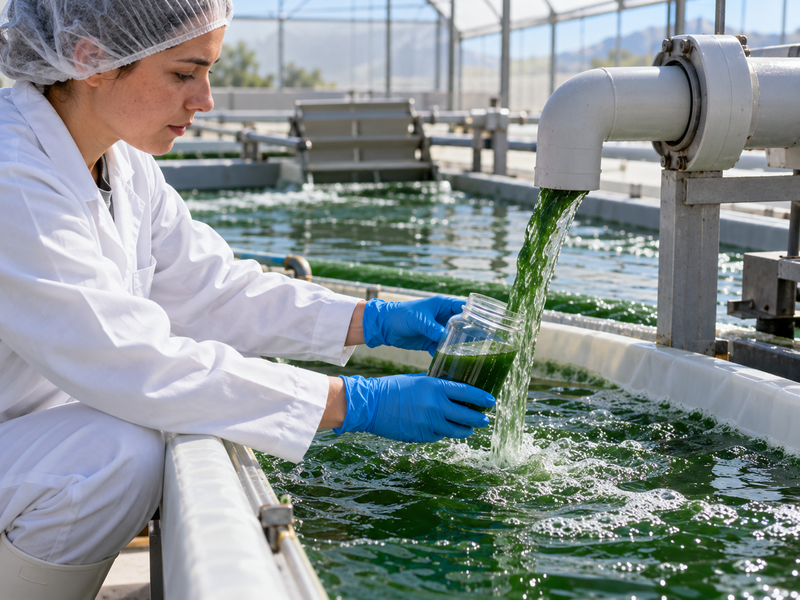
Two technicians can see different conditions in the same open pond if they sample at different points or times. A supplier should define sample depth, location, mixing state, container, handling and time before examination. For a reactor, ports, aseptic technique and cleaning between samples matter. These choices affect comparability. Ask for a simple site map and sampling instruction. A result becomes meaningful only when a reviewer knows where and how the sample was taken.
Trend records should separate routine process variation from a true change. An observation made immediately after feed addition may not match one taken just before harvest. Record that context rather than editing inconvenient numbers away. Look for the handoff: who reviews observations across shifts, and how are abnormal findings passed to the next operator? A whiteboard note can disappear; a controlled log with an action entry can be audited. If a supplier changes a sampling point, it should document the reason and consider whether historical comparisons still hold. Buyers can request this change history without asking for proprietary culture parameters.
4. When should a culture or harvest be held?
Set a hold boundary before trouble arrives
The hold rule should specify both the material and the process stage. A supplier might stop harvest from one pond, quarantine a wet biomass batch or block a finished lot that already contains affected material. Which boundary is right depends on timing and genealogy. Ask who has release authority and whether production staff can override a quality hold. If material was blended before an abnormality was recognized, the scope may extend beyond one pond. A narrow hold based only on the first visible location can miss connected inventory.
Consider the clock: a suspicious observation on Monday may relate to biomass harvested over several shifts. The team needs collection times, transfer records and cleaning boundaries to reconstruct exposure. A hold is not proof that material is unsafe; it protects the decision while evidence is gathered. Request one anonymized example of a past hold and its disposition. Did staff identify all affected packs, send appropriate samples, document review and explain why release or rejection was justified? A supplier unable to show any hold example should at least demonstrate its procedure through a mock scenario.
| Trigger example | Immediate control | Evidence for decision |
|---|---|---|
| Unusual microscopy finding | Hold culture and linked harvest | Identification and follow-up sample |
| Missing sample identity | Quarantine affected material | Reconstructed chain or rejection |
| Out-of-rule process record | Stop transfer | Deviation review |
| Adverse analytical result | Extend hold by genealogy | Confirmatory plan and disposition |
5. What can microscopy and other screening show?
Treat screening as a window, not a universal answer
Microscopy may reveal a shift in organism morphology or obvious foreign material, but its value depends on sampling, analyst training and the organisms present. Ask what staff look for, whether reference images exist and how uncertain observations are escalated. A routine visual check and a named contaminant test answer different questions. A “pass” in one cannot stand in for the other. The WHO cyanobacteria guide discusses the possibility of cyanotoxins entering spirulina products through contamination by other cyanobacteria; buyers should avoid assuming that the intended species alone settles that risk.
Some suppliers also use rapid screens. Ask what the method measures, its detection limit, sample preparation and what happens after an ambiguous result. The key distinction: screening helps decide whether to investigate; a release specification needs a validated method suitable for its analyte and matrix. A supplier can have strong controls without using every available technology. What matters is a coherent link between known hazards, routine observations, escalation and lot testing. Ask for method names and sample IDs rather than a vague promise that “every pond is tested.”
6. How should toxin testing be specified?
Name analytes, methods and the sampled lot
A certificate that says “microcystins: pass” leaves too much unanswered. Ask which congeners or reporting convention were used, which analytical method and laboratory performed the work, the reporting limit, sample preparation and the material stage tested. Set an acceptance criterion against applicable law, customer requirements and a documented risk assessment. Requirements vary by destination and use, so a buyer should not copy a number from an unrelated product. Confirm whether the sample represents culture, wet biomass, finished powder or a composite. A finished lot may contain several upstream inputs.
Keep the method honest: a negative result means the analyte was not reported above the stated limit in that sample. It does not prove every part of a large lot was free of all possible contaminants. A peer-reviewed study of spirulina production and cyanobacterial contaminants illustrates why cultivation practices, monitoring and analytical checks belong together. Ask for a sampling plan that addresses mixing and lot size. Retain a sealed sample where your contract requires one. If an adverse result occurs, agree in advance on hold, confirmatory testing and authority for disposition.
| Certificate field | Buyer question | Why it matters |
|---|---|---|
| Analyte panel | What is actually covered? | “Toxin free” is too broad |
| Method and lab | Is it fit for this matrix? | Supports interpretation |
| Reporting limit | What does “not detected” mean? | Sets result boundary |
| Sampled stage | Which lot and date? | Connects result to shipment |
7. How does the supplier preserve lot identity?
Trace every merge and split
Culture identity can vanish when wet biomass from several units enters a common holding tank or dryer. Ask the supplier where lot codes are created and how each merge or split is recorded. A finished bag code should lead to a dryer run, wet biomass batches and contributing cultures. If a blend contains several powder lots, each component and quantity should appear in the batch record. This level of detail enables a targeted hold; without it, a buyer may have to quarantine a much larger shipment.
Try a mock trace: provide a packed lot code and ask for its upstream sources plus downstream customers or shipments. Agree on a reasonable completion time for your program. Check whether quantities reconcile after yield losses and sampling. A trace that identifies names but cannot account for mass may overlook an unrecorded transfer. Review labels on intermediate containers and the procedure for rework, because those are common points where identity gets fuzzy. A monitoring program only protects buyers when its observations can be attached to the exact material they receive. Keep a copy of the trace outcome in the supplier review file.

8. What happens after an abnormal result?
Investigate cause and affected scope separately
Start by securing material and records. The quality team should identify the observation, collection point, analyst and related culture or lot. Next, determine affected inventory using actual transfers rather than memory. A repeat test may help explain a result, but it should not automatically erase the original. Ask how the supplier distinguishes a sampling error from a genuine contamination signal. Document competing explanations and the evidence for each. If product has shipped, the team needs a customer notification decision and contact path.
Corrective action should address the route by which contamination could enter or persist, such as inoculum handling, water control, uncovered transfers or poorly cleaned equipment. Watch for a weak answer: “operator retrained” without proof that the process problem was fixed. Request an owner, deadline and effectiveness check. The check could include targeted observations over later cycles, maintenance verification or reviewed analytical trends, depending on root cause. Buyers need a concise report that states affected lots and disposition, not every proprietary operating detail. Release should occur only after someone with assigned authority reviews the evidence against the documented rule.
| Investigation step | Useful evidence | Owner |
|---|---|---|
| Contain | Hold list and transfer stops | Quality |
| Scope | Culture-to-pack genealogy | Production and quality |
| Diagnose | Sample, method, equipment logs | Technical team |
| Verify action | Later-cycle checks | Quality manager |
9. How should a buyer review monitoring trends?
Read trends alongside changes
One clean certificate offers a snapshot. A trend can reveal repeated low-level alerts, missed observations or a seasonal pattern. Ask for a summary by culture unit and period, with the number of observations, holds, investigations and dispositions. Review whether sampling frequency changed, instruments were replaced or staff changed shifts. Those events can alter the apparent trend. A chart without its denominator may mislead: three alerts across ten samples tell a different story from three alerts across hundreds.
Ask what management did with the information. Did recurring observations prompt a cleaning review, a revised harvest window or new controls for incoming water? A good supplier can show that monitoring drives decisions instead of merely filling a binder. Avoid demanding that every fluctuation disappear; living cultures vary. Focus on whether the site detects changes, records them and learns from them. Compare trends with finished-lot results and complaint data where available. If a supplier claims zero deviations for years, ask how near misses are logged. Silence can indicate a perfectly controlled process or a reporting gap; the supporting records decide which explanation is credible.

10. What belongs in a release decision?
Put evidence and authority in one place
Release should use an approved specification, defined sample plan and linked records. The reviewer checks culture monitoring, harvest and transfer genealogy, process deviations, finished-lot analytical results and packaging identity. A lab result cannot compensate for an unexplained culture hold. Conversely, one resolved observation should not condemn every later lot if genealogy and investigation narrow the scope. Record the reviewer, date, decision and any restrictions. If the buyer requires third-party testing or a retained sample, state that in the quality agreement before the purchase order.
For a trial shipment, request a redacted release packet and walk through each item with the supplier. Make the next step concrete: agree on alert thresholds, escalation contacts and notification timing. Then test the process with a mock hold tied to one lot. Spirulina cultivation contamination monitoring works when routine observations, laboratory results and lot identity converge at a documented decision. That is the buyer’s strongest assurance that a powder certificate reflects controlled production rather than a lucky sample. Keep the approved packet format for future orders so missing evidence stands out quickly.
| Release input | Question for reviewer | Record |
|---|---|---|
| Culture monitoring | Any unresolved alert? | Signed log |
| Genealogy | All inputs identified? | Batch record |
| Testing | Correct lot and method? | COA and lab report |
| Decision | Authorized and dated? | Release sign-off |
FAQ
Q1. Does a clean finished-powder test replace pond monitoring? No. It covers the analytes and sample tested; process monitoring can catch problems before blending or drying.
Q2. Must every supplier use the same sample frequency? No. Ask for a site-specific rationale, a written schedule and proof that staff followed it.
Q3. Can a visual check identify a toxin? No. Appearance can trigger investigation, while a suitable analytical method answers a defined toxin question.
Q4. What if several ponds feed one lot? Require records that name every contributing pond and the quantity or transfer path.
Q5. When should a buyer be notified? Put notification triggers and timing for holds, adverse findings and shipped material in the quality agreement.
Closing note
Review one real harvest from culture log to packed lot, including every hold and test. That exercise gives purchasing and quality a shared basis for supplier approval. Request the linked records before committing to a long-term order; clear evidence protects both the buyer and the people who will use the finished product.