
A powder and a liquid can carry the same blue ingredient yet behave very differently on a production line. This guide compares phycocyanin powder vs liquid food coloring by usable color, water addition, dispensing, freight and label impact. It gives purchasing and product teams a common trial brief rather than assuming one format always wins. The FDA spirulina extract color-additive status provides the applicable starting point for product review; the commercial decision still needs lot and application evidence.
Contents
- What are buyers actually comparing?
- How should color strength be normalized?
- Which format disperses more reliably?
- How do carriers change formulation?
- What happens during heat and light exposure?
- Which specifications belong in an RFQ?
- How do dosing systems affect labor?
- How should freight and inventory be compared?
- What does a fair pilot look like?
- When should a buyer approve powder or liquid?
1. What are buyers actually comparing?
Define equivalent output
Powder usually arrives as a dry extract blended with a carrier; liquid can be an aqueous concentrate or a formulated color system. The quoted mass of either format is not automatically pigment mass. Ask for full compositional disclosure appropriate to the market, color strength by a stated method and recommended dosing conditions. Confirm whether the two offers use the same extract or different formulations.
Write the proposed ingredient identity and intended technical function on the first line of the trial brief. A sales name alone cannot settle how purchasing, quality and label teams classify it. Keep a retained sample of the first acceptable lot so later comparisons use the same reference, not a memory of its appearance.
Buyer action: Prepare a one-page comparison of ingredient identity, total solids, color value, carriers, preservatives, pack size and shelf-life conditions.
2. How should color strength be normalized?
Use a matched-shade target
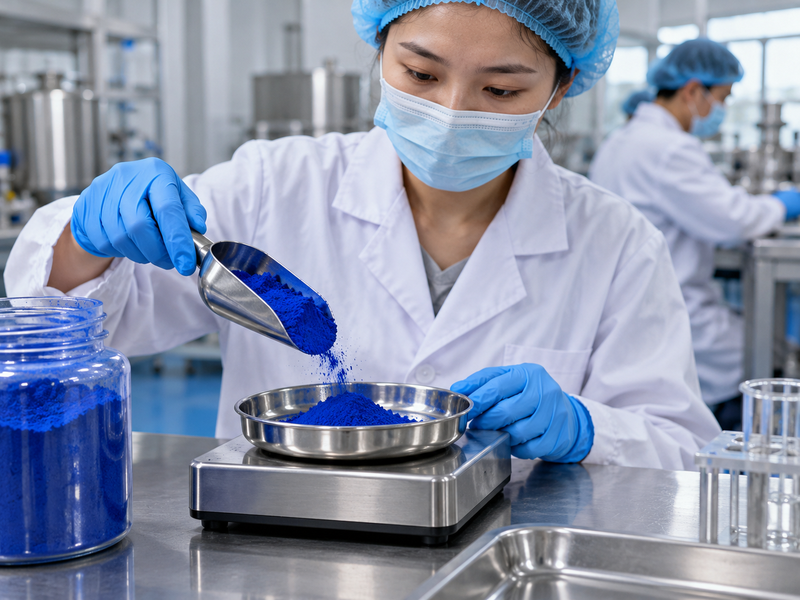
Take a defined mass of each format into the same base and measure the shade after mixing, processing and storage. A liquid dose can appear more efficient because it disperses quickly; a powder can look stronger on a dry-mass basis. Compare the mass required for the same finished color, not the concentrate color in a bottle. Document instrument settings and visual conditions.
Ask two candidates to answer the same written request, including test method, units, sample age and package format. Differences in reported numbers can be caused by method or dilution rather than useful performance. When figures are not directly comparable, run the candidates side by side in one laboratory and do not average away a failed criterion.
Buyer action: Ask the lab to report dose per kilogram of finished product at a specified color difference from the approved reference.
| Measure | Powder question | Liquid question |
|---|---|---|
| Color basis | Strength per dry mass? | Strength per delivered mass? |
| Composition | Which carrier and moisture? | Which water and stabilizers? |
| Handling | Dust or caking? | Pumpability or separation? |
3. Which format disperses more reliably?
Watch the addition point
Fine powder can dust, float or form specks if it is added to an unsuitable vessel. Liquid often meters into water more readily but may stratify or leave residue in a tote. Observe wetting, time to homogeneity and residue after filtration at the normal line shear. A short premix step may solve one problem but adds labor and equipment.
Split the evaluation into ingredient screening and an actual finished-product trial. Prepare both candidates at controlled mass, mixing time and temperature; use coded samples and record the base formula. A favorable jar photograph is only a starting point. The saleable product must survive its real process, packaging and expected storage conditions.
Buyer action: Record exact addition order and mixing energy; sample the beginning and end of the batch for visible streaks.
For a related supplier-side workflow, see the SpirulinaCN guide to phycocyanin color value vs pigment content. Use its questions alongside this product-specific acceptance plan.

4. How do carriers change formulation?
Count everything added
A color sold as liquid may bring water, acid, sugar or stabilizers into a product; a powder may bring maltodextrin or another dry carrier. These are not trivial in a reduced-sugar drink, low-water candy or allergen-sensitive formula. Request a complete ingredient declaration and quantitative information needed for formulation and nutrition review. Check whether carrier changes shift viscosity, solids or sweetness.
Set a target, an acceptable band and a failure definition before the next formulation round. Include flavor, color, texture and label effect where relevant. Record the uncolored or unfortified control. If a blend changes, document the new ingredient addition and its cost, because an apparently better ingredient can simply be receiving more help from the formula.
Buyer action: Make a mass balance at the matched color dose and flag any ingredient that alters the label or process specification.
For example, if a liquid brings five percent water at the color dose and the base formula is controlled tightly for total solids, the production team should decide where that water is deducted. If a dry carrier raises solids, verify whether it changes sweetness, viscosity or powder blend flow. This is a formulation adjustment, not merely a label exercise. Capture it in the approved recipe and retest the finished product.
| Formula input | Record | Decision |
|---|---|---|
| Added water | Mass at matched shade | Rebalance recipe |
| Added solids | Carrier mass | Review texture |
| Declaration | Full components | Approve label text |
5. What happens during heat and light exposure?
Test the real process
Phycocyanin is a protein pigment whose blue appearance can change under heat, acid and light. A powder is not inherently more stable after it enters the food; a liquid is not inherently worse. The finished matrix, stabilizers, concentration and thermal history matter. Run the actual hold and packaging light trial with both formats and measure color after each critical step.
This technical issue is illustrated by the phycocyanin stability experiment. Its conditions are evidence for a risk to test, not a universal prediction for another formula.
Map the ingredient addition to the actual plant sequence: receiving, staging, weighing, premixing, addition, heat treatment, fill and cleaning. Note which steps expose it to water, air, light or temperature. A bench mixture that skips the limiting factory step cannot support a release decision. Preserve process settings with each retained sample.
Buyer action: Use the same pH, dwell time, oxygen exposure and package for both candidates; do not transfer a supplier bench result to another matrix.

6. Which specifications belong in an RFQ?
Specify usable material
Ask for lot identity, color strength method, microbiological and contaminant criteria, moisture or solids, carrier identity and storage conditions. For liquids, add microbial control, viscosity and freeze-thaw handling where relevant. For powders, add particle handling and caking observations. FDA color permission and declaration must be checked against the precise product category and latest rule status.
For the relevant rule or evidence context, consult the FDA food ingredients and colors guidance; confirm the current requirements for the destination and exact product.
Separate legal permission, identity and contaminant evidence from desirable commercial attributes. Require the lot certificate, agreed analytical methods and an escalation route for results near limits. Build a risk-based incoming check for the actual use and market. A supplier assurance letter can start the conversation but cannot replace product-specific review.
Buyer action: Require representative commercial-lot samples, current certificates and a written change notification commitment before a quote becomes an approved item.
For a related supplier-side workflow, see the SpirulinaCN guide to phycocyanin bulk density. Use its questions alongside this product-specific acceptance plan.
| RFQ item | Evidence | Why it matters |
|---|---|---|
| Color strength | Named assay and units | Comparable lots |
| Microbiology | Lot result and method | Incoming control |
| Storage | Temperature and light limits | Receiving plan |
7. How do dosing systems affect labor?
Match format to equipment
A sealed liquid tote can work well with an existing pump but needs cleaning, calibration and line-flush accounting. Dry dosing may suit a powder plant but requires dust controls, weighing and a premix plan. In a small plant, manual addition may outweigh any theoretical automation advantage. Time a realistic batch rather than assuming installation is free.
Put the buyer, supplier technical contact, formulation lead, quality reviewer and regulatory reviewer on one document register. Record the exact grade, version date and any change notice obligation. If a proposed substitution changes carriers, preservatives, extraction method or source, reopen the relevant approval steps before material goes to the line.
Buyer action: Ask operations to estimate setup, weighing, sanitation, changeover and residual color left in the delivery system.

8. How should freight and inventory be compared?
Calculate delivered usable color
Liquid shipments may move more water and need protection from freezing or temperature excursions. Powder can reduce freight mass but may need more careful moisture control. Compare pallets, usable shelf life after receipt, package residues and opened-container rules. A large discount is unhelpful if a minimum order expires before consumption.
Normalize every offer to delivered usable output, including preparation labor, line loss, rejected material and storage. Request written assumptions for minimum order, lead time, freight basis, pack size and remaining shelf life at receipt. A lower invoice price is useful only if the accepted finished-product yield and schedule also work.
Buyer action: Use matched-shade dose times planned production volume, then include freight, storage, disposal and packaging losses.
An especially useful purchasing comparison is cost per thousand saleable packs at a defined blue intensity. Ask the plant to report consumed color, leftover material and rejected packs for each format. Use the same forecast horizon for shelf-life waste. This avoids giving a bulk powder quote an unfair advantage over a smaller liquid pack, or rewarding a convenient liquid simply because line residue was omitted from the accounting.
| Cost element | Powder | Liquid |
|---|---|---|
| Freight | Dry payload | Water payload |
| Residue | Bag and premix | Tote and lines |
| Inventory | Humidity protection | Temperature control |
9. What does a fair pilot look like?
Challenge both formats
Run the same finished formula on the same line with separate controlled batches. Keep base batch, target shade, operator instructions and packaging fixed. Sample color at mixing, after processing and at defined storage points. Note flow problems and cleaning time as well as visual results. If one format needs a special premix, include its labor in the pilot record.
Run at least one pilot or production-scale lot with the proposed addition point and normal equipment. Sample early, middle and late output, then review uniformity and retained samples after a defined storage interval. Record line stoppages and cleaning work; these are part of qualification, even when color or flavor meets its target.
Buyer action: Release a pilot only after quality and regulatory teams review the actual composition and market use.
For a related supplier-side workflow, see the SpirulinaCN guide to blue spirulina extract production scale up. Use its questions alongside this product-specific acceptance plan.
10. When should a buyer approve powder or liquid?
Sign off a fit-for-use choice
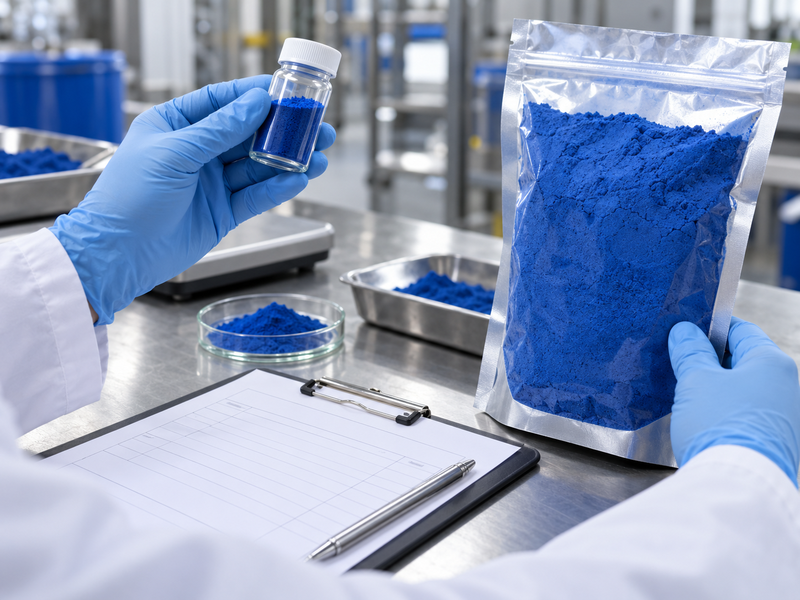
Choose the format that achieves the required shade and acceptable stability with manageable handling, compliant declaration and a defensible delivered cost. Keep an approved alternate only if it passes the same test. The final specification should lock the exact grade, carrier system and strength method, because a familiar trade name may cover reformulations.
Close the decision with a signed specification, approved sample reference, conditional market review, change-control contact and first-order acceptance plan. Name the measurements that would trigger a hold, further trial or supplier discussion. A clear no-go outcome is valuable: it prevents an attractive sample from becoming an uncontrolled routine purchase.
Buyer action: Put the chosen dose range, addition instructions, inspection points and supplier-change trigger into the purchasing file.
| Release gate | Acceptance record | Owner |
|---|---|---|
| Shade | Processed sample and tolerance | Formulation |
| Compliance | Category and declaration | Regulatory |
| Operations | Dose and cleaning trial | Plant lead |
Frequently asked questions
Is powder always cheaper to ship?
It often moves less water, but the answer depends on concentration, pack size, temperature controls and usable dose.
Can a liquid be converted to powder dose directly?
Only after converting on the same color-strength basis and confirming shade in the finished product.
Does dry form protect phycocyanin during cooking?
Dry storage behavior does not establish performance after hydration and heating. Test the actual process.
What should a supplier reveal about carriers?
Request the full composition and the details needed for formulation, allergen and market-label review.
Can both formats share one approved specification?
They need separate format controls even if they share an extract source; keep matched-shade criteria common.
Conclusion
Select by finished-product evidence. A good format decision connects a matched-shade dose to the plant addition point, current market permission, full composition and delivered cost. Save the pilot record with the approved grade so the next purchase is reproducible.