
Natural blue food coloring for hard candy faces a punishing combination of hot syrup, acid and narrow mixing time. A color approved for candy is not automatically robust in a particular cooker. This guide gives confectionery teams a feasibility screen for spirulina extract and a clear stop point when color survival or product quality fails. The hard-candy process review provides the applicable starting point for product review; the commercial decision still needs lot and application evidence.
Contents
- Why is hard candy a difficult blue application?
- Is spirulina extract legally usable?
- What should the first feasibility trial measure?
- When should color be added?
- How should acid be handled?
- Which supplier claims need evidence?
- Can packaging protect the shade?
- How should cost be compared?
- What does a production trial need to prove?
- When should the team stop or choose another color?
1. Why is hard candy a difficult blue application?
Map the exposure
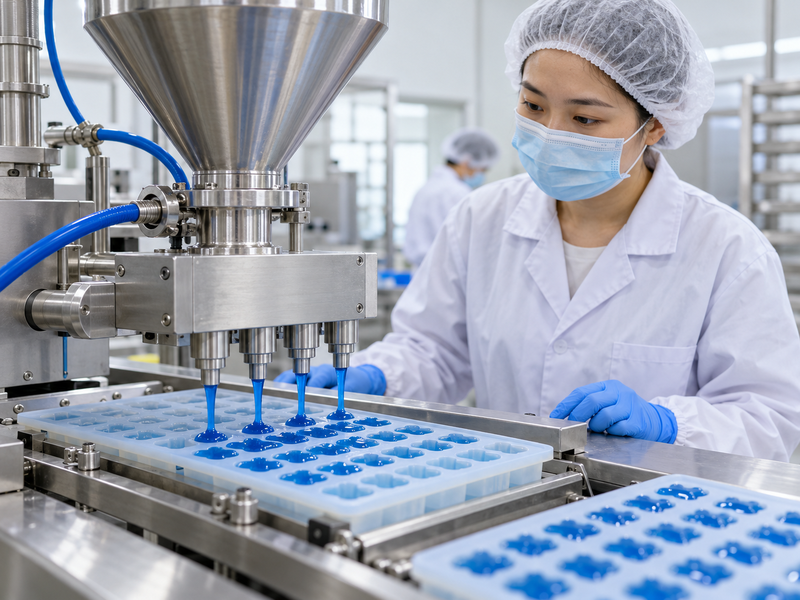
Hard candy production concentrates syrup at high temperature, then mixes color and often acid into a rapidly thickening mass. Phycocyanin is sensitive to heat and low pH, while late addition can leave poor distribution. The processing window can be narrow. Start with the actual cooker, acid sequence and depositing temperature instead of a generic recipe.
Write the proposed ingredient identity and intended technical function on the first line of the trial brief. A sales name alone cannot settle how purchasing, quality and label teams classify it. Keep a retained sample of the first acceptable lot so later comparisons use the same reference, not a memory of its appearance.
Buyer action: Record the temperature and time at color addition, acid addition and deposit for each trial.
Before requesting a sample, ask the team to put the intended product, consumer-facing promise and disqualifying conditions in writing. This makes the first supplier conversation specific enough to yield comparable information.
2. Is spirulina extract legally usable?
Verify the current listing
In the United States, spirulina extract has an FDA color-additive listing, but permitted uses and conditions must be checked in the current regulation. The broader 2026 expansion was delayed after objections; do not treat a press announcement as the operative text. Other markets may classify extract and coloring foods differently. Ingredient counsel should review each destination and final declaration.
Ask two candidates to answer the same written request, including test method, units, sample age and package format. Differences in reported numbers can be caused by method or dilution rather than useful performance. When figures are not directly comparable, run the candidates side by side in one laboratory and do not average away a failed criterion.
Buyer action: Keep a copy or dated link to the applicable rule with the formulation approval file.
If one candidate looks better, repeat the measurement under the same conditions before changing the specification. A small difference can disappear when samples, instruments or operators change.
| Stress | Plant fact to record | Possible effect |
|---|---|---|
| Cook | Peak and dwell | Color loss |
| Acid | Dose and timing | Hue shift |
| Deposit | Temperature and shear | Streaking |
3. What should the first feasibility trial measure?
Separate color from candy quality
Run a small controlled syrup trial with an uncolored control and at least two color levels. Measure shade after forming and after storage, but also test moisture, stickiness, clarity and flavor. A blue that looks good in a warm drop may turn green or dull after acidification. A liquid color can add unwanted water; powder may be hard to disperse.
Split the evaluation into ingredient screening and an actual finished-product trial. Prepare both candidates at controlled mass, mixing time and temperature; use coded samples and record the base formula. A favorable jar photograph is only a starting point. The saleable product must survive its real process, packaging and expected storage conditions.
Buyer action: Define acceptance criteria before the trial and retain samples in the actual wrap or pouch.
For a related supplier-side workflow, see the SpirulinaCN guide to phycocyanin sugar stability. Use its questions alongside this product-specific acceptance plan.
The trial record should identify who prepared each sample and whether the sample represents routine commercial output. Archive the base formula and a dated photograph under controlled lighting.
4. When should color be added?
Test the process window
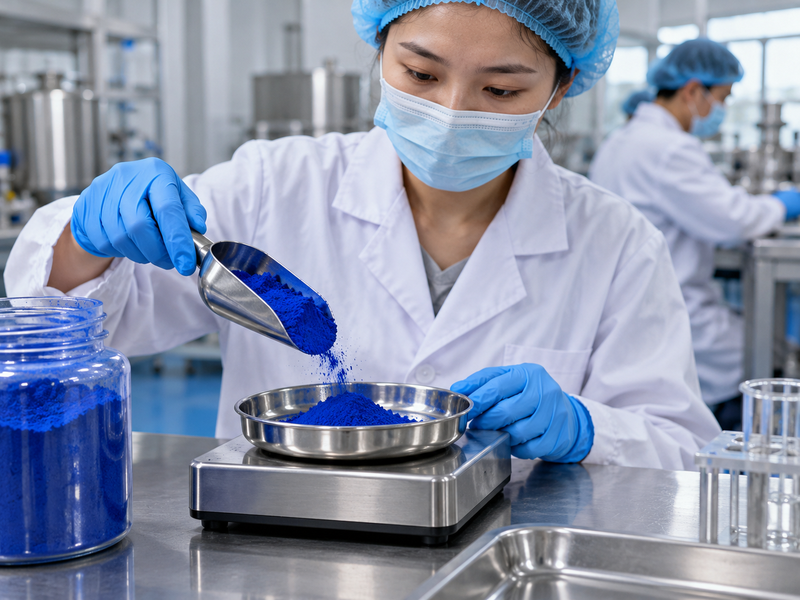
Earlier addition offers mixing time but more heat exposure; later addition reduces heat contact but raises viscosity and streak risk. Set trials at feasible addition points within the plant safety procedure. Do not ask operators to improvise an unsafe late addition. If a separate premix is used, track its temperature and water contribution.
Set a target, an acceptable band and a failure definition before the next formulation round. Include flavor, color, texture and label effect where relevant. Record the uncolored or unfortified control. If a blend changes, document the new ingredient addition and its cost, because an apparently better ingredient can simply be receiving more help from the formula.
Buyer action: Compare each condition at the same final candy solids and acid level so the color result is interpretable.
A useful hard-candy test logs the mass temperature when color enters, the time until deposit and the temperature profile during that interval. It also notes whether the acid was already in the mass. These observations make a failed result actionable: the team can identify whether heat exposure, acid or incomplete mixing is the likely bottleneck. Without a process log, repeating the trial with a larger color dose adds cost but little learning.
Keep any formulation change small enough to explain. Changing color, flavor, texture and process together prevents the team from learning which adjustment solved the problem.
| Trial condition | Control | Outcome |
|---|---|---|
| Early addition | Same syrup | Heat exposure |
| Late addition | Same syrup | Mixing limit |
| Acid sequence | Same final pH | Hue comparison |
5. How should acid be handled?
Check final pH and sequence
Fruit-flavored hard candy commonly relies on acid, which can shift or reduce phycocyanin blue. Test the actual acid blend, its timing and final product pH. A buffer or revised acid system might improve color but also change flavor, ingredients and permitted use. The correct decision may be that this blue source does not fit the desired sour profile.
This technical issue is illustrated by the phycocyanin stability experiment. Its conditions are evidence for a risk to test, not a universal prediction for another formula.
Map the ingredient addition to the actual plant sequence: receiving, staging, weighing, premixing, addition, heat treatment, fill and cleaning. Note which steps expose it to water, air, light or temperature. A bench mixture that skips the limiting factory step cannot support a release decision. Preserve process settings with each retained sample.
Buyer action: Use instrument color and trained visual review after acid addition, then again after storage.
Where a process step is difficult to reproduce on the bench, flag the uncertainty explicitly and move that question into the pilot. Do not convert a convenient laboratory shortcut into a production claim.
6. Which supplier claims need evidence?
Request application data
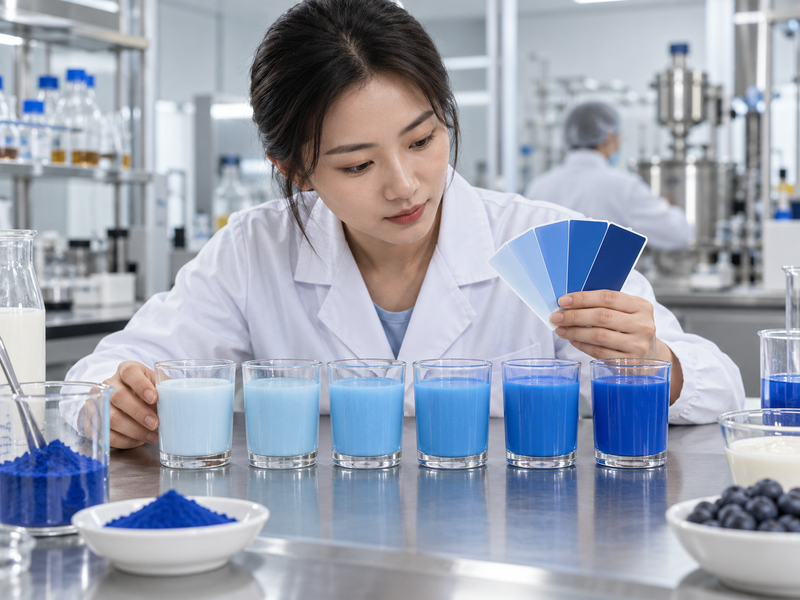
Ask for color-strength method, full carrier system, recommended use conditions, food-grade contaminant and microbiological file, and any hard-candy trial data with time and temperature. A claim of “heat stable” is incomplete without the product matrix and endpoint. Confirm whether the offered material is standard extract or a formulated color system with stabilizers.
For the relevant rule or evidence context, consult the FDA spirulina extract color-additive status; confirm the current requirements for the destination and exact product.
Separate legal permission, identity and contaminant evidence from desirable commercial attributes. Require the lot certificate, agreed analytical methods and an escalation route for results near limits. Build a risk-based incoming check for the actual use and market. A supplier assurance letter can start the conversation but cannot replace product-specific review.
Buyer action: Buy a commercial-lot representative sample and reproduce the result on the plant cooker.
For a related supplier-side workflow, see the SpirulinaCN guide to blue spirulina extract marshmallow color trial. Use its questions alongside this product-specific acceptance plan.
Quality should set the disposition for missing documents before purchasing creates a shipment commitment. Written acceptance criteria make later discussions with a supplier faster and less subjective.
| Supplier claim | Request | Decision |
|---|---|---|
| Heat stable | Time-temperature data | Repeat on line |
| Food grade | Lot tests | Quality review |
| Color value | Method and range | Dose ladder |
7. Can packaging protect the shade?
Include shelf-life stress
Oxygen, light and moisture can change the appearance of a blue candy. Run packaged samples under normal and justified accelerated conditions while tracking product quality. A color that survives deposition but fades on a store shelf has not passed. Keep photographs under controlled lighting and instrument data together.
The FDA spirulina-extract listing adds another check relevant to this decision, but the buyer must verify the offered grade and process.
Put the buyer, supplier technical contact, formulation lead, quality reviewer and regulatory reviewer on one document register. Record the exact grade, version date and any change notice obligation. If a proposed substitution changes carriers, preservatives, extraction method or source, reopen the relevant approval steps before material goes to the line.
Buyer action: Compare transparent and protective packaging only if the commercial brief allows a pack change.
Include substitutes and second-source proposals in the change-control rule. A different trade name can have the same technical function but a different composition or production history.
8. How should cost be compared?
Price saleable candy
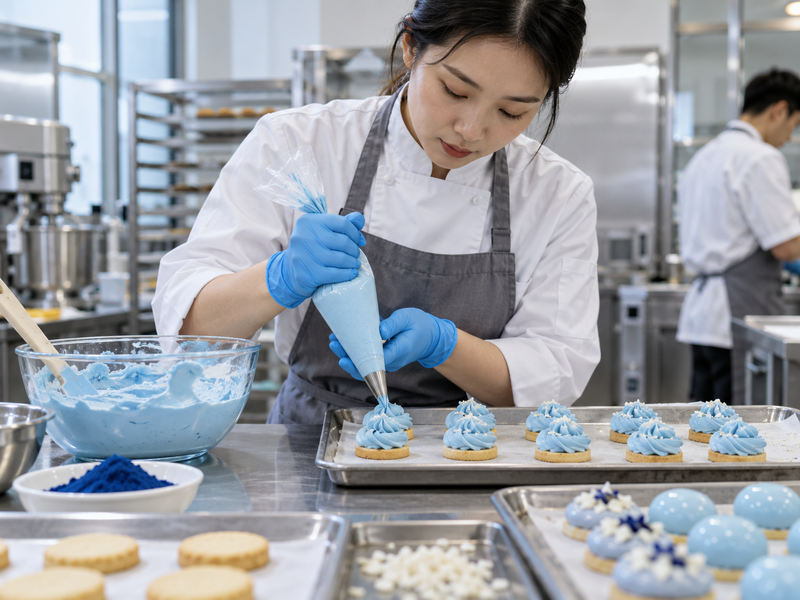
Calculate color cost at the dose needed after the full cook and storage period, not the dose that colors water. Include off-shade scrap, mixing delays and package changes. An alternative color may have a higher ingredient price but lower reject rate. If the only passing condition requires a large process redesign, include that capital and labor.
Normalize every offer to delivered usable output, including preparation labor, line loss, rejected material and storage. Request written assumptions for minimum order, lead time, freight basis, pack size and remaining shelf life at receipt. A lower invoice price is useful only if the accepted finished-product yield and schedule also work.
Buyer action: Use a pilot yield record to replace theoretical cost with actual saleable output.
Hard-candy economics should include the rejected kilograms from color streaks or end-of-run hue drift, not just ingredient spend. If a modified addition step reduces scrap but slows deposition, include throughput. If a different wrapper protects shade, include its material price and shelf-life evidence. A change is worth adopting only when the saleable candy meets quality and margin targets together; one successful blue piece is not a commercial result.
Report the economics as a range when consumption, line loss or demand is uncertain. That is more useful than a single precise-looking number built from assumptions.
| Cost item | Measure | Include |
|---|---|---|
| Color dose | g/kg sold | Ingredient cost |
| Rejects | kg off-shade | Scrap |
| Changeover | minutes | Labor |
9. What does a production trial need to prove?
Challenge the worst step
Trial on the intended line at normal syrup solids, kettle residence, acid load and deposit rate. Sample early and late candy to catch shade drift. Record clogging, streaking, cooling and wrapper performance. Keep a controlled control batch for comparison. A laboratory candy made by a different process is useful only as a screen.
Run at least one pilot or production-scale lot with the proposed addition point and normal equipment. Sample early, middle and late output, then review uniformity and retained samples after a defined storage interval. Record line stoppages and cleaning work; these are part of qualification, even when color or flavor meets its target.
Buyer action: Do not release a commercial claim until stability and regulatory review cover the sold product.
For a related supplier-side workflow, see the SpirulinaCN guide to phycocyanin pasteurization stability. Use its questions alongside this product-specific acceptance plan.
A scale trial is also a training test. Ask operators to record whether the written instructions were usable and which steps required improvised decisions.

10. When should the team stop or choose another color?
Use a clear no-go gate
Stop when the required blue cannot survive the authorized formula and safe process without unacceptable flavor, texture, waste or cost. More dose may deepen the initial shade while failing the shelf-life test. Record which factor caused failure so the next colorant search is focused.
Close the decision with a signed specification, approved sample reference, conditional market review, change-control contact and first-order acceptance plan. Name the measurements that would trigger a hold, further trial or supplier discussion. A clear no-go outcome is valuable: it prevents an attractive sample from becoming an uncontrolled routine purchase.
Buyer action: If spirulina extract passes, lock grade, addition point, process window and packaging in the production specification.
The approved file should be understandable to a colleague who did not attend the trial. Include the rationale for rejection as well as the chosen option.
| Go/no-go gate | Pass evidence | Owner |
|---|---|---|
| Shade at shelf life | Packaged sample | Formulation |
| Candy quality | Moisture and texture | Quality |
| Lawful use | Current market rule | Regulatory |
Frequently asked questions
Can spirulina extract be added before the hard-candy cook?
Test it, but prolonged high heat may damage the color; the actual process determines feasibility.
Does late addition solve all fading?
No. It may reduce heat contact but create mixing problems, and acid or storage can still change shade.
Is liquid color easier in hard candy?
It can meter well but its water content may affect the product. Compare full formula effects.
Can a supplier claim guarantee heat stability?
Only application-specific trials at comparable time, temperature and pH are useful evidence.
What is the simplest stop rule?
Stop if the packaged candy fails approved shade or quality after the intended shelf-life test.
Conclusion
Treat hard candy as a process qualification, not a simple color substitution. Confirm legal use, run controlled addition and acid trials, then judge packaged candy after storage. A documented no-go result is better than an unstable launch.