
A blue marshmallow can leave a mixer looking right and emerge from curing uneven, sticky or faded. A blue spirulina extract marshmallow color trial checks pigment addition alongside aeration, setting, surface drying and packaged appearance. This article gives confectionery teams a sequence for comparing prototypes and deciding when a plant run is ready. Phycocyanin’s documented sensitivity to heat, pH and light in experimental stability research explains why finished-product evidence matters more than a blue powder sample.
Contents
- What should the marshmallow brief specify?
- Which extract lot belongs in the screen?
- Where can colorant enter the process?
- How should dose and shade be compared?
- What happens when aeration changes?
- How should texture and water be tracked?
- Which surface and packaging effects matter?
- What sampling plan can find color variation?
- How should shelf-life evidence be gathered?
- What does a production approval include?
1. What should the marshmallow brief specify?
Define a finished piece, not a mixing-bowl color
Document piece shape, target weight, cut or deposit method, desired blue shade, coating, package and distribution conditions. State whether consumers should see a uniform interior, a colored surface, or both. A lightly colored aerated piece may look much paler than its unwhipped syrup because air changes light scattering. Choose a no-color control and a visual target made in the same geometry. Set texture and handling targets before adding pigment: density, springiness, tack, cut-face appearance and dusting adherence can all shift during a formula change.
Ask the plant question early: will the colorant be added after cooking, before whipping or through a finishing step? Each location offers a different thermal and mixing history. Record current process settings so a change in color is not confused with a change in solids or whip endpoint. The brief should state who approves color, eating quality and shelf-life results separately.
2. Which extract lot belongs in the screen?
Match the test sample with future purchases
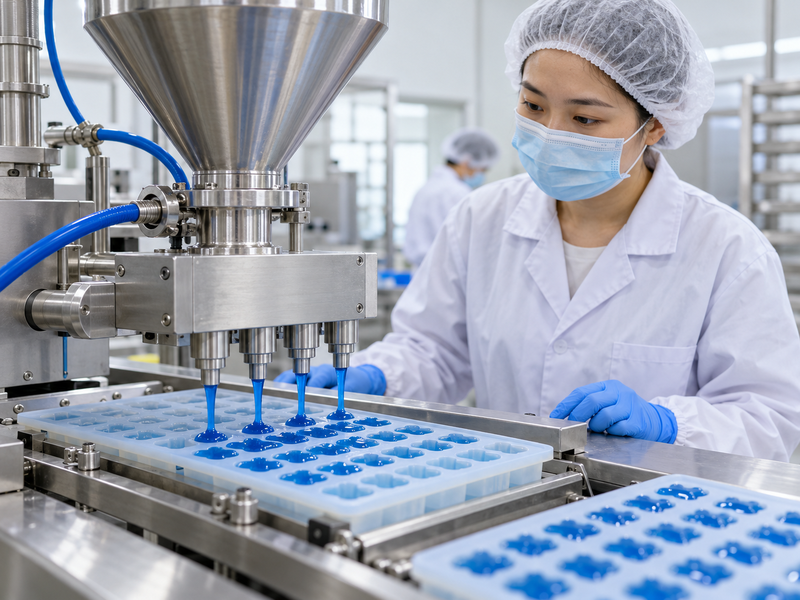
Request the exact extract SKU, commercial-lot sample, specification, carrier composition, color-value method, microbial and contaminant records, and recommended storage. A food-grade extract is distinct from whole-cell green spirulina powder. Green powder can bring particles, odor and different coloring behavior. The supplier’s blue spirulina selection page describes this distinction and the need to test the actual matrix. Keep one sealed retain and one working pack; log opening date and room exposure.
Compare each candidate as a standardized aqueous preparation before moving into syrup, but do not approve it from the water test. A useful purchasing question: can the supplier provide a repeatable carrier system and a color method that procurement can verify on later lots? If two grades differ in carrier, calculate dose on a finished-piece basis and include added solids in the recipe. A tiny pigment dose can still change the formula when the grade contains substantial carrier.
| Incoming item | Trial record | Why it matters |
|---|---|---|
| Exact extract identity | SKU, lot, pack seal | Connects results to supply |
| Carrier ingredients | Specification revision | Affects formula and label |
| Color-value method | Preparation and wavelength | Supports lot comparison |
| Retain storage | Pack and exposure log | Preserves reference quality |
3. Where can colorant enter the process?
Compare the real temperature histories
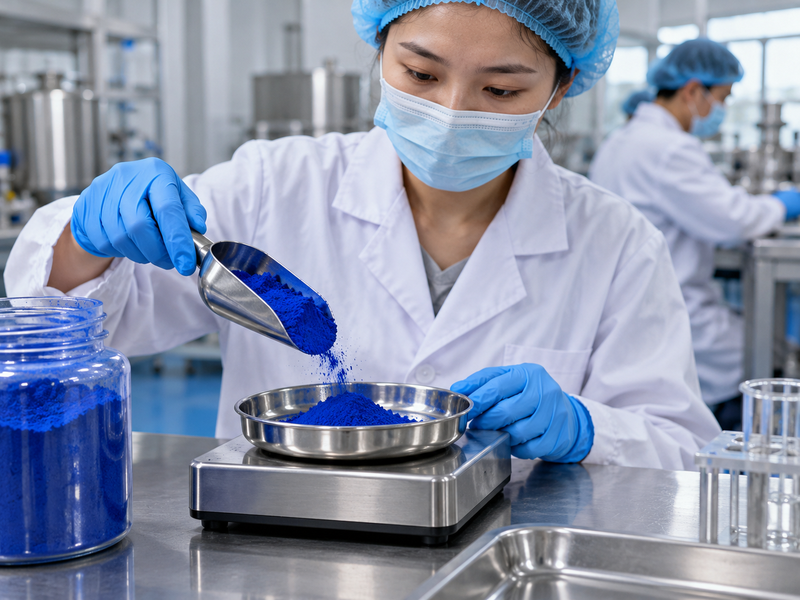
Map syrup cooking, cooling, gelling-agent addition, whipping, deposition and setting. Measure product temperature and time at each step. A bench rule such as “add after cooking” is incomplete if the mass remains hot through a long whip. Prepare a small trial comparing addition after cooling with any other feasible location while holding formula solids constant. Pre-dissolve the extract in a measured portion of process water when permitted; document that water in the batch balance.
Watch the tradeoff: cooler dosing may preserve blue yet shorten the mixing window as viscosity rises. Late manual addition may also leave streaks. Establish the latest point that still permits uniform distribution and hygienic control. Published work on phycocyanin documents temperature-dependent color changes, but it does not prescribe a marshmallow addition temperature. Set a plant-specific range from the chosen recipe, equipment and food-safety plan.
4. How should dose and shade be compared?
Hold the base formula steady
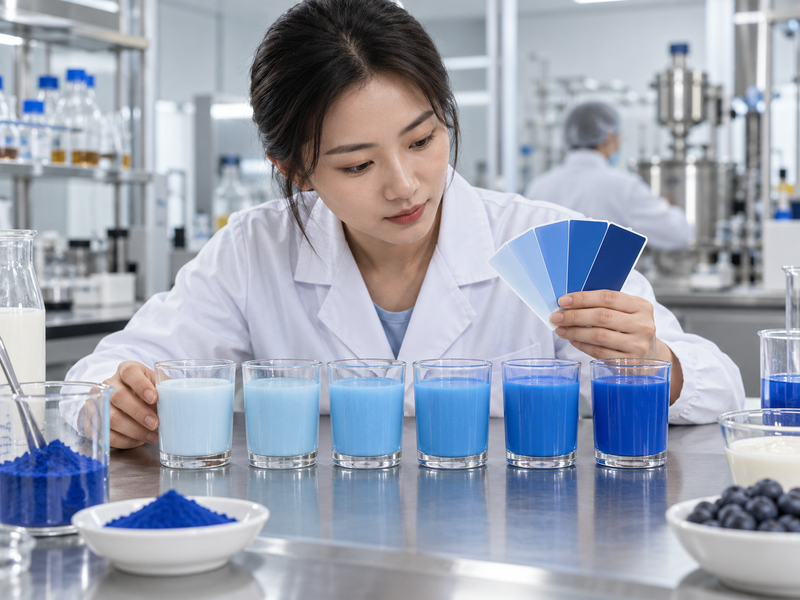
Run a control and several colorant doses that bracket the desired finished shade. State dose per kilogram of final mass, then verify yield so evaporation does not hide a dosing error. A syrup’s color value or extract E-grade gives a starting point, not a direct prediction of blue marshmallow appearance. Use equal piece size and cut geometry for comparison. Photograph interiors and exteriors under fixed light after the same setting time.
Judge the intended pack: white dusting can mute the surface, while a clear window can reveal uneven shades that an opaque carton hides. Have reviewers score both hue and uniformity. If extra extract darkens only streaks, fix dispersion before increasing dose. If the target requires a dose that changes flavor or handling, record that as a formulation limit. Compare the cost per accepted piece rather than a kilogram price of colorant alone.
| Trial arm | Held constant | Primary decision |
|---|---|---|
| No-color control | Solids, whip and setting | Baseline texture and hue |
| Low dose | Same process | Minimum visible blue |
| Target dose | Same process | Shade plus uniformity |
| High dose | Same process | Upper sensory and handling bound |
5. What happens when aeration changes?
Measure density beside color
Whipping changes gas fraction, bubble size and perceived lightness. Record pre-whip and post-whip mass per known volume, whip time, mixer speed, batch temperature and deposit density. If a dose screen is made at different densities, shade comparisons become unreliable. A low-density piece can appear pastel even when its pigment concentration matches a denser piece. Inspect a cut face for streaks, collapse and unusually large voids; these observations can locate mixing problems.
Do not read color alone. If blue looks attractive only after extra whipping, compare the texture and package compression of that version before approval. The original research on aerated marshmallow formulations studies biomass as a formulation component, not this specific extract grade; it reinforces the need to track aeration and texture as linked outcomes. Keep extract identity and formula changes explicit when using such evidence.
6. How should texture and water be tracked?
Separate pigment effects from formula effects
Measure solids or Brix at a defined point, water activity where relevant, piece weight, compression or firmness, and tack after setting. A liquid extract solution adds water; a dry extract with carrier adds solids. Either can change the set if the batch sheet does not compensate. Compare the trial with a control subjected to the same added water and mixing time. Taste coded pieces after the same rest period, since a freshly deposited piece may hide texture changes.
Keep a practical record: note whether pieces cut cleanly, stick to belts, accept dusting and recover shape after packaging pressure. Those outcomes matter to yield even if a laboratory texture value meets its target. If an off-color lot also feels softer, investigate solids, moisture and process timing before assigning the cause to pigment. Define acceptable texture using your established product and plant capability rather than a number from unrelated confectionery research.
| Check | Sample timing | Operational reason |
|---|---|---|
| Syrup solids | Before pigment addition | Identifies cooking variance |
| Deposit density | During run | Captures aeration shift |
| Piece firmness | After fixed set period | Compares finished texture |
| Tack and cut quality | At packing | Predicts line handling |
7. Which surface and packaging effects matter?
Evaluate the piece the customer opens
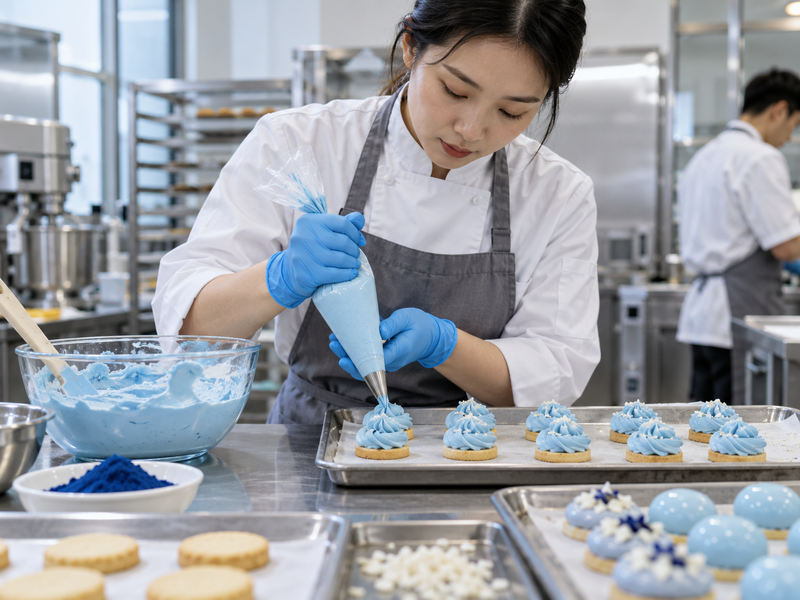
Compare an undusted cut face, finished coated piece and packaged piece. Starch or sugar coating can obscure blue; a wet surface can cause dark patches or transfer pigment onto a neighboring piece. If the line includes oiling or glazing, assess adhesion and color migration under the intended method. Test clear versus light-blocking packs only when those are realistic commercial options.
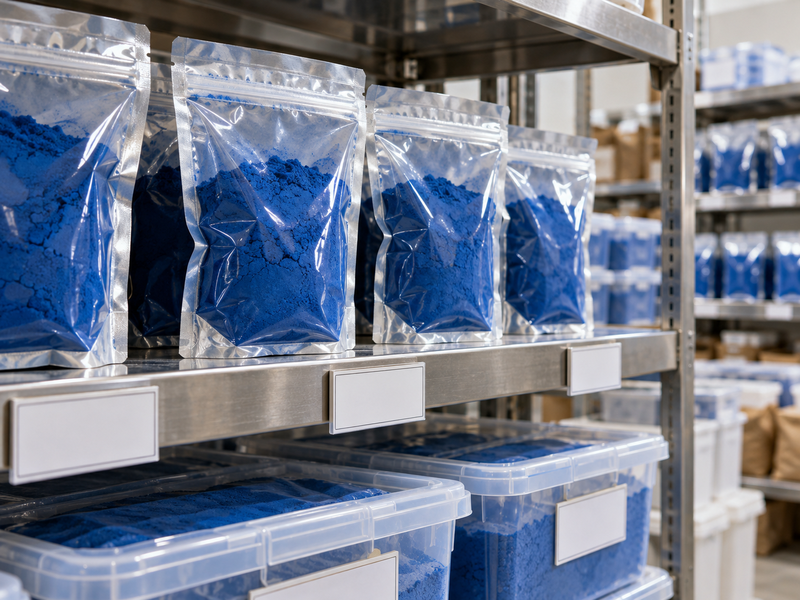
Light exposure is a known phycocyanin stressor in original experimental work, so the package can be part of color control. The shelf test starts at sealing: record pack oxygen and moisture-barrier design, headspace and time from deposit to closure. Do not claim a barrier pack solves a formula problem without comparative evidence. Include warehouse and retail light conditions where practical. Record what happens when consumers leave the pack open, but keep that separate from the sealed shelf-life decision.
8. What sampling plan can find color variation?
Sample through time and across the mass
Take samples immediately after pigment mixing, at the depositor’s start, middle and end, and after the defined setting period. Pull pieces from different belt lanes or tray locations. A single attractive center sample cannot show whether pigment settled in the bowl, entered late or concentrated near a feed port. Use a fixed visual setup and, if available, a colorimeter on consistent surfaces. Record whether readings refer to coated exterior or exposed interior.
Link samples to process time: annotate mixer speed, temperature, line stops, rework additions and holding time. A stop can create a darker tail even when average color appears fine. If the trial uses manual pre-dispersion, have two trained operators reproduce it; large operator effects suggest the method needs tighter instructions. Retain labeled reference pieces where their stability permits, and keep photographs plus instrument data when physical retains degrade.
| Sampling location | What it may reveal | Related record |
|---|---|---|
| Mixer top and bottom | Incomplete dispersion | Mixing trace |
| Depositor start and end | Hold or feed drift | Time and temperature |
| Belt lanes | Uneven deposition | Nozzle settings |
| Packed pieces | Surface or transfer change | Pack and set time |
9. How should shelf-life evidence be gathered?
Track color, texture and safety together
Pack pilot pieces in final materials at normal settings. Store a planned set under expected distribution conditions and a separate stress set chosen for a specific question, such as retail light or warm handling. At each pull, inspect exterior and interior color, tack, firmness, piece separation and package appearance. Measure water activity and perform microbiological review under the manufacturer’s food-safety plan. A visually blue piece with unacceptable texture or microbial performance cannot pass.
Use stress data carefully: it can reveal likely failure modes but does not automatically establish the labeled date. A phycocyanin review identifies pH, temperature and light as interacting variables; product-specific measurements remain necessary because marshmallow composition and pack design are distinct from aqueous model systems. Document how often packages are opened for sampling so repeated exposure does not distort results.
10. What does a production approval include?
Approve a reproducible process window
Compile approved extract lot and specification, formulation revision, dose range, addition point, product temperature, mixing parameters, density range, color standard, texture checks and packaging result. Note open deviations and who owns them. Ask QA to verify that the colorant’s permitted food use and label declaration fit the destination market; U.S. teams should review FDA’s current spirulina extract listing rather than assuming any expanded use is already effective.
The site’s OEM service overview may help coordinate commercial samples and documents, but the manufacturer must approve its own process. Set a change rule: a new extract grade, carrier, cooking profile, pack or coating method should trigger a defined reassessment. Finish with a production batch record that operators can use, not only a laboratory report that explains why a prototype looked good.
| Approval element | Owner | Evidence |
|---|---|---|
| Ingredient and use | QA | Current specification and market review |
| Color and texture | Development | Coded finished-piece comparison |
| Mixing and density | Production | Pilot batch trace |
| Pack stability | Quality | Unopened shelf-life units |
Conclusion
A useful marshmallow color trial measures the blue after whipping, setting, coating and packing while protecting texture and line yield. Select a traceable extract, find a feasible cool addition point, and approve color only alongside density and shelf-life evidence. Share the documented process window with your supplier and production team before the first commercial run; that gives every partner a clear target and fewer surprises at packing.
FAQ
Q1: Can green spirulina powder substitute for blue extract? It is a different ingredient with different particles, flavor and color behavior. A substitution needs a new trial.
Q2: Does a cool addition guarantee even blue? No. Mixing time, viscosity and addition location determine whether pigment disperses before setting.
Q3: Should color be judged before or after whipping? Both readings help diagnose the process, but finished pieces after setting determine commercial acceptance.
Q4: What if blue pieces feel sticky? Check solids, added water, density, setting and packaging moisture before attributing tack to the pigment.
Q5: Is a colorimeter enough for approval? Use repeatable measurements with visual review, texture results, safety checks and packaged shelf-life data.