
The phrase “heat stable” leaves a beverage buyer with the wrong amount of information. A drink’s color may face a warm premix tank, a heating section, a hold, cooling, hot filling and storage. The cumulative time-temperature path matters more than a single equipment setpoint.
Phycocyanin pasteurization stability should be evaluated in the process the manufacturer intends to run. A review of phycocyanin degradation reports temperature and pH effects; a beverage study on high-pressure processing examines a different processing route. Neither paper can validate a specific commercial line or its food safety. This guide gives R&D and quality a process trial that separates color performance from the independent safety validation.
Contents
- What thermal path should be recorded?
- How does heat affect the blue color?
- When should phycocyanin be added?
- How should a bench heat test be run?
- Can hot fill, short-time heat and HPP be compared?
- Which samples show where color changed?
- Who validates the food safety process?
- What should happen during shelf-life testing?
- How should pilot results be transferred to production?
- What belongs in the grade approval packet?
1. What thermal path should be recorded?
Measure the product, not only the machine
Log the product temperature and elapsed time through premixing, heating, holding, cooling and filling. Equipment setpoints can differ from what the liquid experiences, especially during startup, recirculation or a slow changeover. Note where samples are taken and whether the process is running at steady state. If the pigment enters after a heating step, record its addition temperature and subsequent hold. If it enters before heat, the full exposure belongs in the color test.
Include formula pH and the package used for the trial. A result for a neutral test solution cannot automatically predict an acidic RTD drink. Document the current commercial process as food safety and production teams have defined it; R&D can test color within that path. If color fails, changing the heating schedule is a controlled process proposal, not a casual adjustment. A useful trial log lets another plant engineer reconstruct the exposure and identify which part of the path needs investigation.
| Process stage | Record | Color question |
|---|---|---|
| Premix | Time and product temperature | Does blue change before heat? |
| Heat-up | Product temperature profile | Where does fading begin? |
| Hold | Actual residence condition | Does continued exposure matter? |
| Cooling | Rate and end temperature | Is the color still changing? |
| Fill | Product and pack condition | What reaches the shelf? |
2. How does heat affect the blue color?
Judge the outcome in the beverage
Phycocyanin is a pigment protein. Temperature can change its structure and color, while pH and other formulation conditions alter the response. The degradation review summarizes studies with different methods and preparations; it does not supply one universal safe temperature for every grade. Avoid converting a published laboratory threshold into a guarantee for a commercial drink. Test the quoted supplier lot in the intended formula.
Watch for more than a lower blue reading. Heating may produce haze, particles or a shift toward green that fails the brand target before an instrument flags a large total color difference. Measure an uncolored base through the same process because the base can darken or cloud on its own. Keep an unheated colored control to separate heat effects from mixing or storage. If a process change restores blue but alters flavor, package integrity or food safety, the color team has not finished the decision. The full product has to work.
| Observation after heat | Possible next check | Do not assume |
|---|---|---|
| Lighter blue | Instrument color and dose | All pigment is gone |
| Green shift | pH and base color | Heat is the only cause |
| Haze | Protein and solids | Color grade alone failed |
| Sediment | Particle analysis | Extra mixing will fix it |
3. When should phycocyanin be added?
Trial only feasible addition points
R&D may compare addition before heat, after cooling or at another validated stage. Each sequence changes the pigment’s exposure and the production operation. Late addition could reduce thermal contact but require new mixing, dosing and hygienic controls. It may also change the regulatory or safety basis of the line. Process engineers and food safety staff must decide whether a proposed point is practical and acceptable before R&D treats its color as a commercial win.
Use the same powder lot and target dose in each sequence. Measure the finished beverage, not only the tank sample. Note whether the pigment contacts concentrated acid or other ingredients locally before the mixture becomes uniform. Record mixing time and any material lost on vessel walls or filters. A late-addition sample made by hand after processing is a useful screen, but it is not proof that a production filler can repeat it. Advance only the sequences that have an identified process owner and a plan for pilot confirmation.

4. How should a bench heat test be run?
Match the critical exposures as closely as practical
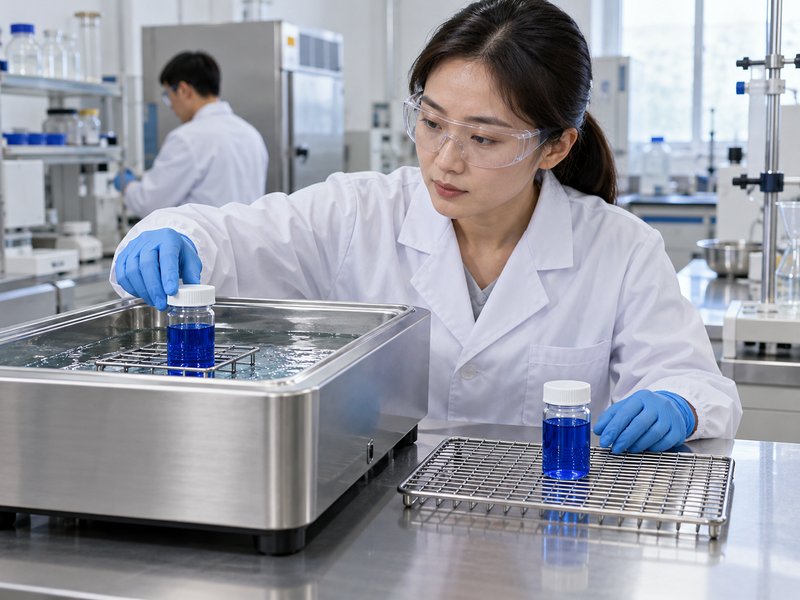
Prepare one base batch, split it into coded samples and add the same measured pigment dose. Use a monitored water bath or other controlled setup to reproduce the intended heat and cooling profile as closely as bench equipment permits. Measure liquid temperature rather than assuming the bath setpoint equals product temperature. Include an unheated colored control and an uncolored processed base. Inspect samples before heat, immediately after cooling and after a defined rest.
The bench trial is a screen for candidates and addition points. Small vessels heat and cool differently from a production line, so record those limits instead of declaring the result equivalent. If samples are opened for repeated readings, keep separate sealed portions for storage. The visual check should use fixed light and background, and any color instrument should use a fixed sample holder. A promising candidate then moves to a pilot run that measures the real line’s residence and filling conditions.
| Bench control | Purpose | Failure signal |
|---|---|---|
| Unheated colored sample | Starting blue target | Preparation drift |
| Heated uncolored base | Base process effect | Matrix darkening |
| Heated candidate | Pigment-plus-process result | Fade or haze |
| Duplicate preparation | Repeatability | Inconsistent mixing |
| Sealed retain | Later comparison | No traceable sample |
5. Can hot fill, short-time heat and HPP be compared?
Compare whole validated routes
These routes expose the beverage to different combinations of heat, time, pressure, filling and packaging. A hot-fill sample may spend time warm in the pack; a short-time heat process may cool before aseptic filling; high-pressure processing applies pressure to a packed or otherwise prepared product under its own conditions. The published HPP beverage study investigated color storage stability under studied conditions. It does not make HPP automatically suitable for every formula, package or microorganism control plan.
If the company has more than one technically valid route, compare finished packs made by each route at matched pigment dose and formula. Record process conditions and storage exposure. A paper or supplier chart that compares only peak temperature cannot settle this decision. Process choice also affects equipment, package, cost and regulatory responsibilities. Color data can help choose among validated options; it cannot authorize a different food safety process. Put the safety validation and color trial in separate sections of the project record.

6. Which samples show where color changed?
Sample before and after each critical stage
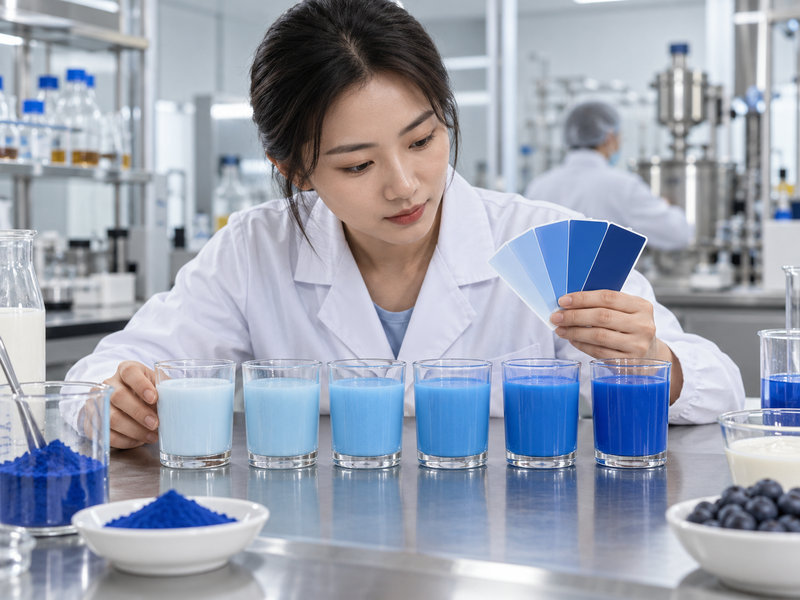
Collect samples from the mixed tank, after heating, after cooling and from finished packs where the line allows safe sampling. Use a consistent time and method for each comparison. Record product temperature, formula pH and sample ID with every aliquot. If a large shift appears between the heater outlet and the filled bottle, review cooling, hold and filling conditions before blaming the heat exchanger alone.
Assess color coordinates where a method exists, and describe haze, flocs, ring formation and sediment. Keep reference samples from an approved lot and the uncolored base. If the product is carbonated, account for bubbles and sample handling in the color method. Do not compare an opaque pack against a clear cuvette without stating the difference. Results must describe the consumer-facing product and the process stage that produced it.
| Sample point | Measurement | Diagnostic use |
|---|---|---|
| Mixed tank | Color, pH, defects | Starting condition |
| Heater outlet | Color, temperature | Immediate heat effect |
| Cooler outlet | Color, defects | Cooling/hold effect |
| Filled pack | Appearance and seal | Consumer-facing result |
| Stored pack | Dated color and sediment | Later change |
7. Who validates the food safety process?
Keep safety approval independent
The company’s qualified food safety and process team must validate the microbial control appropriate to the product and jurisdiction. A blue color that survives a lower heat exposure does not show that the beverage is safe. Conversely, a validated heat process can remain essential even when it damages a particular pigment grade. R&D should bring color evidence to the process team and ask for feasible options, not change the schedule on the strength of a photograph.
Document any proposed late addition, new package, altered fill temperature or alternate process as a formal change. The review may involve hazard analysis, cleaning, dosing equipment, closure integrity and finished-product verification. Commercial use also requires checking the destination rules for spirulina extract. In the United States, the current 21 CFR 73.530 must be checked for the exact food category; do not treat a proposed or delayed expansion as broad permission. The color trial answers a visual-performance question, not the safety or legal-use decision.

8. What should happen during shelf-life testing?
Follow the processed pack
Store packs from the pilot process under the intended distribution condition, with a documented light and temperature history. Include a suitable challenge condition if the company uses one, but keep it separate from the basis for the stated shelf life. At scheduled points, inspect shade, clarity, ring formation, sediment and package condition. Use sealed packs for each destructive checkpoint.
Compare processed packs with an unprocessed laboratory control only as a diagnostic. The commercial decision rests on the processed, packaged product. If color fades, check whether the loss began in the heater or during storage; the remedies differ. A stability review discusses heat, pH and light effects, which is why the storage record should capture all three. If the pack changes, repeat the relevant exposure test rather than assuming the old life applies.
| Checkpoint | Primary question | Record |
|---|---|---|
| Filling | What entered the pack? | Color, pH, defects |
| Early storage | Did a delayed defect appear? | Haze and sediment |
| Midpoint | Is the trend continuing? | Instrument and visual result |
| End of proposed life | Is it still acceptable? | Signed decision |
9. How should pilot results be transferred to production?
Confirm the line, not a simplified surrogate
Start with the same grade, lot, formula, dose and addition stage that passed the bench screen. Record actual residence, heating, cooling, transfer and fill data on the pilot line. Compare those measurements with the planned commercial range. A fast bench heat-up may understate the warm hold on a large tank; a pilot can reveal that difference. Take process-stage samples, then fill the proposed pack and begin the same storage schedule.
If the pilot result differs, investigate the first stage where it diverges. Check dose verification, mixing, pH and temperature records before changing the pigment. A new grade or dose creates a new trial version; do not mix its results into the first dataset. When the pilot passes, production should run a controlled first commercial batch and compare it with the approved retain. The purchase specification should identify the tested SKU and carrier, while the manufacturing instruction captures when and how it is added.
10. What belongs in the grade approval packet?
Tie the supplier lot to the tested process
Archive the exact supplier SKU, carrier declaration, ingredient specification, lot COA and retain sample. Add the formula version, dose, process trace, sample-point results, photographs, instrumental color record, pilot report and packaged-storage outcome. State any limits on use: product pH range, approved addition stage, package and validated process route. The document should name the team members who own supplier changes, quality release and any future process modification.
Procurement should quote and order the approved grade rather than a generic “blue spirulina” equivalent. Ask the supplier to notify the buyer before changes to carrier, extraction, drying or color method. If a change affects color stability, the record shows which comparison to repeat. The decision is concrete when another factory can run the same process and know what evidence means the grade still works.
Frequently asked questions
Q1. Is phycocyanin always damaged by pasteurization? Its response depends on grade, formula and exposure. Test the actual process rather than assume a universal outcome.
Q2. Can a cooler addition point solve fading? It may change color exposure, but production and food safety must approve the revised process.
Q3. Does HPP guarantee a better blue? No. Published results apply to studied conditions; test the proposed formula and package.
Q4. Is color retention proof of a safe drink? No. Microbial control requires its own validation.
Q5. What should a supplier provide for the trial? A named commercial grade, full composition, current specification, lot COA and matching sample.
Trial the grade on the intended line
Tell Spirulina CN the formula pH, process route, time-temperature history, addition point and package. Request a commercial-lot sample and current quality documents. Keep the supplier sample, pilot trace and stored packs together before approving the bulk purchase.