
A supplier may call an ingredient “unchanged” after moving production or switching its milling process. Yet the buyer’s formulation, tests and labels may depend on details behind that name. Chlorella supplier change control gives both sides a notice and approval path before changed material ships. This guide uses risk-based principles reflected in the FDA’s foreign supplier verification guidance and preventive-controls rule, while keeping contract terms distinct from legal obligations.
Contents
- Which changes could affect a chlorella buyer?
- How should supplier notice be written?
- Why do site and species changes need special review?
- What process changes can alter the ingredient?
- How should carrier and additive changes be handled?
- When do packaging changes matter?
- What if the test method changes?
- Which evidence supports approval?
- How are old and new lots kept separate?
- What should happen after an unannounced change?
1. Which changes could affect a chlorella buyer?
Map the whole supply chain
Start with the manufacturing site, biomass source and species. Then include cultivation water controls, harvest, cell-wall treatment, drying, milling, blending, packing and testing. A different contract packer or outsourced laboratory can alter release evidence even when the raw powder comes from the same plant. A change in a bag liner might affect moisture protection. A revised sales document alone can create a regulatory or receiving problem if it no longer matches the approved specification.
Use the customer’s process as a filter. A tablet manufacturer may care about particle size and compression behavior. A beverage customer may care about dispersion, flavor and sediment. A buyer also needs to know whether an allergen, carrier or processing aid has appeared. Not every change needs identical data, but each needs a named owner and a written impact decision. Include temporary substitutions during equipment repairs. Those are easy to overlook because the supplier plans to reverse them later. If the change can affect product identity, safety, function, label or traceability, it belongs in the notice system.

2. How should supplier notice be written?
Specify timing, channel and required facts
A quality agreement should list changes requiring prior written notice. Ask the supplier to provide the current state, proposed state, reason, affected product codes, manufacturing site, planned effective date and earliest affected lot. Name one buyer contact for quality approval and another for commercial coordination. An email to a salesperson who has left the company should not count as approval. Set a practical review period in the contract, recognizing that urgent safety corrections need a separate rapid escalation route.
Avoid vague language such as “material changes.” Give examples: species, production location, cell-wall breakage method, drying equipment, carrier, inner liner, analytical method and specification. State whether shipment may occur before approval. The default should be clear for each change class. A supplier should also say whether existing inventory was made before or after the change. Save the notice and buyer decision beside the product specification. For U.S. importers, the FDA FSVP guidance describes evaluation and verification responsibilities where applicable; a contract notice supports that work but does not replace it.
| Notice field | Supplier provides | Buyer uses it for |
|---|---|---|
| Old and new state | Specific description | Impact review |
| Affected codes | Product and lot range | Inventory control |
| Effective date | Planned production date | Trial scheduling |
| Evidence | Data and methods | Approval decision |
3. Why do site and species changes need special review?
Check identity and control history again
Moving biomass cultivation or powder manufacture to another site can change water source, equipment, sanitation, environmental exposure and regulatory scope. The supplier’s current audit or certificate may not cover the new address. Request the new site’s process map and site-specific evidence. Check whether upstream activities remain in the same ownership chain. A site move should not be described merely as a warehouse change if drying or packing has moved too.
A species or strain change can affect ingredient identity and the customer’s approved label. Ask for the exact scientific name and the method used to confirm it. A trade name is not enough. Compare nutrition, composition, sensory character and functional behavior with the approved material. The buyer’s regulatory team should assess destination-market labeling and claims before purchase. Keep commercial samples from old and proposed new sources under distinct codes. If both are offered simultaneously, traceability must show which one filled each bag and each customer order. A short supply interruption is easier to manage than an unrecognized identity change after production.

4. What process changes can alter the ingredient?
Compare output, not just equipment names
Cell-wall disruption, harvest concentration, dryer configuration and mill settings can alter powder structure and handling. A supplier may change blade size, pressure or residence time for an operational reason; the buyer may see different particle size, bulk density, color, aroma or dispersion. Ask which parameters change and whether previous validation still covers the new range. The answer should include planned trials under commercial conditions, not only a lab blend.
Consider a common case: a new mill screen reduces oversized particles but creates more fines. The COA may still meet a broad particle-size limit, while a customer’s feeder begins bridging. Compare actual distributions and run the buyer’s process trial. For drying changes, inspect moisture, water activity and microbiological controls separately. For cell-wall claims, insist on a defined measurement; do not infer improved absorption from physical breakage alone. Record cleaning and line clearance when a new product shares equipment. If the supplier cannot explain which output attributes might shift, pause approval and build a smaller trial plan together.
| Process change | Output to compare | Useful trial |
|---|---|---|
| Wall disruption | Structure and size | Approved method comparison |
| Drying | Activity and sensory | Multiple lot samples |
| Milling | Size and flow | Customer feeder trial |
| Blending | Uniformity | Start/end sampling |
5. How should carrier and additive changes be handled?
Treat composition as a contractual boundary
An ingredient sold as pure chlorella powder should not acquire maltodextrin, silica or another carrier without buyer approval. Even a small processing aid may affect declaration, nutrition, allergen statements or a customer’s clean-label promise. Ask for the full composition and purpose of any proposed addition. Review the destination market’s rules with qualified regulatory staff; the same declaration language may not work everywhere. Confirm whether the additive enters the cultivation medium, the drying step or a later blend.
Do not settle for “food grade.” That phrase does not answer whether the ingredient suits the buyer’s specific product, claim or customer agreement. Request revised specification, safety information, test methods and trial material with its own code. Compare flavor, flow and processing performance using the actual commercial formulation. If the customer approves one carrier level, put that level and tolerance in the controlled document. A supplier may offer a non-carrier alternative such as better humidity control or different pack design. Evaluate those options against cost and technical need rather than accepting a formula change as an invisible manufacturing adjustment.

6. When do packaging changes matter?
Review the food-contact layer and the route
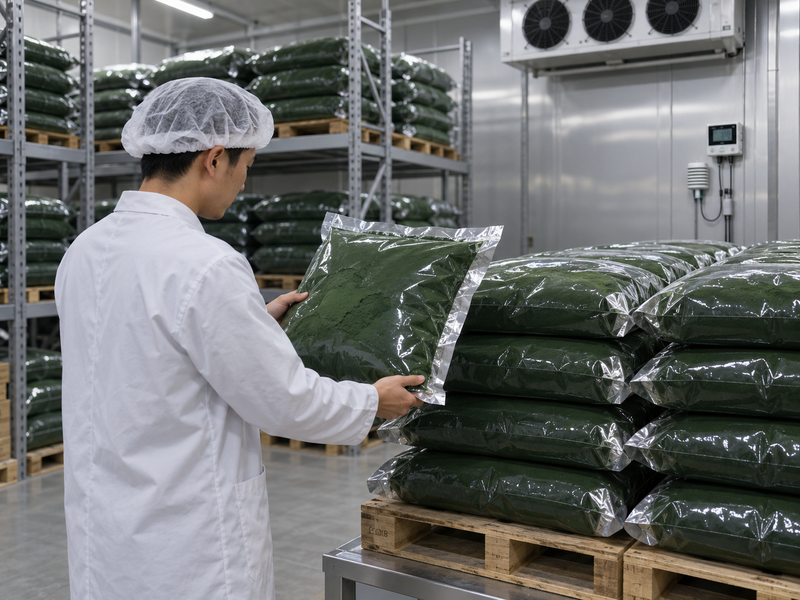
A new inner liner, closure method, bag size or pallet pattern can affect moisture exposure, handling and lot identification. Ask whether the new material has the same food-contact suitability for the intended market and whether its water-vapor barrier meets the approved need. Check seal testing and transport trials. The FDA warehousing provision provides U.S. context for protecting food in storage and distribution where applicable, but buyers still need a product-specific packaging decision.
A tiny pack change may reach far. A larger bag might stay open longer on the buyer’s line. A new pallet wrap may hide labels needed for receipt. A less robust seam may fail during sea freight. Test the proposed pack in actual unloading, storage and opening conditions. Photograph the approved arrangement and place its drawing under change control. Verify whether the supplier’s retain samples use the same container; a glass jar may not represent the commercial liner. If the package update is approved, tell warehouse and receiving staff what new packs should look like before arrival.
| Packaging change | Buyer concern | Evidence |
|---|---|---|
| New liner | Moisture and contact | Material data and trial |
| New seal | Leak risk | Seal inspection results |
| New bag size | Open time and handling | Production trial |
| New label | Lot readability | Artwork approval |
7. What if the test method changes?
Keep old and new results comparable
A method change can shift reported results without changing the powder. Ask why the supplier proposes it, which specification items it affects and how the two methods compare across representative lots. Check detection limits, units, sample preparation and laboratory accreditation scope where relevant. A revised method may be technically better, yet old trend lines cannot simply continue without an interpretation rule. Retest retained material by both methods if the comparison requires it.
Look for the silent change: a COA header stays the same while the laboratory’s underlying method changes. Require method identifiers and revision dates on reports or in a controlled method list. For tests central to release, agree on handling results that pass one method and fail another. The buyer may need its own laboratory review before approving new limits. Do not backdate the revised specification. Record the earliest lot tested under the new method. That record prevents later disputes over a sudden apparent increase in contamination or a change in “broken cell” percentage that reflects measurement rather than manufacturing.
8. Which evidence supports approval?
Match evidence depth with the risk of the change
Approval may require an updated process flow, hazard review, validation summary, comparative COAs, stability work, customer application trial and revised specification. A site change may call for an audit. A label change may call for artwork and regulatory review. A new inner liner may need contact and transport data. Ask the supplier to make a clear claim about what will remain comparable, then test that claim with results from material made under the proposed commercial conditions.
Set acceptance criteria before the trial. Otherwise both sides may interpret mixed data to favor their preferred outcome. Record who reviewed safety, function, regulatory and commercial effects. Do not make a purchasing signature stand in for a quality approval. The FDA FSVP guidance emphasizes risk-based supplier evaluation for covered importers; use a similar discipline in the agreement without claiming every suggested document is legally required. If evidence remains incomplete, approve only a controlled trial lot or defer the change. State the limits of any conditional approval.
| Change risk | Common evidence | Decision |
|---|---|---|
| Low administrative | Corrected document trail | Document approval |
| Packaging | Barrier and handling trial | Pack approval |
| Process | Comparative lots and trial | Quality approval |
| Site or species | Identity, controls, audit | Full requalification |
9. How are old and new lots kept separate?
Make the cutover visible on every record
The supplier should assign a clear effective lot and maintain genealogy from biomass through finished bags. The buyer should create distinct item or version status where needed, especially when old and new material cannot be used interchangeably. Mark trial lots plainly and prevent warehouse substitution. A commercial invoice should not merge two process versions under a single undifferentiated line if the buyer approved only one. Reconcile remaining old stock at both sites before the new version ships.
Ask for an example trace. Select one old and one new bag and follow each to its manufacturing record and customer shipment. If material is blended across the cutover, record proportions and evaluate whether the blend itself needs approval. Keep retain samples from both versions under documented storage. Provide customer-service staff with the effective date and codes so they can answer a complaint accurately. An approval note that no one can connect to a physical bag has little value. The cutover plan should work during a hurried warehouse shift, not just in a meeting room.

10. What should happen after an unannounced change?
Hold scope and reconstruct facts
Quarantine affected incoming and in-process material, identify the earliest changed lot and ask the supplier for a complete change record. Check whether finished customer products contain that material. The quality team should assess safety, identity, label and function using actual data. A sales assurance that “nothing significant changed” is not a disposition. Determine whether the event reflects a notice failure, a process-control problem or both.
Set corrective actions with owners and effectiveness checks. Close the commercial loop: agree on returns, replacement and customer communication through the quality agreement. Update the approved supplier file only after the buyer decides whether the changed state is acceptable. If stock has already shipped, trace affected lots before making a recall or withdrawal decision. The FDA recall-plan provision applies in its defined context; do not assume every chlorella shipment falls under that precise requirement. Strong change control makes such decisions faster because it preserves lot boundaries and written ownership.
| Immediate step | Output | Owner |
|---|---|---|
| Identify affected lots | Scope list | Supplier quality |
| Hold material | Inventory status | Buyer warehouse |
| Compare evidence | Risk assessment | Buyer quality |
| Correct notice failure | Verified action | Both parties |
FAQ
Q1. Does every supplier change need buyer approval? The quality agreement should classify changes; identity, safety, function and package changes often warrant prior review.
Q2. Can a supplier ship during review? Only if the written agreement and a specific buyer decision permit it. Keep affected lots separately identified.
Q3. Is a new COA enough for a site move? Usually not. Review the new site’s controls, scope and production evidence.
Q4. Why review a laboratory method change? Results may shift because measurement changed, even when powder composition did not.
Q5. What if a change was hidden? Hold affected lots, trace the cutover, assess risk and document a corrective action before any new approval.
Chlorella supplier change control works when notice reaches the right people before changed material reaches the dock. Put specific changes, evidence and timing in the quality agreement. Then test the cutover with a real lot code. A few disciplined records can spare customers an expensive label, quality or production surprise. The FDA’s FSVP guidance offers further reading for covered U.S. importers.