
A finished chlorella bag may carry a clear code while its biomass history remains hard to retrieve. Chlorella lot traceability connects culture and harvest records to drying, blending, packing and customer shipment. Buyers can test that connection with a mock trace before a problem arises. The FDA’s food traceability overview distinguishes the additional rule for listed foods from broader recordkeeping; do not assume chlorella powder automatically falls on that list.
Contents
- What should a chlorella lot code identify?
- How can culture and harvest records connect?
- What links wet biomass to dried powder?
- How should blending and repacking be recorded?
- Which labels must match shipment records?
- What does a backward trace test show?
- What does a forward trace test show?
- How should quantities be reconciled?
- How can a buyer run a mock recall?
- What should a failed trace test change?
1. What should a chlorella lot code identify?
Give every physical batch a usable identity
A lot code should take a person or system to a defined manufacturing event, product version and quantity. The code alone may not display every detail, but its linked records should reveal site, source biomass, process dates, tests and pack count. Define when a new code is assigned: harvest, dryer run, blend and finished pack may each need distinct identifiers. A broad code covering unrelated production runs can make a quality event harder to contain.
Start with a bag in hand. Ask the supplier to retrieve its manufacturing and release record without relying on one employee’s memory. If several biomass lots entered that bag, the record should name each. If the same powder was packed on different days, identify pack lots separately. Product names need similar discipline: whole chlorella powder, disrupted-cell powder and a formulated blend should not share an ambiguous grade label. The customer’s purchase order should carry the exact product code and specification revision so a later trace does not answer the wrong question.
2. How can culture and harvest records connect?
Preserve source identity before biomass is pooled
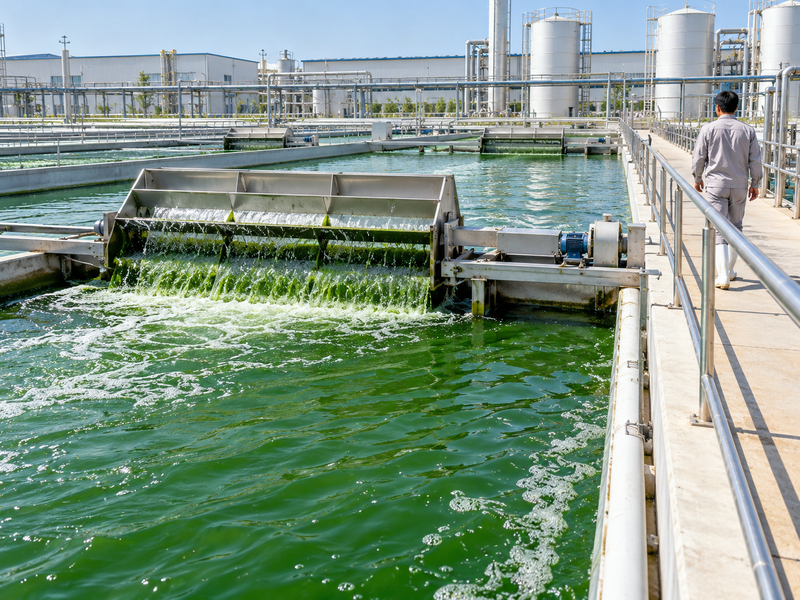
At the cultivation stage, record the culture identity, site or reactor, relevant input lots, harvest date and material transferred. If biomass from several harvests is pooled, the blend record must list each source and its contribution. A supplier may use continuous or semi-continuous operations; the lot rule should explain how material is bounded over time. A buyer need not dictate every farm form, but should know how the supplier can investigate a water-system concern or a late test result.
Try a source question: choose one finished bag and ask which harvest records fed it. The answer should emerge from executed production records, not a generic flowchart. When wet biomass is held before drying, log container, hold conditions and transfer time. A break in source identity at that point cannot be repaired by placing a new finished code on the bag. Where biomass comes from another company, request a controlled receiving code that retains the original supplier and lot. The record chain should follow material even when it crosses legal entities.
| Upstream event | Record | Link forward |
|---|---|---|
| Culture | Identity and site | Harvest run |
| Harvest | Date and vessel | Wet biomass ID |
| Pooling | Source lots | Combined feed ID |
| Transfer | Container and time | Dryer input |
3. What links wet biomass to dried powder?
Map every dryer run and collection point
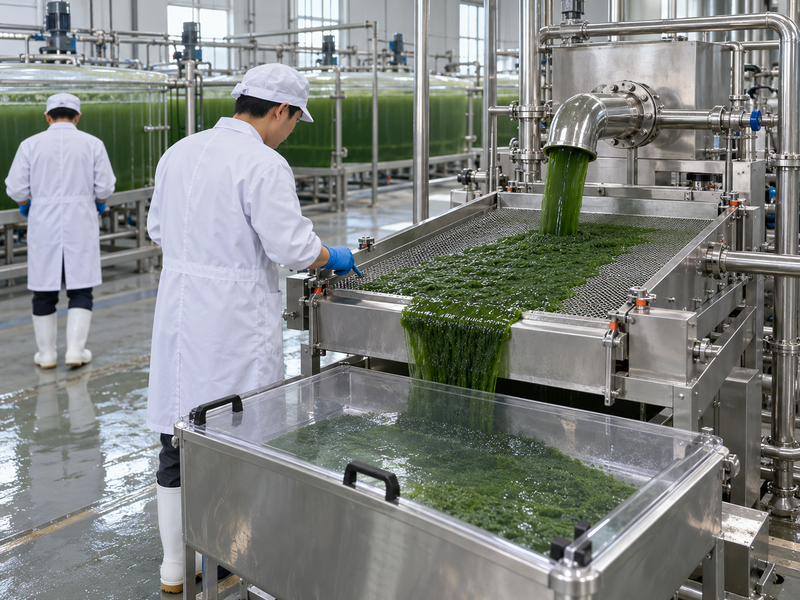
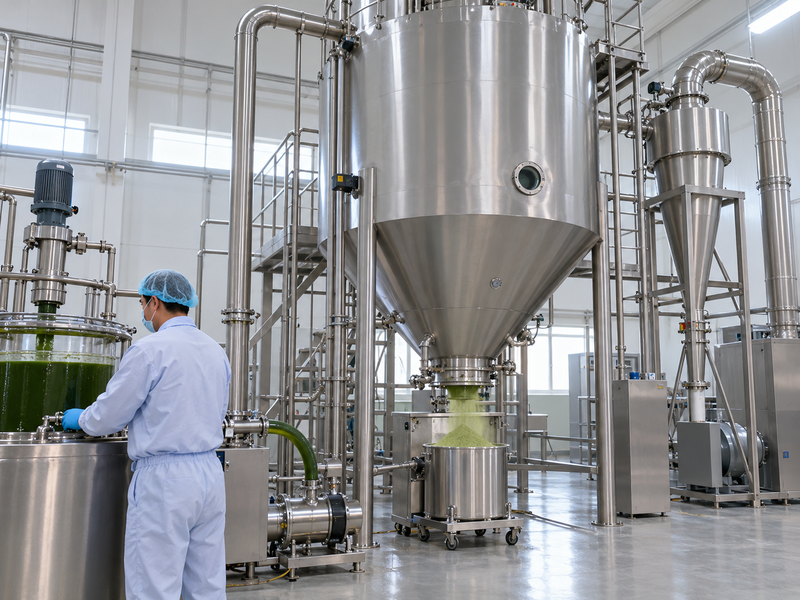
Wet feed entering a dryer may come from one or several harvest containers. Record those source IDs, start and end times, equipment ID, output bins and collected quantities. If the line retains powder in ducts or filters, the supplier should explain its carryover and cleaning controls. A run boundary should be meaningful: merely resetting a counter does not separate physical product left in equipment. Review how the site clears a line between grades or harvests.
A realistic handoff: biomass code CL-WET-A feeds dryer run CL-DRY-A, which fills collector CL-COL-A. Those are illustrative codes, not actual factory results. A quality reviewer should be able to follow the source and output without a handwritten guess. If CL-COL-A is split for different customers, retain that link in each pack record. Drying parameters and sample results should remain tied to the run. A separate COA may summarize finished powder, but it should not replace the production map. When a drying deviation occurs, these links define the powder that must be held.
4. How should blending and repacking be recorded?
Treat every mix or split as a genealogy event
Blending creates a new material relationship. Record all input lot codes, actual weights, blend equipment, processing time, final output and rejected material. If a failed source lot enters a blend, every related finished pack may need review. Conversely, an overly broad blend record may force a buyer to hold more stock than necessary. A repacker should preserve original manufacturing codes even when it assigns its own commercial labels. Ask for a cross-reference that is controlled and retrievable.
Watch returns and rework. Product returned from a customer, sieve overs, line sweepings or recycled powder should never slip into a new batch without a documented, approved rule. The record should say whether rework is allowed at all and how its source remains visible. A distributor may split one bulk bag into smaller units; those units need a packing record, new pack code and link to the original sealed source. Check whether sampling at repack changes shelf life or seal status. The customer should be able to distinguish manufacturing lot from repack lot on documents.
| Event | Input record | Output record |
|---|---|---|
| Blend | All source lots | New blend lot |
| Split | Source bulk lot | Child pack codes |
| Repack | Original manufacturer lot | Repack and seal log |
| Approved rework | Source and reason | New affected lot |
5. Which labels must match shipment records?
Read the bag and the paperwork side by side
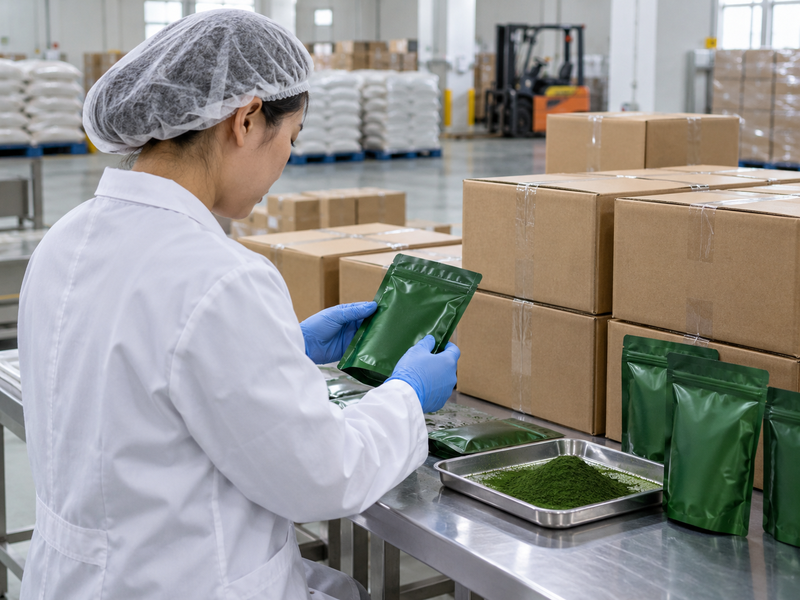
Compare finished bag label, pallet label, COA, packing list, invoice and order acknowledgment. The product code and lot should match directly or through a documented mapping. A shipping label may also show a logistics code; that is acceptable when the quality record can link it to the actual manufacturing lot. Record quantities by lot. If one shipment contains multiple lots, each lot’s bag count and location should be clear to the receiver.
A frequent problem: a trading firm issues a COA with its own stock code while the manufacturer’s bag shows a different code. Ask for the controlled cross-reference before release. A typed explanation in an email is less reliable than a document tied to the shipment. Inspect labels for durability and legibility after transit. When pallets are wrapped, staff should still be able to read a pallet ID without opening bags. Keep a photo of an approved label in the supplier file. A code that survives shipping but cannot be matched to the customer shipment defeats much of the trace program.
6. What does a backward trace test show?
Begin with a customer pack
Select a real delivered pack code, then work backward to pack run, blend, dried powder, wet biomass and culture or source supplier. Retrieve release results, deviations and any outsourced processing record. The exercise tests whether the supplier can identify inputs behind finished stock. It should also check document revisions and whether a product changed process or site mid-order. Record how long retrieval took and which records were missing.
Do not accept a diagram as the result. A diagram describes the intended system; executed records show what happened to the selected material. Choose a recently shipped lot rather than a rehearsed training example. Ask whether all input lots are visible and whether quantities make sense. The supplier may redact other customers’ names while still proving an auditable chain. For a buyer, a backward trace helps investigate a finished-product complaint: the specific raw material and process history can be assessed without blaming every chlorella lot in the warehouse.
| Start point | Trace backward to | Evidence |
|---|---|---|
| Customer bag | Final pack operation | Batch record |
| Packing run | Blend or powder | Input list |
| Powder | Dryer run | Feed map |
| Feed | Harvest source | Culture and transfer log |
7. What does a forward trace test show?
Start with a suspect source
Choose one biomass or process lot and ask which dried powder, blends, finished bags, warehouses and customers received it. Forward tracing defines the scope of a possible withdrawal. The supplier should include on-site finished inventory, in-transit stock and customer deliveries. If the ingredient entered a distributor’s repack process, the mapping must follow child packs. A sales ledger alone may list customers but not identify which lots were physically sent.
Make the question precise: if source CL-WET-A later fails a relevant test, what stock could contain it? The answer should list linked material and justify exclusions. A supplier should not omit retain samples or quarantine stock from its reconciliation, even though those are not customer shipments. The FDA food traceability rule adds records for foods on its Food Traceability List; it is not a blanket rule for all chlorella powder. The operational need for a forward trace still exists under sound quality management and applicable general food requirements.
8. How should quantities be reconciled?
Account for material at every step
For each transformation, compare documented input quantity with packed output, legitimate process loss, samples, retained material, rework and waste. The numbers will not always match perfectly because wet biomass loses water during drying. The supplier should use an expected mass-balance model appropriate to that step, with approved tolerance and explanation of differences. Do not compare wet input kilograms directly with dry output kilograms and declare a shortfall without considering solids content.
The value lies in exceptions. An unexplained extra bag can signal mixed lots or record error. A missing pallet can make a forward trace unreliable. Review both physical inventory and system transactions. If a rework lot entered a blend, its weight belongs in the input side. If a split bag was discarded, the disposal record should close its identity. A mock trace should produce a reconciliation signed by someone independent of the original operator. Quality staff can then identify whether gaps are clerical, measurement-related or physical. Close each gap before assuming a recall scope is complete.
| Step | Reconciliation question | Typical record |
|---|---|---|
| Harvest | Where did wet mass go? | Transfer and hold log |
| Drying | How did solids convert? | Feed/output and loss log |
| Packing | Where is every bag? | Pack and reject count |
| Shipping | Which customer got which lot? | Dispatch and receipt |
9. How can a buyer run a mock recall?
Rehearse a real decision with a harmless trigger
Agree on a fictional trigger, such as a questionable source lot or an unexpected test result. Ask the supplier to identify all linked finished lots, remaining inventory, shipments and customers. Set a time target jointly rather than presenting a universal regulatory promise. Keep the exercise clearly marked as a drill so no real customer is alarmed. The buyer can run its own trace from received bags into finished products at the same time.
Ask the awkward question: what evidence supports each excluded lot? A trace that names affected stock but cannot justify exclusions may still be too broad or too narrow. Have participants retrieve actual files and contacts, not just explain what they would do. The FDA recall-plan rule applies where its conditions are met; use its concepts carefully rather than claiming every chlorella supplier must follow that exact section. After the drill, document elapsed time, missing records, reconciliation gaps and corrective actions. Repeat after meaningful process or system changes.

10. What should a failed trace test change?
Fix the broken link and retest it
Identify whether the gap lies in code design, operator recording, software mapping, repack records or quantity reconciliation. Hold any affected material if a real safety or identity concern exists; a drill failure alone may call for a different response. Assign an owner and deadline. Update forms, training and system rules, then run another trace on a different lot to see whether the repair works. Merely rewriting a procedure does not prove that executed production records improved.
Share the outcome with purchasing and the supplier account team. A useful supplier scorecard can track trace completion and corrective-action closure without inventing a pass rate from one rehearsal. Revisit quality-agreement language if a distributor or contract packer caused the gap. Make sure the buyer’s receiving codes also preserve supplier identity; a perfect factory trace ends too early if the customer’s own warehouse loses the lot link. Chlorella lot traceability is strongest when both organizations can answer the same material question from opposite ends of the chain.
| Gap | Likely repair | Retest |
|---|---|---|
| Missing input code | Mandatory scan or field | New blend lot |
| Repack disconnect | Controlled cross-reference | Child pack trace |
| Quantity gap | Reconciliation step | Different production run |
| Customer gap | Dispatch lot capture | Recent shipment |
FAQ
Q1. Does a printed lot code prove traceability? No. The code must lead to executed input, process, pack and shipment records.
Q2. Must chlorella powder follow the FDA’s additional food traceability rule? Check the current Food Traceability List and the product’s actual status; do not assume universal coverage.
Q3. Can several harvests enter one finished lot? Yes, if blending is controlled and every source remains visible in genealogy and affected-scope decisions.
Q4. What is a mock recall for? It tests whether people can retrieve real records, reconcile stock and identify all affected customers promptly.
Q5. Should a distributor keep original manufacturing codes? Yes. Its new stock code should map reliably to the original supplier lot and any repack event.
Chlorella lot traceability must work backward from a delivered bag and forward from a suspect source. Ask for one live demonstration and a quantity reconciliation before treating a supplier’s chart as evidence. Then test your own receiving-to-finished-product link. The FDA’s Food Traceability List helps clarify where additional U.S. record rules apply.