
A smoothie chain can approve a bright green sample centrally yet serve drinks that vary by location. Staff scoops, cold mixing, open pouches and replenishment timing all affect the customer’s cup. This guide to spirulina powder for smoothie chains bulk foodservice turns those problems into a practical ingredient and service-pack decision. SpirulinaCN’s product page lists whole green spirulina grades, including standard and ultrafine options. Chain operators should ask which current lot and pack can support their menu, then verify the result in actual stores.
Contents
- Which menu items and serving conditions define the purchase?
- What whole-powder grade should a chain trial?
- How can stores deliver the intended dose?
- What cold-dispersion test reflects service reality?
- Which menu flavors need separate sensory approval?
- What pack size fits store consumption?
- How should open-pack handling be specified?
- How should a multi-store pilot be scored?
- What documentation belongs in the chain’s supply file?
- How should demand become a replenishment quote?
1. Which menu items and serving conditions define the purchase?
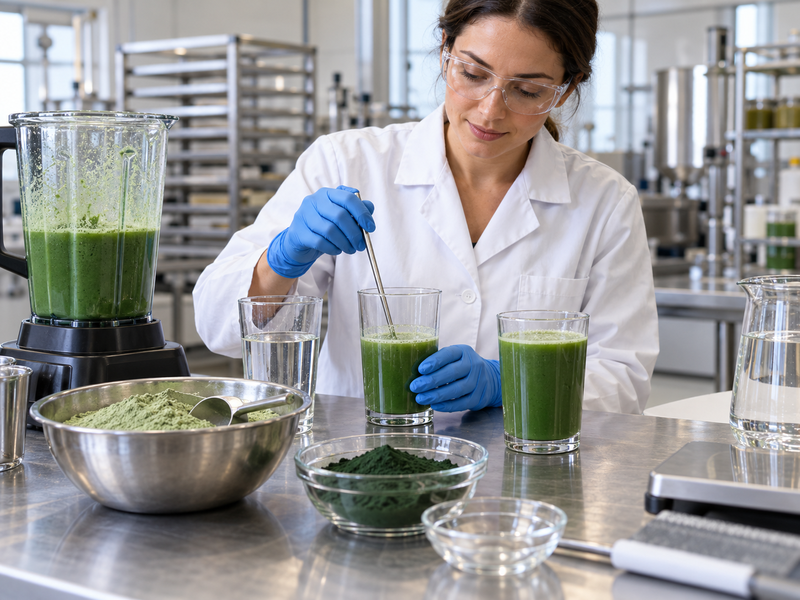
List every beverage that will carry green spirulina, the portion size, the intended dose, the liquid base, fruit and acid ingredients, sweetness, temperature and hold time. A powder approved in a dense mango smoothie may be conspicuous in an unsweetened oat drink. Decide whether spirulina is a visible menu feature or a minor greens component. The latter still needs disclosure and an appropriate sensory standard. Record whether stores blend each cup, prepare a batch for a short service window, or dispense a premade base. The supplier cannot select a useful grade from “smoothie application” alone. Start with the cup: evaluate powder in the exact menu recipe and service route. This article covers ready-to-use whole green powder and store execution. A manufactured dry smoothie premix needs a different qualification plan; the site’s premix guide addresses that separate product.
| Menu input | Record before RFQ | Why it changes the test |
|---|---|---|
| Base | Water, dairy or plant milk | Flavor and color contrast |
| Fruit/acid | Recipe and pH target | Sensory balance |
| Service route | Per cup or batch | Holding and settling |
| Dose | Grams per serving | Cost and acceptance |
2. What whole-powder grade should a chain trial?
The site’s listed SP-FG-100 is a standard whole-biomass grade at 80–120 mesh; SP-UF-200 is described as 200–300 mesh for smoother drink applications. These listings are starting points, not proof that one grade works in your blender or that a specific pack is in stock. Ask for matched samples, current TDSs and lot COAs. Test the standard grade first when the smoothie is thick and its cost matters, and test the finer grade if grit or settling affects service. A finer powder can also dust more during staff handling. Keep “green spirulina” distinct from blue phycocyanin extract, which is a different ingredient with different formulation and regulatory questions. Use a grade gate: approve a powder only if it meets taste, texture and line handling targets in the intended recipe. For a chain, a nominal mesh range matters less than the portion customers receive after a busy shift.
3. How can stores deliver the intended dose?
A scoop is convenient but can vary when powder density changes, staff level the scoop differently or a pouch has settled. Establish the target grams per cup from your tested formula. Weigh a series of staff scoops at opening and later in the day, then set a practical tolerance. Consider a calibrated measure, preweighed portion or controlled dispenser if variation is too high. Do not describe a “teaspoon” dose as though it were a weight. Train staff on order of addition, because dumping dry powder onto ice or a wet blender wall may create clumps. Include a clear substitution rule: staff should not increase spirulina to “make it greener” without recipe approval. A customer-facing cup depends on operator behavior as well as supplier quality. Use the same scale and batch sheet when comparing outlets. Record discarded cups and rework; an ingredient with a low quoted price may be costly if repeated drinks fail visual standards.
| Dosing route | Advantage | Main control |
|---|---|---|
| Weighed single portion | High repeatability | Labor and pack waste |
| Calibrated scoop | Fast service | Periodic weight check |
| Bulk dispenser | Consistent workflow | Cleaning and calibration |
| Commissary batch | Central control | Hold time and distribution |
4. What cold-dispersion test reflects service reality?
Prepare the beverage with chilled ingredients and the blender model used by stores. Time the mixing step instead of giving a laboratory sample unlimited blending. Inspect surface clumps, wall deposits and powder left beneath blades. Pour into a clear cup and check at handoff, after a realistic queue delay, and at the end of the intended consumption window. Score sediment and whether a gentle swirl restores a uniform drink. If a recipe uses a viscous base, compare powder addition before and after the liquid; the ordering may determine wetting more than a small mesh difference. Separate “suspends in a smoothie” from “dissolves,” because whole biomass remains particulate. The site’s grade descriptions distinguish standard and ultrafine powders, but your cold test decides whether either works. Keep service constraints: if a blend requires an extra thirty seconds, include that labor impact in menu approval.
5. Which menu flavors need separate sensory approval?
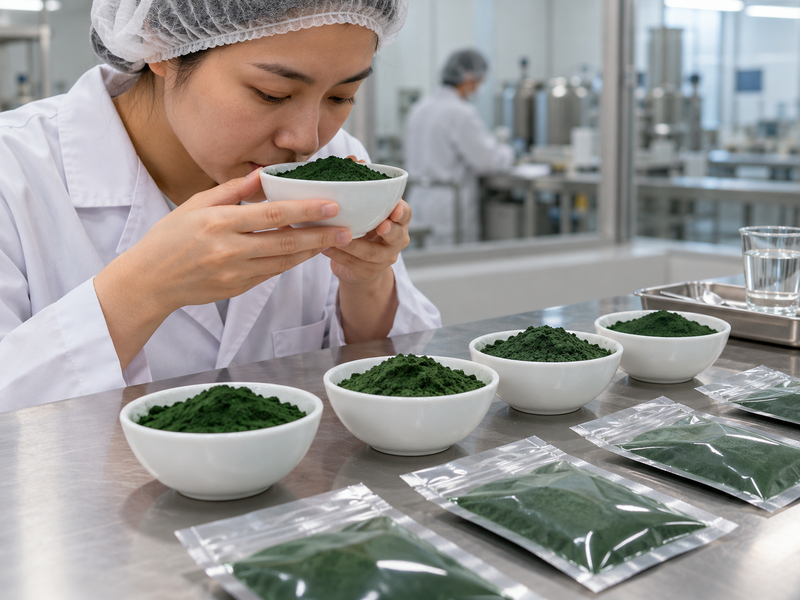
Choose at least a strong fruit recipe, a mild recipe and the least sweet option that might carry spirulina. Run a blind comparison against each recipe’s unchanged control. Ask tasters about aroma before the first sip, flavor during drinking, aftertaste, color expectations and overall purchase willingness. A strong berry base can mask an algal note while also changing green to an unattractive brown. Citrus may shift perception in another direction. Do not approve a powder on color alone. Document the actual dose and serving temperature for each sensory panel. Staff may describe an unacceptable drink as “healthy tasting,” but that phrase will not tell purchasing which lot or dose to reorder. Establish simple pass criteria, such as a minimum preference score and no recurring off-note, before looking at results. If the dose needed for menu marketing fails taste, revisit the menu promise or recipe rather than pushing staff toward unapproved mixing shortcuts.
| Sensory sample | Reason to include | Decision question |
|---|---|---|
| Strong fruit | Flavor masking | Is spirulina still noticeable? |
| Mild base | Reveals off-notes | Is the target dose acceptable? |
| Acidic recipe | Color and taste interaction | Does appearance remain appealing? |
| Delayed cup | Service wait | Does sediment or aftertaste change? |
6. What pack size fits store consumption?
Translate menu forecast into powder grams per store per week. Multiply expected drinks by the approved dose, then add a measured allowance for training and waste. Compare that number with candidate service packs, such as 1 kg or 5 kg pouches, only after the supplier confirms availability for the chosen grade. A store using little powder may keep a large open pack for too long; a high-volume location may generate excessive opening labor with small pouches. Consider storage space, number of staff access points, sealed-pouch inventory and ease of dating an opened pack. The site’s spirulina page lists bulk grade packaging, so the chain should request its actual foodservice configuration rather than assuming those drums translate directly into store packs. Calculate both levels: a commissary may buy bulk, while outlets need controlled service units. Quote both if repacking is involved and clarify who is responsible for food-safe packing and labeling.
7. How should open-pack handling be specified?
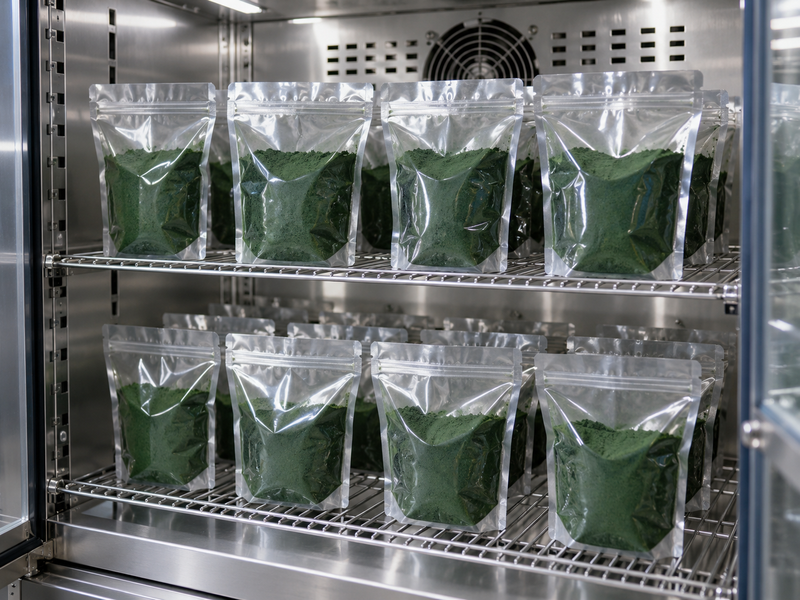
Write a short store procedure: inspect seal at receipt, record lot and opening date, reseal promptly, use a dedicated dry utensil, avoid wet hands and store under conditions stated for the approved SKU. Set the open-pack use period from supplier guidance and your own quality evaluation; do not invent a universal number. Staff should report caking, changed odor or color and damaged packaging instead of trying to break up material in a blender. Keep unopened stock separate from active service stock to make rotation visible. If powder moves into an in-store bin, establish cleaning, labeling and traceability rules. A central office needs enough information to trace a complaint back to a pouch and supplier lot. FDA’s food CGMP overview describes sanitation and process controls, but each operator must determine its applicable foodservice obligations. Good handling protects a qualified ingredient from avoidable variation.
8. How should a multi-store pilot be scored?
Pilot at locations with different traffic levels and staff experience. Give each the same approved recipe, powder lot, pack and training sheet. Collect actual scoop weights, preparation time, remakes, waste, cup appearance and customer feedback over enough service periods to include a rush. A central kitchen trial misses the pressure of a queue and repeated pouch opening. Compare stores on standardized measures, then investigate outliers. If one location has more clumps, check ingredient sequence, blender maintenance and ice loading before changing powder grade. If all locations see the same issue, reconsider the grade or recipe. Photograph cups at the same service time under consistent light; aesthetic judgments from different phone filters are weak evidence. Log lot and pouch codes with every observation. Approval should require a process that new staff can reproduce, not a drink made perfectly by a single product developer.
| Pilot measure | Store record | Approval use |
|---|---|---|
| Dose variation | Sampled grams per cup | Portion control |
| Prep time | Seconds added per order | Labor model |
| Remakes | Count and reason | Cost of execution |
| Cup quality | Standardized score | Menu consistency |
9. What documentation belongs in the chain’s supply file?
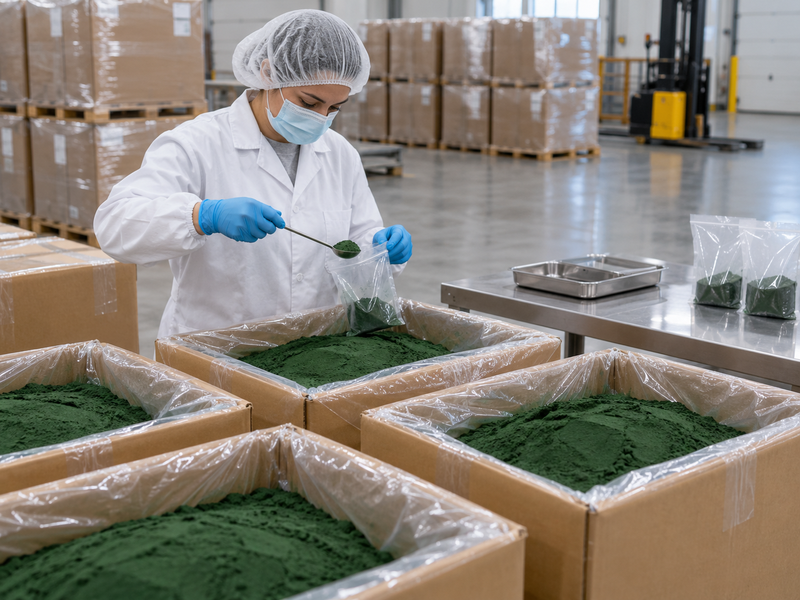
Keep the current ingredient specification, lot COA, identity and composition, declared pack format, storage instructions, shelf-life basis, allergen statement where relevant, and the chain’s approved sample record. Ask for food-safety system evidence appropriate to the market and risk. Verify any organic or other certification against the actual product scope and current status. The supplier should identify the legal selling entity, manufacturing site and lot code format so procurement can match invoices, packs and COAs. Retain the recipe version and store procedure alongside these documents. This prevents a good supplier from shipping a different mesh or pack than the pilot used. Determine whether the chain will make nutrition or health claims and have the responsible team review them against destination rules. A supplier’s ingredient brochure cannot approve a finished-menu statement. Make the file useful for both procurement and store operations, not an archive of unrelated certificates.
10. How should demand become a replenishment quote?
Forecast servings by menu item and location. Convert approved grams per serving into monthly powder need, then separate expected trial, launch and stable-run volumes. Request price at those volumes, current MOQ, service-pack availability, lead time, delivery term and whether the same grade can be held across scheduled orders. Confirm how lot transitions will be communicated and when a changed grade needs reapproval. Build a small buffer from observed demand variation and delivery time rather than ordering a fixed “bulk” quantity with no store-level calculation. A chain that wastes powder after opening may prefer a smaller pack despite a higher price per kilogram. The purchase decision: select the grade and pack with the lowest reliable cost per saleable cup that passes sensory and staff-execution gates. Recheck after launch using actual consumption and remake data. A supplier can quote more accurately when the menu base, target dose and location footprint are disclosed.
| RFQ field | Chain input | Supplier response needed |
|---|---|---|
| Approved recipe | Dose and base | Matched grade sample |
| Store demand | Monthly grams by location | Pack and MOQ |
| Destination | Delivery points | Freight and trade term |
| Launch plan | Trial and rollout dates | Availability and lead time |

FAQ
Q1. Is green spirulina powder the same as blue spirulina extract? No. Whole green biomass contributes color, flavor and solids; blue extract is a separate phycocyanin-rich ingredient.
Q2. Should every store receive a 5 kg pouch? Not automatically. Compare expected use during the validated open-pack period with handling and storage conditions.
Q3. Can a finer mesh solve all clumping? No. Powder addition order, liquid volume and blending time also matter; test the exact store procedure.
Q4. Can staff dose by teaspoons? They need a validated weight equivalent and periodic checks because a volume measure can vary with packing and powder density.
Q5. What should the first supplier sample include? Ask for an identifiable lot, current TDS and COA, pack details and storage guidance for the candidate grade.
Turn a menu idea into repeatable cups
For spirulina powder for smoothie chains bulk foodservice, the best purchase fits the drink, staff workflow and pouch turnover together. Send your menu base, target specification and dose, anticipated quantity by store, preferred pouch size and destination through SpirulinaCN’s contact page to request a matched foodservice sample kit and a pack-and-volume quote. A controlled pilot can then show whether stores can serve the promised drink consistently.