
The hardest part of buying broken-cell chlorella is often knowing which organization grew, processed, tested and will actually supply the material. A polished product page does not answer those questions. This chlorella powder supplier audit checklist helps a first-time buyer turn a promising quotation into a documented pre-award decision. SpirulinaCN’s chlorella page describes Chlorella vulgaris, disruption, grade matching and batch documents; buyers should verify those details for the proposed SKU and facility rather than assuming every listed capability applies to every order.
Contents
- Who is the legal seller and actual manufacturer?
- What organism and grade will be supplied?
- Where do cultivation, disruption and packing occur?
- How is cell-wall disruption verified?
- Which food-safety systems cover the sites?
- Do recent lot results support the specification?
- Can the supplier trace a shipment both ways?
- How are changes and deviations handled?
- Can the approved grade be supplied repeatedly?
- What evidence closes the supplier approval gate?
1. Who is the legal seller and actual manufacturer?
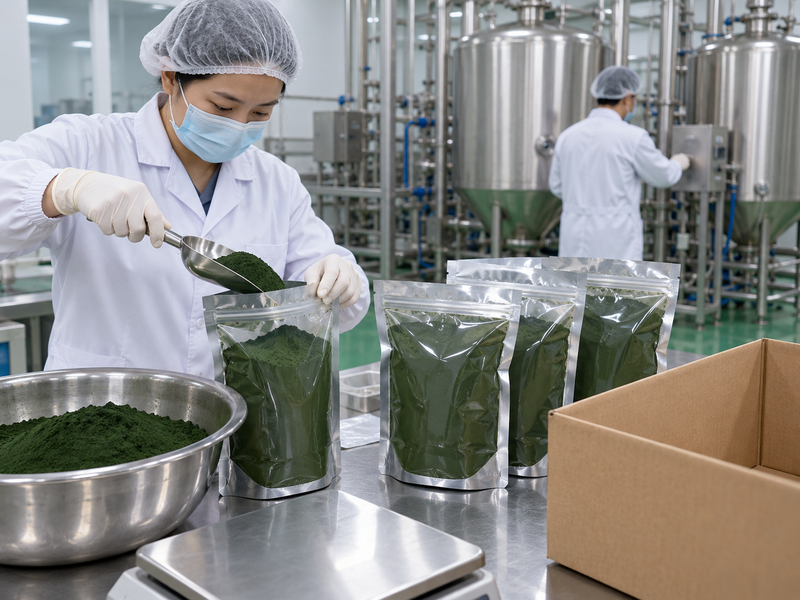
Request the legal name and address of the seller, cultivation operator, processor, packer and exporter. One company may fill all roles; several may share them. Ask which entity issues the invoice, COA and certification documents and which holds records if a lot question arises. Cross-check these identities against the quotation, sample label, TDS and any audit certificate. A broker can be a useful source, but the buyer still needs a clear path to the responsible plant. The FDA FSVP factsheet makes clear that covered U.S. importers evaluate the foreign supplier and food, not merely the commercial intermediary. Requirements differ by destination and product type. Practical gate: do not approve a supplier whose actual manufacturing site remains unidentified or whose documents refer to unrelated entities without an explanation.
| Entity | Evidence to request | Mismatch to resolve |
|---|---|---|
| Seller | Registration and quote | Invoice name differs |
| Cultivator | Site identity | Unstated source of biomass |
| Processor | Process map | Disruption outsourced silently |
| Packer | Site and pack record | Lot code cannot be traced |
2. What organism and grade will be supplied?
Write the intended species and grade into the audit request. “Chlorella powder” alone can cover different taxa, disruption status, particle sizes and end uses. If your formula was built with broken-cell Chlorella vulgaris, ask for the exact taxonomic name, ingredient composition, processing description and a current TDS that identifies that grade. Reconcile those statements with sample label and COA. SpirulinaCN’s product explanation explicitly separates cell-wall disruption from mesh size; a fine sieve result does not establish broken cells. Ask whether any carrier, flow aid or additional ingredient is present, then check the implications for your label. An identity test should be appropriate to the organism and the form supplied; request the method and acceptance criteria rather than a bare “passed” stamp. The approval file should make it impossible to substitute an intact-cell or different-species powder without a new review.
3. Where do cultivation, disruption and packing occur?
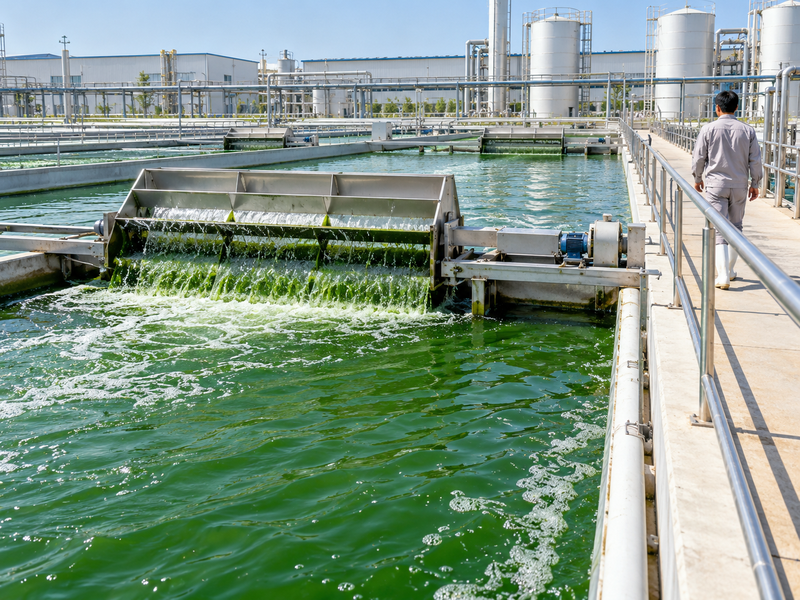
Ask for a simple flow diagram from culture through harvest, drying, cell-wall disruption, milling, testing and final pack. At each step, record the site, owner, batch identifier and whether material from multiple harvests can be combined. The purpose is not to collect industrial secrets. It is to know where contamination, mix-up or a process change could enter the product. If a third party handles disruption, confirm how the supplier qualifies that processor and transfers lot identity. If powder is repacked after testing, determine how the repacked lot remains connected to the tested material. Ask what product-contact controls apply during storage and transit between plants. A facility video is useful context, but a dated process flow and a traceable lot record are stronger audit evidence. Follow one real lot: use a recent COA number and ask the supplier to show the route backward to biomass input and forward to packed units.
| Process step | Site and lot question | Audit evidence |
|---|---|---|
| Cultivation | Which harvest entered this lot? | Origin record |
| Disruption | Where and when was it done? | Process batch record |
| Testing | What material was sampled? | COA and sample plan |
| Packing | Which units received this code? | Pack reconciliation |
4. How is cell-wall disruption verified?
Request the method used to break cells, its operating control points and the test used to estimate disruption. Ask whether the reported percentage is based on microscopic counting, another validated method or a supplier-specific calculation. The result needs a sample location and lot identifier. A high numerical value without a defined method is hard to compare with another vendor’s number. Examine whether disruption changes particle size or oxidation exposure that matters in your finished matrix. Require both a physical grade specification and an agreed disruption measure if the term “broken cell” is a purchasing condition. The site’s chlorella overview highlights this distinction. Do not convert disruption into an automatic human-health claim; the buyer’s job here is to verify the material ordered and the process consistency. For detailed method questions, a separate cell-wall testing article can support the technical discussion.
5. Which food-safety systems cover the sites?
Request the relevant certificates or audit summaries, scope, issuing body, expiry and the specific site address. Verify whether cultivation, drying, disruption and packing are included or whether a certificate covers only the sales office. Review the supplier’s hazard-control overview for water, environmental contamination, foreign material, microbiology and chemical contaminants appropriate to chlorella and its destination. Ask how equipment cleaning and allergen cross-contact are managed if shared lines exist. FDA’s food CGMP overview explains that Part 117 addresses food facilities and preventive controls where applicable; Part 111 applies specifically to dietary supplements. The buyer should map applicable rules for its own product and market. Check scope, not logos: a current certificate can be irrelevant if it names the wrong entity, location or operation. Audit evidence should match the material and supply route being approved.
| System evidence | Look for | Do not infer |
|---|---|---|
| Certificate | Site, scope, dates | All sites are covered |
| Hazard controls | Relevant hazards and owners | Every hazard is absent |
| Cleaning record | Shared-line controls | Allergen-free status |
| Corrective action | Closure evidence | Zero future deviations |

6. Do recent lot results support the specification?
Ask for the current TDS plus three recent, identifiable lot COAs, ideally spanning different production dates. Review identity, disruption, protein, moisture, mesh or particle distribution, microbiology and relevant contaminant results against your intended limits. A specification shows the promised range; a COA shows what was measured on a named lot. Look for missing methods, values reported only as “complies,” unusual gaps and inconsistent unit conventions. If an assay is decisive, arrange independent confirmation on a matched sample. Do not treat three COAs as statistical proof of future quality, but they can expose whether a proposed minimum is routinely met or only marginally reached. Ask how out-of-spec results are investigated and whether reworked material can be sold under the same grade. The supplier’s chlorella product page describes lot-linked documents; request actual records for the candidate SKU rather than relying on the marketing description.
7. Can the supplier trace a shipment both ways?
Choose one recent lot and ask the supplier to trace backward to harvest or raw biomass sources and forward to packed units and customers or distribution channels, within the limits of confidentiality. Review how mixed or split lots are represented and how retain samples are labeled. A useful trace exercise should identify quantities received, processed, rejected, packed and shipped without unexplained gaps. If a shipment contains several production lots, each pack needs a clear code and corresponding COA. Ask how quickly the supplier can assemble a recall contact list and who has authority to stop shipment. This is not a request for a theoretical traceability policy alone. A simple mock exercise exposes whether records from sales, plant and warehouse actually connect. The buyer can then align its incoming system with those identifiers. Test the handoff: commercial invoice, packing list, carton code and COA should tell one consistent story about what will arrive.
| Trace record | Direction | Buyer use |
|---|---|---|
| Biomass input | Backward | Source review |
| Process batch | Both | Manufacturing history |
| Packed units | Forward | Receipt reconciliation |
| Shipment list | Forward | Recall reach |

8. How are changes and deviations handled?
Ask what changes trigger buyer notification: species or strain, cultivation location, cell-disruption method, drying, mesh, test method, pack material or a subcontractor. Agree on advance notice and resampling where the change could affect your product. Review a redacted corrective-action example to see whether the supplier documented cause, containment, disposition and effectiveness. A procedure labeled “CAPA” is less persuasive than a completed example. Determine who decides whether a lot that misses a specification can be downgraded or offered under another grade. Once a vendor is approved, ongoing change control deserves its own process; this checklist focuses on confirming that a credible process exists before award. The supplier’s answers should be captured in writing and assigned owners on both sides. If a disruption method changes after your formula is validated, a new COA alone may not show whether sensory and blend behavior remain acceptable.
9. Can the approved grade be supplied repeatedly?
Ask for a realistic volume and call-off plan, current MOQ, production cadence, lead-time range and contingency for a short harvest or rejected lot. Discuss whether the exact approved grade is stock, made to order or available only seasonally. Check pack material and container configuration at the expected order size. Review whether the supplier can maintain the same specification across lots and how price changes will be communicated. A one-kilogram sample does not prove a six-month program can be supported. Compare the planned commercial volume with the supplier’s demonstrated process and available documentation, while avoiding unverifiable capacity promises. Request an outline of lot-release timing, shipping document preparation and sample retention. A candidate may be technically sound but unsuitable for a launch calendar if the pack or release cycle cannot meet it. Keep this commercial review linked to the exact site and SKU audited, not a generic company sales forecast.
| Repeat-supply question | Evidence | Decision impact |
|---|---|---|
| MOQ and call-offs | Written terms | Inventory exposure |
| Lead time | Dated planning response | Launch feasibility |
| Lot transition | Notice and new COA | Requalification trigger |
| Pack format | Current specification | Warehouse fit |
10. What evidence closes the supplier approval gate?
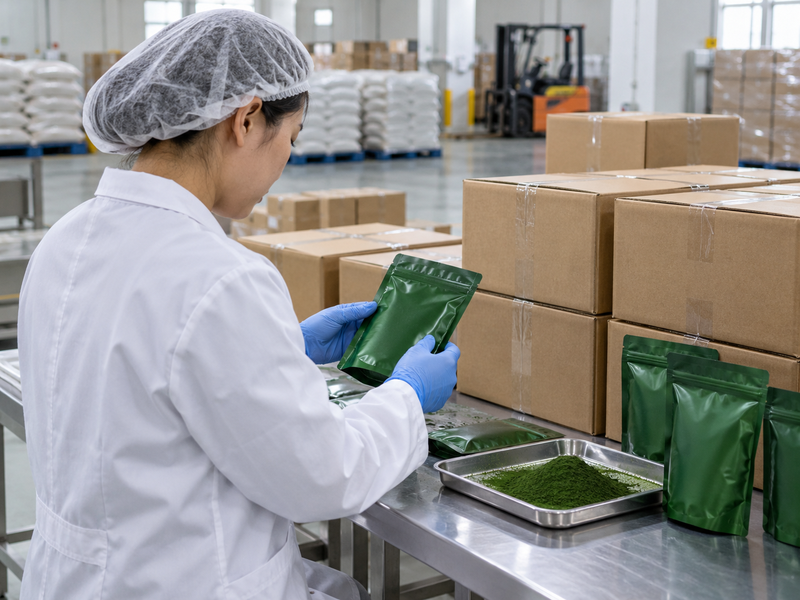
Create a short decision record with requirements, evidence reviewed, open issues, owner and status. Minimum inputs include verified entities and sites, flow diagram, exact species and broken-cell grade, current TDS, three recent lot COAs, relevant audit evidence, traceability exercise and a matched sample. Evaluate that sample in the intended matrix, then attach trial results to the approval. If a gap remains, define whether it blocks sourcing or permits a conditional small trial with extra checks; document the rationale. Approval should identify the specific site, SKU, process and pack, because a company-wide approval can hide a material change. Once goods arrive, use a separate incoming inspection plan to compare the delivered lot with what was approved. This pre-award record gives procurement a clear basis for supplier selection and gives quality a way to challenge an unsupported substitution before an order is placed.
FAQ
Q1. Is a supplier certificate enough to approve chlorella? No. Verify site and scope, then review product-specific specifications, lots, process and a matched sample.
Q2. Does 300 mesh prove broken cells? No. Mesh describes powder granulation; disruption status needs its own evidence and method.
Q3. Why ask for several COAs? They reveal how recent lots compare with the proposed specification and can expose missing or shifting tests.
Q4. Should an importer use this as an FSVP plan? No. Covered U.S. importers must assess their own obligations and maintain the food-and-supplier program required by FDA.
Q5. Can a trading company pass the audit? It can if the actual manufacturer and supply route are clear and the trader can provide reliable, traceable evidence for the proposed material.
Qualify the supply route, then the powder
Use this chlorella powder supplier audit checklist to make a documented pre-award decision rather than rely on a brochure. Send your application, target specification, anticipated quantity and destination through SpirulinaCN’s contact page. Request facility identities, a process flow, audit evidence, current TDS, three recent lot COAs and a grade-matched sample, then close any gaps before issuing a bulk purchase order.