
Spirulina iron content per serving requires a measured iron value and accurate serving-size math. Iron is one of spirulina’s most frequently advertised nutrients, but a large per-100-gram number can exaggerate the contribution from a normal portion. The useful calculation starts with the specific powder, the grams actually eaten and a current iron assay. This guide shows the math and explains why content, absorption and claims are different questions.
For a blend, iron math needs another step. Multiply each ingredient’s tested concentration by its mass in the formula, add the contributions, and divide by the number or mass of finished servings. Then compare the calculation with representative finished-product tests. This catches errors from dilution, omitted ingredients and uneven blending. It also helps the team distinguish naturally present iron from intentionally added fortification on the final label.
Contents
- What does a reference iron value represent?
- How do you calculate iron in a small portion?
- How does that compare with daily iron needs?
- Is spirulina iron absorbed efficiently?
- Why do supplier lots vary?
- Can a brand claim ‘high in iron’?
- Does cooking or blending change the iron number?
- Could high iron numbers indicate contamination?
- Should someone with low iron rely on spirulina?
- What is the best buying checklist for iron content?
1. What does a reference iron value represent?
Treat the table as a starting sample
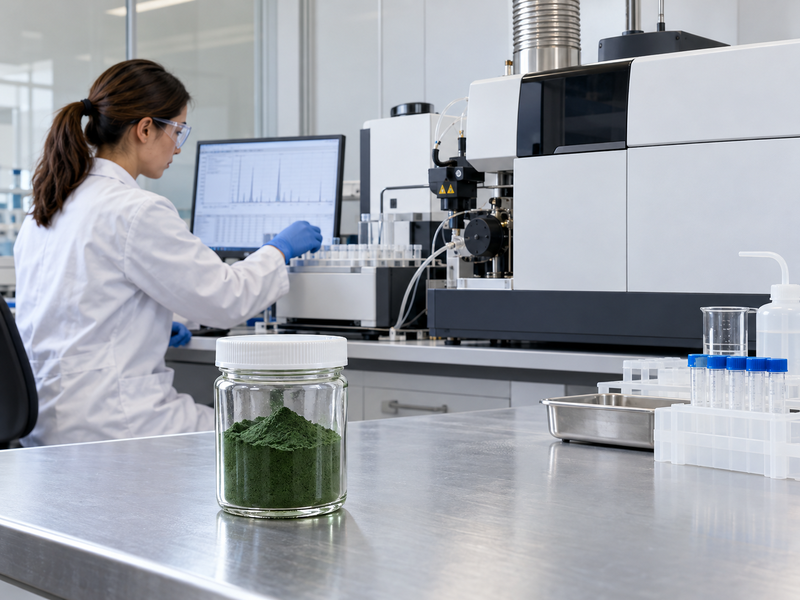
The USDA FoodData Central entry for dried spirulina reports 28.5 milligrams of iron per 100 grams. That is a composition value for a reference food, not proof that every supplier lot has the same concentration. Whole dried biomass, tablets and blended products may differ by moisture and ingredients. A blue phycocyanin extract is another material and should not borrow whole-biomass nutrient figures.
Before calculating anything, identify the food, the basis of the value and the actual sold product. A buyer should ask whether the supplier report states iron on an as-sold or dry-matter basis.
A useful next step
Record scientific identity, product format, moisture basis, analytical method and lot. Use the USDA number for an illustrative exercise; use current product data for a claim or purchase specification.
2. How do you calculate iron in a small portion?
Multiply by serving grams divided by 100
If a powder matched the USDA reference exactly, a purely illustrative 3-gram portion would contain 28.5 × 3 ÷ 100, or 0.855 milligrams of iron before rounding. A 5-gram arithmetic example would be 1.425 milligrams. These figures are examples, not recommended daily amounts. The formula works with a lot assay too: replace 28.5 with the measured milligrams per 100 grams of the chosen powder. If an assay reports milligrams per kilogram, divide by 10 to obtain milligrams per 100 grams before applying the portion multiplier. Always keep units visible to prevent tenfold errors.
If a manufacturer reports iron as milligrams per kilogram, the unit conversion deserves its own check: 285 milligrams per kilogram equals 28.5 milligrams per 100 grams. Multiplying 28.5 by 0.03 produces the illustrative 0.855 milligrams in 3 grams. If the finished food contains only a fraction of that 3-gram powder portion, recalculate for the actual amount in one serving. A reviewer should reproduce the arithmetic from the original laboratory units rather than copying a spreadsheet total whose assumptions are hidden.
A useful next step
Write out units on each line and verify the result with a second person for label work. Use the actual package serving and tested value. Do not round upward early to make a claim threshold.
| Input | Reference example | Calculation |
|---|---|---|
| Iron concentration | 28.5 mg per 100 g | Reference only |
| Portion | 3 g | 3 divided by 100 |
| Result | 0.855 mg | Before rounding |
| Alternative 5 g | 5 divided by 100 | 1.425 mg |
3. How does that compare with daily iron needs?
Use the correct population and reference
The NIH iron fact sheet lists different recommended amounts by age, sex and life stage. For example, adults do not all have the same daily requirement, and pregnancy changes the need substantially. A product label may instead use a standardized Daily Value for comparison, which is not the same as individualized advice. The illustrative 0.855-milligram portion is a small fraction of the US 18-milligram Daily Value for adults and children at least four years old.
Do not translate that fraction into a promise to prevent deficiency or improve energy.
A useful next step
State whether a percentage uses a labeling Daily Value or a person’s dietary recommendation. Keep the market and population visible. Refer deficiency questions to qualified clinical care rather than a food label.

4. Is spirulina iron absorbed efficiently?
Content is not the same as bioavailability
Spirulina’s iron is not heme iron from meat. The NIH iron guidance explains that nonheme iron absorption depends on the food matrix and other meal components, with vitamin C enhancing absorption and some dietary factors inhibiting it. Exact absorption from a particular spirulina recipe cannot be inferred from a simple mineral assay. A fruit smoothie, dry tablet and savory meal may present different contexts.
Brands should avoid claiming superior absorption unless there is relevant evidence for the tested product. Consumers seeking to manage iron deficiency need a diagnosis and care plan, not a blanket “algae iron” statement.
A useful next step
Keep two columns: milligrams of iron measured and evidence about absorption. Do not place an absorption percentage on packaging without a validated basis for the exact formulation. Evaluate the whole diet.
| Question | Content evidence | Absorption evidence |
|---|---|---|
| How much iron? | Lot or finished assay | Not answered |
| Meal effect? | Recipe record | Context-specific |
| Clinical status? | Not a food assay | Medical assessment |
| Claim wording? | Label rule | Product evidence |
5. Why do supplier lots vary?
Biology and measurement both matter
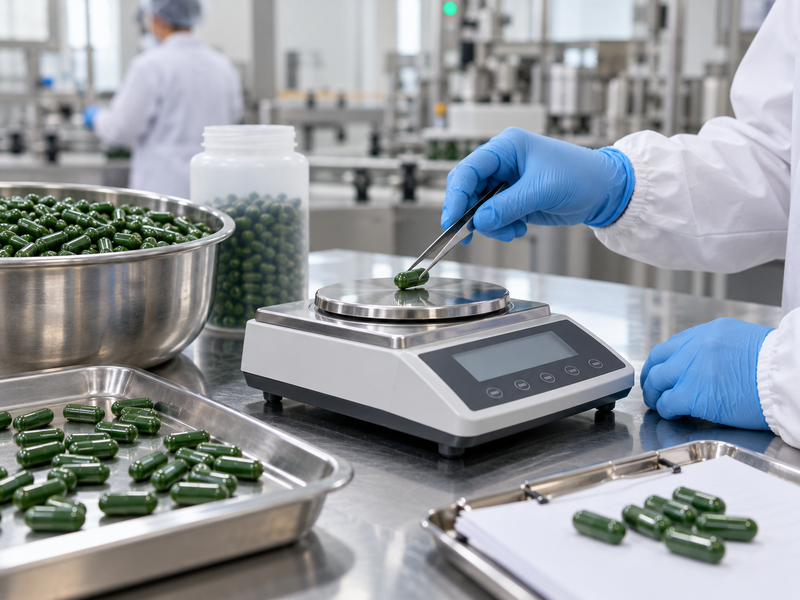
Cultivation conditions, harvest timing, processing water, washing, drying and moisture can influence a biomass mineral result. Laboratory methods and sampling also create variation. A single exceptional lot should not establish a permanent label value. For manufacturing, request a series of results with consistent units and method, and choose a specification that separates normal variation from an unusual shift. Mineral testing can also identify unwanted toxic elements, but an iron result says nothing about lead, arsenic or cadmium. Safety and nutrition panels should be managed separately.
A trustworthy supplier can explain trends rather than only show its highest number.
A useful next step
Trend several representative lots, note moisture and assay method, and investigate outliers. Calculate a conservative label basis. If a supplier changes water source or processing, require a renewed review.
6. Can a brand claim ‘high in iron’?
Check the sold serving and legal criteria
The FDA label-claims overview explains that nutrient-content claims have defined conditions in US food labeling. A powder’s 100-gram composition cannot be placed next to a small serving and treated as a “high” claim. The applicable reference amount, finished-food category, nutrient amount and rounding rules all matter. A blend may receive iron from another ingredient or fortification, which must be accounted for accurately. Other markets use different criteria.
A claim file should identify the tested finished product and exact wording, not simply cite a supplier’s generic data sheet.
A useful next step
Calculate iron per labeled serving, compare with the relevant rule and obtain regulatory review. If the threshold is not met, describe the ingredient without overstating iron. Retest after formula changes.
| Claim step | Evidence | Outcome |
|---|---|---|
| Serving | Realistic portion | Calculation basis |
| Iron | Finished assay | Declared amount |
| Threshold | Market rule | Eligibility |
| Copy | Approved wording | Release |
7. Does cooking or blending change the iron number?
Consider the complete finished food
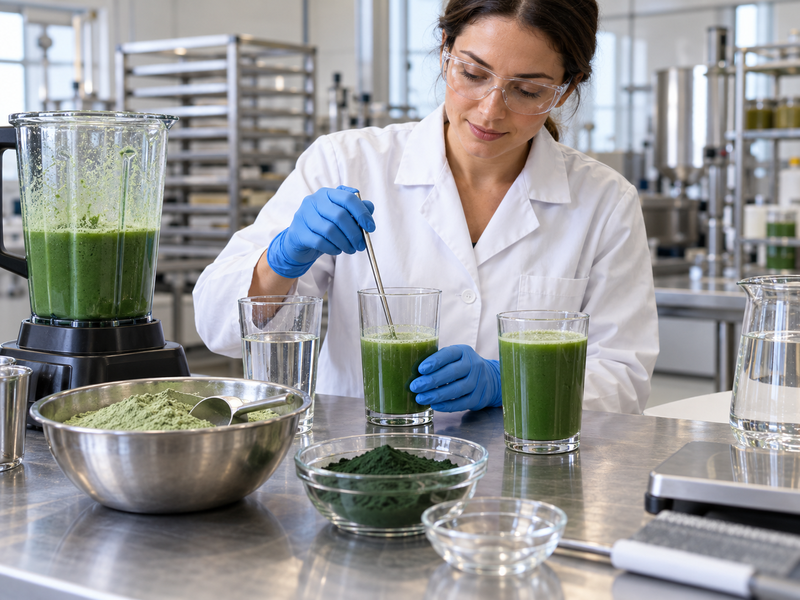
Iron is a mineral, so it is not destroyed like a heat-sensitive vitamin, but processing can change the amount present in a serving through ingredient losses, dilution, settling or uneven distribution. A drink that settles can deliver a different amount depending on whether it is shaken. A baked product may vary if powder is not mixed evenly. A raw ingredient certificate therefore cannot prove the finished serving’s iron content. Manufacturers should sample representative finished units after production and through shelf life if distribution may shift.
Consumers should follow “shake” directions when present, without assuming that mixing corrects every quality problem.
A useful next step
Measure powder addition, batch yield and final portion mass. Test multiple finished units for uniformity where iron claims matter. Document any loss or settling rather than assuming perfect transfer.
8. Could high iron numbers indicate contamination?
Review nutrients and hazards with separate tests
Iron is an essential mineral; lead, cadmium and arsenic are different analytes with different risk questions. A high iron assay alone cannot establish that a powder is contaminated, and a favorable iron amount cannot prove it is safe. Commercial buyers should request individual toxic-element results and evaluate them against the intended use and destination-market requirements. The FDA information on blue-green algae contaminants also illustrates why ingredient quality needs hazard-specific analysis rather than a single “pure” label.
For repeated consumption, lot traceability is particularly useful.
A mineral panel is most useful when results are shown individually. “Heavy metals pass” does not say which elements were tested, the limits used or whether the test covered the same lot as the iron assay. Compare the methods and sampling dates, especially when material from several lots is blended. A high iron number should prompt a nutrition calculation, while an elevated toxic-element result needs a separate safety disposition. Keeping those decisions apart prevents a nutrient claim from distracting the team from an unresolved quality issue.
A useful next step
Ask for the named element, method, unit, result and acceptance criterion. Do not infer toxic-element levels from the iron value. Hold lots with missing or contradictory safety documents until quality review.
| Analyte | Purpose | Document |
|---|---|---|
| Iron | Nutrient calculation | Mineral assay |
| Lead | Toxic-element control | Lot result |
| Arsenic | Toxic-element control | Lot result |
| Microcystins | Cyanotoxin control | Specific assay |
9. Should someone with low iron rely on spirulina?
Separate dietary contribution from treatment
Spirulina can contribute some dietary iron, but the amount in a modest portion may be limited and absorption varies. Iron deficiency can have several causes; the appropriate response may require testing, dietary changes or prescribed supplementation. The NIH iron information advises on iron needs and food sources, while personal medical decisions belong with a clinician. A product page should not say spirulina cures anemia or substitutes for a treatment plan.
Equally, people who need to restrict iron for medical reasons should not rely on a generic web chart; they should check the actual product and professional advice.
A useful next step
Use the label to estimate dietary contribution, then discuss suspected deficiency or iron restriction with qualified care. Bring the package and serving information. Do not self-treat based on a per-100-gram headline.
10. What is the best buying checklist for iron content?
Require a traceable chain from lot to claim
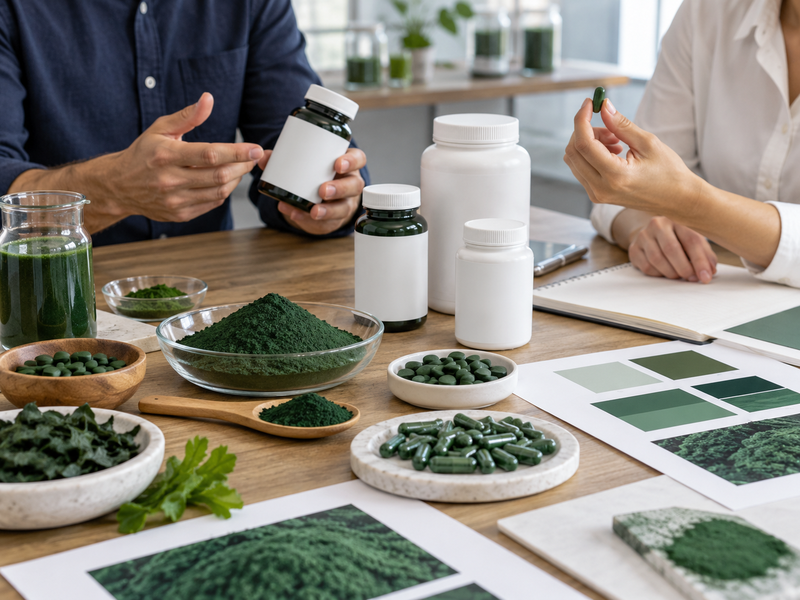
A defensible iron statement connects species identity, current lot assay, realistic serving size, finished-product formulation and market-specific wording. Each link can break: a supplier may test an old lot, a manufacturer may change the scoop, or a retailer may repeat a per-100-gram number without context. Procurement should keep the analytical report and specification with the approved sample; marketing should work from the same file. For consumers, a clear nutrition panel and accessible lot support are stronger signals than a dramatic “iron rich” banner.
If the product is mainly purchased for color, it may not need iron positioning at all.
A useful next step
Compare two suppliers with the same serving math and request missing analyses before selecting. Keep a retained sample for first-lot matching. Approve a claim only after quality and regulatory reviewers can reproduce the calculation.
| Link | Evidence | Owner |
|---|---|---|
| Identity | Species and formula | Procurement |
| Lot | Current iron assay | Quality |
| Serving | Measured grams | Product team |
| Claim | Market review | Regulatory |
Frequently asked questions
How much iron is in one serving of spirulina?
It depends on the powder and serving mass. A USDA-based 3-gram arithmetic example is 0.855 milligrams, not a universal product value.
Is spirulina iron heme iron?
No. Absorption of nonheme iron depends on the diet and person, so content is not the same as absorbed amount.
Can spirulina cure anemia?
No food product should be presented as a substitute for diagnosis and treatment of iron deficiency.
Does blue spirulina extract have the same iron content?
Do not assume so. It is a different ingredient; request its own composition data.
What document should a brand request?
A current lot-specific iron assay with method and units, plus finished-product calculation and market claim review.
Conclusion
Spirulina iron content per serving is a calculation, not a slogan. Use a measured concentration for the exact product, multiply by grams eaten and interpret the result within diet and labeling context. Keep absorption and clinical treatment questions separate. For brands, trace every iron statement to an approved lot and finished-serving record.
For ingredient documentation, compare the whole spirulina range, the heavy-metal testing guide and the whole spirulina ingredient page. These product pages can start a supplier discussion; final nutrition and safety statements still require the chosen lot and finished-product evidence.