
Does spirulina have vitamin B12? The answer depends on which molecular forms a product actually contains. A nutrition panel may show a B12-like signal in spirulina, yet that does not prove the product supplies vitamin B12 the human body can use. This distinction matters most to people relying on plant-based diets and to brands considering a B12 claim. The practical answer lies in the chemical form, test method and actual serving, not the marketing category “superfood.”
If B12 is the purchase goal, place three items side by side: the amount of active vitamin declared per serving, the test method and the ingredient that supplies it. An algae powder may score poorly on that comparison while a fortified food scores well, even if both look green. If a brand cannot answer all three, it should keep B12 out of the product story until evidence is available.
Contents
- Why is spirulina B12 controversial?
- What did the original algae study actually show?
- What is pseudovitamin B12?
- Can a nutrition database settle the question?
- Should vegans use spirulina for B12?
- How can a laboratory distinguish active forms?
- What if a product has added B12?
- Can spirulina interfere with B12 assessment?
- What wording can a responsible brand use?
- What should a buyer ask before accepting a B12 claim?
1. Why is spirulina B12 controversial?
A measured signal can include inactive molecules
Vitamin B12 belongs to a family of related corrinoid compounds. Some assays respond to compounds that resemble B12 chemically but do not perform the vitamin’s essential functions in humans. That means a reported “total B12” value may overstate useful B12. An original study of edible algae and tablets isolated and characterized compounds and found inactive pseudovitamin B12 predominated in the spirulina tablets tested. This does not establish the composition of every future lot; it explains why broad, unqualified B12 claims are unsafe.
A consumer needs a reliable B12 source, not an ambiguous assay reading.
A useful next step
Ask what molecular forms a laboratory measured and whether the method distinguishes active cobalamins from analogues. Do not treat a broad colorimetric or microbiological response as proof of bioavailable B12.
2. What did the original algae study actually show?
Read the tested products and methods
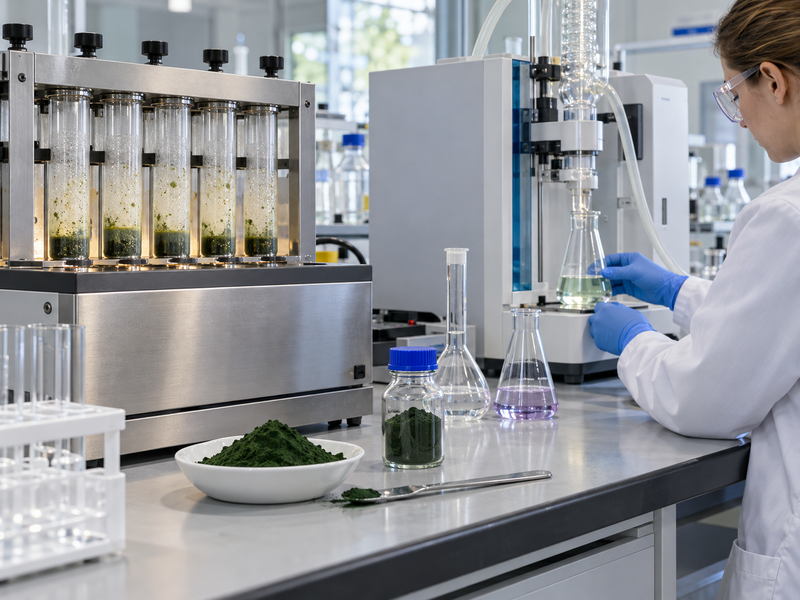
The researchers examined particular edible algae and algal health foods, purified their corrinoids and assessed chemical identity. Some algae products in the study contained true B12, while pseudovitamin B12 dominated the spirulina tablets examined. A buyer should resist two leaps: assuming every chlorella product therefore provides B12, or assuming a new spirulina product cannot contain any active B12. The study’s strength is identifying why a non-specific test can mislead. It does not replace current lot testing.
For a brand, the relevant evidence is the sold formulation after processing, with its exact serving and analytically separated B12 forms.
A second distinction is between detecting a compound and showing that a person can use it. The original paper’s separation of corrinoids was designed to answer a chemistry question that a broad total assay could not. A marketer may quote a historical concentration without explaining that the signal included an inactive analogue. A current product could also be fortified with active B12, creating a true finished-product value that comes from an added ingredient. The only defensible way to resolve these cases is to identify the forms in the actual formula and state where the vitamin originates.
A useful next step
Read the study’s material description before applying it to a product. Then obtain a current assay for the named lot using a discriminating method. If there is no such assay, omit the nutrient claim.
| Evidence layer | What it answers | Limit |
|---|---|---|
| Historic study | Analogue problem | Different lots |
| Current lot assay | Forms in ingredient | May change with process |
| Finished-product assay | Amount sold | Needs shelf-life basis |
| Human nutrition | Adequacy | Individual context |
3. What is pseudovitamin B12?
A look-alike is not a useful vitamin source
Pseudovitamin B12 is a corrinoid with a different chemical structure from cobalamin forms used by humans. The body does not use it as a reliable replacement for vitamin B12. In an analytical method that counts corrinoids broadly, it can inflate the apparent B12 value. This is why “contains B12” requires more than detecting a compound with similar behavior in an assay.
The NIH B12 fact sheet explains B12’s physiological roles and recognized dietary sources; spirulina should not be assumed equivalent to fortified foods or a tested B12 supplement.
A useful next step
Request method validation that separates pseudovitamin B12 from active forms. Review the report’s units, detection limit and sample mass. A total corrinoid result should be labeled honestly as such.

4. Can a nutrition database settle the question?
Check what the database measured
A reference database can be useful for screening, but an entry may rely on older assays, composite samples or incomplete form identification. It cannot certify that the packet in a consumer’s hand contains a specified amount of active B12. The distinction is especially important where numbers are shown per 100 grams but the normal serving is much smaller. An apparently impressive 100-gram value may translate into a modest portion even before the active-form problem is considered.
A manufacturer should trace the database citation to the underlying method and commission current product-specific testing if B12 will be declared or claimed.
A useful next step
Mark every B12 number as total assay response, active-form assay or unknown. Reject a label calculation that treats “unknown” as active vitamin. Keep the source and year with every reference value.
| Data source | Useful for | Not enough for |
|---|---|---|
| General database | Initial research | Lot claim |
| Supplier brochure | Questions to ask | Independent proof |
| Specific assay | Named forms | Human efficacy |
| Finished test | Label amount | Medical advice |
5. Should vegans use spirulina for B12?
Choose sources designed to provide B12
A plant-based diet can meet many nutrient needs, but B12 requires special attention because reliable sources are generally animal-derived foods or fortified foods and supplements. The NIH Office of Dietary Supplements B12 guidance describes sources and deficiency risk. Spirulina’s inactive analogues make it an unreliable sole strategy. A person who already uses a dependable fortified food or B12 supplement need not avoid spirulina as a culinary ingredient; the point is not to count the spirulina toward B12 adequacy without valid evidence.
People concerned about deficiency or symptoms should seek professional evaluation.
A useful next step
Identify a reliable B12 source with declared active vitamin and follow appropriate dietary or clinical advice. Do not replace it because a green powder’s website displays a B12 number without compound-specific testing.
6. How can a laboratory distinguish active forms?
Require a fit-for-purpose analytical method
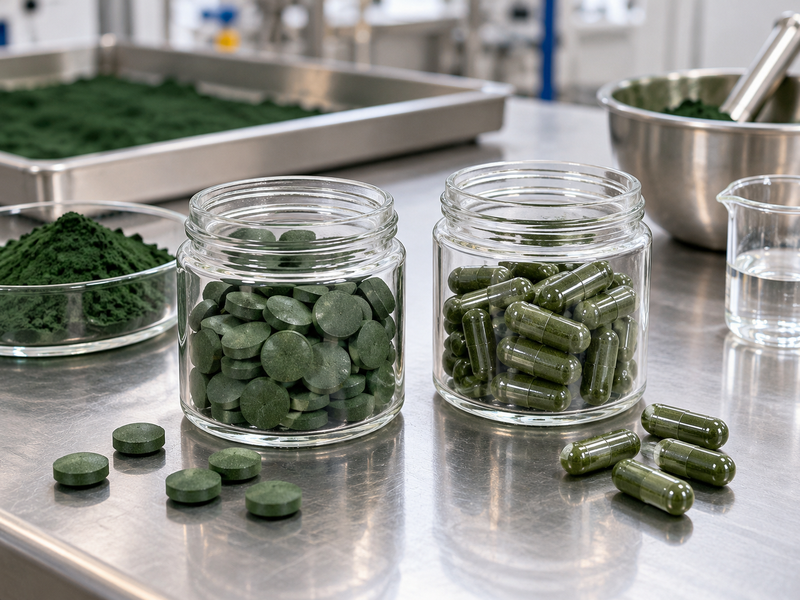
A method suitable for a B12 claim must identify or quantify active cobalamin forms separately from inactive analogues in the relevant matrix. The laboratory should explain sample extraction, recovery, calibration, detection limits and uncertainty. If a blend contains added B12, the result may come from fortification rather than the spirulina itself; ingredient attribution matters. A broad assay that responds to microbial growth is insufficient when analogues may contribute to the signal.
Brands should sample production lots and consider shelf-life changes if a declared amount must remain accurate through sale.
A useful next step
Ask the lab to name measured analytes and provide chromatographic or equivalent separation evidence where appropriate. Reconcile the result with the ingredient statement and finished-product serving. Have a qualified reviewer approve wording.
| Method question | Why it matters | Request |
|---|---|---|
| Analytes | Active versus analogue | Named compounds |
| Recovery | Matrix interference | Validation |
| Units | Serving calculation | Clear report |
| Shelf life | Label accuracy | Stability plan |
7. What if a product has added B12?
Separate fortification from native spirulina
A greens blend or tablet may contain added cyanocobalamin or another recognized B12 form. The finished product can then be a useful B12 source if the amount, stability and label meet applicable rules. That does not prove native spirulina supplies the vitamin. Read the full ingredient list and nutrition panel to see whether fortification is declared. Brands should specify the source of the added vitamin, verify finished-product content and avoid copy implying that all B12 originates in the algae.
Consumers benefit from a clear statement of which ingredient supplies which nutrient.
A useful next step
Locate the fortificant on the ingredient list and confirm the per-serving declared amount. For a brand, keep fortificant purchase records, formulation calculation and finished-product test together.
8. Can spirulina interfere with B12 assessment?
Do not let a food claim postpone testing
The serious practical risk is false reassurance: someone with low B12 intake may rely on spirulina and delay obtaining a reliable source or clinical assessment. Symptoms of deficiency can have multiple causes and should not be self-diagnosed from a website. A clinician can interpret dietary history and appropriate laboratory tests. The NIH B12 fact sheet discusses deficiency and risk groups. A product seller should avoid suggesting that a spirulina routine corrects deficiency.
The presence of a B12-like analyte in a food test is not evidence that it maintains a person’s status.
The practical consequence of a misleading claim can be delayed action. Someone eating a plant-based diet may count a spirulina serving as their B12 source and overlook reliable fortified foods or supplements. If tiredness, numbness or other symptoms raise concern, those symptoms are not specific enough for self-diagnosis and deserve professional assessment. A company can help by making its ingredient and fortification statements clear, supplying analytical methods on request and avoiding language that implies a green color signals B12 adequacy. A food product page should not replace a clinician’s evaluation.
A useful next step
If B12 status is a concern, discuss diet and testing with a clinician. Bring the product label, but do not assume its total corrinoid value counts toward effective intake.
| Scenario | Risk | Better step |
|---|---|---|
| Vegan diet | Low reliable B12 intake | Fortified source or supplement |
| Ambiguous panel | Analogue counted | Ask method |
| Symptoms | Delayed diagnosis | Clinical evaluation |
| Brand claim | Misleading source | Active-form test |
9. What wording can a responsible brand use?
Describe only verified composition
Without active-form evidence, a brand can describe spirulina’s identity, color, protein or tested minerals if those statements are accurate, but it should not borrow a B12 claim from a generic composition table. If active B12 is added to a formula, the claim should reflect the complete finished food and local nutrient-content requirements. The FDA label-claims overview explains that nutrient claims are governed by defined criteria in US markets. Never imply that spirulina treats pernicious anemia or another condition.
Keep a documented chain from assay to serving to approved wording.
A useful next step
Review all packaging, product pages and retailer copy for hidden B12 implications, including icons and comparison charts. Remove unsupported figures. Retest and update copy if the formula or supplier changes.
10. What should a buyer ask before accepting a B12 claim?
Use four linked proofs
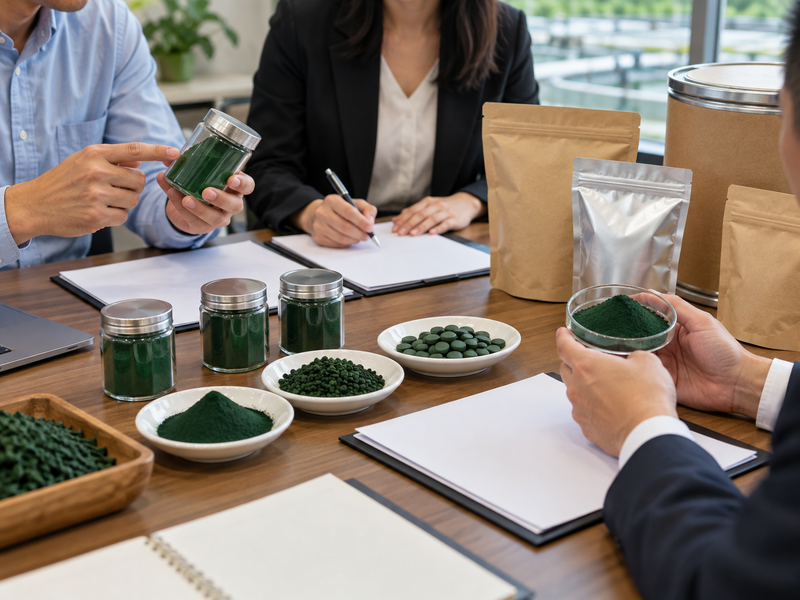
Ask for exact product identity, active-form analytical method, lot result and finished-serving calculation. If the product is fortified, request the fortification record and finished-product stability plan. A supplier who can only provide “B12 present” without form identification has not answered the key question. For consumers, choosing a separately labeled reliable B12 source is simpler than interpreting ambiguous algae analyses. For manufacturers, a claim may be possible in a properly fortified product, but it must be attributed and validated accurately.
The decision turns on evidence for the sold item, not the reputation of the ingredient.
A useful next step
Put the four proofs in a single review file and mark any missing step. Do not approve B12 positioning until a qualified nutrition and regulatory reviewer can follow the entire chain.
| Proof | Document | Failure sign |
|---|---|---|
| Identity | Formula and species | Generic algae |
| Form | Discriminating assay | Total corrinoid only |
| Amount | Current lot result | Old brochure |
| Serving | Finished-product calculation | 100-g headline |
Frequently asked questions
Does spirulina contain a B12-like compound?
Often, yes, but a B12-like analytical signal can include inactive analogues.
Can spirulina replace a B12 supplement for vegans?
It should not be relied on as the sole B12 source. Choose a dependable fortified food or supplement.
Does adding B12 to spirulina make the blend useful?
Potentially, if added active B12 is present at a verified amount and the finished label is accurate. Attribute the vitamin to fortification.
Why do some labels show B12?
Methods and formulations differ. Ask whether the value reflects active forms, a broad assay or added vitamin.
What test should a brand request?
A validated method that separates active B12 forms from inactive analogues in the actual product matrix.
Conclusion
Spirulina can contain corrinoids, but the evidence does not support treating ordinary spirulina as a reliable vitamin B12 source. The decisive questions are chemical form, method, lot and serving. Consumers should use established B12 sources; brands should make B12 claims only from verified active vitamin in the finished product.
For ingredient documentation, compare the whole spirulina range, the spirulina product page and the chlorella product page. These product pages can start a supplier discussion; final nutrition and safety statements still require the chosen lot and finished-product evidence.