
Spirulina foreign matter prevention is the set of controls that keeps unintended physical material out of harvested biomass and finished powder. A clean final sample cannot reconstruct every exposure from pond to pack. Buyers need a source map, maintained barriers and a clear response when an object appears. 21 CFR 117.80 requires adequate measures against metal or other extraneous material for covered US food facilities; each supplier should apply a documented hazard analysis to its actual line.
Contents
- What counts as foreign matter?
- Where can it enter cultivation?
- How are harvest tools controlled?
- What risks arise during drying and milling?
- How do sieves and magnets help?
- What protects the packing area?
- How should a finding be preserved?
- How is affected material traced?
- What evidence should buyers request?
- How are repeated findings reduced?
1. What counts as foreign matter?
Define the problem by source and effect
Foreign matter can include glass, brittle plastic, metal, rubber, insects, stones or fragments from packaging and equipment. Some material may enter outdoors during cultivation; other material originates inside the factory. Classify what was found, its size and form, where it appeared and whether it presents a safety concern. A dark fleck in green powder deserves identification rather than an automatic label of “natural.” Preserve the object and the surrounding sample when possible.
Keep categories useful. Naturally occurring defects and dangerous physical hazards require different responses. The FDA Macroanalytical Procedures Manual explains that defect action levels apply to specified nonhazardous unavoidable defects, not a blanket allowance for hazardous objects in spirulina. A supplier should not cite a generic food-defect percentage to excuse a piece of glass or metal. Buyer specifications should identify relevant categories and investigation requirements without inventing a universal “zero detectable particles” test that no sampling plan can establish.

2. Where can it enter cultivation?
Review exposure at the pond edge
Open cultivation can expose a pond to windblown debris, insects and material from nearby maintenance. Covers, perimeter housekeeping and controlled work near ponds reduce opportunities for entry. Inspect screens, splash guards and transfer lines at the points where culture leaves the pond. A closed reactor has different exposures: seals, ports and internal parts need maintenance. The large-scale cultivation review describes contamination and operational challenges in open systems, but each facility’s layout determines its practical controls.
Walk the route. Ask how staff prevent tools, cable ties or cleaning implements from falling into culture. Record maintenance work and inspect the pond before returning it to production. If a visible object is found, identify the pond, time and possible entry path before harvesting continues. A single net may catch large debris while fine pieces remain. Buyers should look for a defined escalation from pond observation to harvest hold. The site’s cultivation contamination monitoring records may help establish when an abnormal observation began.
| Cultivation source | Preventive practice | Evidence |
|---|---|---|
| Windblown debris | Covers and housekeeping | Pond inspection |
| Maintenance parts | Tool and part control | Work order closeout |
| Transfer line | Pre-use inspection | Connection checklist |
| Damaged cover | Repair and hold | Deviation record |
3. How are harvest tools controlled?
Account for items entering wet biomass
Harvest screens, pumps, hoses, clamps and totes contact or carry wet biomass. A loose fastener or worn gasket can create fragments after the pond itself has passed review. Give reusable equipment an identity, inspect it before use and record cleaning and repair. Keep temporary implements out of product-contact zones unless they are controlled. If a filter panel is replaced, account for the old panel and any missing pieces. Material collected from the screen can help identify a developing failure upstream.
Check the handoff. The harvest log should identify which equipment handled each pond or cut. That lets the supplier trace a damaged pump seal to more than one harvest if equipment was shared. Under 21 CFR 117.40, covered food equipment must be maintained to avoid contamination including metal fragments. Buyers can review one actual equipment defect and how the supplier bounded affected material.
4. What risks arise during drying and milling?
Watch wear, breakage and exposed handling
Drying and milling introduce moving parts, air-handling components, seals and cleaning tools. A worn blade, flaking surface or brittle gasket may shed material into powder. Check maintenance history, pre-start condition and post-cleaning reassembly. Any open transfer between equipment creates an opportunity for environmental debris or a bag fragment to enter. The supplier should map those points and use covers or contained transfer where appropriate. Dried powder may conceal a small fragment more easily than wet biomass does.
Look at timing. A part found damaged after a run should trigger a review of product processed since the last documented good check. The site’s dryer cleaning verification is one related control, but cleanliness does not prove mechanical integrity. Ask the plant to distinguish sanitation checks from wear inspections. If a component was repaired mid-run, record the exact time, affected containers and restart approval. That timeline determines which finished bags need investigation.
| Process area | Possible fragment | Check |
|---|---|---|
| Dryer | Seal or fastener | Pre-start and maintenance |
| Mill | Blade or screen piece | Wear inspection |
| Transfer | Bag or liner strip | Opening method |
| Air handling | Filter material | Filter condition |
5. How do sieves and magnets help?
Use each barrier for its defined scope
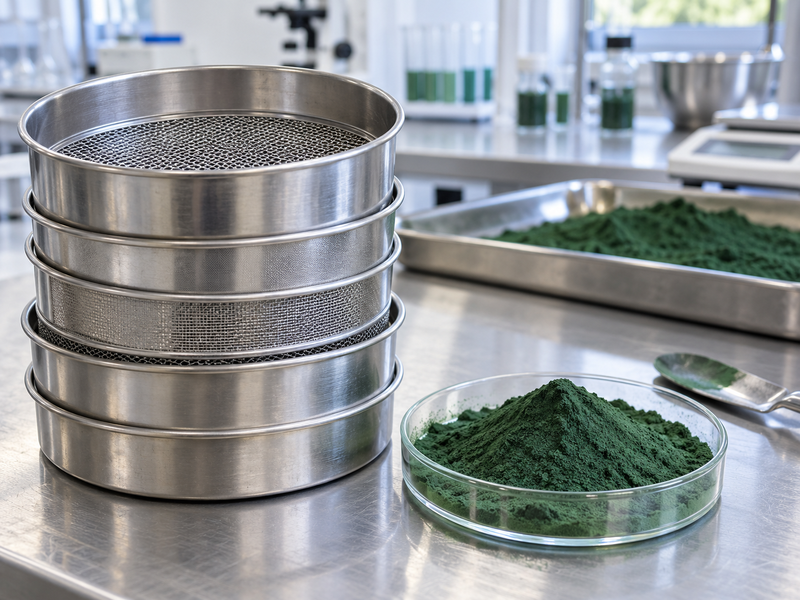
A sieve can retain material too large or unable to pass its aperture, while a magnet can collect some magnetic metals. Neither can prove a lot free of every physical object. A long thin fragment may pass a screen in a favorable orientation; nonmagnetic materials will not stick to a magnet. Inspect devices before and after a run and identify which powder passed through them. Record retained objects by lot and investigate unusual findings rather than treating reject bins as routine waste.
Ask what happens downstream. Rework added after the final sieve bypasses that control unless it has its own route. A broken screen may become a source of fragments. The site’s sieve integrity process should distinguish aperture choice from inspection of the installed mesh. FDA food CGMP rules call for adequate protection against extraneous material; a combination of devices should follow the site’s hazard analysis, not a generic equipment list.

6. What protects the packing area?
Control packaging and open-product exposure
Packing introduces liners, scoops, seals, labels, cartons and pallet materials. Tear strips from bags or cut liner edges can fall into open powder if opening is uncontrolled. A line-clearance check should remove parts from previous products and identify only approved packaging for the current run. Keep overhead fixtures and brittle items on an inspection register where exposure warrants it. Document damaged bags and the powder they held. A sealed outer carton cannot compensate for a foreign piece already inside the inner liner.
Follow one bag. The operator should know which hopper, screen and packing shift filled it. If an unusual fragment appears during receiving inspection, that genealogy helps locate other bags from the same interval. A buyer can ask for photographs of the actual packing configuration and one completed line-clearance record. Avoid using staged clean-room images as proof of everyday practice. The supplier should also explain how opened or partly filled bags are protected during breaks and how rejected packaging is kept away from saleable material.
| Packing exposure | Control | Useful record |
|---|---|---|
| Liner cutting | Defined opening tool | Work instruction |
| Open hopper | Cover and access control | Pre-start check |
| Changeover parts | Line clearance | Signed form |
| Damaged package | Segregation | Repack genealogy |
7. How should a finding be preserved?
Protect the object and its context
Stop handling the suspect unit, photograph the object in place and save it in a clean labeled container. Record product lot, bag number, discovery point, date and who found it. Avoid washing or scraping the object before identification. Keep surrounding powder or packaging where it may show how entry occurred. A laboratory may examine material type or morphology, but the chain of custody should show that the tested object is the one found. If the object is sharp, manage handling safely while preserving evidence.
Do not jump to blame. A fragment found by a buyer might originate in packing, transport, receiving or the buyer’s own process. Compare it with supplier equipment and packaging without assuming a source from appearance alone. The FDA HACCP principles guidance lists physical hazards such as glass and metal as factors for hazard analysis. Use that framework to assess consequences and control points. A clear evidence trail helps both parties decide the right hold scope and corrective action.

8. How is affected material traced?
Bound the interval from last good evidence
Trace backward from the finding to production line, component, harvest inputs and inspection points. Trace forward to every bag and customer shipment from the suspect interval. If a screen or gasket failed, the last documented intact check provides a boundary; without it, the hold may need to widen. Assess rework, samples and partly filled bags, not only sealed cartons. A production timestamp has value only if pack records connect it to physical units in storage or transit.
Test the system. Ask the supplier to trace an arbitrary packed bag backward and an equipment event forward. The site’s spirulina lot-traceability guide addresses those links. If material was already consumed by a buyer, that buyer must assess its own work-in-process and finished goods. Record each disposition decision separately. A foreign-matter investigation is complete only when affected product has an authorized outcome and the entry pathway has been addressed.
| Trace direction | Starting point | Expected output |
|---|---|---|
| Backward | Found object or bag | Source process interval |
| Forward | Failed component | All affected bags |
| Across | Shared equipment | Other products or lines |
| Downstream | Shipped bag | Customer and use status |
9. What evidence should buyers request?
Examine controls and real deviations
Request a physical-hazard assessment, equipment map, inspection logs, sieve and magnet records, packing line clearance, maintenance closeouts and lot genealogy. Select one finding and review the object description, containment, investigation, product disposition and effectiveness check. If the supplier has no documented findings, ask how staff report a small object without penalty or concealment. A credible program makes it easy to stop a line and preserve evidence. Training records matter less than observing whether operators know the response.
Connect the documents. The hazard assessment should name the device or practice that controls each credible source. Its inspection log should identify the same device. The deviation should show what happened when it failed. A disconnected set of certificates cannot demonstrate a working system. Buyers should keep requirements proportionate to their product and market, but a supplier making strong “foreign matter free” claims should be able to support them with control and complaint history rather than a single passing sample.

10. How are repeated findings reduced?
Trend objects by material and location
Group findings by object type, size, line, shift and point of discovery. Several blue plastic flecks may suggest one worn tote or tool; metal filings near a mill may indicate wear. Compare findings with maintenance and cleaning dates before selecting a cause. An action should remove or control the pathway, such as replacing a component, changing its inspection interval or redesigning a bag-opening step. More final-product sampling alone may improve detection but leave the source unchanged.
Verify the fix. Review later inspection findings and component condition over normal production, then document whether the pattern stopped. If it returns, reopen the investigation instead of simply repeating training. Share relevant changes with buyers when their lots were affected. Spirulina foreign matter prevention becomes credible when a supplier can show where objects could enter, how controls are checked and how a real finding changes both product status and process behavior.
| Pattern | Likely review area | Evidence of improvement |
|---|---|---|
| Plastic strips | Bag opening | New method and observations |
| Metal specks | Wear or repair | Component inspection trend |
| Screen wires | Sieve condition | Screen life and rejects |
| Insects | Pond or room access | Exclusion and monitoring |
FAQ
Q1: Does a passing final sample prove no foreign matter? No. Sampling has limits; prevention and process checks provide broader control.
Q2: Can a sieve remove every object? No. Aperture, orientation and screen condition limit separation.
Q3: Should a found object be cleaned? Preserve it and its context for identification unless safe handling requires otherwise.
Q4: How far should a hold reach? Trace from the last reliable control check and expand for shared exposures or missing records.
Q5: What should a buyer inspect? Review one real finding from discovery through disposition and later effectiveness checks.
Practical next step
Spirulina foreign matter prevention works through source control, maintained barriers and fast, traceable response. Ask your supplier for a process hazard map and one complete object investigation. Compare those records with a recent packed lot before deciding how much incoming inspection your own plant needs.