
How to store spirulina powder after opening matters once a sealed pouch starts meeting kitchen air, light and damp spoons. Poor handling can change flavor, color or texture well before a printed date, while a date alone cannot validate every opened pack. This guide turns published stability research and ordinary food-handling principles into practical steps for home users and brands writing clear pack instructions.
Contents
- What changes when a spirulina pack is opened?
- Where should an opened pack be kept?
- Why do heat and light deserve attention?
- How can you keep moisture out?
- Should spirulina powder be refrigerated?
- How should you reseal and portion it?
- Which changes warrant disposal?
- What does the printed date really mean?
- How can brands write useful storage directions?
- What simple routine works each time?
1. What changes when a spirulina pack is opened?
Think about each exposure
A sealed pouch limits contact with room air and humidity according to its barrier material and seal quality. Opening it starts repeated exposure every time you scoop powder. A kitchen can add steam from a kettle, light from a counter, heat near a stove and crumbs or water carried by a utensil. These are separate risks. A product that was stable in a sealed package does not automatically remain unchanged under frequent, careless handling.
Conversely, an opened pack does not become unusable on a universal schedule just because its seal has been broken.
The useful shift is from date to practice: close the pack promptly, keep tools dry and store it according to the product label. Whole green spirulina powder is a dry biomass ingredient; blue pigment extract is a different product with different handling needs. Identify which material you own before borrowing storage advice from another label. Brands should test instructions against their actual package design and product formulation.
2. Where should an opened pack be kept?
Choose a cool, dark and dry location
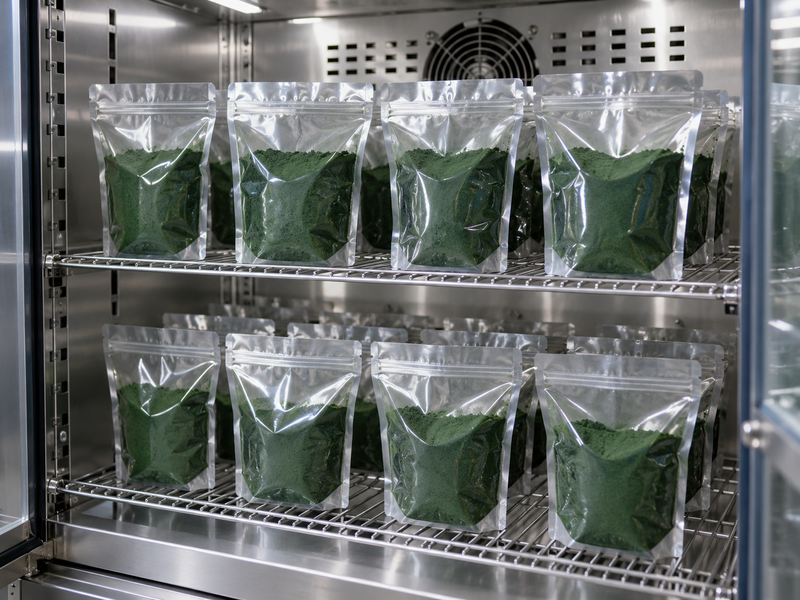
For most shelf-stable dry powders, a cupboard away from the oven, sink and direct sun is easier to control than an exposed countertop. Follow the package’s stated storage conditions if they are more specific. Do not move the powder into a decorative clear jar simply because it looks tidy; the original opaque barrier pouch may protect it better from light and moisture. If you do transfer it, use a clean, thoroughly dry, food-safe container with a tight closure and preserve the lot code and date.
A fast kitchen check: stand where the package will live during normal cooking. Does steam reach it? Does sunlight strike it for part of the day? Will someone leave the scoop on a wet board? Those ordinary details matter more than finding a theoretical perfect temperature. At work, foodservice teams should assign a storage spot and include it in opening procedures, so staff do not leave a shared pack next to hot beverage equipment through every service shift.
| Location | Main concern | Better choice |
|---|---|---|
| Sunny counter | Light and heat | Closed cupboard |
| Above a kettle | Steam | Dry shelf away from steam |
| Original barrier pouch | Repeated opening | Reseal promptly |
3. Why do heat and light deserve attention?
Interpret the experiment carefully
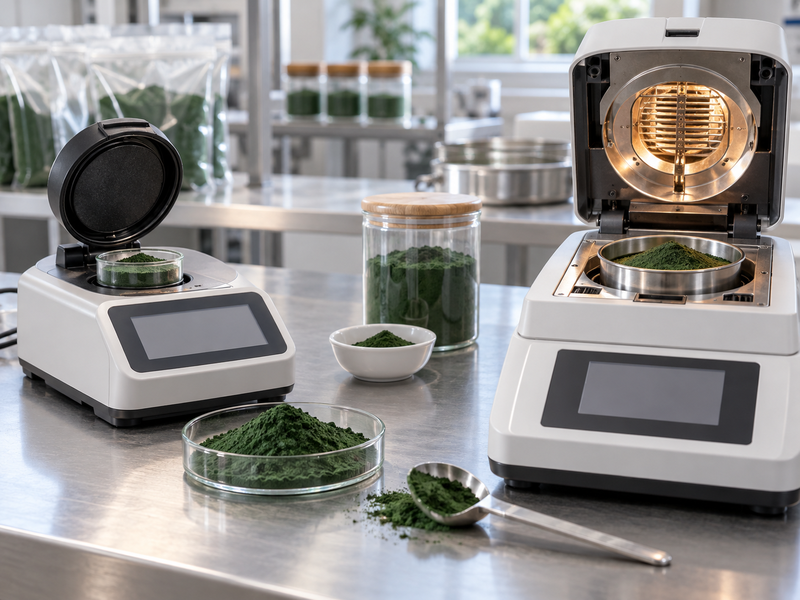
A primary study on Spirulina platensis powder exposed biomass to different temperatures and light conditions and measured changes in its antioxidant potential in a laboratory system. The authors reported deterioration under heat and light in the tested setup. That finding supports protecting an opened powder from avoidable exposure. It does not create a universal “use within X days” rule for every commercial pouch, nor does a laboratory antioxidant measure predict a consumer health outcome.
Storage instructions should therefore be modest and concrete: keep the pack away from direct light and heat, then rely on its own date and supplier guidance. Here is the distinction: an unopened stability study evaluates a defined package under specified conditions; a household pouch opened twice daily faces another exposure pattern. A seller can use stability studies to choose packaging and directions, but it should validate the actual product, closure and market route before promising a post-opening life.
4. How can you keep moisture out?
Keep every scoop dry
The easiest avoidable mistake is putting a wet spoon into a dry powder. Water can cause local clumps and creates conditions unlike those for which a dry product was packed. Scoop away from steaming pots and drinks; do not hold the pouch over a blender while condensation rises. Close the zipper fully after taking the portion you need. If powder gathers in the zipper track, wipe the track with a clean dry cloth before sealing.
Never return an unused portion that has touched liquid or food.
Brands should consider how easily customers can operate the closure with powder on their fingers. A zipper that repeatedly fails may undermine otherwise good barrier packaging. A simple rule helps: pour or scoop into a separate dry dish before mixing, then reseal the pouch before preparing the food. If the original package tears or cannot close reliably, move the remaining powder to a dry, airtight food-safe container, and attach the original label or record its lot and date.
Do not assume a clump is harmless without knowing how it formed.
| Habit | Why it helps | What to avoid |
|---|---|---|
| Dry utensil | Limits added water | Damp measuring spoon |
| Scoop away from steam | Reduces condensation | Open pouch over kettle |
| Clean zipper | Improves closure | Powder trapped in seal |
5. Should spirulina powder be refrigerated?
Follow the label and control condensation
Refrigeration is not an automatic upgrade for a dry powder. A cold pouch opened in a warm, humid kitchen can collect condensation, particularly if the container is left open while it warms. Some manufacturers may instruct chilled storage for a specific product or formulation; their directions take priority. For a typical shelf-stable dry powder, a reliably cool and dry cupboard may be simpler than repeated trips in and out of a refrigerator. The package design and climate matter more than a blanket rule.
If refrigeration is specified, keep the powder tightly sealed and let a closed container reach room temperature before opening when condensation is likely. Avoid opening a cold pouch over a steaming pan. The practical test: are you reducing heat exposure without adding water exposure? If the answer is uncertain, ask the manufacturer for product-specific advice. Do not freeze or refrigerate solely because an unrelated article recommends it; a change in storage conditions should make sense for the actual pack and your environment.

6. How should you reseal and portion it?
Reduce repeat exposure without overcomplicating use
Open the pouch only as long as needed, use a clean dry utensil and push air out gently if the pack design allows it. Close every part of the zipper or lid and return the pack to its storage spot. For a large bulk bag used repeatedly, a clean smaller working container may reduce the number of times the master pack is opened.
Portion only what will be used within the operation’s established practice, and label the smaller container with product name, lot and transfer date.
Do not leave an open bag beside a production mixer while staff step away. A controlled dispensing routine protects both powder and traceability. What makes this workable? A scoop that fits, an easy closure and a storage location close enough that staff will actually use it. For household buyers, there is no need for elaborate equipment. Good habits—dry spoon, prompt seal, dark dry shelf—address the main avoidable exposures. For business users, document those habits so different shifts handle the same lot consistently.
| Pack format | Sensible handling | Record to keep |
|---|---|---|
| Retail pouch | Scoop, reseal, return | Printed lot and date |
| Large bag | Decant small working amount | Transfer date and lot |
| Jar | Close lid fully | Original label details |
7. Which changes warrant disposal?
Treat unusual changes as a reason to stop
Do not taste a suspect powder to decide whether it is safe. Visible mold, evidence of water entry, a damaged or contaminated container, or a strong new off-odor are reasons to stop using the product and follow the manufacturer’s advice or discard it. Color can naturally vary by lot, so compare an opened pack with its original appearance and the brand’s specification rather than a random online photograph. A small dry lump may come from compaction; a sticky or damp mass tells a different story.
You may not be able to distinguish the cause confidently at home.
When in doubt, pause use: store the pack aside with its lot code if you want to contact the seller. A brand should have a complaint process that asks for purchase date, storage history, photographs and batch code, while avoiding a safety verdict from a picture alone. The FDA’s discussion of algae-related contaminants also notes that some hazards cannot be seen, smelled or tasted; appearance is not a substitute for supply-chain testing.

8. What does the printed date really mean?
Read it with storage conditions attached
A best-before or expiration date reflects the maker’s chosen labeling framework and supporting product data under specified conditions. It does not imply that a pouch left open in a humid room remains unchanged until that day. It also does not mean every opened package becomes unusable on the same fixed number of days. The spirulina powder shelf-life testing guide discusses why packaging, water activity and defined endpoints matter when a business qualifies shelf life.
Consumers should treat the package date and storage instructions as a pair.
Ask the brand if it provides a validated post-opening instruction for that exact product. The key distinction: a printed date is not a replacement for checking the seal, storage history and obvious signs of damage. Brands should avoid copying a competitor’s “use within 30 days” line unless their own formulation and packaging support it. Clear directions can say “keep tightly sealed in a cool, dry place” while explaining how customers should handle a compromised pack.
| Date statement | What it may support | What it cannot prove |
|---|---|---|
| Printed best-before | Planned quality period | Any opened storage history |
| Opened-on note | Time since opening | Safety without condition check |
| Lot code | Traceability | A universal shelf life |
9. How can brands write useful storage directions?
Match copy to actual packaging and tests
Good instructions describe an action the customer can perform: keep closed, avoid moisture, use a dry utensil and store away from heat and light. If the product needs refrigeration, state it clearly and account for condensation. If an opened-use period is given, explain how it was established for the real package and formulation. A generic promise based on another supplier’s powder is weak because pigment, moisture, seal and distribution route may differ. Packaging design should make the direction easy to follow.
Test the closure after repeated openings and evaluate powder properties during a simulated use period. Record color, odor, caking and any safety endpoints the product requires. A customer-friendly instruction: “Reseal immediately after use; store in a cool, dry place away from sunlight; use a dry spoon.” Add product-specific language only when supported. A foodservice pack may need a different procedure from a retail sachet.
Keep a route for customers to report damaged seals and provide the lot code, which helps investigate a concern rather than merely dismiss it.

10. What simple routine works each time?
Make the safe habit automatic
Put the pack in a dry cupboard away from sunlight and cooking steam. At each use, take a dry utensil, remove the needed amount, close the package completely and return it immediately. Keep the date and lot information intact. Check for unusual odor, visible moisture or package damage before use, particularly if the pouch has been stored for a while. Follow any additional directions printed on the actual product.
These steps are simple enough for a busy kitchen and specific enough to put on a retail label.
The point is consistency: regular careful handling is more reliable than trying to rescue powder after repeated exposure. A café can build the routine into opening and closing checklists; a household can keep the scoop in a clean dry spot next to the cupboard. If your climate is very humid or your package cannot seal, contact the maker about suitable handling or move the powder into an appropriate dry container with its lot information preserved.
| Each use | Action | Result to check |
|---|---|---|
| Before opening | Inspect pack and spoon | Clean and dry |
| After portioning | Close fully | Seal engaged |
| Before storage | Return to cupboard | Away from heat and light |
Frequently asked questions
How long does opened spirulina powder last?
There is no universal period. Follow the product’s date and specific storage directions, and ask the manufacturer if it states a validated opened-use period.
Can I leave the pouch on a kitchen counter?
A cool counter away from light and steam may work, but a closed dry cupboard usually offers more consistent protection.
Does a clump mean the powder is unsafe?
Not always; compaction is possible. Sticky or damp clumps, water entry or other unusual changes warrant stopping use and asking the maker.
Should I put the scoop inside the pouch?
Only if the scoop stays clean and completely dry. A wet or food-contaminated scoop can introduce moisture or debris.
Can I rely on smell to identify contamination?
No. Some hazards have no obvious smell. Use reputable sourcing and lot-specific testing, and discard a visibly compromised product.
Conclusion
The best answer to how to store spirulina powder after opening is a repeatable routine: keep it sealed, dry, cool and away from light. Published stability research supports care with heat and light, while the maker’s own package and date provide product-specific guidance. Use a dry utensil, inspect the pack and stop using it if moisture or another concerning change appears. Those small actions protect the product you paid for and make handling easier to explain to others.