
Spirulina vs greens powder can be confusing because one jar may hold a single ingredient while another combines dozens of plants, vitamins and flavors. A long ingredient list does not tell you how much spirulina is present or whether the mix fits your needs. This guide uses the actual label, serving weight and supplier evidence to make the comparison useful for consumers and for brands planning transparent formulas.
Contents
- What counts as pure spirulina or greens powder?
- Where should you start on the label?
- Can you tell how much spirulina is inside?
- How do added vitamins change the comparison?
- What do sweeteners and flavors contribute?
- How should you compare cost per serving?
- Can either product replace vegetables?
- What quality documents matter?
- How should a brand describe a blend?
- Which purchase makes sense for you?
1. What counts as pure spirulina or greens powder?
Name the reference product
For this comparison, pure spirulina means dried whole green Arthrospira biomass with no other active ingredients. A greens powder is a formulated mixture that may include algae, grasses, vegetables, fruit extracts, vitamins, minerals, probiotics, sweeteners and carriers. There is no one universal greens-powder recipe. Two tubs in the same aisle can have very different amounts and different intended uses. The word “greens” on the front does not establish vegetable equivalence, while a green color does not prove the presence of spirulina.
The whole green spirulina product description shows why raw ingredient identity matters. Blue pigment extract is a separate material, and a spirulina-flavored blend is not automatically pure spirulina powder. The comparison starts with the back panel: read the full ingredient statement, serving size and any declared amounts. Decide whether you want a single ingredient that can be weighed into recipes or a flavored, finished supplement with several components. That distinction drives every later label question.
2. Where should you start on the label?
Read product type, serving and panel
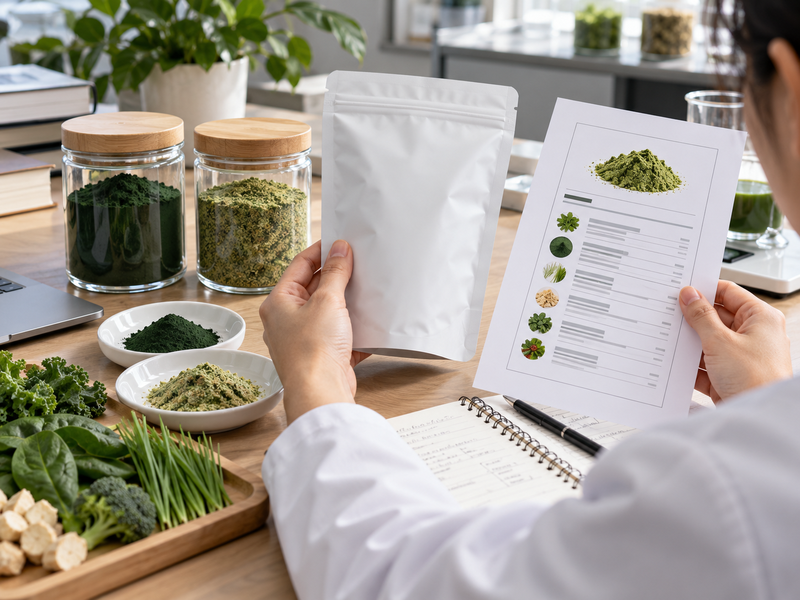
Check whether the item is sold as a conventional food or a dietary supplement in its market. Then read its Nutrition Facts or Supplement Facts panel, not only the headline promises. Serving weight is the denominator for every claim. A 12-gram flavored blend and a three-gram pure powder should not be compared by price per scoop without accounting for what each scoop contains. Look at servings per container and the ingredient list, including items that can easily be overlooked near the bottom of the panel.
The FDA guide to dietary supplements explains that a Supplement Facts label lists serving size and dietary ingredients with amounts per serving. A quick label walk: circle the serving weight, underline every named active ingredient, and mark any quantity you cannot find. If a product promises several benefits yet does not reveal meaningful inclusion levels, ask the seller for details.
Transparency is especially useful when the front label prominently pictures spirulina but the blend contains only an undisclosed small portion.
| Label location | What to extract | Why it matters |
|---|---|---|
| Front | Product identity | Sets expectations |
| Facts panel | Serving and nutrients | Defines the dose |
| Ingredient list | All components | Reveals formulation |
3. Can you tell how much spirulina is inside?
Distinguish presence from quantity
An ingredient statement may confirm that spirulina appears in a blend without giving its gram weight. The position of an ingredient in a list can offer limited context under the labeling rules for the product, but it is not a precise dose calculator. If several ingredients sit inside a proprietary blend, the declared weight may apply to the group rather than each member. A brand might advertise “with spirulina” accurately while still leaving consumers unable to compare its inclusion with a pure powder.
Ask for grams of whole spirulina per serving if that quantity matters to your decision. Confirm whether the named material is dried biomass or an extract. Here is the useful test: calculate the price per declared gram of spirulina only when the amount is actually disclosed. If it is not, compare the finished products as different formulations instead of pretending they supply equal amounts of the same ingredient. For a brand, voluntary disclosure can make a modest inclusion more credible than a large, unquantified promise.
4. How do added vitamins change the comparison?
Separate fortification from source ingredients
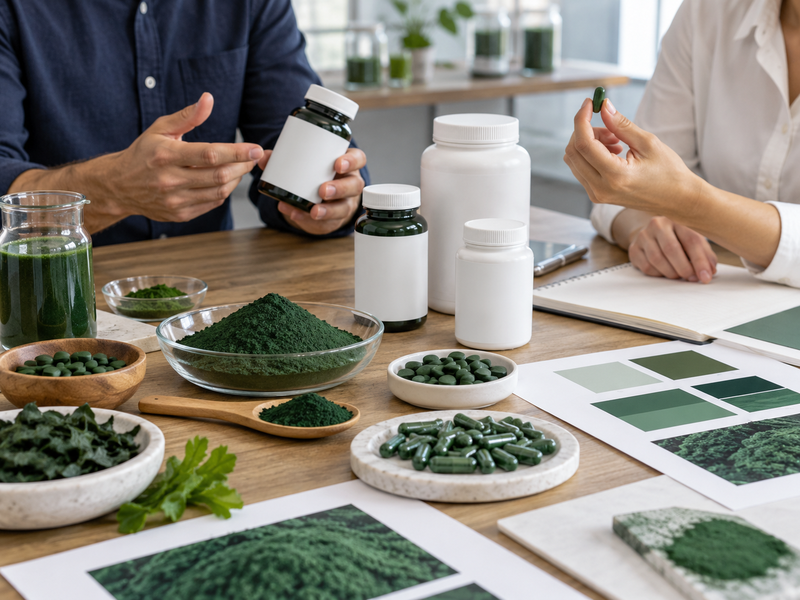
Greens products often add vitamins and minerals directly. That can produce a higher percent Daily Value than an unfortified single-ingredient powder, but it does not mean the dried greens themselves supplied those nutrients. Check the ingredient list for added forms and compare the amounts with what you already take in other supplements. A pure spirulina product may have a simpler label, yet simple does not automatically mean nutritionally superior. The question is whether the declared nutrient amount serves a useful purpose at the actual serving.
The FDA explanation of Daily Value describes percent Daily Value as a per-serving contribution. Keep the source visible: a claim such as “contains vitamin C” can come from added ascorbic acid, fruit powder or both. If a brand wants to attribute a nutrient to spirulina, it should have ingredient-specific evidence and finished-product data. Buyers should also watch for duplicated high-dose nutrients when combining a greens blend with a multivitamin.
| Label feature | Pure spirulina | Greens blend |
|---|---|---|
| Added vitamins | Usually absent | May be included |
| Nutrient source | Whole biomass | Multiple sources |
| Comparison need | Lot assay | Full formula and panel |
5. What do sweeteners and flavors contribute?
Assess the whole scoop
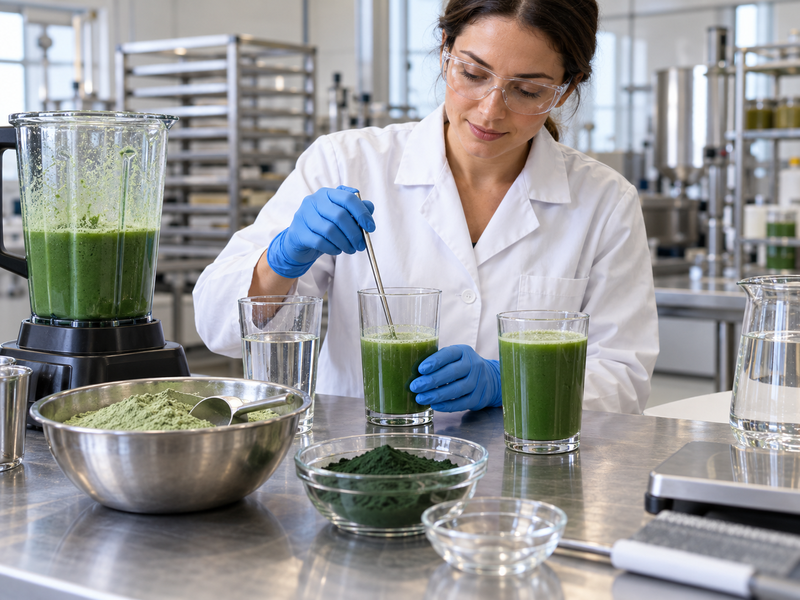
Pure spirulina has a distinctive savory, marine or earthy flavor, so many people mix it with fruit, yogurt or another strongly flavored base. A greens blend may already contain sweeteners, acids and flavoring agents to improve its taste in plain water. That convenience can be valuable, but it changes the product’s cost, ingredient count and suitability for recipes. A powder made for a quick drink may perform poorly as a neutral addition to soup or bread because its flavor package was designed for sweetness.
Read for added sugars, sugar substitutes, fruit flavor, gums and fibers, then taste the mix as directed. An easy comparison: prepare one serving of each product in the same volume of plain water and another in the recipe you actually use. Check sweetness, aftertaste, grit and sediment. For brands, flavor masking should not be used to obscure a low inclusion of the featured ingredient.
If the formulation is primarily a flavored beverage mix, present it that way and let the label explain what makes up the scoop.
6. How should you compare cost per serving?
Use a denominator that reflects your goal
Cost per container hides large differences in serving count and scoop weight. Calculate price per prepared serving first. If your purpose is specifically to consume whole spirulina, calculate cost per declared gram of spirulina as well. That second figure cannot be estimated honestly when a blend omits the individual amount. A more expensive greens product may still be convenient because it replaces several separate ingredients or includes flavoring; the price calculation should reveal that choice rather than decide it for you.
For procurement, include manufacturing loss, minimum order quantity, packaging and quality testing in the cost model. The number that matters: usable cost per finished drink or unit that passes sensory and quality criteria. A low-cost raw powder requiring twice the inclusion or extensive flavor correction may not be cheaper in the final product. Conversely, a premium-looking blend with undisclosed active amounts can be a poor choice for a buyer who wants a specific dose.
| Objective | Calculation | Missing-data rule |
|---|---|---|
| Daily drink | Pack price ÷ servings | Use label count |
| Spirulina dose | Pack price ÷ declared grams | Do not guess |
| B2B formula | Total cost ÷ saleable units | Include waste |
7. Can either product replace vegetables?
Keep the role of a supplement realistic
Neither a small spirulina serving nor a flavored greens scoop reproduces the volume, texture and variety of a diet that includes vegetables. A product can add certain measured nutrients, but the composition of a blend does not automatically match a vegetable portion. The FDA supplement guidance says supplements should not take the place of the variety of foods central to a healthy diet.
That matters when a front label uses fields of leafy imagery or “daily greens” language.
Ask what problem the powder actually solves. It might add a convenient ingredient, help a recipe meet a documented nutrient target or provide a flavor you enjoy. Keep the promise narrow: a greens scoop can be one part of a routine, but it is not a license to skip ordinary food. Brands can communicate convenience without turning a supplement into a replacement meal claim.
Shoppers should check whether they are buying an ingredient, a fortification product or a habit cue, and judge it against that purpose.

8. What quality documents matter?
Follow testing from ingredient to finished batch
A single-ingredient powder makes traceability relatively simple: identify the lot and request relevant results for identity, microbes, moisture and contaminants. A multi-ingredient greens blend creates more points where source quality and dosage can vary. Finished-product testing remains necessary, and each supplier should provide suitable input records. Organic or natural wording does not establish the absence of heavy metals, microbes or other hazards. For algae-containing products, a risk-based contaminant plan should address the exact material and growing system.
Request a batch-linked certificate of analysis and ask which tests were performed on the final blend rather than only on raw ingredients. A spirulina factory overview illustrates the categories a buyer can discuss with a supplier; the actual lot documents decide the case. The practical question: can the company trace a consumer complaint back through the finished mix to its ingredient lots? If not, an appealing ingredient list gives little confidence about consistency or response to a problem.
| Product type | Key document | Extra question |
|---|---|---|
| Pure powder | Lot certificate | Same grade each reorder? |
| Complex blend | Finished-batch record | Inputs traceable? |
| Private-label mix | Formula and testing plan | Who releases lots? |
9. How should a brand describe a blend?
Make front and back labels agree
A brand can make a product easier to understand by stating which ingredients drive its main use. If spirulina appears prominently on the front, disclose its role and amount when possible. If vitamins are added separately, do not imply all nutrient values come from the green plants. The FDA label-claims overview explains the need for truthful, supported wording and the distinction between ordinary function language and disease claims. An attractive story does not replace substantiation.
Draft the label from a claim ledger that lists serving weight, each featured ingredient, source of each nutrient and evidence for every promise. A strong sentence is specific: “Each serving contains two grams of whole spirulina” tells a buyer more than “powered by supergreens.” If the blend uses tiny amounts of many ingredients, describe it as a flavored mix rather than implying therapeutic doses of each plant. Review copy for the finished product’s category and destination markets before printing packaging.

10. Which purchase makes sense for you?
Decide what you want the scoop to do
Choose pure spirulina when you want to control its dose, add it to varied recipes and avoid paying for a flavor system or added nutrients you do not need. Choose a greens blend when its specific formula, taste and convenience meet your goals and its label discloses enough to assess value. The better choice depends on composition, not the length of the ingredient list. If a product’s key amounts are unavailable, treat that uncertainty as part of the purchasing decision.
Set one question before shopping: do you need a named ingredient or a finished drink mix? Then compare like with like. Check the serving weight, product type, declared spirulina grams, added nutrients and cost per usable serving. For B2B buyers, demand traceable lots and a stable formula. A transparent label may be less dramatic than a “100 greens” headline, but it gives both shoppers and formulators information they can actually use.
| If you need… | Start with… | Check… |
|---|---|---|
| A controllable ingredient | Pure spirulina | Identity and batch data |
| A flavored daily drink | Greens blend | Full formula and amounts |
| A specific spirulina dose | Either | Declared grams per serving |
Frequently asked questions
Is greens powder the same as spirulina?
No. Spirulina can be a single ingredient; greens powder is a variable blend that may or may not contain spirulina.
Does a longer ingredient list mean better nutrition?
No. Amounts, nutrient forms and the finished serving matter more than the number of names on the panel.
Can ingredient order show the spirulina dose?
It may provide limited context under relevant labeling rules, but it does not supply a precise gram amount.
Are proprietary blends always poor products?
No. They can be useful formulations, although undisclosed individual amounts limit dose comparisons.
What is the fastest buying check?
Read serving weight, facts panel and full ingredients. Then ask how much of the featured ingredient each serving contains.
Conclusion
The spirulina vs greens powder decision becomes clearer when you read past the front label. Identify the product type, weigh the serving and separate whole spirulina from sweeteners, fortification and other blend ingredients. Choose the item whose disclosed composition matches your purpose and whose maker can document its batches. That gives you a repeatable choice rather than a guess based on green packaging.