
A green powder sample can look excellent and still fail as a purchasing reference. If nobody records its exact grade, lot and test limits, the first bulk shipment may be impossible to compare. This chlorella powder sample approval before bulk order workflow turns a bench trial into a purchase-ready record. SpirulinaCN describes broken-cell grades, specification matching and lot documents, but buyers must request and check the records for the particular sample and order.
The goal is simple: a commercial lot should be measurably the same kind of material that passed your finished-product trial.
Contents
- What should be decided before requesting a sample?
- How do you prove the sample matches a saleable grade?
- Which documents should accompany the sample?
- What receiving checks protect the trial?
- How should the actual product-matrix trial run?
- Which acceptance limits should be set before testing?
- What should happen when a sample fails?
- How do you preserve an approved reference?
- What must transfer into the first purchase order?
- How should the first bulk lot be released?
1. What should be decided before requesting a sample?
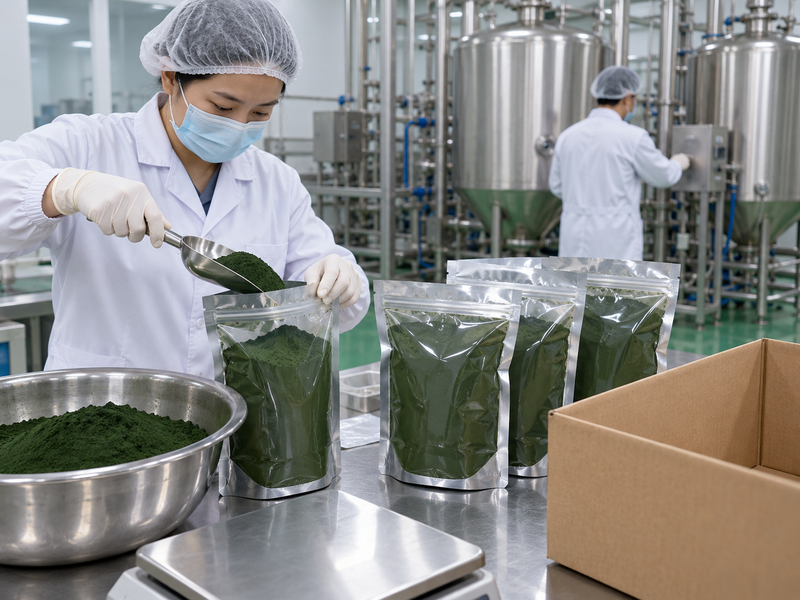
State the intended product, target dose, process, market and must-have specification. Decide whether Chlorella vulgaris and broken-cell status are essential or merely preferred. Set practical needs for particle size, color, flavor, microbiology and contaminants based on your product and destination. If a greens blend will be shaken in water, record the reconstitution conditions. If the ingredient goes into a bar, note binder, temperature and shelf-life target.
Ask for enough powder to repeat the test and retain a sealed portion, rather than a decorative sachet that can support only a photograph. Give the supplier the planned annual volume and first-order scale, so it can choose a sample from a commercially available grade. Set the question first: approval asks whether a defined material works in a defined product at an affordable dose. Without that brief, every sample can be described as “promising” while no purchase criterion is settled.
| Brief field | Buyer input | Why it matters |
|---|---|---|
| Product matrix | Recipe and process | Trial relevance |
| Intended dose | Range per serving | Sensory and cost |
| Required grade | Species and disruption | Prevent substitution |
| Market | Destination and category | Testing and label review |
2. How do you prove the sample matches a saleable grade?
Request the SKU, exact taxon, process description, sample lot number, production date, pack code and proposed commercial pack. Ask whether the sample was taken from a routine production lot, a pilot run or a hand-selected exhibit. A sample from a pilot process can still be useful, but it cannot alone qualify routine bulk material. Confirm what “broken cell” means for that grade and how the supplier measures it. The product page separates disruption status from mesh size; fine granulation is not evidence of disrupted cells.
If the quoted bulk grade differs in mesh or drying route, classify it as a new candidate. Reconcile spelling and codes across sample pouch, TDS, COA and quotation. This administrative step prevents expensive confusion later: a pleasing trial result has value only when procurement can order the same specification through an identified supplier and lot-release system.
3. Which documents should accompany the sample?
Ask for a current TDS, the sample lot’s COA, method notes for critical tests, composition and allergen information, storage guidance and proposed shelf life. Relevant COA fields may include species or identity, disruption measure, protein, moisture, particle distribution, microbiology and contaminants. Choose them from the actual use and destination; do not collect a generic list and call it complete. A COA bearing a different lot number may describe the supplier’s capabilities but not the powder in your trial.
Compare the TDS limits with the lot values and ask about any result close to a boundary. Where an organic or other certificate is needed, verify site, product scope and current status. FDA supplement CGMP guidance describes component specifications and quality controls for covered supplement manufacturers; food products may follow different requirements. Your quality team should define the actual document set for its category.
| Document | Match to sample | Decision use |
|---|---|---|
| TDS | Exact SKU/version | Proposed limits |
| COA | Exact lot number | Measured values |
| Method note | Critical assay | Comparable re-test |
| Pack/storage | Sample and bulk route | Stability planning |

4. What receiving checks protect the trial?
When the sample arrives, record seal condition, net weight, lot number, receipt date, declared storage conditions and any transit damage. Photograph the unopened label before transferring powder to a lab container. Assign an internal sample ID and log who receives and divides it. Split material into test, confirmation and retain portions using clean tools to avoid cross-contamination. Keep a reference of the original pack if that format affects moisture or odor.
If the sample arrives warm, wet or without a readable lot code, quarantine it and ask for a replacement or written investigation before using its results for commercial approval. A rushed formulation trial using uncertain material creates false confidence. The receiving record is the bridge between supplier documents and your actual jar of powder. Later, when a commercial lot arrives, this record helps quality compare appearance and packaging against what was originally approved.
5. How should the actual product-matrix trial run?
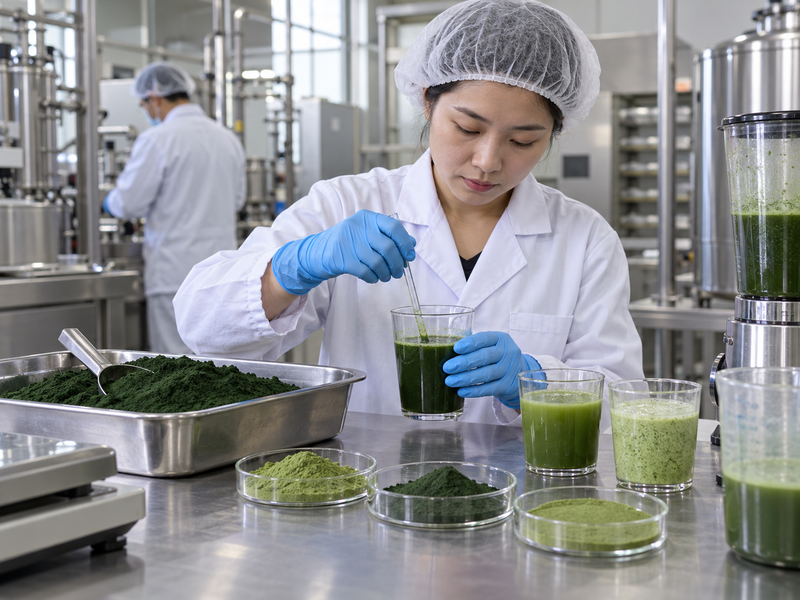
Make a control without chlorella and a dose ladder that brackets the intended inclusion. Keep total formula weight, mixing order, processing temperature and serving size constant where feasible. Record the lot of every major co-ingredient because flavors and colors interact. Test the outcome after normal processing, not only immediately after powder addition. For drinks, check wetting, clumps, sediment and flavor after the expected hold. For a dry greens mix, check distribution and reconstitution. For a bar, check appearance and texture after packaging.
A laboratory spoon test may screen a candidate but should not replace a pilot in equipment and packaging close to production. Write observations in measurable terms: “strong aftertaste at target dose” is more useful than “quality seems lower.” Retain photos under consistent light and coded sensory sheets. The trial should identify the highest acceptable dose and whether that dose supports the intended finished-product statement.
| Trial point | Measure | Reason |
|---|---|---|
| Dry powder | Color, odor, flow | Incoming reference |
| During process | Mix time and loss | Line feasibility |
| Finished product | Taste, color, texture | Consumer acceptance |
| After hold | Stability and settling | Shelf-life screen |
6. Which acceptance limits should be set before testing?
Separate critical analytical limits from formulation preferences. Critical limits might include identity, selected contaminant maximums and microbiological criteria appropriate to the destination. Formulation limits may cover acceptable color range, visible particles, mixing time, flavor score or finished moisture. Define how each is measured and who decides a borderline result. Establish the target dose and a maximum acceptable ingredient cost per serving from the quoted grade.
If the trial is judged after results arrive, a team can rationalize away a failing observation because it likes the supplier’s price. Use a simple pass, conditional or fail rule set before coding samples. For a product with a nutritional claim, test finished-product evidence separately; an ingredient protein result does not establish the final label. If a limit is not yet known, name it as an open question and run a screening trial rather than approving bulk.
This protects both the buyer and supplier from an ambiguous purchase order.
7. What should happen when a sample fails?
Document the failure, affected criterion, test method and whether the problem appears in duplicate runs. Check formulation or process errors before assigning blame to the powder. If a sample fails an identity or safety-related requirement, stop its approval and involve quality. If it fails a sensory target, decide whether a different grade, lower dose or revised recipe warrants a new trial. Ask the supplier for a proposed replacement with its own lot and documents.
Do not edit the original sample record to make a new grade appear continuous. A supplier may recommend finer mesh or another disruption route, but that change requires a distinct candidate ID. For a minor process issue, a documented conditional trial can be appropriate, yet no commercial order should be placed until the resulting grade and specification are clear. Keep failure useful: a precise rejection reason often lets the supplier send a better matched sample on the next attempt.
| Failure type | Immediate action | Re-entry condition |
|---|---|---|
| Document mismatch | Hold trial | Matching records |
| Analytical failure | Quality review | New compliant lot |
| Sensory failure | Reformulate or alternate | Fresh coded trial |
| Process difficulty | Check setup | Repeat under defined settings |
8. How do you preserve an approved reference?
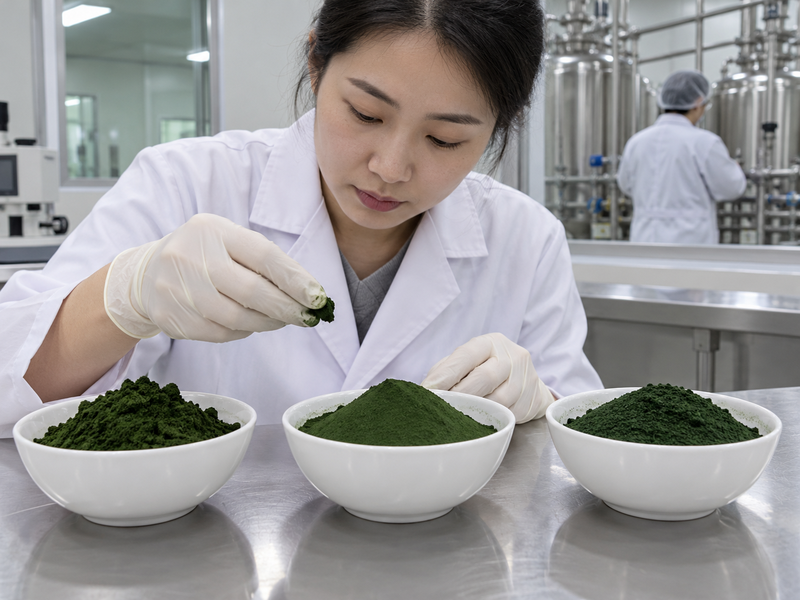
Keep a sealed retain from the approved sample lot under the stated storage conditions, with lot, date and internal approval ID. Preserve the final product from the successful trial when stability permits. Archive a concise approval sheet: SKU, species, disruption method, key limits, COA, trial recipe, process settings, sensory outcome and approver signatures. A photograph can help compare shade, but camera exposure and aging make it a weak sole standard. Define an objective color measure or controlled reference where shade matters.
Make the file accessible to receiving QC and procurement, not only R&D. Ask the supplier how long it retains the same lot and how it notifies buyers of process or raw-source changes. Retain samples do not replace new-lot testing, but they give a practical comparator when the first shipment looks different. This is the point at which the sample becomes a purchasing standard rather than an attractive lab object.
9. What must transfer into the first purchase order?
Name the approved SKU, taxon, broken-cell requirement and method, particle-size and other binding limits, pack configuration, quantity, destination, delivery term and required documents. Reference the approved TDS version and sample ID. Specify whether the first shipment must be from the tested lot or may be from a new lot meeting the same standard; availability must be confirmed. Set the COA fields and any independent testing requirement. Include a change-notice condition for site, process, composition or packaging changes that could affect the trial result.
Ask for current MOQ, lead time and a dated price before committing. Do not write “same as sample” as the only specification because the sample’s attributes may not have been recorded fully. The supplier’s chlorella page describes sample and batch matching, but the purchase order must make that matching explicit for this transaction.
| PO element | Required reference | Why |
|---|---|---|
| Grade | Approved SKU and TDS | Order identity |
| Quality | Limits and COA methods | Release basis |
| Logistics | Pack, term, destination | Receiving match |
| Change | Notice trigger | Protect trial validity |

10. How should the first bulk lot be released?
Treat the first bulk delivery as a controlled verification, not an automatic release because a sample passed. Reconcile seller, pack, lot code and COA against the PO. Inspect containers and take samples according to the buyer’s risk-based plan. Confirm critical analytical attributes and run a short in-matrix comparison against the approved retain. Record any color, odor, flow or process difference before full-scale use. If the bulk lot does not match, quarantine it and resolve the difference with the supplier under documented disposition.
Do not assume an off-spec lot can be blended away. Once released, archive its results and the outcome of the first production run; this becomes a stronger reference for later orders. A separate incoming inspection guide can provide more detail. The sample-to-PO chain closes only when a real shipment passes the same essential gates as the original trial.
FAQ
Q1. Can a supplier’s general COA qualify my sample? No. Request the COA for the identified sample lot, then compare it with the proposed specification.
Q2. Does a good bench taste test justify a bulk order? It is a screen. Confirm the result in the intended process and pack at the proposed dose.
Q3. What if the commercial lot is different from the sample lot? Test it against the approved specification and retain. A lot change is normal, but its acceptance must be evidenced.
Q4. Must the buyer independently test every parameter? The plan depends on product risk, law and quality system. Define which results need supplier evidence and which need confirmation.
Q5. Can a failed sample be reformulated? Yes, if the reason is understood. Record the revised formula or grade as a new trial and approve it deliberately.
Carry the approved sample into the first order
Chlorella powder sample approval before bulk order works when the sample’s identity, documents and matrix outcome become written buying criteria. Send your application, target specification, anticipated quantity, destination, first-order volume and intended process through SpirulinaCN’s contact page. Request a grade-matched sample, lot TDS and COA, MOQ and lead time, then share trial results so the first commercial specification can be locked accurately.