
Two chlorella quotes can differ dramatically while describing different species, disruption methods, pack quantities or delivery points. A buyer who sorts by the first price-per-kilogram figure may award the wrong material. This bulk chlorella powder price per kg comparison gives purchasing and quality teams a common worksheet. Public product listings, such as an EU wholesaler’s quantity tiers, show why unit price depends on order size. Their displayed prices are not a current factory quote for your grade, destination or contract. SpirulinaCN’s chlorella page identifies species, disruption and grade matching as key checks before price is meaningful.
Contents
- What must be identical before prices are compared?
- How should species and broken-cell claims be specified?
- Which quality differences change usable value?
- How do pack size and order tiers change the quote?
- Which Incoterm and destination costs belong in the model?
- How should cost per usable kilogram be calculated?
- What does a matched sample add to the comparison?
- How do payment and delivery terms affect value?
- What should the standardized RFQ contain?
- How should the award decision be documented?
1. What must be identical before prices are compared?
Write one target specification and send it unchanged to every bidder. State Chlorella vulgaris or the intended species, broken-cell requirement, particle size, protein and moisture limits, microbiology, contaminants, organic status if relevant, pack format and intended use. Add the sample quantity and annual forecast. Then demand that each supplier identify every exception in a separate column. A quote for intact-cell powder is not a cheaper version of broken-cell powder; it is a different product. Neither is a 25 kg warehouse-stock price directly comparable with a multi-ton annual contract. Require currency, quote date, validity period, tax treatment and delivery term. Normalize first: do not calculate a price ranking while grade fields remain blank. If a bidder proposes a lower-cost alternate, keep it as a separate trial candidate with its own approval, not as a silent substitute for the requested SKU.
| Comparison field | Standard RFQ value | Supplier exception to flag |
|---|---|---|
| Species | Buyer-selected taxon | Different organism |
| Disruption | Method and acceptance rule | Undefined “broken cell” |
| Pack | Net weight and liner | Different handling cost |
| Delivery | Named place and term | Freight excluded |

2. How should species and broken-cell claims be specified?
Ask for the scientific name, composition and process description on a current TDS. If broken-cell status is required, ask how the disruption percentage is measured and on which lot. SpirulinaCN’s product guide distinguishes cell-wall disruption from mesh size, so “fine powder” should not be accepted as evidence of broken cells. Compare suppliers using the same acceptance method where possible. Otherwise, record that reported percentages are not directly comparable. A stronger-looking disruption number may reflect a different laboratory definition rather than better material. Determine whether the process changes sensory behavior, flow or oxidation in your product. If your formulation allows either disrupted or intact material, quote both explicitly and test both. The price gap then becomes a deliberate formulation choice rather than an accidental sourcing compromise. Require written approval before an alternate taxon, method or grade enters the commercial purchase.
3. Which quality differences change usable value?
Compare lot COAs against the same specification for protein, moisture, microbiology, heavy metals and relevant physical properties. A high moisture value means less dry matter per kilogram and may affect storage behavior. Very different particle distributions can alter blending and reconstitution, even at the same ingredient weight. Ask about color and odor standards when the finished product is visually exposed. Assess whether quoted powder includes any carrier or flow aid; the formula and label may need adjustment. Use actual lot results for the matched sample instead of a generic “typical” number. A COA is not sufficient by itself: the trial might reject material that technically meets an analytical limit but tastes unacceptable. Conversely, a slightly higher quote can save cost if it produces fewer rejects or requires less masking flavor. Price the approved material: only lots that meet the buyer’s quality and matrix gates should enter a final price comparison.
| Evidence | Cost connection | Buyer action |
|---|---|---|
| Moisture | Dry-matter value | Normalize if material differs |
| Mesh/flow | Manufacturing loss | Trial on actual line |
| Color/odor | Rework or masking | Sensory benchmark |
| Lot test scope | Release burden | Add missing test cost |

4. How do pack size and order tiers change the quote?
Ask for price at a trial order, a routine call-off and the full forecast rather than one headline MOQ. Specify whether annual volume is committed or merely forecast. A 25 kg bag may cost less per kilogram than smaller packs while forcing a small manufacturer to keep material open too long. Count liner, pallet, warehouse and repacking costs. An EU wholesale listing visibly changes its per-kilogram price between 25 kg and 50 kg tiers; that is an example of tiering, not evidence that those prices apply to another supplier or market. Ask whether a price tier applies per shipment, per purchase order or across scheduled call-offs. Confirm whether the supplier can split lots or reserve one lot for several deliveries. A low bulk figure loses appeal if it demands excess inventory, cash tied up or more material than the formulation can use before its validated shelf life.
5. Which Incoterm and destination costs belong in the model?
Write the named place and agreed Incoterm on every quote. Ex works, FOB and delivered offers allocate freight, insurance, export and import responsibilities differently. Do not assume the same term covers identical services from every port or carrier. Ask your broker for destination-specific duties, taxes, entry charges and any required documentation or testing; classification and legal obligations depend on the exact product and market. Compare estimates in the same currency and at the same date, noting exchange-rate assumptions. For one supplier already holding stock in your market, local delivery may be simple while another offer requires an import process. Neither route is automatically cheaper. Track uncertainty: some charges can be quoted firmly, while freight, duty treatment or inspection costs may be estimates until the shipment is specified. Keep the uncertainty visible in the worksheet rather than hiding it in a single landed-cost cell.
| Cost layer | Ask for | Common omission |
|---|---|---|
| Product | Unit price at exact tier | Pack or lot difference |
| Export/transit | Term and named place | Inland haulage |
| Import | Broker estimate | Duty and fees |
| Destination | Warehouse delivery | Local handling |
6. How should cost per usable kilogram be calculated?
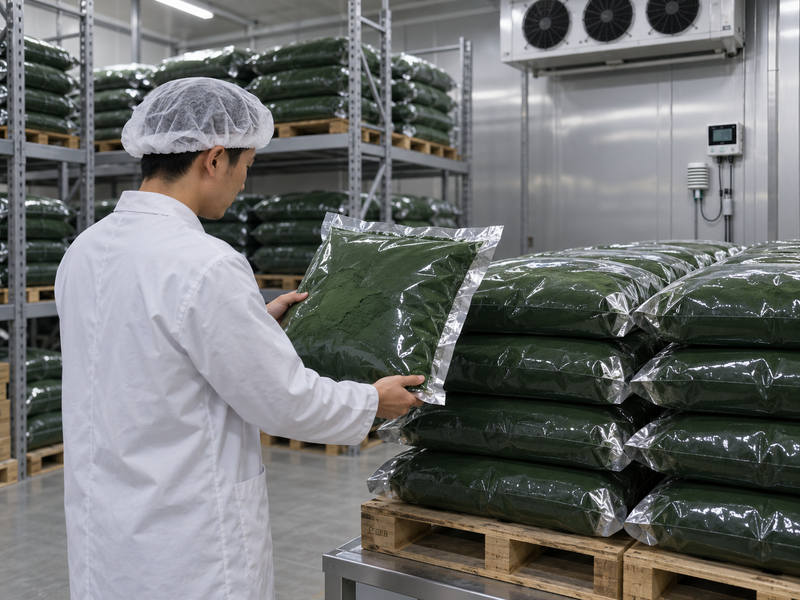
Start with the delivered, duty-inclusive amount paid for the lot. Divide by net kilograms accepted into production after sampling, damage and quality rejects. If the process loses powder through dusting or line residue, multiply by the measured usable yield. For example, a purely illustrative $15/kg delivered quote at 95% usable yield becomes about $15.79 per kilogram actually incorporated, before blending costs. The numbers are arithmetic examples, not a market quote or expected yield for chlorella. When moisture differences are material, also compare dry kilograms: net mass times one minus moisture fraction. For a final product, calculate ingredient cost per saleable serving at the approved inclusion, then add formulation changes driven by taste or flow. This is where a cheap but difficult powder may reverse a price ranking. Use the same calculation for every bidder and keep raw quote values visible for audit. Never bury a quality failure inside a favorable cost average.
| Normalized measure | Formula | Decision use |
|---|---|---|
| Accepted kg | Received kg minus rejected kg | Quality-adjusted supply |
| Usable kg | Accepted kg × production yield | Cost-in-use basis |
| Cost/usable kg | Landed cost ÷ usable kg | Supplier comparison |
| Cost/serving | Cost/usable kg × dose in kg | Product economics |
7. What does a matched sample add to the comparison?
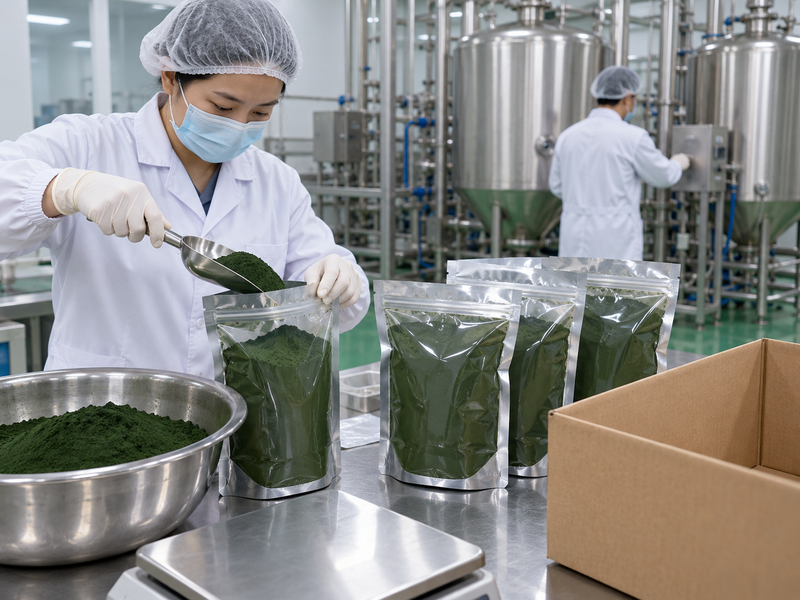
Ask suppliers for a sample that matches the quoted species, disruption process, mesh, composition and proposed production route. Record lot number and whether it is representative of bulk supply. Run the same blending, reconstitution or food-matrix trial for every candidate, with the same recipe and equipment. Evaluate sensory, color, particle behavior and process loss. A sample from an unusually selected demonstration lot can give a misleading cost model if routine lots differ. Therefore request its COA and compare it with several recent commercial COAs. If the cheapest bid fails the trial, do not simply raise masking flavor and declare it equivalent; model the formulation and quality impact, then decide whether the alternate remains attractive. A sample approval is a prerequisite for bulk purchase, and the purchase order should reference the grade and relevant acceptance standard. This step converts a quotation into an ingredient choice that production can execute.

8. How do payment and delivery terms affect value?
Compare deposit, balance timing, credit terms, currency and claims process. A low unit price with full prepayment creates a different cash requirement from a higher price on established terms. Ask for realistic lead time from purchase confirmation through lot release and dispatch, and distinguish stock from made-to-order material. Record how late delivery or off-spec material will be handled, including who pays for testing, replacement freight and disposal. Contract language cannot eliminate all risk, but vague terms make a precise kilogram price less useful. Split the initial commercial order into a manageable qualification lot if your process has not seen the supplier’s material. Maintain a reorder buffer based on actual lead-time variation. For regular purchases, calculate the cost of carrying larger minimum orders and any expiry or obsolescence exposure. The winning quote should support both the first order and the replenishment pattern the brand can afford.
9. What should the standardized RFQ contain?
Send one short packet with product specification, application, sample quantity, expected annual kilograms, shipment size, preferred pack, destination, proposed Incoterm and required document list. Ask bidders to return exact SKU, origin, manufacturer, taxon, disruption evidence, current TDS, sample-lot COA, price tiers, MOQ, quote validity and estimated lead time. Request a separate line for testing or logistics charges. Include the buyer’s evaluation sequence and the date by which technical exceptions must be declared. For organic goods, specify destination-specific documentation and verify certification scope; do not assume a generic organic statement answers the import question. The SpirulinaCN chlorella page provides product options, but the RFQ must define the actual project. One packet, many responses: this saves time because suppliers answer the same commercial and quality questions, and the buyer can detect missing terms before final negotiation.
| RFQ block | Minimum detail | Response type |
|---|---|---|
| Technical | Species, grade, limits | Comply or exception |
| Commercial | Tiers, MOQ, validity | Dated quote |
| Logistics | Pack, destination, term | Delivery plan |
| Evidence | TDS, COA, sample | Linked lot record |
10. How should the award decision be documented?
Make a comparison sheet with one row per conforming SKU and separate flags for technical exceptions. Record quoted price, normalized landed cost, cost per usable kilogram, trial outcome, supply terms and open risks. Do not give a failing sample a high overall score merely because its cost is low. If a nonconforming alternate is commercially appealing, run a separate qualification rather than treating it as interchangeable. Have quality sign off on the specification and trial, procurement on the quote and logistics, and the product team on finished-formula impact. Archive the dated supplier offer and assumptions. Then issue a purchase order that names the approved SKU, lot requirements, documentation and change-notice condition. Re-run the model when freight, exchange rates, grade or forecast changes. A transparent record lets the team explain why it selected a higher nominal price if that material delivers lower total cost in a saleable product.
FAQ
Q1. Is there a reliable universal chlorella price per kilogram? No. Grade, quantity, geography, delivery term and date all change the number; request live quotes.
Q2. Is the lowest quoted kilogram price the best offer? Only if the material passes your specification and trial and remains lowest after delivery and usable-yield costs.
Q3. Can mesh stand in for broken-cell percentage? No. Particle fineness and cell-wall disruption are distinct measurements.
Q4. Should organic and conventional offers sit in one price ranking? Only as explicitly different approved alternatives. Verify organic scope and shipment needs before pricing the claim.
Q5. How should freight volatility be shown? Use a dated estimate or range and name the delivery term. Recheck it before order placement.
Request a quote you can truly compare
A useful bulk chlorella powder price per kg comparison begins with one approved specification and ends at cost per usable, saleable serving. Send that specification, sample quantity, annual forecast, preferred pack size, anticipated quantity, destination and Incoterm through SpirulinaCN’s contact page for a comparable factory quote. Add your application and any required lot tests so the sample and commercial offer describe the same material.