
An “organic chlorella” listing can look convincing while leaving the specific lot, processor or destination market unclear. Chlorella organic certification should be verified as a chain of approved production and handling activities, supported by current documents. This guide focuses on buyer checks for a U.S. organic program and flags where local rules need separate review. USDA organic regulations govern U.S. organic production, handling and labeling; a sales claim alone cannot replace certification evidence.
Contents
- What does an organic claim actually cover?
- How do buyers verify a certificate?
- Which Chlorella identity details matter?
- How are cultivation inputs reviewed?
- What happens during processing and repacking?
- How is chain of custody maintained?
- What changes for U.S. imports?
- How should finished labels be checked?
- What evidence belongs with each lot?
- How should buyers approve an organic supplier?
1. What does an organic claim actually cover?
Identify the operation, product and market
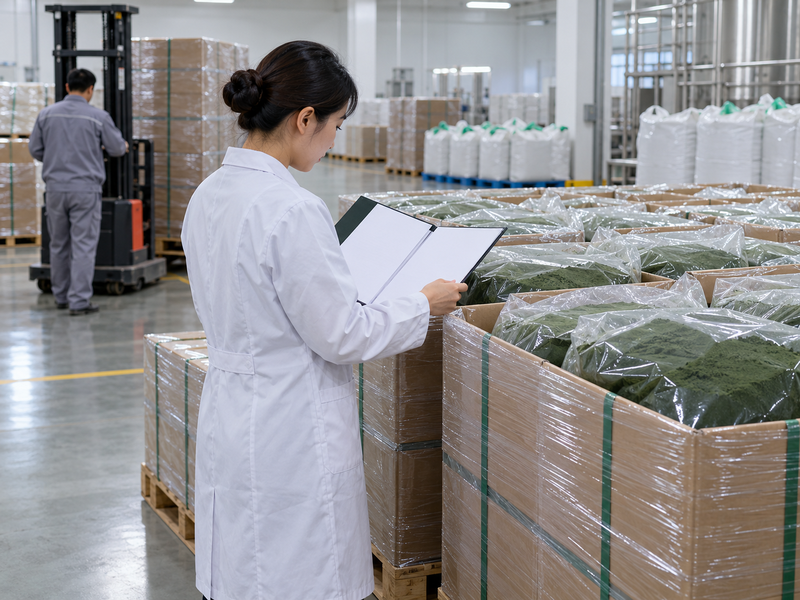
An organic certificate relates to an identified operation and scope. It does not automatically cover every product the company sells. Ask whether the certificate lists cultivation, handling, processing, repacking or another relevant activity, and whether the actual Chlorella product appears in the certifier’s product listing. Check the named legal entity against the quotation and manufacturing site. A distributor’s certificate may cover its handling role while a separate grower or processor has its own certification. Write down the destination market because “organic” requirements and allowed labels vary across jurisdictions.
Start with the offered SKU. A supplier may have organic C. vulgaris powder and conventional C. sorokiniana tablets. The existence of the former certificate does not validate the latter. Obtain species, form, processing description and current certificate references for the exact item. The USDA National Organic Program provides the U.S. framework, but the certifier confirms detailed scope. If your buyer needs EU, UK or another program, request evidence specific to that market. A clean organic claim begins with a clearly identified product, not a leaf icon on a brochure.
2. How do buyers verify a certificate?
Confirm status through the certifier and database
Request a current certificate and product annex, then search the operation in USDA’s Organic Integrity Database guidance. Match the operation name, address, scope and status. A document can look formal yet refer to a different entity, a former site or a suspended operation. If the product detail is not visible online, contact the certifier named on the document. USDA’s Integrity FAQ notes that the certifier has the most current detailed information when database entries need clarification.
Check dates with care. Certification is maintained through continuing oversight, so avoid treating a single PDF as permanent proof. Record when your team verified it and set a renewal reminder. Ask the supplier to notify you of status, site or scope changes before shipment. If a certificate number or product name differs among invoice, pack and annex, resolve the discrepancy in writing. An organic procurement file should let another reviewer reproduce your decision without relying on an account manager’s assurance. A short verification log can be more useful than a folder of unexplained logos.
| Item | Match against | Action if unclear |
|---|---|---|
| Operator | Quote and factory address | Ask certifier |
| Scope | Cultivation/handling route | Request annex |
| Product | Species and form | Confirm exact listing |
| Status | Current database entry | Hold organic approval |
3. Which Chlorella identity details matter?
Keep species and product form distinct
Chlorella is a genus containing multiple species and strains. Specify the organism shown on the supplier documentation, and check that the certified product description actually corresponds to the material ordered. Whole biomass powder, smaller-particle powder and tablets may pass through different processes or handlers. A certificate for a powder should not be assumed to cover a new tablet pack without confirmation. Likewise, Chlorella is distinct from Arthrospira, commonly sold as Spirulina; certificates and ingredient names should not be exchanged between them.
A product description should travel with the lot. Compare the approved specification, organic product listing, commercial pack label and COA. Differences in Latin name, processing phrase or grade code warrant a question. If the seller uses a marketing name that hides species, ask for its cross-reference to the certified product. FDA’s GRN 986 dossier demonstrates how a particular C. sorokiniana strain can be described precisely; it is not a generic organic approval. The site’s Chlorella comparison article can orient cross-functional teams, but the purchase file needs exact Chlorella identity.
4. How are cultivation inputs reviewed?
Ask what the certifier has approved
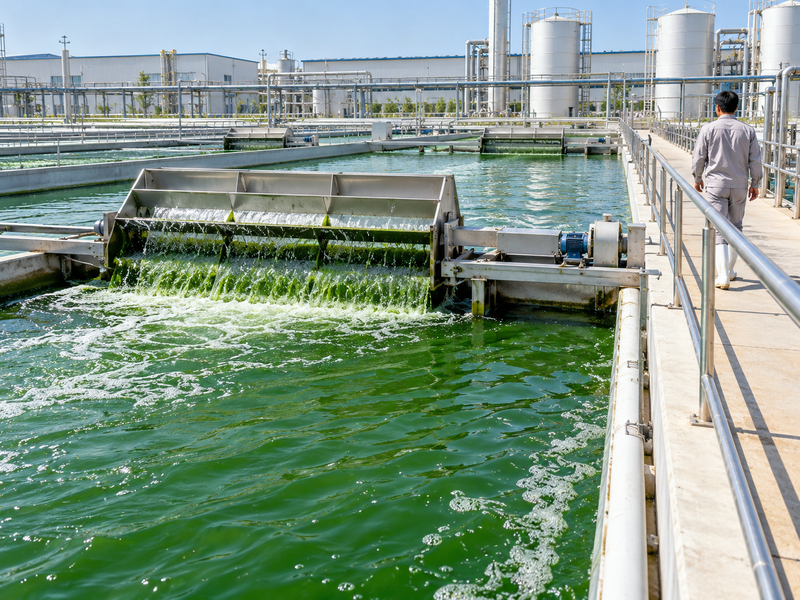
An organic claim depends on the certified operation’s approved system, not merely the appearance of a closed reactor or a sunlit pond. Water, nutrients, carbon inputs, cleaning substances and pest controls can all enter the production discussion. Ask the supplier for an input-category summary and confirmation that the certifier has reviewed the applicable production plan. The supplier may protect its full recipe as proprietary, yet it should be able to state whether material changes require certifier approval and buyer notice.
Separate two reviews. Organic acceptability of an input does not replace food-safety assessment, and a safe input is not automatically permitted for organic production. USDA’s National List explains the role of allowed and prohibited substances in the U.S. program. Your quality team should also review contaminants, microbial risks and specifications for the finished ingredient. If a site changes a nutrient source, ask how both certification status and lot quality were assessed. Do not infer compliance from the word “natural” on a raw-material invoice. A documented certifier determination is much stronger.
| Input category | Organic question | Separate quality question |
|---|---|---|
| Nutrients | Allowed in certified plan? | Identity and contaminant profile? |
| Water | Production control accepted? | Treatment and test results? |
| Cleaning | Approved use and rinse? | Residue and sanitation evidence? |
5. What happens during processing and repacking?
Follow every certified handler
Harvesting, drying, milling, tableting and repacking may occur at different sites. Map each handoff and identify the operator responsible. Ask whether every handler requiring certification has it for the relevant activity, and whether nonorganic material is handled on shared lines. The supplier should explain segregation, cleaning and label reconciliation. A genuine certified cultivation step does not cure an undocumented later repack. If a broker never takes physical possession, its role may differ from a warehouse that opens and repacks drums; have the certifier or specialist assess the actual arrangement.
Follow one commercial batch. Request source lot, transfer records, production records and finished pack identities. Any added binder or excipient in tablets changes the finished-product composition and potentially the permitted label category. USDA’s U.S. organic labeling guide explains category thresholds and certifier naming. A powder certificate should not become an unreviewed “100% organic tablets” claim after excipients are introduced. Review artwork only after confirming the entire process and formula. The site’s organic Spirulina verification guide offers an analogous buyer checklist, with Chlorella records assessed separately.

6. How is chain of custody maintained?
Reconcile certified quantity and lot identity
Organic material should remain identifiable from harvest through sale. Ask for parent and child lot codes when bulk powder is split, blended or repacked. Records should show incoming certified quantity, output, process loss and remaining stock. A mass-balance review can expose accidental substitutions or impossible volumes. Compare organic purchase documents with the actual batch record and outbound invoice. The buyer does not need every proprietary factory detail, but it needs enough records to establish that the purchased lot came from certified material.
Look for a clean handoff. At each custody transfer, the shipping description, lot code and certified status should agree. If a distributor assigns a new stock code, it must preserve the source lot. Ask how rejected, returned or opened packs are prevented from reentering saleable organic stock. A warehouse’s physical segregation matters when conventional and organic Chlorella sit nearby. Build a mock trace into supplier qualification: select one delivered pack and ask for its certified source plus other packs from the same parent lot. A supplier that can answer promptly gives procurement more confidence than one that sends a certificate without a lot link.
| Record | Purpose | Buyer check |
|---|---|---|
| Source certificate | Certified operator | Current and scoped |
| Receiving record | Lot custody | Code and quantity |
| Processing record | Transformation | Yield and segregation |
| Sales document | Outbound claim | Lot and status match |
7. What changes for U.S. imports?
Connect certification to the shipment
For organic products imported into the United States, USDA states that each shipment must be associated with a valid electronic NOP Import Certificate. Identify the exporter, importer and certifier who arranges that certificate. Check product description, quantity and shipment reference against your purchase documents. Do this before dispatch, since an unresolved certificate issue can delay entry or force an unplanned claim change. Other import and food requirements also apply; organic documentation is only one part of release.
Plan the paperwork route early. A supplier may be certified for production yet unfamiliar with the current export process. Ask for a sample redacted document and a named contact responsible for issuance. If a shipment is split or rerouted, confirm how the records are updated. If you buy through a trader, determine which entity appears on the import certificate and who supplies the certificate number. Keep shipment-specific proof with the receiving lot. A generic organic certificate attached to every purchase order is not a substitute for the required import document where the rule applies.

8. How should finished labels be checked?
Approve the actual package, not a claim in isolation
The finished label depends on formula composition, certification of the handler and market rules. In the United States, “100% organic,” “organic” and “made with organic” have different conditions under USDA’s labeling guide. A single organic ingredient does not make a multi-ingredient product automatically eligible for the same front-panel statement. Check the certifier statement, seal use, ingredient list and product name with the certifier responsible for the finished item. Food and supplement labels may have separate FDA requirements.
Test the whole claim path. Suppose organic Chlorella powder enters a capsule with a nonorganic shell. The biomass certificate supports the raw material but does not settle the finished capsule’s category. Ask the finished-product certifier to review formulation and artwork before printing. Keep the approved proof, version and approval date. If a supplier changes shell, binder, packer or ingredient source, reopen the review. Translation for another market also needs local approval. The least expensive label correction happens before commercial packaging is ordered, not after a buyer notices an unsupported seal.
| Label element | Review owner | Evidence |
|---|---|---|
| Organic category | Finished-product certifier | Formula calculation |
| Certifier statement | Artwork team/certifier | Approved proof |
| Ingredient identity | Regulatory team | Species and formulation |
| Seal use | Certifier | Written approval |
9. What evidence belongs with each lot?
Build a release packet that can be audited
A useful packet includes a lot-specific COA, product specification, pack label, manufacture or pack date, quantity and organic transaction evidence. The certificate and product listing can sit in the approved supplier file, with status checked at an agreed frequency. If imported into the United States, retain the shipment’s NOP Import Certificate reference as applicable. Include any exception approval when a label, legal seller or lot code differs from the normal route.
Keep quality and organic decisions distinct. A lot can pass organic-document checks yet fail moisture or microbiology limits. Another can pass safety tests but lack evidence for an organic claim. Use separate release flags so a clerk cannot infer one from the other. FDA’s CGMP guidance for dietary supplements describes release documentation where Part 111 applies. Adapt the packet to your regulatory category. A receiving team should be able to match the physical drum to both the analytical result and certification chain in minutes, not after several vendor emails.
10. How should buyers approve an organic supplier?
Qualify the route before committing volume
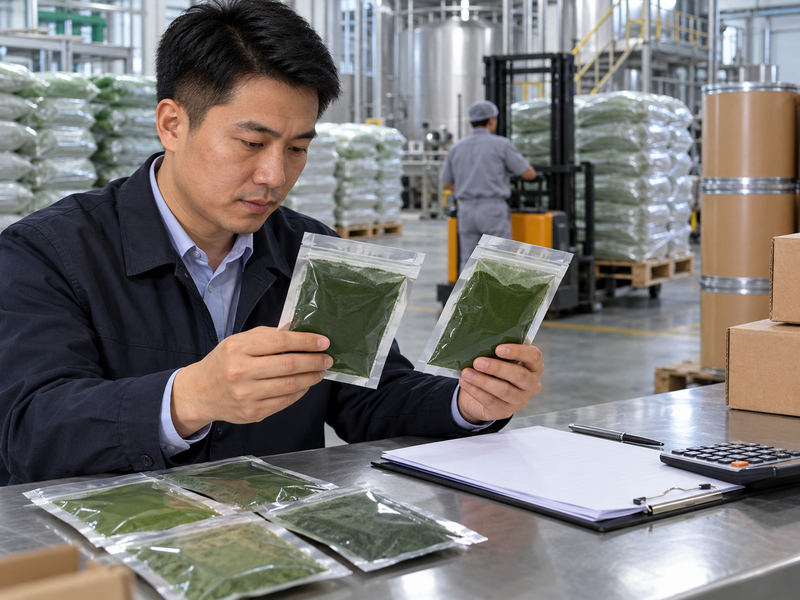
Begin with exact species, grade, form, manufacturing site and intended markets. Verify each operator’s certification and product scope, then trace a real lot through cultivation, processing and sale. Review food-safety controls separately. Request three recent lot COAs and a commercial sample for formulation testing. Confirm whether a trader, repacker or private-label partner changes the custody path. Agree on responsibility for import documentation and finished-label approval before the initial shipment.
Write the approval condition. Your purchase agreement should require current certification, change notice, lot evidence, corrective action after discrepancies and clear rights if organic status cannot be substantiated. Put a periodic status check on the calendar. If documents arrive late or do not agree, quarantine the lot’s organic claim until resolved; do not silently downgrade or relabel it without commercial and regulatory review. A small trial order can test responsiveness before launch volume. The strongest supplier is the one that can connect a certified production plan to your specific pack and shipment, while still meeting your normal ingredient specification.
| Qualification step | Pass condition | Record retained |
|---|---|---|
| Certification | Current and scoped | Certificate/annex |
| Trace | Pack to source | Mock trace |
| Quality | Approved specification | Recent COAs |
| Label | Market-specific approval | Artwork proof |
What to do next. Chlorella organic certification becomes credible when each operator, product and shipment can be verified. Check current scope with the certifier, trace a commercial lot and approve the finished label for its market. That discipline protects both the buyer’s brand and the customer who expects the word “organic” to mean something precise.
FAQ
Q1: Does one company certificate cover all Chlorella products? No. Confirm the exact product, scope and operating site.
Q2: Can an organic powder certificate validate tablets? Not by itself; processing, excipients and finished-product certification need review.
Q3: Is the USDA Organic Integrity Database enough? Use it to check status, then ask the certifier about product detail if unclear.
Q4: Does a U.S. organic import need shipment evidence? USDA says each organic import shipment needs an associated NOP Import Certificate.
Q5: Should organic review replace routine COA checks? No. Organic status and ingredient quality are separate release decisions.