
A culture can look healthy and still lose value during its transfer out of the vessel. The chlorella harvesting process concentrates small cells, separates growth medium and creates a traceable wet-biomass lot for drying. Buyers need to know how recovery, hygiene and hold times are controlled before powder exists. An experimental comparison of centrifugation, membrane filtration and coagulation shows that recovery depends on method and study conditions; it does not prescribe a universal food-production route.
Contents
- Where does harvesting begin?
- Which separation methods are used?
- How should wet biomass be handled?
- What happens during washing and concentration?
- Which centrifuge controls matter?
- How should filtration and dewatering be evaluated?
- How are hygiene risks controlled during harvest?
- Which records link culture to wet biomass?
- What is the handoff to drying?
- What pilot validates the harvest route?
1. Where does harvesting begin?
Define the point when culture becomes a food ingredient
Harvest starts with a decision that a culture is ready for removal. Ask how the plant decides: cell density, age, appearance, contamination screen or a combination. For example, a high biomass concentration can reduce downstream volume, but growth phase may affect composition. Meanwhile, a site may remove all culture at once or make repeated draws from a semi-continuous vessel. As a result, those approaches need different lot definitions. Obtain the harvest ID and the exact cultivation run it represents.
Timing matters more than a tidy flowchart. A delayed harvest can occupy a vessel beyond plan; a rushed harvest can overload separation equipment. Ask for the normal operating window and the criteria used when results fall outside it. Research on pilot C. sorokiniana reactors documents repeated harvesting and dilution under defined conditions. A commercial supplier should show its own operating limits instead of borrowing those numbers. For B2B use, the meaningful output is dry, released biomass linked to a specific harvest, not a theoretical culture density.
2. Which separation methods are used?
Compare recovery, cleanliness and residual medium
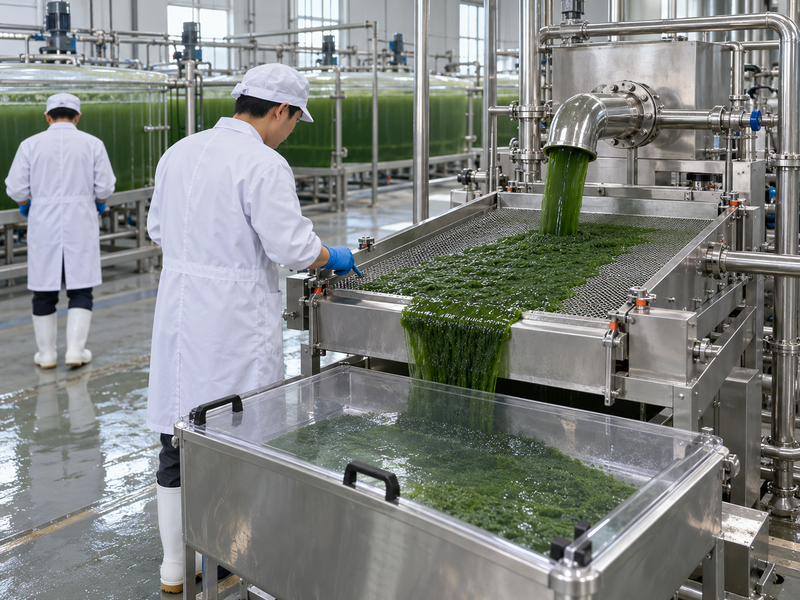
Common separation trains include filtration, centrifugation or a combination. Each must concentrate small cells from liquid while preserving the intended product attributes. For example, a centrifuge may process volume quickly but needs cleaning, seal checks and a plan for heat generated during operation. Meanwhile, a filter needs suitable media, pressure control and evidence that replacement or cleaning is performed. Flocculation can aid separation in some processes, yet any added aid must be disclosed, approved for the intended use and assessed for residues. The site’s Spirulina harvesting guide provides a parallel checklist, though Chlorella needs its own tested route.
Ask what leaves with the cells. Dissolved salts, nutrient residues and fine contaminants may carry into a concentrated paste. Request the supplier’s balance of separation recovery, wash steps and specification testing. A pilot study comparing harvesting techniques for C. sorokiniana demonstrates that method choice is process-specific. Avoid claiming a method always has the best yield. Test finished powder from the offered route and compare ash, sensory and color against your application. A lower equipment cost has little value if accepted dry kilograms fall or a new aid complicates the label.
| Method | Process question | Buyer evidence |
|---|---|---|
| Centrifugation | Speed and cleaning? | Run and sanitation logs |
| Filtration | Media and changeout? | Filter specification |
| Assisted separation | Added substances? | Aid declaration and residue review |
3. How should wet biomass be handled?
Control the vulnerable interval before drying
Concentrated Chlorella paste contains water and nutrients. So, its handling time and temperature deserve explicit limits because microbes and enzymes can alter quality before drying begins. Ask when the harvest ended, when concentration finished and when drying started. Then, determine whether paste waits in a closed tank, moves in sealed containers or crosses an open work area. Also, a plant should specify its normal maximum hold and response when a dryer stops. The answer may vary by validated process, so do not impose a universal time from a general article.
A simple timeline reveals gaps. Request one commercial batch record and plot harvest, transfer, hold, dryer feed and pack events. Look for unexplained delays or combined harvests that make investigation difficult. A good supplier can explain what tests or disposition rules apply after an excursion. If frozen or chilled storage is used, ask whether thawing or condensation affects processing. The goal is not merely a green final appearance. You need confidence that wet biomass entered a controlled process and that deviations were recorded before a COA was issued.
4. What happens during washing and concentration?
Establish what is removed and what is retained
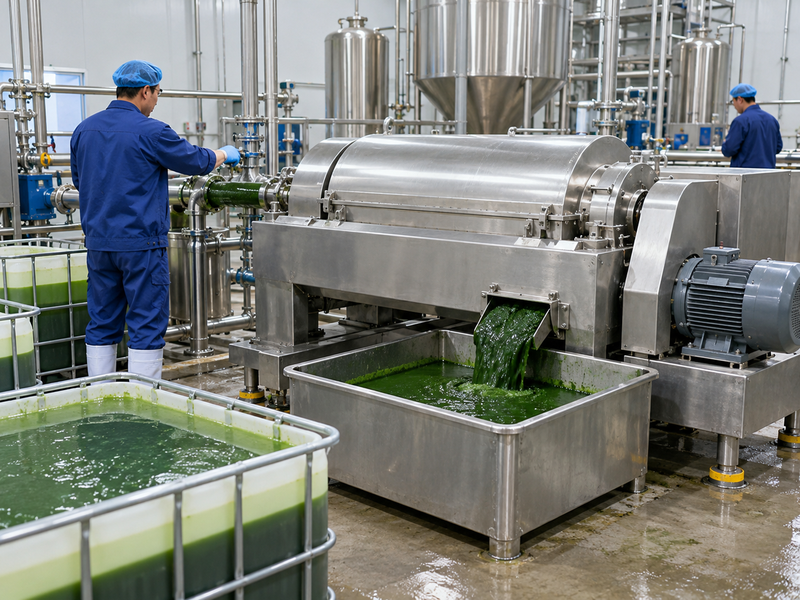
Some production routes wash concentrated biomass to reduce residual growth medium; others use different control strategies. Ask whether potable or specified process water contacts the paste, how wash volume is measured and whether repeated washing changes yield. Also, the plant should account for water quality and sanitation of every wetted surface. It should also explain how it avoids introducing an unacceptable contaminant during a step intended to improve purity.
Keep the mass balance visible. Request input culture volume, paste mass, final dry mass and a sensible tolerance range. A sudden yield shift may indicate incomplete recovery, excessive water in paste or an equipment issue. Check whether conductivity, ash or another suitable measure is used to monitor residual medium. A single test can be informative without becoming a universal release requirement. Compare historical results for the exact product grade and ask how outliers are handled. If your formulation has a narrow flavor or mineral profile, pilot both a typical lot and a lot near the supplier’s approved edge.
| Stage | Measurement worth recording | What it can show |
|---|---|---|
| Culture feed | Volume and density | Incoming biomass estimate |
| Concentrate | Paste mass and solids | Separation performance |
| Wash | Water lot and volume | Input traceability |
| Dryer feed | Solids and time | Dryer load consistency |
5. Which centrifuge controls matter?
Check recovery without overlooking shear and cleaning
Centrifugation separates Chlorella cells from a large culture volume by force. Ask which separator type is used, how feed rate and solids loading are controlled, and whether the machine operates continuously or in batches. In practice, recovery should be calculated from measured feed and discharge streams, not guessed from a green-looking paste. Still, heat rise, shear and residence time may affect product behavior, so the plant should define an operating window. Also, cleaning of bowls, seals and discharge paths also belongs in the run record.
Look for the actual trade-off. A faster setting may recover more cells while increasing energy, temperature or carryover of unwanted material. A study of harvesting methods for Chlorella sp. compared centrifugation with membrane microfiltration and coagulation for a biofuel application. Its measured recoveries do not rank food-grade suppliers, but they show why process comparisons need the same biomass and endpoint. Ask for a recent commercial run with feed density, paste solids, losses and sanitation release. If several culture batches pass through one separator, require a clear transition and lot-boundary rule. A buyer should be able to identify which finished powder lots used that wet biomass.
6. How should filtration and dewatering be evaluated?
Follow flux, solids and retained biomass
Membrane or screen-based filtration can concentrate cells before another dewatering step. Ask which media contact the culture, how integrity is checked and what happens when a filter fouls. Meanwhile, pressure, flow and cleaning frequency affect throughput and hygiene. Compare the solids concentration entering and leaving each stage, then calculate recovery against discarded liquid. However, a stated filter pore size does not prove a complete separation result for a particular Chlorella strain or culture condition.
The wet paste is the output that matters. Its solids content governs transport volume, hold behavior and dryer loading. A pilot-scale Chlorella harvest study tested combined flotation and screw-press filtration under its own conditions; those figures should not be copied into a food specification. Ask the supplier for its actual paste-solids range and measurement method. If flocculants or filter aids are used, obtain identity, intended-use and residue controls. A route that recovers biomass efficiently may still be unsuitable if an aid is not acceptable for the destination product. Evaluate both technical yield and ingredient status.
| Dewatering measure | Ask for | Buyer use |
|---|---|---|
| Feed solids | Method and range | Input baseline |
| Paste solids | Run result | Dryer planning |
| Filtrate loss | Cell or solids estimate | Recovery calculation |
| Filter condition | Integrity and cleaning log | Hygiene assurance |
7. How are hygiene risks controlled during harvest?
Examine every open transfer and product-contact surface
A culture-screening result cannot replace hygienic harvesting. Cells may contact pipes, hoses, pumps, filters, centrifuge seals, paste tanks and sampling tools. Ask how each is cleaned, inspected and released before use. Identify open transfers or manual steps that expose concentrated biomass to the room. Airflow, operator practices and equipment maintenance matter at those points. A food-safety plan should define relevant biological, chemical and physical hazards for the actual route.
Walk through an interruption. If a separator stops midway, where does the culture wait and how long can it remain there? Which material is held after a filter tear? Who authorizes restart after a failed cleaning check? FDA’s food and supplement CGMP overview explains that applicable frameworks differ by product category. The buyer should request site-specific controls rather than infer safety from a certificate name. Finished microbiology tests remain useful, but they sample a lot after exposure; they do not substitute for controls during the wet, vulnerable steps.
8. Which records link culture to wet biomass?
Define parent and child lots before mixing
One culture vessel may be harvested in several draws, and one paste tank may receive material from multiple vessels. So, the supplier must define which combinations are permitted and how every parent lot remains visible. Ask for vessel ID, harvest time, separator run, paste-container code, washing step and measured solids. Then, a downstream powder lot should retain links to all wet-biomass parents. If material is reworked or blended, the record should state quantity and approval.
Run a mock trace. Choose a paste container and ask which cultures supplied it, then trace one culture forward to every paste container and dryer run. The test reveals whether a continuous line has meaningful lot boundaries. FDA’s dietary supplement CGMP guide details batch production records for applicable U.S. operations. A food ingredient plant may have another regulatory role, but clear genealogy remains a practical buyer requirement. Put response time and record access in the quality agreement. A lot code that only identifies a shipping date cannot explain an abnormal harvest or wet hold.
| Link | Identifier | Evidence |
|---|---|---|
| Culture | Vessel and draw | Growth and release log |
| Separator | Run ID | Feed and discharge record |
| Paste | Container/tank code | Solids and hold data |
| Dryer handoff | Transfer code | Parent-child map |
9. What is the handoff to drying?
Transfer a controlled paste, not an anonymous mass
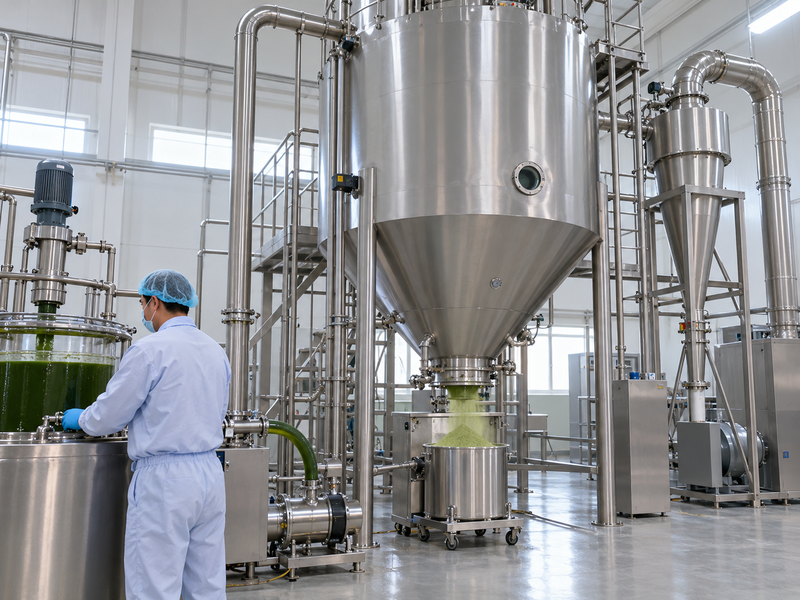
Drying begins only after wet biomass has been accepted from the harvest area. Agree on paste-solids range, container closure, transfer route, maximum hold and the person who releases it. Also, the supplier should show the time between the final separation step and dryer feed, including any chill or storage period. For example, a paste with excess water can overload a dryer; a delayed paste can change before it reaches one. The buyer need not dictate a universal hold time, but it should see a defined, justified limit.
Keep scope clear. This article evaluates the harvest and dewatering chain, with drying treated as the receiving process. Ask what information the dryer operator gets: source lots, solids, sanitation status, deviations and any approved rework. A drying method or product shelf-life claim belongs in its own finished-grade assessment. An original study of wet-preserved C. vulgaris biomass examined how harvest method and nutrient conditions affected wet storage; its research conditions do not establish a commercial food hold limit. Use the principle: control the exact paste and time window used at the plant, then verify the released powder separately.
10. What pilot validates the harvest route?
Measure a complete commercial-equivalent run
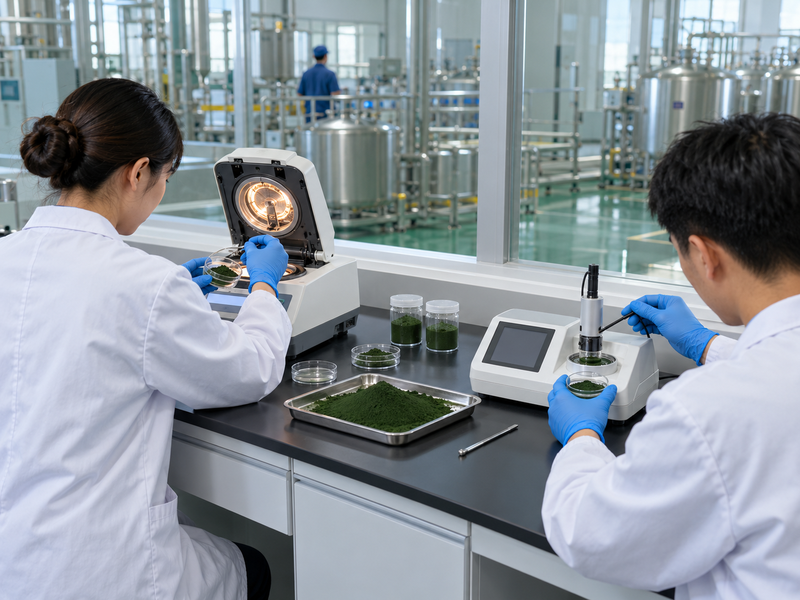
Ask the supplier to start with a coded culture batch and follow it through harvest, separation, washing if used and paste handoff. Record feed volume and density, paste mass and solids, loss stream, processing time, hold time, sanitation checks and deviations. Then, calculate recovered dry solids using measured values. Sample paste and finished powder under the agreed plan; a strong recovery percentage cannot excuse a contaminated or unsuitable ingredient. Also, compare at least two runs when process variation is a known risk.
Make acceptance explicit. Define the attributes needed for your application: species identity, acceptable input and aid declarations, wet-paste control, traceability and finished-lot quality. Ask whether a change in separator, filter media or flocculant would trigger buyer notice. A comparative Chlorella harvest study supports testing methods under the same biomass conditions; it does not endorse one universal route. If a plant claims a low-cost harvest, include water use, rejects and accepted powder yield in the comparison. A documented pilot should let quality, operations and procurement reach the same decision without relying on a sales diagram.
| Pilot gate | Evidence | Decision |
|---|---|---|
| Input culture | Identity and status | Harvest permitted |
| Separation | Mass balance | Recovery acceptable |
| Wet handling | Time and hygiene | Paste accepted |
| Output | Finished-lot tests | Buyer approval |
What to do next. The chlorella harvesting process should be judged by measured recovery, controlled wet-biomass handling and a traceable handoff. Request a complete commercial run record with culture, separator, paste and dryer-feed codes, then compare the released powder with your specification. That gives buyers a defensible basis for choosing a harvest route.
Frequently asked buyer questions
FAQ
Q1: Is centrifugation always the best Chlorella harvest method? No. Compare recovery, hygiene, cost and product quality for the offered strain and site.
Q2: Why measure wet-paste solids? Solids determine transport load, hold behavior and dryer-feed consistency.
Q3: Can flocculants be used for food Chlorella? Only after the specific aid, use, residues and destination-market requirements are assessed.
Q4: Can several cultures feed one paste lot? Yes, when the plant preserves every parent identity and validates the combined lot.
Q5: What is the most useful buyer record? A timed mass balance linking one culture to separator run, wet paste and finished powder.