
Organic spirulina supplier verification starts with a simple question: who grew and packed the powder? An organic logo cannot answer it. Match the whole-biomass lot with a valid certificate and a clear lot trail. This guide shows how to review those records. It draws on USDA organic certification guidance and the EU organic framework. The destination and transaction set the exact rules.
Contents
- What product is actually being offered?
- Whose organic certificate needs checking?
- How can certificate scope be matched to powder?
- Which lot records connect harvest with shipment?
- What changes for a US organic import?
- How should an EU-bound order be reviewed?
- Does organic status replace food-safety review?
- What should an independent sample confirm?
- How can an exception be resolved before payment?
- What belongs in the supplier approval file?
1. What product is actually being offered?
Define the commercial ingredient before reading seals
Start with the bag, not the badge. Ask whether the offer covers dried whole Arthrospira biomass, a phycocyanin-rich extract, tablets, or a blend. Those forms differ in processing, ingredients, labeling, and test methods. A certificate for an extract, another plant, or a contract packer cannot silently stand behind whole-biomass powder. The RFQ should name the accepted botanical identity, physical form, production site, packaging site, pack size, intended use, and destination. Ask for a technical specification and ingredient declaration under the same commercial SKU as the quotation.
A practical example is a buyer seeking organic green powder for a nutrition blend. A supplier may present an organic certificate headed “spirulina products” while quoting a blue colorant with a carrier. Pause and request a product schedule that names the offered SKU and all ingredients. The FDA color-additive rule for spirulina extract concerns an extract for specified color uses; it does not certify or define whole biomass. Keep that distinction visible in every email and purchase order.

| Product question | Document to request | Review action |
|---|---|---|
| Whole biomass or extract? | SKU specification | Match the physical form to the order |
| Any added carrier? | Full ingredient declaration | Check certification scope for every component |
| Where is it packed? | Site and flow chart | Identify the certified handling operation |
2. Whose organic certificate needs checking?
Map every organization that handles the lot
A familiar name can hide several roles. The company on a website may be a sales office while cultivation, drying, milling, warehousing, and export occur under other legal entities. Draw a simple chain from producer through each handler to your importer. Ask which entity invoices you, which entity owns the goods at each stage, and which certifier covers each operation that must be certified. Verify the legal names and locations rather than matching logos by eye. USDA says certifying agents issue operation certificates and its Organic Integrity Database provides a way to find certified operations.
For a direct farm shipment, the producer and exporter may be the same operation. For a brokered order, the broker may need its own certification depending on its actual handling and trade role under current rules. The Strengthening Organic Enforcement FAQ explains expanded oversight of brokers, importers, and exporters. Do not infer the answer from an organization chart. Ask the certifier or competent compliance adviser where a role is unclear, then record that answer with the order.
3. How can certificate scope be matched to powder?
Check dates, activities, sites and product schedules
Here is the practical test: could a reviewer trace this quoted SKU to an active certificate without guessing? Read the operation certificate and its product schedule. Then check the certifier, site, status, and listed activities, such as cultivation or handling. Confirm that the seller’s PDF matches the current entry or ask the certifier for confirmation. A certificate from last year is useful history but cannot alone establish status for a new shipment. A broad “organic food” entry may need a detailed schedule showing spirulina biomass rather than assuming every product from that facility qualifies.
The same exercise applies to repacking. If bulk biomass is moved into new bags, the packing operation and resulting SKU must fit the applicable organic control system. Compare label artwork with product and market: “organic” on a nonretail bag, an ingredient statement, and a consumer seal have different review contexts. The USDA certification page explains that certification permits operations to sell and represent products as organic; it does not declare each proposed label lawful without checking the actual product and chain.
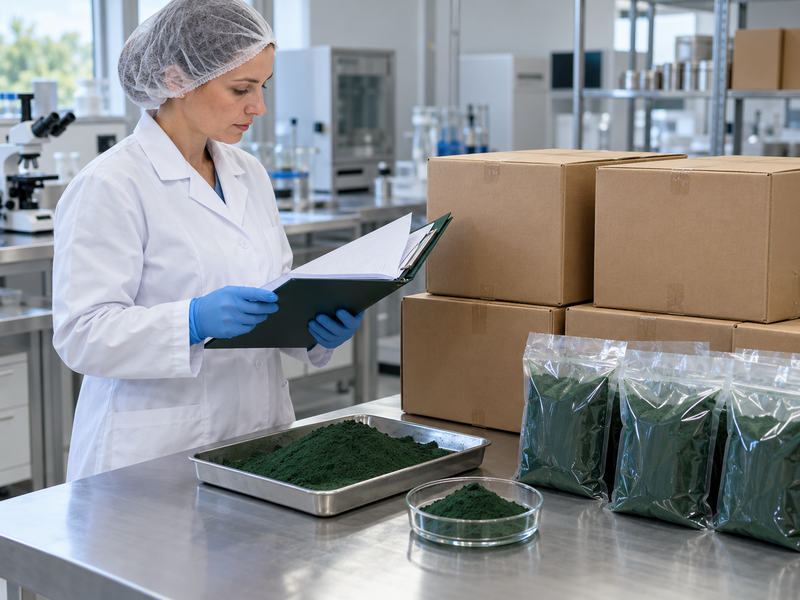
| Certificate field | Buyer comparison | Hold point |
|---|---|---|
| Legal operation | Quote, invoice and plant address | Names do not reconcile |
| Product schedule | Exact whole-biomass grade | Only extract or generic item appears |
| Status and certifier | Current database or direct confirmation | Expired or unverifiable status |
4. Which lot records connect harvest with shipment?
Follow quantity as well as lot numbers
The trail needs arithmetic. Request a redacted example showing culture or harvest lot, drying run, milling or blending batch, finished powder lot, packed units, and shipment reference. Records should reconcile inputs with outputs after normal process loss. If a shipment contains material from several harvests, ask how the finished lot is defined and how each contributing lot is represented in release testing. A traceable organic claim requires more than a matching date on a certificate and a box label.
Buyers can test a sample trail with a mock recall: choose one proposed packed lot and ask which upstream batches fed it and which customers received its other packs. That question reveals whether records sit with one operator or stop at a broker. USDA’s Strengthening Organic Enforcement rule emphasizes recordkeeping and farm-to-market traceability. Record what the supplier can produce in normal business time and who is responsible for retrieving missing links. Protect commercial confidentiality, but do not accept a chain that cannot identify the physical goods.
5. What changes for a US organic import?
Confirm the shipment certificate and importer responsibilities
An operation certificate and an import certificate do different jobs. USDA says each U.S. organic import shipment needs an associated electronic NOP Import Certificate under rules in force since March 19, 2024. An accredited certifier issues it through the Organic Integrity Database. The USDA import-certificate page describes this requirement. Ask which certified exporter requests it, how its number reaches the importer and broker, and which shipment and lot identifiers connect it to the goods.
Build time for certificate issuance before departure; do not plan on a backdated fix after the container sails. Check the current USDA SOE FAQ for certificate validity and filing details because import operations can change. Keep this organic check separate from FDA food-safety obligations, customs classification, and label approval. In a purchasing meeting, assign named owners for each check. A supplier statement that “we ship organic to America” is not the transaction record your importer will need.
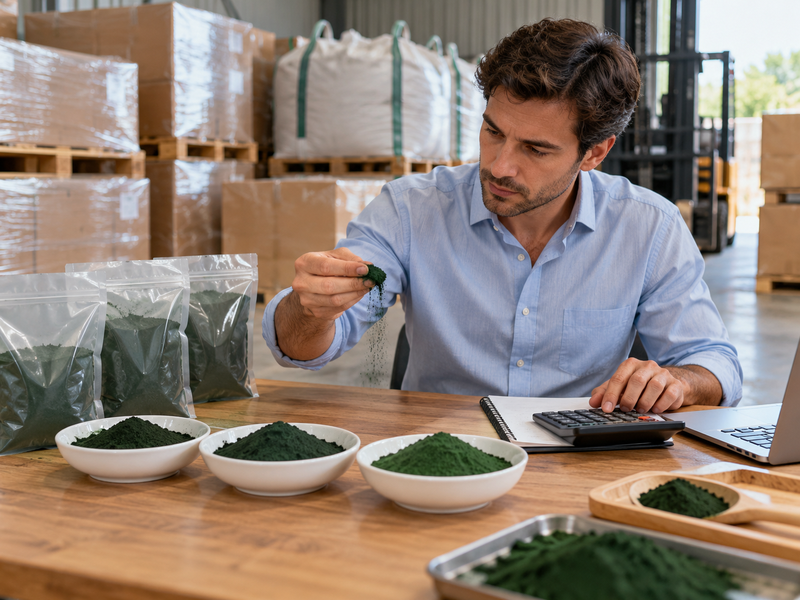
| US order stage | Ask for | Owner |
|---|---|---|
| Before contract | Current operation status | Buyer compliance team |
| Before export | NOP Import Certificate plan | Certified exporter and importer |
| Before filing | Certificate identifier tied to shipment | Importer or customs broker |
6. How should an EU-bound order be reviewed?
Start with the current EU control pathway
Destination changes the paperwork. The EU organic regulation 2018/848 defines its organic production and control framework, including imported goods. Confirm the exporter, importer, control body, country, and product scope against the current consolidated rules and the relevant import process. Ask the importer to identify the applicable certificate of inspection workflow and any country-specific implementation details before the seller prepares labels. A U.S. organic certificate alone does not resolve an EU label decision.
Consider a powder destined for a supplement manufacturer in one member state and later sold across several markets. The importer may approve the inbound organic papers. Even then, the finished product needs an ingredient, claims, and language review. Keep the organic evidence chain in the same file as each lot’s food-safety documents but separate their approvals. Record exactly which operator is responsible for the arrival check, whose control body has the file, and what happens if a document is corrected. Regulatory wording and annexes change, so confirm current text immediately before shipment.
7. Does organic status replace food-safety review?
Treat certification and contaminant control as separate gates
No certificate measures your specific lot for every hazard. Whole-biomass spirulina may require review of identity, microcystins, heavy metals, microbiology, moisture, and packaging integrity for its intended use. Organic controls address production and handling under a defined scheme; they do not replace a lot-specific certificate of analysis or the buyer’s hazard analysis. FDA explains that it assesses microcystin risk in blue-green algae products case by case. That page discusses contamination prominently in AFA products; it should not be recast as proof that every spirulina lot has the same risk.
For a U.S. dietary supplement manufacturer, 21 CFR Part 111 guidance explains component identity and contaminant specifications. Food uses can involve different applicable rules. Ask for current methods, reporting limits, sample definition, and release signature. If the supplier offers only a certificate plus a glossy test-summary image, request the underlying lot report before supplier approval. The organic claim and safety decision should each have an accountable reviewer.

| Evidence | Supports | Does not establish |
|---|---|---|
| Organic operation certificate | Certified activity and scope | Lot contaminant results |
| Lot COA | Reported analytes for one sample | Whole supply-chain organic status |
| Supplier audit | Process controls observed | Every future lot’s outcome |
8. What should an independent sample confirm?
Use an approved sample plan and an appropriate laboratory
A beautiful green sample can still mislead. Have the supplier identify the finished lot from which the sample came, date of draw, sampling method, seal, and planned shipment allocation. A hand-picked sales sample may help formulation but cannot automatically represent a bulk lot. For critical analytes, consider independent testing from sealed commercial packs under a written plan. Check whether the lab’s accreditation scope covers each method and matrix. ISO/IEC 17025 addresses lab competence. Yet its certificate alone does not show that every test is in scope.
Compare independent and supplier results using the same units, moisture basis, and method range. If they diverge, review the sample trail and analytical uncertainty before making accusations. A pilot ingredient may also need sensory and dispersion checks in the buyer’s recipe. Document those application results separately from legal compliance. Organic verification protects the chain claim; independent sampling tests whether the proposed physical powder meets your agreed specification. Both matter when a multi-month supply agreement depends on repeatable lots.
9. How can an exception be resolved before payment?
Name the missing link and set a release condition
A vague promise keeps risk with the buyer. Create an exception log with the exact mismatch. For example, a certificate may name the exporter but omit the packing site. The product schedule may list an extract, or the COA lot code may differ from carton labels. Ask for a corrected document from the responsible issuer, not a sales-team rewrite. When a certificate’s authenticity is in doubt, contact the certifier using independently obtained contact details. When a lot trail is incomplete, hold release until the physical stock can be identified and reconciled.
The purchasing contract should define what happens if documents arrive late, if a certifier changes status, or if a shipment must be relabeled. Do not substitute an emailed reassurance for a documented deviation decision. Keep a clear audit trail of original file, correction, reviewer, and approval date. If the exception concerns food safety rather than paperwork, quarantine and investigate under the buyer’s established procedure. This disciplined approach protects supplier relationships: the request identifies exactly what must be fixed and avoids arguing from an ambiguous “organic yes/no” checkbox.
10. What belongs in the supplier approval file?
Make the decision reproducible for the next order
Close the loop before issuing a repeat PO. Keep the approved SKU and specification with a map of supplier roles. Add current certificates, scope checks, lot trail, COA, lab methods, import plan, label decision, and exception log. Record the person who approved each item and the review date. Set triggers for reapproval: a new production site, different packer, changed formulation, revised certifier status, or another destination market. A periodic review should ask whether physical lots still follow the documented route.
The Spirulina CN site describes its business and products, but any site statement remains a supplier representation. Ask the sales contact for the current SKU’s certificate scope and batch documents before writing an organic claim or releasing payment. Send a concise RFQ with intended market, whole-biomass form, quantity, pack size, and target delivery terms. The right outcome is a file that another buyer can read and reach the same decision, even after personnel change.

| Approval item | Evidence retained | Recheck trigger |
|---|---|---|
| Certification | Current scope and verification | Expiry or certifier change |
| Lot identity | Harvest-to-pack chain | New site or process |
| Compliance | Market and label review | New destination or use |
FAQ
Q1: Does an organic certificate prove a spirulina lot is safe? No. Review lot-specific contaminant and microbiology evidence under the intended-use specification.
Q2: Can an extract certificate cover green whole-biomass powder? Only if its scope explicitly covers the offered powder and the relevant certified operations; never infer that from a related product name.
Q3: Where can a US buyer check certification status? Start with USDA’s Organic Integrity Database and confirm uncertain scope with the named certifier.
Q4: Does every US organic import need a shipment document? USDA’s current SOE guidance requires an electronic NOP Import Certificate associated with each organic import shipment, subject to its detailed rules.
Q5: When should verification happen? Before the contract is finalized and again against the actual commercial lot and shipment paperwork.
Organic spirulina supplier verification works when certification, product identity, and the physical lot tell one consistent story. Build that story before purchase, then check it again at shipment. Ask prospective suppliers for current scope, a redacted traceability example, and the proposed lot COA. That small request can prevent an expensive relabel, detention, or rejected ingredient later.