
Spirulina harvesting and filtration separate filamentous Arthrospira biomass from its culture liquid. Buyers often study cultivation and finished powder while overlooking this short, busy transfer. The solution is to review separation equipment, sanitation, wet-biomass hold time and lot links as one controlled step. The FAO spirulina production review places harvest and processing together, reflecting how quickly the condition of a wet intermediate can affect a dried ingredient.
Contents: 1 · 2 · 3 · 4 · 5 · 6 · 7 · 8 · 9 · 10
1. What happens between culture and a wet biomass cake?
Draw the actual separation sequence
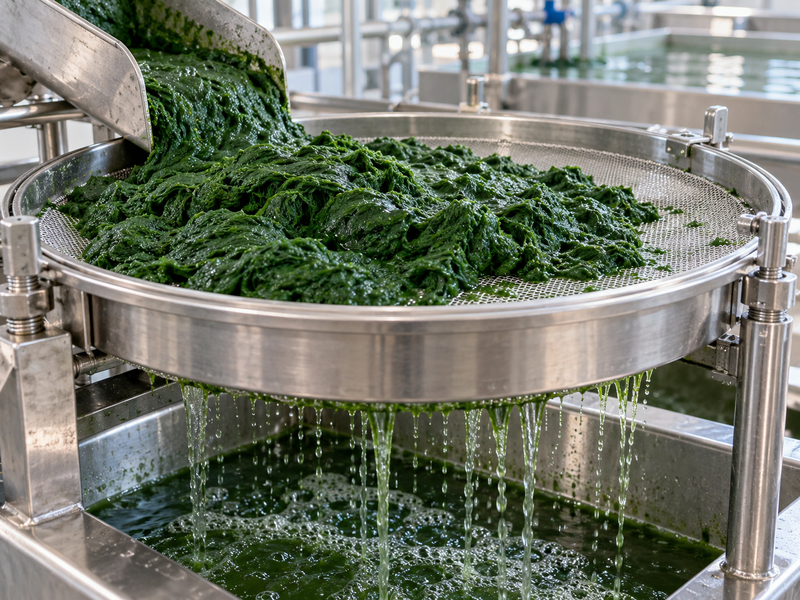
A harvest begins when a defined culture volume is diverted from a pond or reactor. Material can pass through coarse screening, finer filtration or another concentration step before wet biomass moves to dewatering or drying. The precise sequence varies by factory. Ask for a flow chart showing pumps, transfer lines, screens, collection vessels, wash stages and return streams. Look at every handoff: each point needs a material status and cleaning control.
The chart should state where a culture sample is taken, how harvested material receives a lot code and whether several culture batches combine. A single “harvest” label can hide hours of intermediate handling. Ask the supplier to walk through a real batch record from start time to dryer entry. Research on Arthrospira harvesting by ultrafiltration illustrates that separation method and biomass condition interact; one membrane trial cannot describe every commercial screen. The buying question concerns the supplier’s actual process, not an idealized diagram.
| Stage | Record | Buyer question |
|---|---|---|
| Draw-off | Vessel and volume | Which culture was harvested? |
| Screening | Equipment and mesh | What was retained? |
| Collection | Intermediate lot ID | Was material pooled? |
| Transfer | Time and destination | How long before drying? |
2. Why can filament shape affect filtration?
Match equipment to real biomass
Arthrospira grows as multicellular filaments, so screening can capture material that would pass with smaller single-celled microalgae. Yet filament length and condition can vary with strain, shear and culture health. A review of microalgal biomass production explains why filtration behaves differently across organisms. For a buyer, the key is whether the supplier validates its screen against the biomass it actually grows.
Ask how operators detect fine material escaping into filtrate and what happens when a screen tears, blinds or loads unevenly. Yield data should include both recovered wet solids and losses in return streams. The hidden cost: an aggressive filter might recover more biomass but damage texture or slow throughput; a loose screen might push solids into wastewater or recirculation. The supplier should have a rule for screen integrity checks and post-maintenance release. A photo of a clean filter cannot establish performance on the offered lot.
3. Which filtration choices matter to product quality?
Evaluate separation without assuming one winner
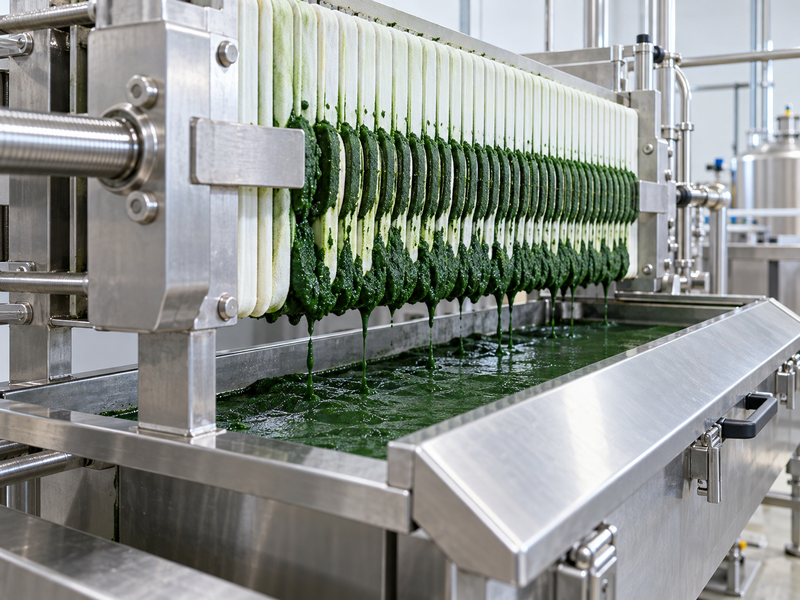
Screens, cloth filtration, belt systems and membranes may each appear in a commercial process. Selection depends on culture density, desired solids level, throughput, cleaning burden and downstream drying. A primary ultrafiltration study examined limiting and critical flux with fresh and stressed A. platensis cultures, showing that culture condition can change membrane behavior. A separate settling study investigated a gravity approach under its own conditions. These studies support asking for validated performance, not copying a specific setting.
Compare wet-solids consistency, filtrate losses, cleaning frequency and time between harvest and drying. Ask for a process capability summary across several lots. What matters to a purchaser: consistent input to the dryer and a sanitary route into a defined intermediate. A higher dry-solids percentage can lower drying load, but only if it arrives without excessive residence time or foreign matter. Do not use recovery yield alone as a quality score.
| Option | Main variable | Evidence to request |
|---|---|---|
| Screen or cloth | Opening, integrity | Loss and inspection trend |
| Belt filtration | Loading and wash | Solids and sanitation record |
| Membrane | Flux and cleaning | Pressure and fouling history |
| Settling | Residence time | Recovery and hygiene data |
4. How should a harvest line be cleaned and inspected?
Verify contact surfaces before every run
Wet biomass contacts pumps, hoses, screens, frames, tanks and tools. A sanitation procedure should specify disassembly where needed, cleaning agent, rinse acceptance, inspection and release before production. Ask whether equipment handles only spirulina or multiple materials. Shared lines need documented changeover. The practical audit move: follow one component that is difficult to clean, such as a hose coupling or screen edge, through its cleaning record and visual inspection.
Cleaning is a process control, not a marketing adjective. Request recent pre-operation checks, corrective actions for failed inspection and evidence that operators understand who can release equipment. A membrane system may need clean-in-place verification, while a cloth system may require replacement or laundering rules. The supplier should describe how it prevents detergent residues from reaching food biomass. Finished-lot microbiology helps verify outcomes but cannot replace surface controls during every harvest. A clean culture can still meet an unclean collection vessel.
5. What happens to filtrate and returned culture medium?
Trace the liquid as well as the solids
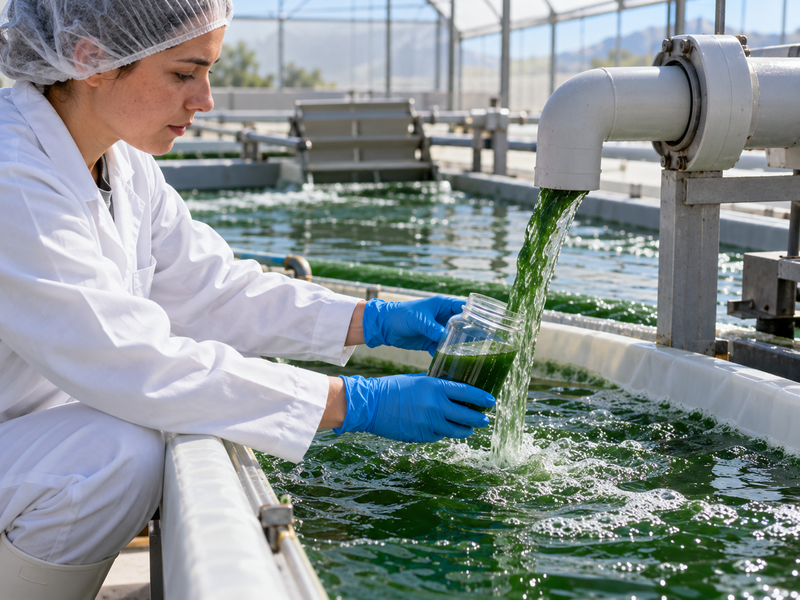
Filtrate may leave the process, enter treatment or return to cultivation. Each destination creates a different control question. If it returns, ask how solids, contaminants and chemistry are monitored. If it leaves, ask how the plant accounts for biomass losses and prevents cross-contamination between streams. Follow the arrow: a flow diagram without a destination for liquid is incomplete.
The supplier should document valve positions, return approvals and maintenance activities that could redirect liquid. A screened filtrate is not automatically sterile or free of dissolved substances. The FAO review describes cultivation and harvesting as linked operations; recycle choices connect them again. A buyer does not need the facility’s full water balance to recognize a gap. Ask for the rule governing return versus discard and a sample log. If the site changes the rule, evaluate possible effects on current and future lots.
| Liquid route | Control question | Possible record |
|---|---|---|
| Recycle | What treatment and limit apply? | Return chemistry log |
| Discharge | Is biomass loss measured? | Mass balance |
| Rewash | Which water contacts biomass? | Wash-water approval |
| Hold tank | How long does liquid remain? | Time and cleaning log |
6. Why does wet-biomass hold time matter?
Control a vulnerable intermediate
Fresh wet biomass contains abundant available water and can change during holding. Temperature, container design, hygiene and elapsed time affect what reaches the dryer. A 2026 primary study of fresh Spirulina biomass evaluated quality deterioration under specified storage temperatures. Its findings concern that experimental material; they do not establish a universal commercial hold limit. Ask the supplier for its validated maximum time and temperature from harvest to drying.
The clock should start at a defined event, such as separation or transfer into a tank, and stop at dryer feed. Request actual timestamps for the sampled lot and an example where a limit was exceeded. The release test: was affected material segregated, assessed and either approved under a justified procedure or rejected? A statement that drying “starts immediately” is vague unless the batch record supports it. Pooling older and newer wet biomass can hide long exposure, so ask how time is tracked for each contributing harvest.
7. How should yield be measured without hiding quality loss?
Use a meaningful mass balance
Yield can refer to wet weight, dry solids, recovered culture mass or finished powder. These figures are not interchangeable. Ask the supplier to state the denominator, moisture basis and boundaries around the calculation. A high wet-cake weight may simply reflect retained water; a low powder yield may reflect strict rejection of nonconforming material. Compare like with like: use dry-solids recovery alongside product release rate and filtrate loss.
Trends matter more than one perfect batch. Request anonymized monthly values if exact quantities are sensitive. An abrupt change may signal screen damage, altered filament structure, filter fouling or operator changes. The ultrafiltration study shows why flux and biomass condition can interact. Procurement can use yield trends as a prompt for questions without assuming the supplier is efficient or unsafe from one number. Keep cost discussion separate from food-safety release criteria.
| Yield measure | What it tells you | What it misses |
|---|---|---|
| Wet cake mass | Volume for next step | Water retained |
| Dry-solids recovery | Separation performance | Product safety |
| Filtrate solids | Material loss | Drying outcome |
| Released powder | Saleable output | Reason for rejects |
8. Which records preserve harvest-lot traceability?
Link culture, filter and dryer
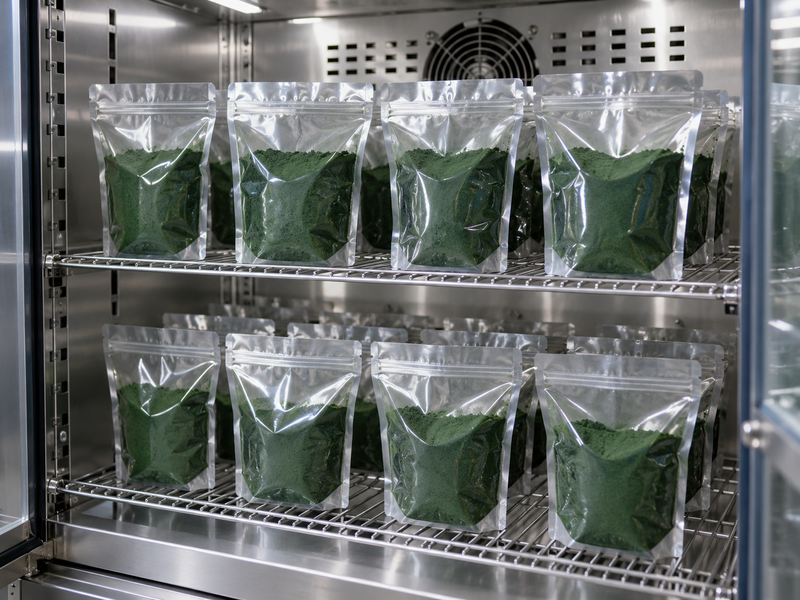
A harvest ticket should identify the culture source, date and start/stop times, line and operator. The wet intermediate needs its own code, even if it only exists for a short interval. A pooling record should list every contributing culture or harvest. Dryer and pack records then carry the link into sealed units. Check one bag backward: if quality staff cannot identify its source and separation route, the system cannot support a targeted investigation.
Retain material status at every stage: awaiting checks, released for drying, held after deviation or rejected. That prevents a failed harvest from silently joining acceptable wet biomass. Ask how the company reconciles kilos after screening and whether an unplanned line change receives approval. The batch COA should reflect the defined finished lot, not a nearby run with a similar date. During qualification, review a real example instead of a blank form; populated records reveal how the system works under ordinary pressure.
For a useful trace exercise, choose a finished package at random rather than allowing the supplier to prepare its favorite example. Ask quality staff to identify every contributing culture, harvest time, filter line and dryer run from that package code. Then reverse the exercise: start with one hypothetical failed screen inspection and list every wet intermediate and sealed package that would be placed on hold. Record the time required to produce the list and whether quantities reconcile. This procedure can expose missing transfer tickets, pooled material without contributor codes and packaging units released before an investigation closed. Include the outcome in supplier approval. A system that can trace both directions gives buyers a practical way to limit a future recall without guessing which bags share a production event.
9. What should a buyer verify in a sample and site review?
Pair paperwork with a physical check
Request one production sample with its harvest and dryer records, then compare particle, color, odor and microbiological results with the specification. On site, inspect screen storage, spare-part control, wet-biomass containers and any place where standing liquid can remain. Ask an operator what happens after a torn filter or delayed dryer start. A candid answer matters: an effective facility can show how it detects and contains mistakes.
Where a site such as Spirulina CN describes harvesting methods, treat the site description as a starting point and verify the current line and lot documents. Do not claim that a particular supplier uses a named filter unless its current process record shows it. A sample can be attractive while upstream records are weak. Conversely, a credible record system still needs finished-product conformity. Approve both the physical result and the process that can repeat it.

| Review item | Acceptance evidence |
|---|---|
| Screen condition | Pre-run inspection and replacement log |
| Sanitation | Released cleaning record |
| Wet hold | Actual time and temperature |
| Lot link | Culture-to-bag trace exercise |
10. When is a harvesting process ready for an order?
Approve a repeatable route
The process is ready when equipment selection fits the cultivated biomass, hygiene controls cover every contact surface, wet holding is bounded and records link culture to finished pack. Ask for an approved process flow, evidence from several conforming lots and one handled deviation. Then run a sample in your own product. A high recovery claim or impressive filter photograph cannot replace this evidence.
Write change notification into the purchase agreement. A new screen material, membrane system, wet-biomass tank or revised pooling rule may affect your approved grade. Take one final step: compare the initial commercial shipment with the qualification sample and check that its harvest record falls under the approved route. This protects procurement and production from a quiet process shift. Separation may take minutes, but its record needs to endure for the whole commercial life of the lot.
FAQ
Q1: Is filtration the same as dewatering? Filtration may capture biomass, while further dewatering raises solids before drying; some equipment performs both roles.
Q2: Can a finer screen always improve quality? No. It can slow flow, increase fouling or change handling; validate against real biomass.
Q3: Should filtrate be returned to a pond? Only under a documented reuse rule with appropriate monitoring and traceability.
Q4: What is the main wet-biomass risk? Uncontrolled time and hygiene between separation and drying can affect the intermediate.
Q5: Which record should accompany a sample? A lot-linked COA plus the harvest-to-dryer trace and current specification.
Put harvest controls into the supplier file
Ask for a route map, sanitation evidence, wet-hold timestamps and a trace exercise from one sealed bag back to its culture. Those records turn spirulina harvesting and filtration from an invisible handoff into a manageable purchasing checkpoint.