
A Chlorella supplier can show a clean finished COA while leaving its largest process input unexplained. Chlorella cultivation water quality affects culture performance and the hazards a food buyer must evaluate. A useful review connects source water, treatment, nutrient addition, reuse and finished-lot tests rather than relying on the phrase “pure water.” This guide turns that review into supplier questions. FDA requires water contacting food and food-contact surfaces to be safe and of adequate sanitary quality under applicable U.S. human-food rules; destination-market duties require separate assessment.
Contents
- Why does cultivation water deserve its own specification?
- Which water sources should a buyer identify?
- What treatment steps need records?
- How do nutrients change the water review?
- Which contaminants need risk-based monitoring?
- How should reuse and recirculation be controlled?
- What operating trends should the plant record?
- How can water results link to a powder lot?
- What should happen after a failed water result?
- What evidence belongs in a buyer approval?
1. Why does cultivation water deserve its own specification?
Follow the largest direct process input
Chlorella grows suspended in a liquid medium, so water contacts cells through most of cultivation. However, a water result at the plant gate cannot describe every later addition or contact surface. Ask which water uses are defined as culture make-up, dilution, nutrient preparation, equipment cleaning and post-harvest washing. Each use may have a different control point and sampling schedule. The buying question is not whether one universal water grade exists. It is whether the supplier has chosen requirements appropriate to its food product and can demonstrate compliance.
The distinction matters in practice. Water can support strong cell growth while still carrying an unwanted element or microorganism. Conversely, a treatment process can meet a microbial target yet alter mineral balance enough to affect cultivation. Review both food-safety and process-performance criteria. A study of C. sorokiniana grown in thermal mineral waters examined biomass minerals and metals; its conditions do not describe a commercial food plant, but they show why the water-to-biomass link deserves testing. Chlorella is a green microalga, not Arthrospira Spirulina, so copy neither organism’s water assumptions into the other’s specification.
2. Which water sources should a buyer identify?
Map source, season and point of use
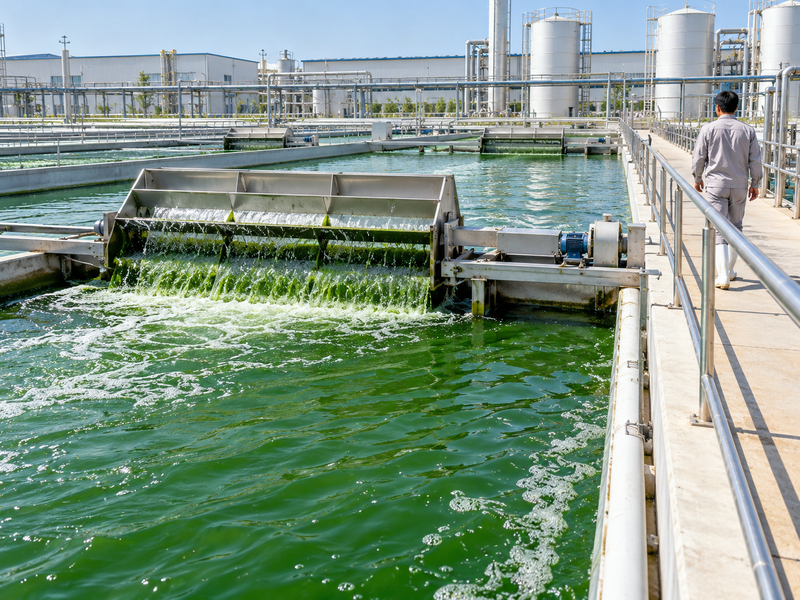
Ask whether the facility uses municipal supply, a protected well, another permitted source or a controlled blend. Record the legal and physical source, intake location and whether it changes seasonally. The plant should identify storage tanks, transfer lines and treatment trains before water reaches culture vessels. Still, a source can be acceptable at intake and deteriorate in a poorly maintained tank. Then, request a schematic and representative source-water test history rather than a single certificate issued years ago.
Check the change scenario. If drought or maintenance forces a switch to another source, who approves it and which tests occur before use? A supplier may disclose the source category while keeping exact well coordinates confidential; the buyer still needs the control plan and change-notice terms. Under applicable U.S. human-food CGMP, 21 CFR 117.37 addresses sanitary water supply for food and contact surfaces. The rule does not create one Chlorella-specific numeric panel. Let a qualified quality team select source checks from hazards, local water data and intended use. Keep the source identity tied to production dates so later findings can be traced to affected lots.
| Source question | Record to request | Buyer purpose |
|---|---|---|
| Origin and backup | Approved source list | Change visibility |
| Intake | Periodic results | Baseline quality |
| Storage | Cleaning and turnover log | Downstream protection |
| Point of use | Sample map | Actual culture exposure |
3. What treatment steps need records?
Verify the process after the water source
Treatment may include filtration, disinfection, deionization or other site-specific steps. Ask what each stage is meant to control and how the plant checks that it works. For example, a filter rating says little without integrity checks or changeout records. A disinfectant feed needs dose monitoring and a plan for residues where relevant. Even so, a deionized stream can become contaminated in downstream storage or pipes. The final sampling point should reflect water actually used to prepare culture, not only water exiting an upstream device.
Ask for the operating window. The supplier can provide a redacted trend for pressure, conductivity, microbial indicators or another chosen variable, together with action limits and corrective action. Review maintenance intervals and how water is diverted or held during treatment failure. A treatment claim on a brochure should map to named equipment and documented checks. FDA’s food CGMP overview distinguishes food from supplement manufacturing frameworks; the supplier and buyer should identify which applies to their operations. Good records explain both normal water and the water that failed, since a deviation can expose the real strength of the system.
4. How do nutrients change the water review?
Assess the medium after every addition
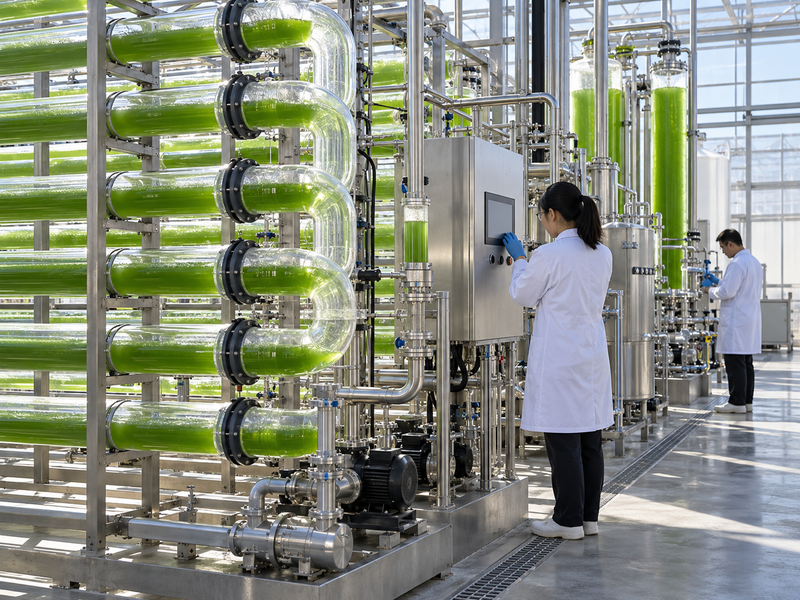
Culture water becomes growth medium once nutrients, carbon inputs and pH agents are added. Also, those materials can influence microbiology, conductivity, trace elements and finished biomass composition. Ask which input categories are used, what grades and suppliers are approved, and how each lot is linked to a culture batch. However, a proprietary medium recipe need not be disclosed in full to evaluate whether key inputs carry unacceptable hazards. The supplier should be able to show receiving specifications and a controlled change process.
Separate growth success from ingredient safety. A nitrogen or mineral source may produce healthy green cells but still require review for metals or other impurities. A laboratory media formulation used in a research paper is not automatically appropriate for a food plant. Pilot C. sorokiniana cultivation research reports defined culture conditions; commercial operations need their own food-grade input controls. Ask whether nutrients are dissolved in treated water and which tank supplies that step. If multiple sources feed one vessel, retain all input lot codes. Final powder testing remains necessary because good input specifications cannot guarantee the result after growth, harvest and packing.
| Addition | Question | Evidence |
|---|---|---|
| Mineral salts | Food-suitable grade? | Supplier specification |
| Carbon input | Identity and delivery? | Lot or gas record |
| pH agent | Dose control? | Batch log |
| Nutrient solution | Water and tank hygiene? | Preparation record |
5. Which contaminants need risk-based monitoring?
Choose analytes from source and process hazards
A water panel can include microbial indicators, relevant elements and chemical residues, but a copied list may miss a local hazard. Start with source-water history, treatment chemicals, nutrient impurities and nearby activities. Define where each analyte is tested: intake, treated point of use, culture medium or final biomass. Still, a favorable result at one point answers only that location and time. Ask the supplier to explain sampling frequency, laboratory method, detection limit and response threshold.
Avoid a false safety shortcut. Chlorella can interact with dissolved elements; a water concentration does not translate directly into a finished-powder concentration. A 2024 experiment using mineral waters measured metals in resulting biomass and reported product-specific concerns. Use the study as a reason to monitor both inputs and finished lots, not as a prediction for your supplier. The buyer’s own specification should set market-dependent limits for the finished ingredient and serving. If a supplier says “zero heavy metals,” request numeric results and method limits. A measurable, risk-based plan supports decisions better than an unqualified absolute claim.
6. How should reuse and recirculation be controlled?
Define what returns to the vessel
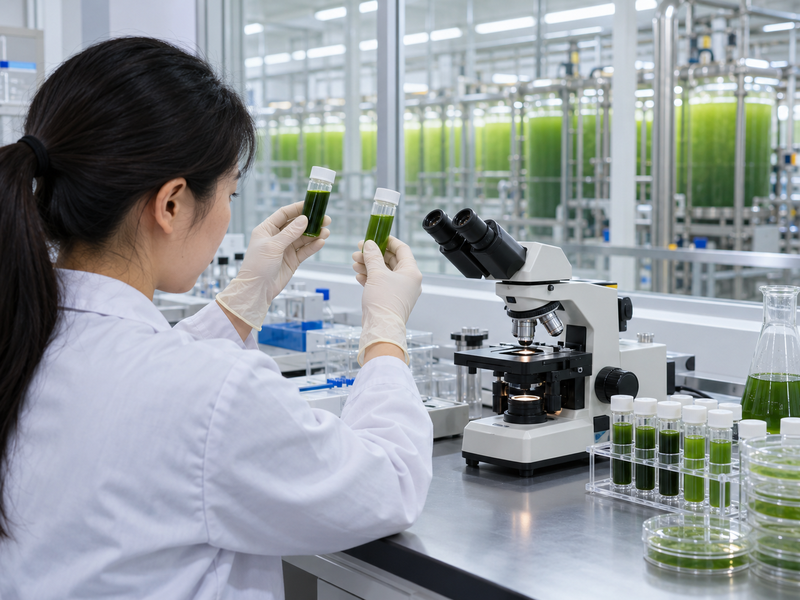
Some plants recirculate medium within a production system or reuse water after harvesting. However, reuse can reduce withdrawal but may concentrate salts, residual nutrients or unwanted organisms. Ask which streams return, what treatment they receive, how many cycles are allowed and what criteria end reuse. A supplier should distinguish recirculation inside one controlled vessel from water transferred between batches. Both also need identity and change records. For that reason, a sustainability claim based on reuse should be supported by measured flows, not a diagram alone.
Test the cumulative effect. Compare fresh and recycled medium for the parameters the plant uses to control growth and safety. Check whether pH, conductivity, nutrient balance or microbial trend drifts across cycles. An original study on C. vulgaris medium reuse after different harvest methods shows that separation route can influence reuse; the study investigated biodiesel production, so its conditions do not establish food-grade acceptability. For food buyers, ask what prevents a failed harvest or contaminated stream from returning to saleable culture. Set a documented diversion rule and verify that affected finished lots remain traceable.
| Reuse control | Ask the plant | Failure signal |
|---|---|---|
| Stream identity | Which line returns? | Unmapped crossflow |
| Treatment | What is removed? | Unverified claim |
| Cycle limit | When is water purged? | Accumulation |
| Release | Who authorizes reuse? | No disposition record |
7. What operating trends should the plant record?
Connect water checks with culture behavior
Routine readings may include pH, temperature, conductivity, nutrient concentration and a culture-density measure. The chosen set depends on strain and process. Then, record instruments, calibration, sampling point and time so trends can be compared. Yet, a single acceptable pH at harvest does not describe a multi-day run. Ask which excursions trigger feed adjustment, added sampling or a batch hold. A quality system should distinguish an expected process adjustment from a deviation requiring investigation.
Trend the whole path. Plot treated-water values against culture readings and finished-lot attributes over several batches. If chlorophyll, ash or metal values drift, the source may be one of several causes. The flat-panel C. sorokiniana pilot study demonstrates controlled operating measurements for one strain; commercial ranges belong to the supplier’s own validated process. Ask for a redacted normal-lot chart and a failed-lot example. The ability to explain an outlier is stronger evidence than a claim that every reading always looks perfect. Keep trend review periodic, with action owners and recorded closure.
8. How can water results link to a powder lot?
Create a chain from tap to pack
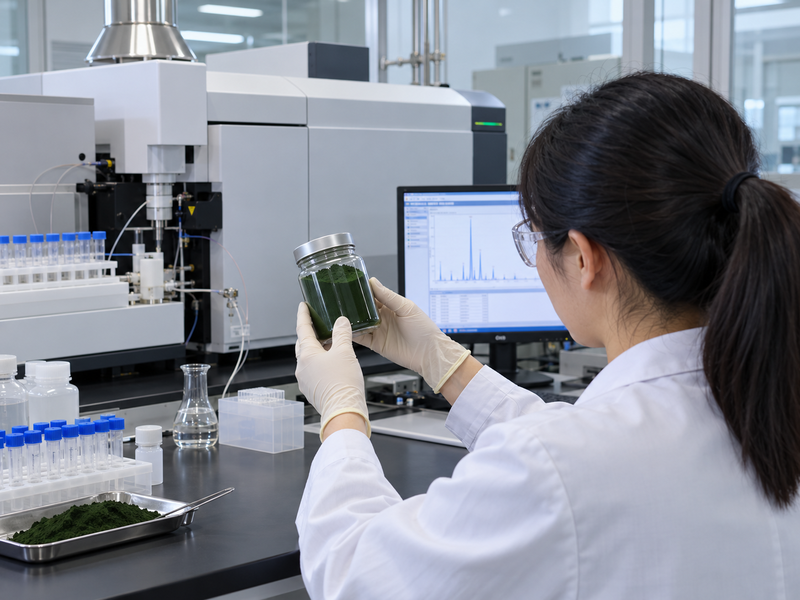
Start with a delivered drum and trace it to its drying run, harvest, culture vessel and water preparation batch. The water record should show source, treatment status, sampling date, relevant tests and any nutrient-solution lot. Meanwhile, semi-continuous production needs a clear rule for which water additions and culture draws belong to a finished lot. If several harvests are blended, every parent batch should remain visible. A COA for the finished powder is useful only when it identifies the material that actually shipped.
Run the trace in both directions. Give the supplier a failed water-sampling date and ask which cultures and powder lots could be affected. Then pick a powder lot and reconstruct its water history. A generic facility certificate cannot answer that question. FDA’s dietary supplement CGMP guidance describes batch production and release records where U.S. Part 111 applies; analogous trace logic benefits food ingredients even when another rule governs. Set record retention and response time in a quality agreement. The site’s Spirulina quality-agreement article gives a comparable document structure, while Chlorella input risks must be written specifically.
| Trace link | Minimum identifier | Buyer check |
|---|---|---|
| Source water | Source and date | Approved status |
| Treated water | Tank/run | Monitoring result |
| Culture | Vessel and run | Addition history |
| Powder | Harvest/pack lot | COA and labels |
9. What should happen after a failed water result?
Hold affected material and investigate scope
The plant should define action limits before a failure occurs. When a sample exceeds one, it must identify the affected system, isolate relevant water and cultures, assess finished lots and investigate cause. Also, a resample can help determine whether an initial result was erroneous, but it should not erase the original reading. Ask who decides disposition and whether product already shipped can be traced. A failed microbial indicator, unusual conductivity and a metal result may need different responses, all documented.
Request one redacted example. Examine the trigger, timeline, containment, root-cause work, corrective action and verification of effectiveness. If a treatment filter failed, review maintenance and downstream exposure. If a nutrient solution was prepared with wrong water, check every culture it entered. A supplier who explains a controlled excursion gives more confidence than one promising that failures never occur. Do not assume a clean final COA alone resolves a documented input problem; a qualified quality team should assess sampling coverage and hazard. The buyer agreement should state notification timing and access to enough records for its own release decision.
10. What evidence belongs in a buyer approval?
Review a real production run and its controls
Request a source-and-treatment map, water specification, sampling plan, recent trend summary and deviation procedure. Next, obtain a matched example connecting treated-water records to a culture and finished powder lot. Add nutrient input categories and approved supplier controls. Then, review a current finished-lot COA for identity, microbiology and relevant contaminants. A supplier may redact proprietary set points while still showing dates, limits, results and disposition. Confirm where water is used after harvest, since washing or cleaning can introduce exposure outside cultivation. The site’s Spirulina water-quality guide offers parallel audit questions, while Chlorella controls need separate evidence.
Make approval conditional on evidence. If the supplier changes water source, treatment equipment or major input, require notice and a documented impact review. Decide whether independent testing is appropriate at onboarding or after a change. FDA’s supplier evaluation resources describe risk-based activities for applicable U.S. food settings; the buyer should use the requirements that fit its role. Keep a simple review checklist and a dated approval decision. A water program is credible when the supplier can show what entered a particular culture and what happened when a control moved outside its limit.
| Approval item | Evidence | Owner |
|---|---|---|
| Source/treatment | Flow map and limits | Supplier quality |
| Monitoring | Recent trends | Buyer quality |
| Traceability | Water-to-powder example | Joint review |
| Change control | Notice terms | Procurement/quality |
What to do next. Chlorella cultivation water quality should be evaluated as a chain of source, treatment, medium preparation and lot evidence. Ask for a real water-to-powder trace and review both input monitoring and finished tests. That gives procurement a practical reason to trust the grade beyond its green appearance.
Frequently asked buyer questions
FAQ
Q1: Is municipal water automatically suitable for Chlorella culture? No. The plant must control the actual point of use and its process needs.
Q2: Can a finished COA replace water records? No. Both answer different questions and should link to the same lot.
Q3: Does recycled medium make a food ingredient unsafe? Not automatically; suitability depends on treatment, controls and evidence for the specific process.
Q4: Should buyers demand the full nutrient recipe? They need input categories, hazard controls and traceability; confidential proportions may remain protected.
Q5: What is a useful quick audit test? Trace one shipped powder lot back through culture, treated water and source-water records.