
Chlorella microbiological testing checks defined organisms or counts in a specified sample and method. Even so, a dried powder can carry a clean-looking COA while its wet-process controls and sampling plan remain unknown. This guide connects culture, harvest, drying and packing risks with meaningful microbial results. FDA’s Bacteriological Analytical Manual supports method selection; the specification still needs product-specific limits and a responsible release decision. The FDA Bacteriological Analytical Manual helps laboratories select methods. Sampling and acceptance criteria still need to fit the product and destination.
Contents: 1 · 2 · 3 · 4 · 5 · 6 · 7 · 8 · 9 · 10
1. Why does a dried algae powder need testing?
Trace contamination opportunities
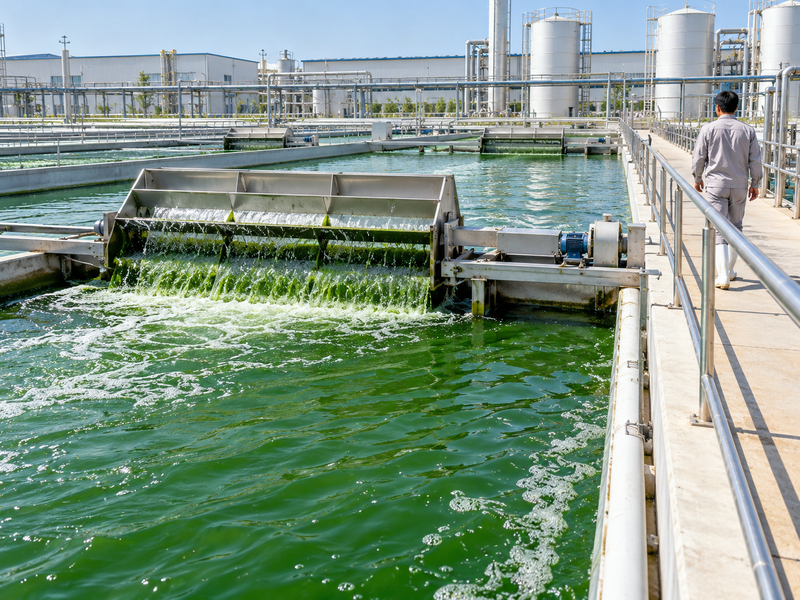
Cultivation water, harvesting equipment, wet holds, drying, milling and packaging each offer different microbial exposure points. Dry powder may limit growth when water activity is controlled, yet drying does not automatically remove organisms introduced earlier. Finished-lot tests complement supplier process controls. Drying reduces available water, but it does not prove that organisms introduced during cultivation or packing have disappeared. Follow the material from culture medium through harvest, wet hold, dryer, mill and final bag. Ask which points are monitored and where a batch can be stopped. For that reason, a finished-powder test samples only a small portion of the lot, and the buyer needs process-control evidence alongside the COA. Product category and intended use shape the final test panel.
Start with the offer: Request a process map and lot-linked microbiology results. Ask where the supplier controls wet holding and post-dry recontamination.

| Buyer check | Evidence to request | Decision it supports |
|---|---|---|
| Cultivation | Water and culture monitoring | Catch early contamination |
| Wet harvest | Time, temperature and cleaning records | Control growth opportunity |
| Dry packing | Environment and seal checks | Prevent recontamination |
2. Which routine counts may be reported?
Understand what counts measure
Aerobic plate count and yeast-and-mold count describe populations recoverable under their methods. They are useful trend and hygiene indicators, not a direct guarantee that pathogens are absent. Compare methods, units and sample preparation before ranking two COAs. Aerobic plate count and yeast-and-mold results are useful hygiene indicators, but neither directly proves a named pathogen is absent. Also, units such as CFU/g, method and sample preparation must accompany the value. Compare a supplier’s recent lot trend before accepting a sudden high result that still falls below the formal limit. If one seller reports an estimated count and another a precise number, ask how each laboratory handles results near its quantification boundary.
Here is the evidence check: Specify each routine count with method, unit and limit. Review trend data separately from pathogen criteria.
The FDA method manual helps define analytical methods. It does not supply a universal chlorella acceptance limit; the buyer must establish a market- and product-specific criterion.
3. How should pathogen criteria be written?
Specify the organism and sample mass
For example, a Salmonella result should state the method and tested mass. Not detected in a stated portion differs from a whole-lot guarantee. Additional organisms may be appropriate based on destination market and hazard assessment. Avoid copying a generic panel without examining the use case. A pathogen requirement needs a named organism and a stated test portion, such as a defined mass for Salmonella analysis where appropriate. “Absent” without sample size and method is not auditable. The sampling plan should also identify which finished-lot packs contribute material. Even then, a negative result describes only the tested portion; a prevention program protects the broader batch. Choose the panel through a hazard analysis rather than copying a competitor’s COA.
Make the comparison fair: Write organism, method, sample mass and acceptance expression into the specification. Confirm the lab can validate the Chlorella matrix.
| Buyer check | Evidence to request | Decision it supports |
|---|---|---|
| Salmonella criterion | Named method and tested mass | Interpret not-detected result |
| Routine count | CFU/g and recovery method | Trend process hygiene |
| Sampling plan | Packs and increments per lot | Support representativeness |
4. What does FDA BAM contribute?
Select validated procedures
FDA’s Bacteriological Analytical Manual collects preferred methods for microbiological analysis of foods. It helps laboratories choose and document techniques; the manual does not establish every chlorella product limit. However, rapid methods need suitable validation and matrix verification. FDA BAM chapters describe preferred methods for food microbiology and can help a laboratory select a procedure. In contrast, they are not a ready-made list of chlorella limits. Ask the lab which chapter or validated alternative it uses and whether the method handles pigmented, dry powder appropriately. If a rapid method is proposed, request evidence of suitability for this matrix and sample preparation. Keep method version visible when comparing results over time.
Follow the process trail: Require a named BAM or validated alternative method on the COA. Review any method change before accepting trend comparisons.
5. Why is sampling design critical?
Look for uneven distribution
Contamination can be patchy across a lot. A clean small sample does not prove every pack is clean. Define production lot, sampled packs, sample mass, aseptic collection and chain of custody. If several lots share a shipment, keep their results separate. Microbes may be unevenly distributed within a production lot, especially after a localized equipment or packing issue. For example, a small clean scoop cannot settle the risk for all bags. Define the lot boundary and sampled packs before shipment; use aseptic collection and traceable containers. If material from different production dates is blended, ask how the blended lot is represented. Preserve the sampling record for any out-of-limit investigation or retest discussion.
For example, imagine a shipment with four production lots on one pallet. One composite sample from the entire pallet can conceal which lot contributed a result and make a later investigation difficult. Keep lot labels and samples separate unless a justified plan explicitly treats the blend as one production lot. Record which packs supplied each increment and who collected it. If a positive finding appears, those records help quality identify affected inventory without automatically assuming every neighboring pack has the same history.
Try this in a pilot: Approve pack selection, sample mass and chain of custody in advance. Reject a certificate whose sampled material cannot be linked to the shipment.
| Buyer check | Evidence to request | Decision it supports |
|---|---|---|
| Lot boundary | Production date and batch record | Avoid mixed-lot ambiguity |
| Sample increments | Number and location of packs | Capture variation |
| Aseptic handling | Tools and chain-of-custody record | Prevent collection error |
6. How do moisture and water activity differ?
Measure available water
Moisture percentage describes total water in powder; water activity describes water available for microbial processes. The measures are related but not interchangeable, as FDA’s water-activity guide explains. Low water activity can restrict growth under controlled conditions, yet it cannot prove that a pathogen was never introduced or killed during drying. Specify both measures only when each supports a distinct release or stability decision. Test final powder in its actual pack and monitor humidity during storage and transport. If a bag seal fails, a passing factory water-activity result may no longer describe material received by the buyer.
Put it in writing: Specify water activity and moisture as separate tests when both matter. Verify final-pack values and monitor humidity exposure during storage.
7. What controls belong before drying?
Review wet-process hygiene
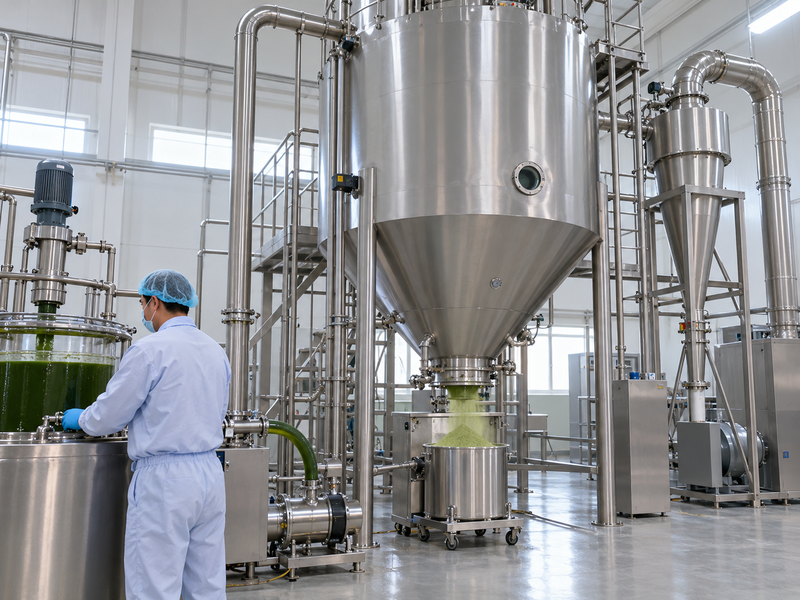
Wet biomass can spend time in harvest and hold vessels. Residence time, cleaning, water quality and temperature control matter before the dryer. A supplier should document routine monitoring and corrective action rather than relying entirely on end-point testing. Before drying, harvested biomass may pass through concentration and holding equipment. Time, temperature, water quality and cleaning at those stages affect microbial exposure. Ask for maximum hold times and how out-of-range conditions are handled. If multiple culture tanks feed one dryer, understand how batch identity and deviations are tracked. End-product tests are more credible when the supplier can show routine controls for these wet transitions.
At receiving, check this: Review wet-hold limits and sanitation records for the offered process. Request a deviation example showing containment and disposition.

| Buyer check | Evidence to request | Decision it supports |
|---|---|---|
| Wet hold | Maximum time and temperature | Limit microbial opportunity |
| Water quality | Monitoring method and result | Control culture input |
| Cleaning | Verification after shared equipment | Protect next batch |
Where US supplement CGMP applies, FDA’s guide addresses appropriate tests and supplier records. Review microbial results from the final production stage.
8. What controls belong after drying?
Prevent recontamination
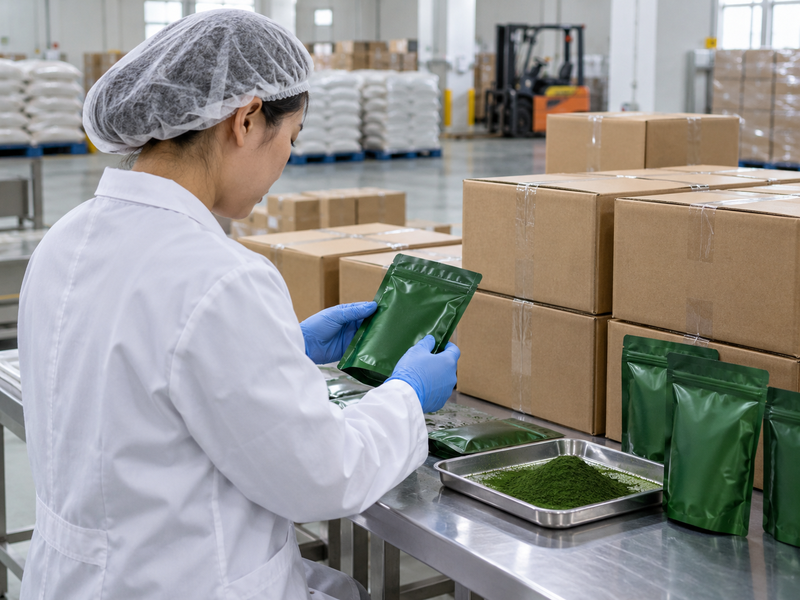
Milling, sifting, transfer and filling expose dry material to equipment and the packing environment. Segregation, cleaning verification, pest control and controlled humidity help protect a passing lot. Packaging integrity and transport condition preserve that state. After drying, mills, sifters, transfer lines and packing machines can reintroduce organisms. Ask how dry areas are cleaned without creating moisture pockets and how equipment is protected during maintenance. Check pack seals and transit conditions because a passing powder can be compromised after release. If the supplier repacks at another site, add that facility and step to the qualification file. A final COA from before repacking may not cover the later operation.
Watch the risk pathway: Inspect post-dry controls and require final-pack lot traceability. Hold material when seals, labels or transport conditions indicate exposure.
FDA’s Bacteriological Analytical Manual supplies microbiological-method context, not a universal chlorella threshold.
9. How should an out-of-limit result be handled?
Do not retest away a failure
Hold the lot, verify identification and method, investigate the process and assess adjacent lots. However, another negative sample does not automatically invalidate an initial positive. Corrective action may require equipment, sanitation or supplier changes. When a lot exceeds a microbial limit or returns a pathogen-positive result, hold it and investigate the process, sample and adjacent batches. Even if follow-up sampling is negative, keep the original finding in the investigation. Establish who decides disposition and what corrective action is required before supply resumes. Ask the supplier how it protects other lots from the same equipment or environment. Document retesting rules before an incident so commercial pressure cannot rewrite them afterward.
Count usable output: Keep the lot quarantined under a written deviation process. Require root-cause and corrective-action evidence before any release decision.
| Buyer check | Evidence to request | Decision it supports |
|---|---|---|
| Initial result | Original positive or high count | Start lot hold |
| Investigation | Affected equipment and adjacent batches | Determine scope |
| Corrective action | Sanitation and verified follow-up | Decide future release |
10. What should buyers request before release?
Review complete evidence
Require lot-linked results, methods, sample sizes, limits and actual count units, plus relevant process-control records. Trend recent lots and confirm the supplier can notify deviations promptly. Include receiving checks suited to your own manufacturing environment. The buying file should connect the specification, sampling plan, laboratory method, actual counts or pathogen results and release signature for each lot. Also, review recent trends and supplier deviations, not only a single pass stamp. Ask how quickly a supplier will notify you of a positive finding discovered after shipment. Align incoming controls with your own handling and final product process so a clean ingredient is not compromised in your plant.
Agree how the supplier will handle a finding reported after dispatch. The notice should identify affected lot codes, shipment destinations, test method and immediate hold instruction. Your receiving team needs a matching internal contact list so inventory can be blocked before use. Rehearse this communication path with a sample lot record during supplier qualification. A fast, traceable response can limit disruption when the underlying investigation takes longer.
The decision point: Release only against complete lot evidence and a named quality approver. Include notification timing and retest rules in the supplier agreement.
FAQ
Does low water activity kill pathogens?
No. It can limit growth under controlled conditions but does not prove absence or inactivation.
Does an aerobic count replace pathogen testing?
No. Routine counts indicate hygiene trends; relevant pathogens need their own criteria.
What must a not-detected result say?
Name the organism, method and tested mass, and link the sample to the production lot.
Can a retest erase a positive result?
No. Hold the lot and investigate the initial finding before disposition.
Why inspect dry packing after a passing test?
Milling, transfer and filling can reintroduce contamination after an earlier sample was taken.
Practical next step
Treat microbial COA data as one part of a control chain from culture through final sealed pack. Define organisms, sample sizes, methods and limits; inspect wet holds and dry packing; and prewrite how positive or high results will be handled. The elemental testing guide addresses a different safety panel that belongs in the same supplier file. A lot should move into production only after its complete evidence is reviewed by the assigned quality approver.