
Chlorella cultivation pH control keeps culture chemistry within a site-justified operating range while cells grow. For a buyer, one pH number on a batch sheet says little about a culture that drifted during daylight or after carbon dioxide dosing stopped. A credible plan records calibrated measurements, control actions and the decision made after any excursion. In an airlift photobioreactor study, carbon dioxide addition and algal growth changed pH over time; its observed range describes that experiment, not a universal release limit.
Contents
- Why does pH change during chlorella growth?
- Which pH range should a supplier use?
- Where should pH be measured?
- How are probes checked and calibrated?
- How does carbon supply affect control?
- What does a pH trend reveal?
- What should happen during an excursion?
- How can pH influence harvest timing?
- What changes require new control trials?
- What should buyers review before approval?
1. Why does pH change during chlorella growth?
Follow carbon and culture activity
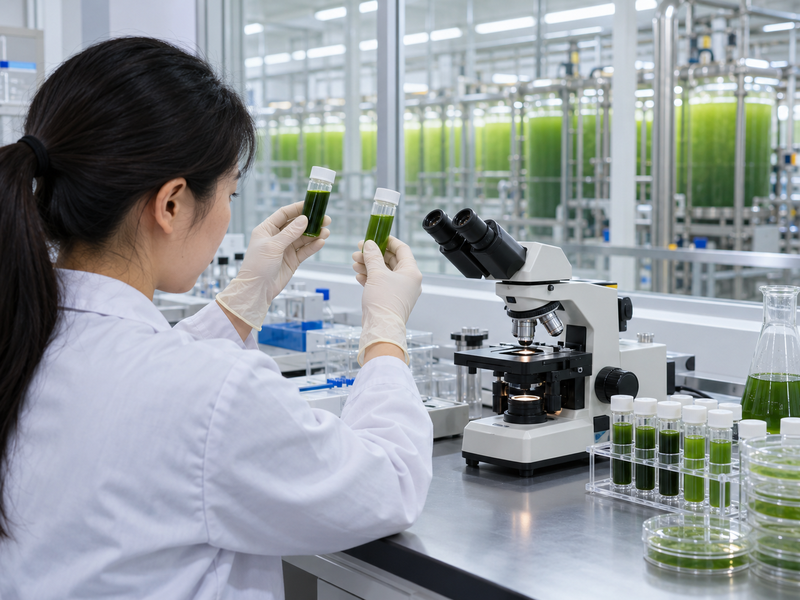
Photosynthetic chlorella consumes dissolved inorganic carbon under light. Carbon dioxide dissolving into the medium can lower pH, while carbon uptake may raise it. The balance also depends on alkalinity, nutrients, gas exchange and the culture’s stage of growth. A pH shift can so be normal within a known process, or it can signal failed gas delivery, a medium error or unexpected biology. Read pH with context: light schedule, aeration, biomass and dosing records are needed before deciding what a change means.
The C. vulgaris airlift study recorded an initial pH fall after carbon dioxide supply and a later rise as biomass developed. Another photobioreactor experiment observed a different pH behavior under its own conditions. These studies show why a buyer should not demand one textbook value for every species and reactor. Ask the supplier to explain its actual process trajectory and which deviations have been linked to poor growth or product quality.
2. Which pH range should a supplier use?
Derive limits from the strain and process
An operating range should come from trials using the supplier’s strain, medium, reactor and intended biomass qualities. It may include a tighter target for routine control and wider action boundaries that trigger investigation or hold. A range suitable for a laboratory flask may fail in a sunlit outdoor unit with changing carbon demand. The supplier should show how growth, color, composition and harvestability behaved near proposed boundaries. Ask what the number protects: a limit without a linked failure mode is hard to defend.
Avoid confusing an operating range with a food-safety standard. Neither the studies cited here nor a supplier’s favorable run creates a universal legal pH limit for food-grade chlorella cultivation. Record measurement frequency and exposure duration, because a short transient and a sustained excursion may have different consequences. If pH control is automated, define the target, alarm band, maximum dosing response and who reviews alarms. For buyers, a short rationale with trend data is more useful than a bare specification line.
| Limit type | Purpose | Buyer question |
|---|---|---|
| Routine target | Guides dosing | How was it selected? |
| Alert band | Prompts operator check | What is checked? |
| Action boundary | Triggers hold or correction | Which lots are affected? |
3. Where should pH be measured?
Pick a representative point
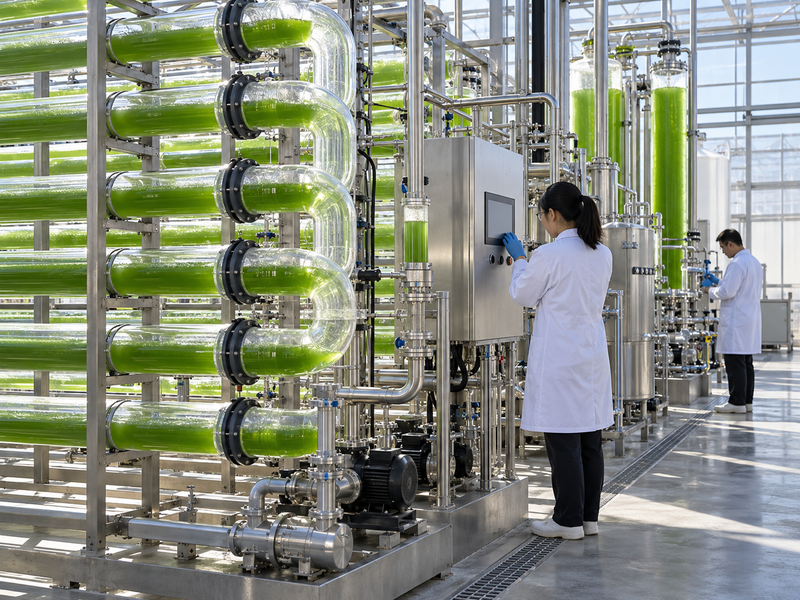
Probe location affects interpretation. A sensor next to a carbon dioxide inlet may see a local low value while a distant pond area remains different. A sample from a static corner may lag the mixed culture. Map the flow and identify a location that reflects the bulk culture, then verify it by comparing several positions during process development. For large reactors, a single point may not capture gradients during poor mixing or after dosing. A practical check: collect paired samples near the sensor and at a distant, normally mixed point under routine conditions.
Sampling method matters too. Carbon dioxide can leave a sample after it is removed, changing pH before a bench meter reads it. Write down how quickly and under what conditions samples are tested. Use the same convention when comparing batches. If a probe is placed in a side stream, record pump status and flow; a stopped side stream may report stale liquid. Trace the measurement point in the process diagram so a later plumbing change cannot silently alter the meaning of the trend.
4. How are probes checked and calibrated?
Keep the instrument fit for culture use
A pH probe can drift because of coating, aging, temperature effects or a damaged reference junction. Set calibration and verification intervals using manufacturer instructions, process experience and the risk of a missed excursion. Record buffer identity, lot, expiry, temperature and the as-found result before adjustment. That as-found check matters: if a probe is discovered out of tolerance, the team must assess earlier culture records, not simply reset the instrument and move on. Keep one independent view: a bench meter or another verified probe can help investigate questionable readings.
Clean probes using a method compatible with the sensor and culture system. Avoid calibration performed only when a convenient reading appears wrong. Review response time; a sluggish probe may miss fast changes even while its final reading looks plausible. Document maintenance and replacement against reactor ID. If automated dosing depends on pH, sensor failure should trigger a safe response, such as stopping dosing and alerting an operator, according to a site-tested control design. The buyer should be able to see calibration history for a selected cultivation lot.
| Probe issue | Signal | Response |
|---|---|---|
| Drift | As-found check fails | Assess prior data |
| Fouling | Slow response | Clean and verify |
| Stopped side stream | Flat trace | Check flow and sample |
5. How does carbon supply affect control?
Treat gas flow as part of the pH system
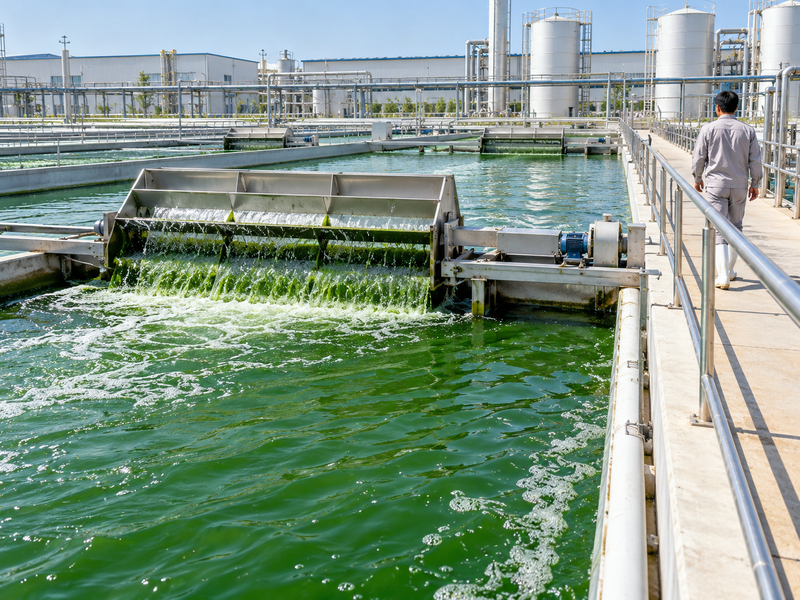
Carbon dioxide supply changes dissolved carbon and pH, while aeration and mixing influence how evenly gas reaches cells. Set controls for gas source, flow, diffuser condition and dosing logic. If gas stops overnight, a morning pH reading may reveal the event only after the culture has experienced several hours of changed conditions. Keep alarms for supply loss separate from pH alarms. The airlift C. vulgaris study examined carbon dioxide and airflow alongside pH and growth, illustrating that these variables interact.
Avoid using acid or base as a quick correction without evaluating the effect on medium composition and product. A dosing change may restore the displayed pH while leaving carbon limitation unresolved. Check cause before correction: compare gas-cylinder or pipeline status, flow meter, diffuser pressure and biomass trend. Where automated gas control is used, test sensor and valve failure modes during commissioning. A buyer can request a short description of control logic and alarm response without asking for proprietary recipe details.
6. What does a pH trend reveal?
Compare shape, timing and linked variables
A trend is more informative than a single end-of-shift value. Look for daily rises and falls associated with light, gas dosing and harvest dilution. Compare current behavior with accepted runs at similar biomass density. A sudden flat line may mean instrument or circulation failure; a rapid swing can point toward dosing or a medium error. The hard question: did the culture change, or did the measurement system change? Use corroborating readings before deciding.
Overlay pH with optical density or dry weight, temperature, gas use and nutrient additions. If biomass slows while pH rises, carbon availability may be one hypothesis, but investigate light, nutrients and contamination too. The C. vulgaris photobioreactor observations show that pH and associated bacteria can vary under reactor conditions, so pH alone is not a contamination test. Keep the raw time series and mark manual corrections; smoothed averages can hide short excursions that matter for batch assessment.
| Trend pattern | Possible explanation | Cross-check |
|---|---|---|
| Sudden flat line | Sensor or flow fault | Grab sample |
| Repeated daytime rise | Carbon uptake or dosing gap | Gas and growth logs |
| Abrupt step after addition | Medium or dosing event | Addition record |
7. What should happen during an excursion?
Define the affected interval and response
An excursion should trigger a recorded operator check: confirm the reading with a reliable method, inspect gas and dosing equipment, and note the time control was lost. If the deviation is real, apply the approved corrective action and decide whether cultivation or harvest must be held. Document duration and magnitude, not just the peak number. A short, measured correction may have a different impact from an overnight unknown event. Do not erase the trace: preserve original trend data even if a sensor was faulty.
Investigate causes in order of evidence. Was the buffer or medium mixed correctly? Did a valve fail? Did photosynthetic demand change after unusually strong light? Did an organism enter the culture? Test product implications through the established batch specification and any targeted checks justified by the event. If the run proceeds, the disposition should explain why. Link deviations to the chlorella lot traceability record so later powder results can be interpreted with the actual cultivation history.
8. How can pH influence harvest timing?
Connect culture history to the harvest gate
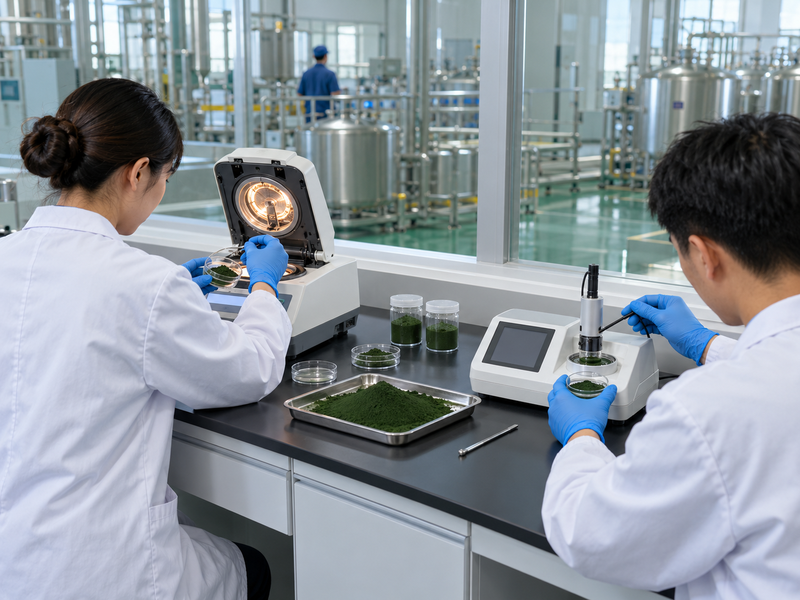
Harvest should depend on biomass condition and product targets, not on pH alone. Still, pH history can affect the decision. A recent prolonged excursion may call for extra checks before moving biomass into dewatering. A stable final reading does not show that an earlier event had no effect. Review growth, microscopy, sensory or pigment observations and relevant safety tests, then decide whether the culture is fit to harvest. The chlorella harvesting process also depends on timing and downstream capacity.
Ask what happens next: if a culture is held while quality investigates, will its pH and biomass continue changing? Set a maximum hold and repeat-check plan based on site experience. Record the handoff from cultivation to harvest with the approved pH trend or deviation disposition. If a buyer later sees unusual powder color or process behavior, these records help distinguish cultivation effects from drying or milling issues. They also keep a supplier from treating every harvest as equivalent merely because all finished lots pass the same few release tests.
| Harvest question | Relevant evidence | Decision |
|---|---|---|
| Was pH controlled? | Trend and alarms | Routine or review |
| Did growth recover? | Biomass slope | Continue or hold |
| Was an excursion evaluated? | Deviation disposition | Approve or reject |
9. What changes require new control trials?
Recheck the system after a meaningful change
A new strain, medium recipe, reactor geometry, light schedule or carbon-dosing method can change the pH trajectory. A replacement probe in a new location may create apparent improvement without changing the culture at all. Review each change for its effect on mixing, buffer capacity, sampling and alarm response. One range does not travel automatically: the supplier should demonstrate that existing targets still support growth and product quality under the revised setup.
Run paired observations during a controlled changeover, with enough time points to capture light and dark behavior. Verify the new sensor against a reference and compare culture performance. Update the standard operating procedure, operator training and buyer notification list before routine supply begins. Where a supplier claims better control, ask for a before-and-after trend with comparable conditions. A one-day screenshot at the target value does not demonstrate stable operation across changes in biomass density or weather.
10. What should buyers review before approval?
Sample a real cultivation batch
Request the supplier’s pH control rationale, probe location, calibration procedure, gas-control overview, alarm limits and deviation response. Then select one delivered chlorella lot and review its time series from inoculation through harvest. Check whether alarms, manual additions and instrument maintenance are visible. Ask for one excursion case, even if the final batch was accepted, to understand the hold and disposition decision. A good question for quality: what observation would stop harvest despite a normal latest pH reading?
Agree which changes require notice, especially strain, medium, sensor location and carbon-supply method. Chlorella cultivation pH control works when pH is measured credibly, interpreted with growth and gas data, and acted on before the culture becomes a finished powder. Ask the supplier to show the last calibration and a complete trend for a representative lot. That evidence gives procurement a more dependable basis than a single certificate value or a generic “controlled pH” claim.
| Buyer record | What to verify | Warning sign |
|---|---|---|
| Control rationale | Range tied to trials | Universal number asserted |
| Calibration | As-found result retained | Only adjusted value shown |
| Batch trend | Gaps and alarms visible | One daily value |
| Excursion file | Product impact reviewed | Retest alone closes event |
FAQ
Q1: Is there one required pH for all chlorella cultivation? No. The range depends on strain, medium, reactor and validated process goals.
Q2: Can pH show contamination by itself? No. It can flag abnormal behavior but requires microbiological and process checks.
Q3: Why can pH rise during daylight? Photosynthetic carbon uptake can shift the culture’s carbonate balance.
Q4: What if an online probe fails calibration? Assess earlier readings since the last acceptable check and use a verified method before release.
Q5: Should a normal harvest pH erase an earlier excursion? No. Review its duration, cause and effect on the culture before disposition.