
Chlorella biomass dewatering concentrates harvested culture into a wetter-than-powder paste or slurry before drying or further processing. Buyers can receive inconsistent powder when a supplier changes recovery equipment, carries excess water into the dryer or leaves biomass waiting too long. A sound process sets a solids target, tracks cell recovery and controls contact surfaces from harvest through drying. A primary study of membrane harvesting with Chlorella investigated concentration and membrane behavior, showing why equipment performance must be assessed with the actual culture.
Contents
- Why dewater chlorella before drying?
- How do filtration and centrifugation differ?
- What solids target should a supplier set?
- How is biomass recovery measured?
- What causes filtration performance to fall?
- How should a centrifuge be controlled?
- When are aids or flocculants a concern?
- How should sanitation and hold time be managed?
- What evidence links dewatering to powder quality?
- What should buyers request from a supplier?
1. Why dewater chlorella before drying?
Remove water while protecting product
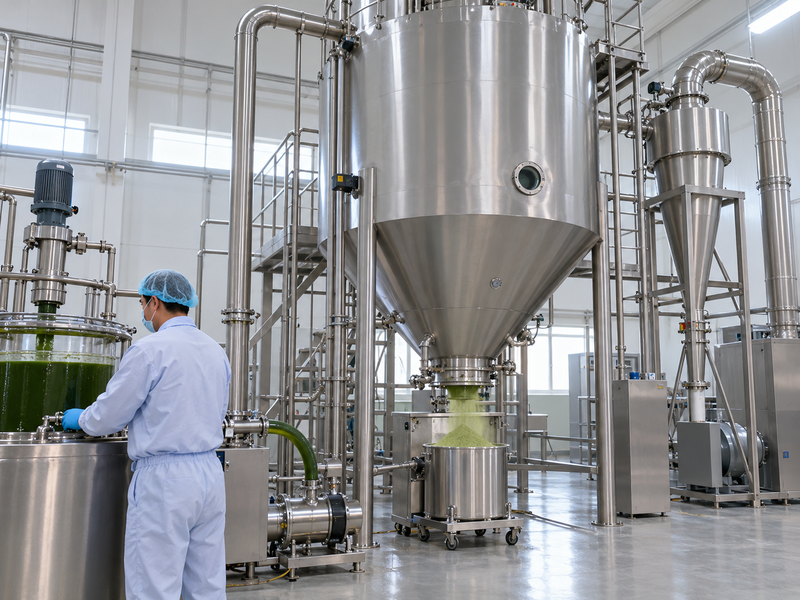
Harvested chlorella is a dilute cell suspension. Removing part of its water before thermal drying can reduce the load on the dryer and make feeding more consistent. However, a concentration step also adds product-contact surfaces, time and possible loss of cells into liquid streams. A thicker paste is not automatically better if it clogs a feed line or forms uneven droplets during spray drying. Start with the downstream need: the dryer or other process should state the solids range and flow behavior it can handle.
Record the culture lot entering dewatering, volume, solids, temperature, equipment route and concentrated output. The output should remain traceable to the cultivation batch and to the final powder. A published Chlorella membrane-harvesting study treated dewatering as a process with tradeoffs in concentration and membrane performance, not just a water-removal percentage. A buyer should ask whether the selected method maintains both usable product and an acceptable microbiological history before drying.
2. How do filtration and centrifugation differ?
Compare the product, not only the equipment name
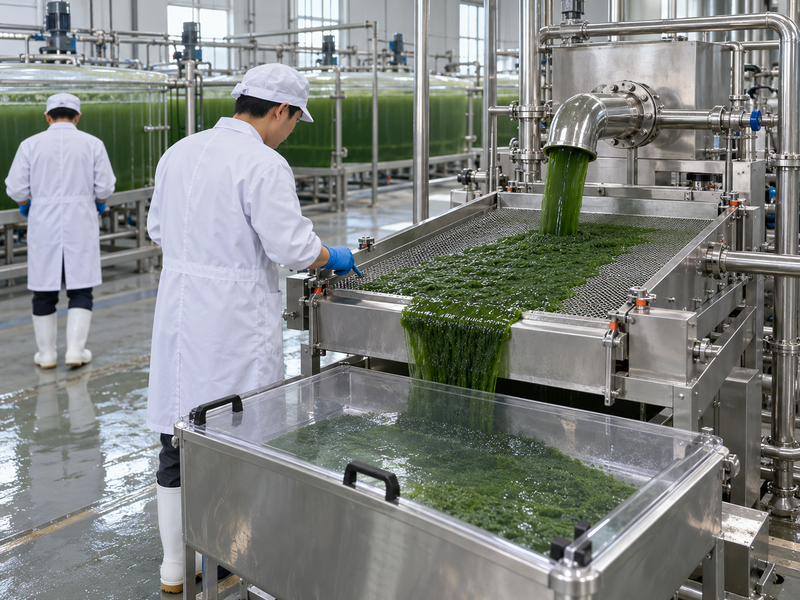
Filtration retains cells behind a screen or membrane while water passes through. Centrifugation separates material under rotational force. Each has many configurations, and performance changes with cell size, culture density, medium and equipment settings. Filtration may use less energy for an initial concentration stage but can lose throughput as membranes foul. A centrifuge can produce a concentrated stream yet imposes its own energy, shear and cleaning demands. Ask for actual mass balance: compare feed, product and reject streams on the supplier’s culture.
Some processes combine methods. A C. vulgaris filtration experiment discusses membrane pre-concentration before a later centrifugation stage and the challenge of fouling. Its economics and chemistry are not automatically transferable to food-grade production. For purchasing, the choice should be judged on repeatable solids, recovery, residue control and sanitation evidence. Do not assume a membrane is inherently gentler or a centrifuge inherently cleaner; inspect how each is operated and maintained.
| Method | Main operating issue | Evidence to compare |
|---|---|---|
| Screen filtration | Fine cells may pass | Recovery and filtrate solids |
| Membrane filtration | Fouling and cleaning | Flux trend and integrity |
| Centrifugation | Setting and discharge loss | Feed/output mass balance |
3. What solids target should a supplier set?
Let the next process define the range
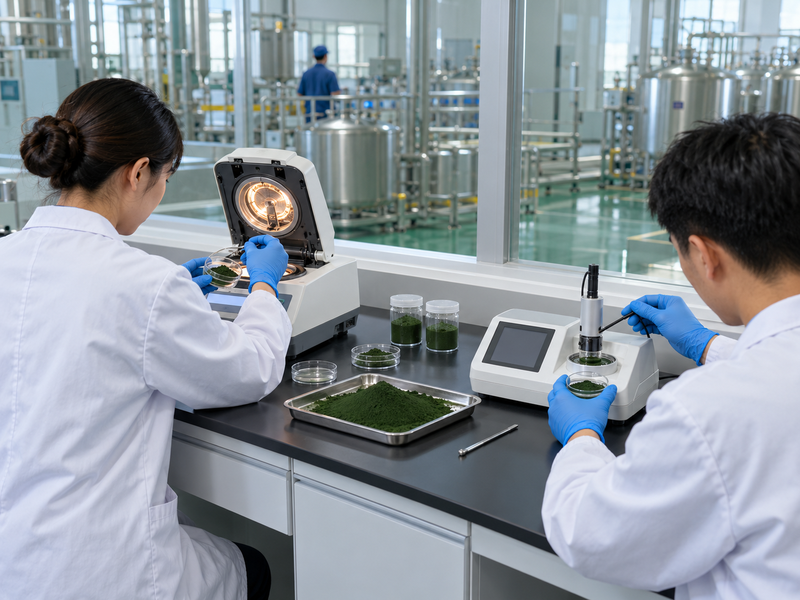
A solids target should support the intended dryer, homogenizer or cell-wall process. Too dilute a feed can waste drying capacity; too thick a paste may pump poorly or produce inconsistent dryer output. Set an operating range after trials that measure feedability, dryer behavior and final powder quality. Record whether solids are measured as dry weight, total solids or another defined method. A percentage without the measurement basis can mislead, especially when residual salts and medium components contribute to dried mass.
Sample at a known point after adequate mixing. A paste can separate while waiting, so a top-only sample may not represent the material entering the dryer. Check the clock: record the time from concentration to downstream use and whether the paste was cooled or agitated. A lot that met the target when discharged may no longer behave the same after a prolonged hold. Buyers should request the target rationale and actual results for representative lots, not a universal number copied from a research paper.
4. How is biomass recovery measured?
Account for cells in every stream
Recovery compares biomass entering dewatering with biomass collected for product. Measure volume and solids in feed, concentrate and liquid leaving the equipment, with allowances for samples and line hold-up. A clear-looking filtrate may still carry many small cells; a green filtrate makes the loss visible but does not quantify it. Follow the missing mass: if a reported yield changes sharply, check measurement method and tank calibration before changing machine settings.
Mass balance also guards against mixing of lots. If the equipment retains paste from a prior run, the next concentrate may contain more than its assigned culture. Document flushes and changeover loss. The membrane Chlorella study measured process behavior across biomass concentrations, a useful reminder that recovery may shift during a run. Buyers can ask for trend summaries and exception records, particularly when a supplier promises a fixed yield regardless of culture density.
| Stream | Measurement | Decision supported |
|---|---|---|
| Feed | Volume and dry biomass | Input baseline |
| Concentrate | Volume and solids | Usable output |
| Filtrate or centrate | Volume and residual cells | Product loss |
| Equipment hold-up | Flush or residual mass | Lot reconciliation |
5. What causes filtration performance to fall?
Distinguish fouling from a culture change
Membrane or screen flow can fall as cells, secreted organics and other solids accumulate on the surface. A pressure rise or slower filtrate rate may show fouling, but the same symptom can follow a more concentrated feed or a temperature change. Record flux, pressure, feed solids, temperature and cleaning state together. One number is not enough: a “normal” pressure with half the expected flow still indicates a process problem. The Chlorella hollow-fiber study evaluated permeability and fouling behavior under different biomass conditions.
Set a response before the run: backflush, stop, clean or replace the element based on validated process boundaries. Confirm that a cleaning chemical is removed as required before food-grade production resumes. Inspect filter integrity after unusual pressure events and account for cells in the filtrate. If a screen tears, hold affected material and trace the interval since its last acceptable check. A buyer should ask how the supplier distinguishes an equipment failure from a genuine change in culture filterability.
6. How should a centrifuge be controlled?
Fix settings and monitor discharge
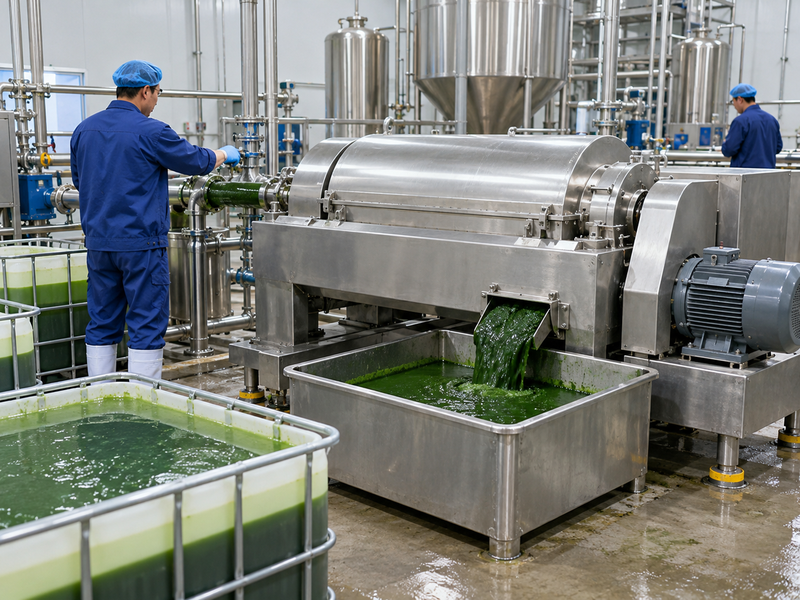
Centrifuge performance depends on feed rate, rotational conditions, discharge cycle and the culture’s density. Set a validated operating window using the actual product stream, then record run conditions and exceptions. A higher speed is not automatically better; it can alter shear, energy use or equipment wear without improving useful recovery. Check the solids in concentrate and cells lost in centrate at defined points through the run. A stable start does not guarantee a stable finish: bowl loading and feed conditions may change.
Inspect seals, wear parts and the route by which the product exits the machine. Metal or lubricant contamination risk belongs in the maintenance assessment. Cleaning access and dryness before the next production campaign matter as much as separation performance. If the machine is shared with another ingredient, changeover controls should be explicit. Buyers need not demand proprietary speed settings, but they should see a controlled operating range, routine output checks and a documented response to an out-of-range result.
| Control point | Why it matters | Record |
|---|---|---|
| Feed rate | Changes separation | Run trend |
| Concentrate solids | Protects dryer feed | Test result |
| Centrate cells | Shows loss | Sample result |
| Maintenance | Controls contamination | Work order |
7. When are aids or flocculants a concern?
Treat added material as an ingredient risk
Some dewatering studies use coagulants or flocculants to improve cell capture. That can be useful for research or nonfood applications, but a food-ingredient supplier must assess whether any aid is permitted for the intended market and whether residues remain in biomass. The C. vulgaris filtration study examined coagulant-assisted filtration; it does not authorize those aids for every edible chlorella product. Ask before approval: what exactly is added, at what stage and where does it end up?
Request the chemical identity, supplier specification, regulatory basis for the intended use, dosing record and a justified residue or removal assessment. A process that removes water may concentrate an added substance in the retained paste. Even a food-contact process aid can affect color, ash, taste or downstream cell-wall processing. If the supplier changes aids without notice, powder can differ despite an unchanged chlorella strain. State in the purchase specification whether aids are allowed and which changes need buyer approval.
8. How should sanitation and hold time be managed?
Control the wet interval before drying
Concentrated chlorella remains wet and can sit in tanks, pumps and hoses before drying. Establish conditions for holding, mixing or cooling based on process trials and microbiological risk assessment. Record start and end times for each transfer. A final dry powder test cannot reveal every wet-stage hygiene weakness, so monitor the process and its equipment. For facilities subject to US food CGMP rules, 21 CFR 117.35 requires food-contact surfaces to be cleaned as frequently as needed to protect food.
Clean hard-to-drain separators, gaskets and piping, then verify the line is ready before use. After maintenance, confirm no chemical, gasket fragment or rinse water remains where the product flows. Keep lots apart: tanks and transfer lines should not blur one harvest into another without documented blending. When a wet paste wait exceeds its approved period, hold it for quality review rather than resetting the clock at a new tank. Link this record with chlorella microbiological testing and final-lot genealogy.
| Wet-stage risk | Process control | Evidence |
|---|---|---|
| Long hold | Defined time and condition | Timestamped log |
| Shared line | Clean changeover | Release record |
| Stagnant pocket | Drainable design | Inspection |
9. What evidence links dewatering to powder quality?
Compare paste condition with downstream results
Finished powder can change when dewatering solids, hold time or cell loss changes. Follow each concentrate lot into dryer feed records and compare final moisture, color, bulk density or other specified attributes. A wetter feed may alter drying settings; a paste with poor flow may create uneven feeding. These are mechanisms to investigate, not automatic claims about every product. Join the records: a finished-lot COA and a dewatering log are only useful together when they share a stable batch code.
When a powder complaint appears, review the actual dewatering run, including equipment alarms and discarded streams. Compare affected and unaffected lots made on the same dryer. The chlorella biomass drying validation guide addresses the next stage; dewatering evidence can show whether the dryer received comparable feed. Ask the supplier to retain representative paste or powder samples where practical and to document any blend of dewatering batches before drying.
10. What should buyers request from a supplier?
Ask for one complete mass balance
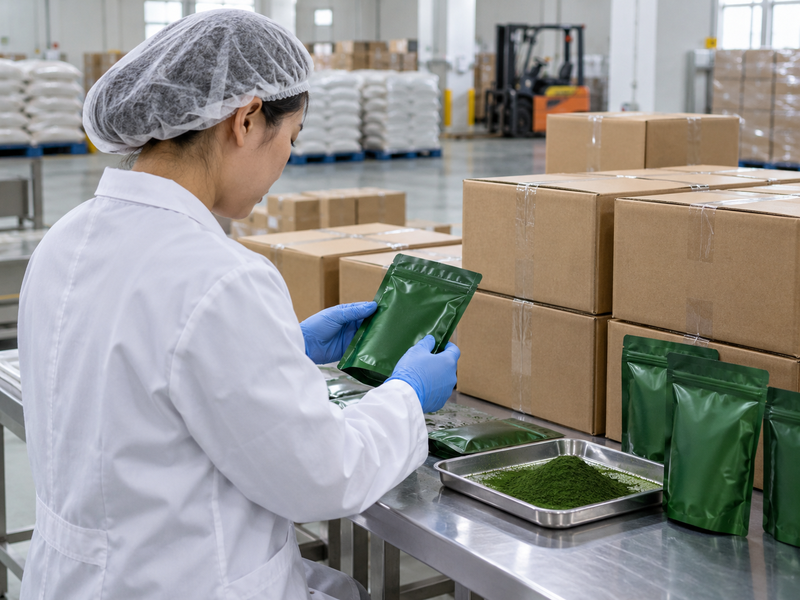
Request the process flow, chosen equipment, solids method, target range, recovery calculation, sanitation plan and hold-time rule. Select a delivered powder lot and ask for its cultivation feed, dewatering output and dryer-feed records. Review a failed or delayed run to see whether the supplier held product and investigated. If a flocculant or other aid is used, obtain its identity and market-specific regulatory assessment before accepting material. Use one pilot order: compare the reported paste solids and final powder behavior with your application.
Agree which changes require notice: a new membrane, centrifuge, aid, hold condition or drying interface may alter product even if the final specification remains nominally the same. Chlorella biomass dewatering works when cells are recovered predictably, wet biomass is handled hygienically and the dryer receives a controlled feed. Ask the supplier for a recent run’s input-output reconciliation and signed release. That evidence gives the buyer a practical basis for judging process consistency before larger orders.
| Buyer document | What it answers | Warning sign |
|---|---|---|
| Process flow | Where water leaves | Undocumented aid |
| Solids trend | Was feed consistent? | One end-point sample |
| Recovery balance | Where cells went | No centrate check |
| Sanitation record | Was equipment ready? | Missing changeover |
FAQ
Q1: Is filtration always preferable to centrifugation? No. Compare recovery, solids, hygiene and total process performance on the actual culture.
Q2: Does thicker paste always improve drying? No. Excessive viscosity can disrupt pumping or feed consistency.
Q3: Can dewatering aids be used in food-grade chlorella? Only after evaluating their identity, permitted use and potential residues for the intended market.
Q4: What does centrate or filtrate testing reveal? It shows cells lost from product and helps test the recovery calculation.
Q5: Which buyer record is most useful? A lot-linked mass balance from culture feed through concentrate, liquid reject and dryer feed.