
Wet chlorella biomass spoils quickly and its drying history can affect powder quality. Chlorella biomass drying validation gives a manufacturer evidence that its chosen process repeatedly meets defined product and safety targets. Buyers can use the same evidence to ask better questions. This guide draws on the FDA’s water activity explanation and human food preventive controls rule, while leaving product limits to the responsible food-safety team.
Contents
- What does drying validation actually establish?
- Which biomass and equipment details belong in the study?
- How do moisture and water activity differ?
- Which dryer settings need defined operating ranges?
- Where should samples be collected?
- How should microbiological risks be assessed?
- What records show repeatable performance?
- When does a process change require fresh evidence?
- How can a buyer review a validation packet?
- What happens when a drying run falls outside limits?
1. What does drying validation actually establish?
Define a claim that records can support
Validation asks whether a specified dryer, feed condition and operating range can repeatedly deliver powder meeting written acceptance criteria. A passing certificate from one lot shows that lot’s sampled results. However, it does not prove that wet clumps, short residence times or heavy feed loads will behave the same way. The study should name its target product, equipment configuration, operating boundaries, sampling locations and analytical methods. Then a buyer can compare a production lot against that defined range.
Here is the distinction: a dry-looking powder does not establish shelf stability. Instead, water activity, residual moisture, microbiological results and relevant quality attributes deserve separate limits. The FDA explains that water activity affects stability after drying and during storage. Yet it does not supply a universal chlorella number. The manufacturer should justify a product-specific limit through its hazard analysis, formulation and shelf-life work. Ask how the study treated the slowest-drying or most heavily loaded condition, not only a convenient center point.
2. Which biomass and equipment details belong in the study?
Start upstream of the hot air
Feed material can vary in solids content, temperature, cell-wall treatment and time since harvest. For that reason, record those features before each validation run. A dewatered paste may behave differently from a dilute slurry even when the same dryer setpoint appears on the screen. Also ask whether biomass came from the intended species and cultivation process. Document any carrier or processing aid. The output specification should name those additions so an ingredient buyer does not mistake a formulated powder for pure chlorella.
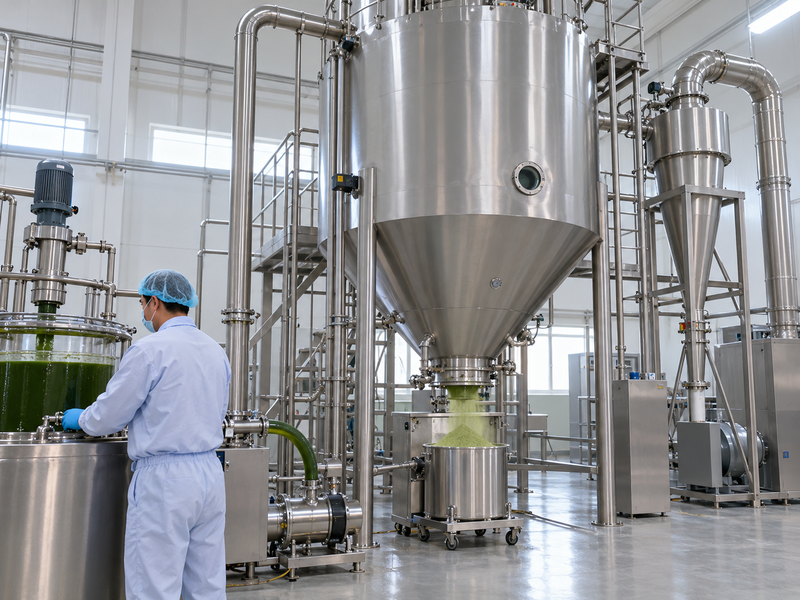
Equipment matters as much as feed. Next, identify the dryer model, atomizer or tray arrangement, exhaust path, product-contact surfaces and downstream collector. Record maintenance status and instrument calibration. If the supplier uses several nominally identical dryers, qualify each site and equipment train through a justified plan. A useful buyer question: which exact line made the trial sample and which line will make commercial lots? A sample from a small pilot unit cannot by itself establish commercial-scale control. Also keep a diagram showing where product may collect or encounter humid ambient air after leaving the heated zone.
| Study input | Record from each run | Buyer reason |
|---|---|---|
| Feed | Solids, source lot, hold time | Explains load differences |
| Equipment | Dryer and collector IDs | Ties evidence to supply line |
| Setup | Nozzle, airflow, bed depth | Defines operating configuration |
| Output | Packed lot and yield | Reconciles study material |
3. How do moisture and water activity differ?
Measure both for different reasons
Moisture content estimates total water in a sample under a stated test method. Water activity describes the availability of water in a food at equilibrium. However, powders with the same moisture result can show different water activity when composition or water binding changes. That makes it unwise to replace one test with the other without supporting data. The FDA’s water activity guide notes that both processing and storage conditions can shift the result. As a result, record sample temperature and equilibration practice when comparing runs.
Try this review: place the method name, unit, limit and actual result side by side on the release record. Then ask whether the laboratory tested immediately after drying or after packing. A hot, recently discharged powder may gain water during cooling if air humidity is uncontrolled. Meanwhile, a bulk sack may hide wetter pockets that a single surface scoop misses. Moisture and water activity limits should follow the product’s shelf-life and hazard assessment. Do not copy them from another ingredient. If a supplier offers only a moisture percentage, request its reasoning for leaving water activity out of the validation plan.
4. Which dryer settings need defined operating ranges?
Use ranges rather than one attractive setpoint
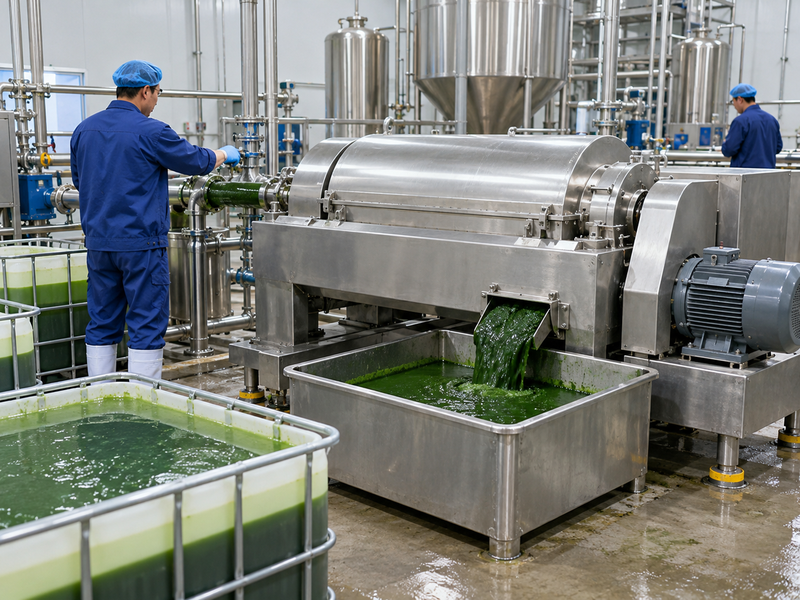
A study should identify parameters that influence drying: inlet and outlet air temperatures, feed rate, airflow, solids loading, residence time and pressure where relevant. Yet their relevance depends on dryer design. A spray dryer needs different observation points from a belt dryer. For example, recording only heater temperature misses a blocked nozzle or an overfilled collection bin. Set alarms and response instructions for parameters that matter to the approved range.
Ask how the manufacturer selected its high-load and low-energy challenges. A practical example: a faster feed can lower outlet temperature and increase residual water even while inlet temperature stays steady. Then the team should document a run at the edge of its proposed operating range. Sampled powder must still meet agreed criteria. Control charts can help reveal drift, but charts do not replace a clear pass/fail decision. Read the study’s acceptance criteria before looking at results. If limits were written after the data came back, request the scientific and quality approval history.
| Variable | Possible failure signal | Evidence to keep |
|---|---|---|
| Feed rate | Wetter discharge | Time-stamped trend |
| Outlet condition | Incomplete drying | Calibrated sensor record |
| Airflow | Uneven residence | Fan and filter log |
| Collection time | Humidity pickup | Hold and packing times |
5. Where should samples be collected?
Sample the process, not just the saleable bag
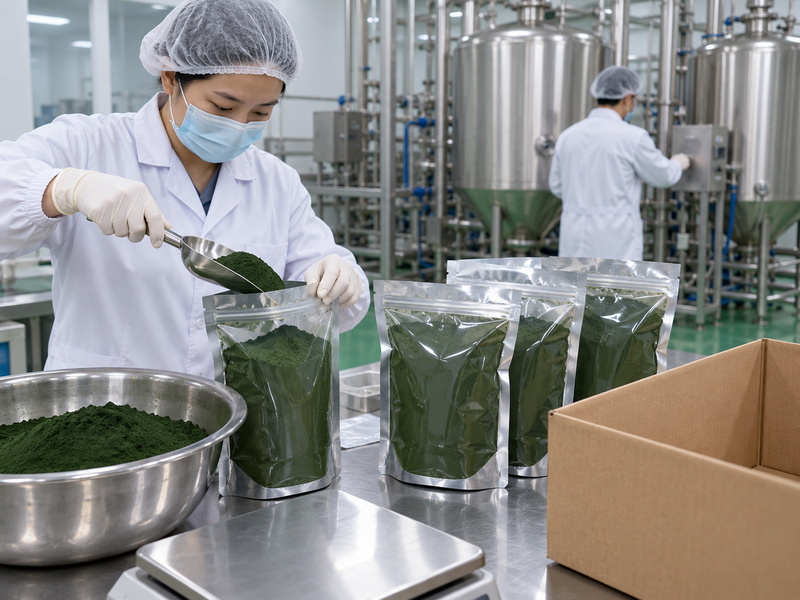
Define locations before running the study: beginning, middle and end of discharge; separate collection points; areas likely to retain product; and finished packs. The pattern should reflect dryer design and the risk of uneven residence. However, composite samples can conceal a local wet pocket. Include individual samples when the question concerns worst-case performance. Also record the lot code, time, exact point, container and person who collected each sample.
The timing matters. Testing powder while warm may differ from testing after it reaches pack temperature. As a result, explain when equilibrium is expected and when the shelf-life clock begins. The plan also needs a rule for missed samples and invalid tests. Do not silently replace a failing point with another convenient scoop. For repeat runs, use the same sampling logic and show all results, including outliers. If a buyer receives only an average, ask for the range and the sampling map. That request often reveals whether the study was designed for a decision or a presentation slide.

6. How should microbiological risks be assessed?
Low water activity does not erase earlier contamination
Drying may stop microbial growth under suitable conditions, yet it does not automatically act as a validated kill step. A low-water-activity powder can still carry organisms introduced before or after drying. For that reason, the manufacturing team should assess hazards from biomass, water, equipment and packing. The FDA preventive controls rule provides a U.S. framework for covered human-food facilities; applicability depends on the business and product. Ask how the site controls relevant hazards and what evidence supports any claimed reduction during drying.
Separate three questions in the supplier file: can the process reach its drying target, does the lot pass its microbiological specification, and do environmental controls work? One favorable result cannot answer all three. If a supplier says “sterile,” ask what that term means. Ordinary food-powder drying should not be described as sterilization without a validated process and appropriate specification. For a drink-mix or tablet ingredient, involve the buyer’s food-safety team. After all, downstream use and consumer exposure affect the right acceptance decision.
| Risk point | Evidence to request | Limit of that evidence |
|---|---|---|
| Feed biomass | Incoming controls | Does not prove packed-lot status |
| Dryer | Parameter history | Does not alone prove lethality |
| Packing | Hygiene and environment checks | Does not replace lot testing |
| Finished lot | Method and result | Covers sampled material |
7. What records show repeatable performance?
Link study runs to routine production
Request a signed protocol, raw instrument traces, calibrated-device list, laboratory results, deviation log and final report. The report should identify each run, its feed lot and finished output. Also, it should explain why chosen conditions cover expected production variation. A summary saying “three batches passed” leaves too much unsaid if sizes, loads or collection methods differ. Each result should point to a defined sample and a defined process condition.
Routine records then show whether production stays inside the qualified window. For example, ask for a recent batch record with actual parameter ranges, not only a prefilled form. Compare its results with the trial material offered to the buyer. Watch the handoff: quality release should review deviations and out-of-range alarms, not just a certificate of analysis. A supplier may redact unrelated customer information while still providing a useful sample record. Also record who approved the study and who can suspend release when process data no longer match the validated state.
8. When does a process change require fresh evidence?
Compare the change with what the study actually covered
A new dryer, feed source, solids range, cleaning cycle, collection system or package may change the moisture profile. Also, a revised test method can make old and new results hard to compare. Ask the supplier to document the change and assess its effect on qualified boundaries. Then decide whether targeted trials or a new study are needed. The buyer’s quality agreement should name changes requiring notice before commercial shipments, especially changes to the plant, species, process and release method.
Consider a small-looking change: extending the time between drying and sealing can expose powder to humid air. The dryer settings stay identical, yet finished-pack water activity may rise. A review of heater setpoints alone would miss that risk. As a result, keep before-and-after data, revised instructions and approval dates. The change record should say which lots were made under each version. For U.S. importers, the FDA FSVP guidance describes risk-based supplier evaluation and verification. Buyers should align supplier changes with their applicable program rather than assume old approval carries over automatically.
| Change | Review question | Possible evidence |
|---|---|---|
| New feed condition | Inside qualified range? | Solids and drying trial |
| New dryer | Same heat and residence? | Equipment qualification |
| Longer open hold | Humidity pickup? | Finished-pack activity |
| New test method | Results comparable? | Method comparison |
9. How can a buyer review a validation packet?
Ask for a decision trail, not a stack of files
Begin with a one-page index: product and line, approved specification, validation protocol, executed runs, exceptions and final decision. Then confirm that the lot offered for sale came from the qualified line. Check whether acceptance criteria preceded testing and whether all planned samples appear in the report. Ask the supplier to explain every repeat test. A passing rerun without an investigation may conceal a process or sampling problem. Also compare critical measurements with the actual certificate and package specification.
A useful review note has three columns: claim, evidence and remaining question. For example, “water activity remains within the supplier’s approved limit after packing” needs dated finished-pack results and a defined limit. If a buyer cannot access full proprietary settings, request a controlled summary of process boundaries and change-notice duties. Even then, the manufacturer can explain what was qualified. Record the reviewer’s name and approval conditions. This helps purchasing avoid treating a confident sales answer as a technical release decision.
10. What happens when a drying run falls outside limits?
Hold affected product while the cause is checked
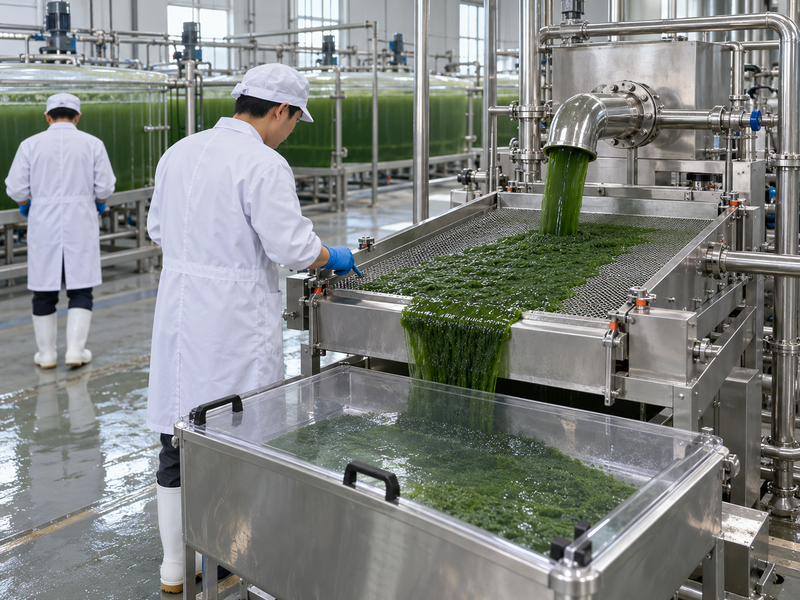
Define hold rules before an alarm occurs. Then identify affected time windows and lot codes, stop release, protect product from humidity and investigate the process record. A wet-pocket finding needs a sampling and equipment review, not only a new average. Rework or redrying should follow an approved procedure that addresses quality and microbiological risks. If no justified disposition exists, the buyer should not accept the lot because its final COA looks acceptable after selective retesting.
The FDA preventive controls framework addresses monitoring, corrective actions and verification for covered facilities. A commercial agreement can add buyer notice and replacement terms. Close the loop: document cause, affected product, disposition, action owner and evidence that the fix worked. Afterward, review whether the validation study itself needs revision. The goal: buyers receive powder made inside a controlled process, with exceptions resolved before shipment.
| Deviation | Immediate control | Release question |
|---|---|---|
| Activity above limit | Quarantine lot | Is safe disposition justified? |
| Sensor failure | Stop or segregate output | Can exposure be reconstructed? |
| Feed outside range | Hold affected interval | Is fresh qualification needed? |
| Open hold too long | Protect and sample | Did packed product change? |
FAQ
Q1. Does a low moisture result prove chlorella powder is shelf-stable? No. Review water activity, packaging, microbiological controls and product-specific shelf-life evidence as separate questions.
Q2. Is one successful commercial lot enough for validation? It can be a useful data point, but the protocol must justify how its runs cover expected variation and challenging conditions.
Q3. Must buyers receive proprietary dryer settings? A supplier may protect detailed know-how while sharing qualified boundaries, acceptance criteria, deviations and change-notice commitments.
Q4. Can drying be called a kill step? Only if a suitable hazard-specific reduction has been demonstrated for the stated process and conditions. Dryness alone does not establish lethality.
Q5. When should buyers request a new review? Review after meaningful site, equipment, feed, hold-time, packing or analytical changes and after unexplained out-of-limit results.
Chlorella biomass drying validation should connect real feed conditions, measured powder and routine lot records. Ask your supplier for the study index, sample map and a recent production record before approving a new source. That short request can prevent a costly dispute after powder reaches your factory. For background, read the FDA’s water activity guide.