
A small blue powder sample can pass a bench test while the later shipment differs in grade, carrier or test method. Blue spirulina wholesale sample approval should tie the material that worked in R&D to a named commercial SKU and a controlled release process. The Spirulina CN Blue Spirulina page shows multiple grade directions; buyers need more than a color photograph. This guide builds an evidence chain from sample receipt through formula sign-off and production-lot matching.
Contents
- What does blue spirulina wholesale sample approval cover?
- How should a sample be identified on receipt?
- Which supplier documents should accompany it?
- How do formula trials establish usable performance?
- What changes when a sample is hand-packed?
- How should buyers compare sample and commercial lots?
- Who signs the controlled sample record?
- Which changes require a new approval?
- How should an approved reference be retained?
- When can purchasing release a volume order?
1. What does blue spirulina wholesale sample approval cover?
Define the approval boundary
An approval should name the supplier, manufacturing site if relevant, product code, grade, carrier, specification revision and intended application. It should state the tested dose, process and finished-product conditions. A sample is not a universal approval of “blue spirulina” from any source. The same color at bench scale can behave differently when a carrier changes or when a food passes through heat and storage. Establish an approval number that purchasing can reference rather than relying on a shared folder called “good blue sample.”
Ask one sharp question: could a buyer order a materially different product while still using this approval? If yes, the record is too broad. Separate supplier qualification from product approval and formulation approval. The specification-sheet checklist offers fields for the product side. Keep legal suitability for the destination and food category in the scope. A passing shade test does not grant permission for a use outside the current local rules.
2. How should a sample be identified on receipt?
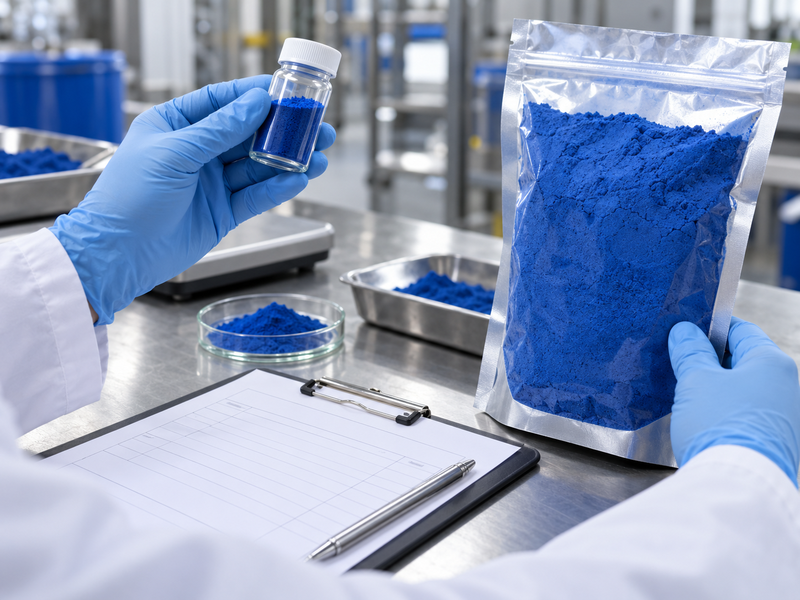
Assign an internal sample ID at receipt and record sender, arrival date, supplier lot, sample size, seal, pack and storage condition. Photograph the original label before splitting material for tests. If a supplier sends several color-value options, label each separately and prevent informal swapping. Record any lack of lot number as a deviation; do not invent traceability after the fact. The sample should remain in quarantine until the receiving and quality team knows what it is and which tests are authorized.
Preserve the chain: every lab aliquot and pilot batch needs a link back to the original container. A technician’s shorthand such as “E18 blue” is weak when two suppliers use that grade name. The lot-traceability article gives a related record approach. Keep a log of opening, subdivision and storage because pigment exposure can affect later comparisons. A reference sample that sat open on a bench should not become the control for a dispute months later.
| Receipt field | Record | Why it matters |
|---|---|---|
| Supplier and SKU | Exact names/codes | Prevents substitution |
| Lot and dates | Printed label values | Links later COA |
| Seal/pack | Photo and condition | Shows custody |
| Internal ID | Unique code | Links trials and reports |
| Storage | Place and conditions | Protects reference |
3. Which supplier documents should accompany it?
Get the current product specification, a lot-specific COA, full composition and carrier statement, allergen information, proposed storage and shelf life, and the method behind color value. Ask whether the sample came from normal production or a development batch. A specification tells you the promised range; a COA reports what that particular lot measured. The two should use compatible units and methods. The COA guide explains why a pass/fail stamp without actual results gives a weak comparison baseline.
Spot the mismatch early: if the bag says one lot and the report another, hold testing until the supplier resolves it. The same applies when the proposed commercial SKU uses a different carrier or lower color value. For a U.S. food use, compare the intended category with current 21 CFR 73.530. FDA notes the February 2026 expansion order was delayed in March. Regulatory review should use the current rule, not a pending broader use statement.

4. How do formula trials establish usable performance?
Set a target shade and approved dose in the real food matrix. Run the sample through the intended mixing sequence, process exposure, packaging and storage. Capture color by a repeatable instrument method or controlled visual standard, then document any sensory or dispersibility concerns. A powder can look strong in water but appear dull in a protein beverage or change after acid exposure. The sample testing protocol is a useful companion, but the buyer must define the product-specific pass criteria.
Keep comparisons fair: test candidate samples at the same conditions and record every adjustment. If R&D changes pH, dose and process hold time in one run, the approval cannot show which variable drove the result. Include a reference product or current approved lot when available. Retain photos with consistent lighting as supporting evidence, not the sole decision. A signed formula trial should say where the sample passed, what remains untested and whether scale-up is required before purchasing can release routine orders.
| Trial endpoint | Method | Approval question |
|---|---|---|
| Initial shade | Defined visual/instrument check | Does it meet target? |
| Dispersion | Standard mixing sequence | Does it process cleanly? |
| Process loss | Batch mass balance | What dose is needed? |
| Storage color | Defined interval/conditions | Does it hold in product? |
5. What changes when a sample is hand-packed?
A hand-packed envelope may contain product from a normal lot, yet it does not prove that commercial bags protect material or that operators can dispense from them. Ask the supplier to disclose the sample origin and packing method. Mark packaging approval as open until a commercial-style unit arrives. Check whether powder in the sample shares the proposed production process, carrier and testing method. A development blend should not be relabeled as a representative commercial sample merely because its shade is attractive.
Draw a line between tests: use the small sample for chemistry and formula screening; use a paid pilot for pack integrity, receiving and line handling. The bulk packaging guide helps define those packaging checks. If the supplier changes to a larger drum, test how long a part-used pack can remain open under your controls. The quality file should state whether approval applies to powder composition only or to the full supply configuration. This simple note prevents a laboratory yes from becoming an accidental warehouse yes.
6. How should buyers compare sample and commercial lots?
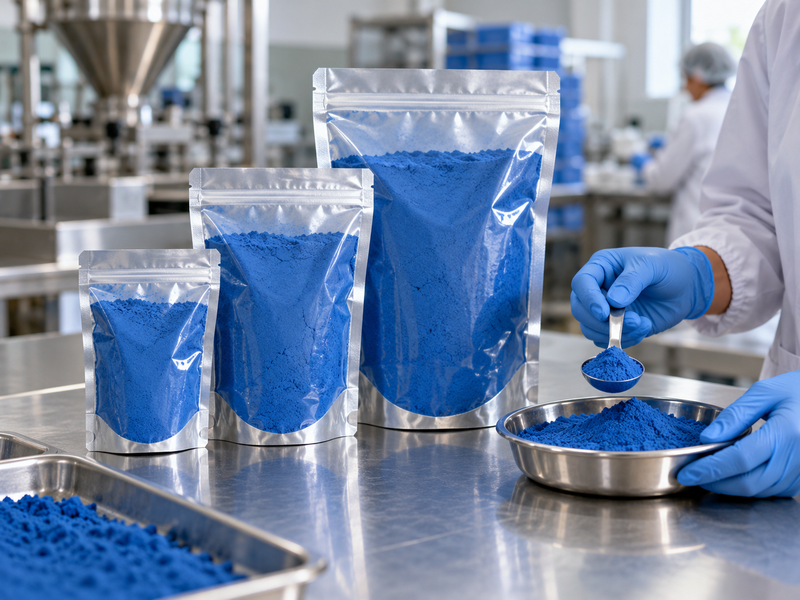
Match the approved sample ID with the proposed commercial SKU, grade, carrier, specification revision, color method and manufacturing site. Compare actual COA results, not merely pass labels. Then run a bridging test in the same reference formula at the approved dose. A meaningful shade difference should be investigated even if both lots sit inside a broad analytical range. Do not assume one supplier’s E18 is interchangeable with another’s; the E-value method guide explains why method details matter.
Use an objective bridge: record dilution, lighting, instrument settings, operator and sample date. If the commercial lot differs, determine whether normal lot variation explains it or whether the sample was not representative. Keep commercial lots on hold while a material discrepancy remains unresolved. The buyer may accept a revised dose only after R&D, quality, labeling and finance check the change. A higher dose changes both cost and possibly the finished product; procurement should not make that adjustment by itself.
| Match point | Sample record | Commercial record |
|---|---|---|
| SKU/carrier | Approved ID | Label and spec |
| Color method | Sample COA | Lot COA |
| Shade in formula | Trial result | Bridging result |
| Pack | Sample note | Production pack |
7. Who signs the controlled sample record?
Quality should own identity, documentation and specification acceptance. R&D owns formula performance. Production signs off processing where a plant trial is required. Regulatory or labeling staff review market use and carrier declarations. Procurement confirms the supplier and purchase description match the approved material. Each owner should sign a decision, date and any open condition. A shared email saying “looks fine” is difficult to interpret after a staff change or complaint.
Make conditional approval explicit: a sample may pass formula screening but remain pending a commercial-pack pilot or a missing contaminant report. Purchasing software should reflect that status so a production order is not placed prematurely. Under applicable U.S. supplier-verification programs, FDA guidance describes risk-based supplier evaluation; internal sign-off should connect with that program where relevant. A controlled form creates a durable link between evidence and authority, which matters more than a neat signature box alone.

8. Which changes require a new approval?
Changes to grade, carrier, color-value method, processing site, ingredient composition, pack barrier or intended food application can invalidate part of the original evidence. Define a change-notification clause with the supplier and an internal impact review. Not every change needs a full restart. A label layout correction may need a receiving check; a new carrier could need formula, allergen and label review. The response should follow the actual risk and preserve a record of why some tests were repeated while others were not.
Do not trust a familiar name: two bags marked “blue spirulina” can contain different blends. Record the exact revision on the approved specification and purchase order. Ask the supplier to notify before substitution, even during a shortage. When a change appears only after receipt, quarantine the lot until the change is understood. A fast commercial promise cannot replace a controlled bridge. Your approved sample has value because it represents a known product under known conditions; silent changes break that link.
| Change | Review owner | Likely evidence |
|---|---|---|
| Carrier | R&D/labeling/QA | Formula and declaration |
| Grade or method | R&D/QA | Color bridge |
| Packing barrier | QA/warehouse | Storage and seal check |
| Site/process | Supplier quality | Risk-based requalification |
9. How should an approved reference be retained?
Keep a sealed retained portion of the approved sample or a commercial bridging lot under the documented storage conditions. Label it with internal ID, supplier lot, collection date, expiry and approval scope. Define who may open it and how comparison aliquots are logged. A reference can support a later shade complaint or supplier switch, but it cannot last indefinitely. Set a review date tied to remaining stability and replace it through a documented bridge before it degrades.
Protect the meaning of comparison: a reference stored in light or heat may fade and make fresh stock seem different. Store the analytical method and finished-product standard alongside the powder reference. One unopened powder pack and one controlled finished-product sample answer different questions. The former helps compare ingredient identity and color; the latter shows how the approved formula looked under defined conditions. When either reaches its validated life, retire it and document the replacement rather than silently using an aging sample as the gold standard.

10. When can purchasing release a volume order?
Purchasing can order at volume when the exact SKU and pack are approved, supplier qualification is complete, the formula trial passes, current documents are accepted and any bridging pilot is closed. Enter the approval code and specification revision on the purchase order. Require a COA for each later lot and follow the incoming verification plan. If the product’s intended market or use changes, request a regulatory review before assuming the approval still covers it.
Close the file cleanly: retain sample receipt, methods, trial data, deviations, signatures and the agreed change-notification route. An approval should let a new buyer reproduce the right order without calling the original project team. Blue spirulina wholesale sample approval protects the business only when a later commercial lot can be shown to match what passed. Ask the supplier for a lot-matched sample and documents, then approve the named material rather than an attractive shade in an untracked pouch.
| Release gate | Evidence | Result |
|---|---|---|
| Product identity | SKU and composition | Exact match |
| Formula | Signed trial | Passed scope |
| Supplier | Quality review | Approved source |
| Pack | Pilot/pack review | Approved format |
| Lot release | Current COA and tests | Routine control |
FAQ
Q1: Is a good color sample enough to place a bulk order?
No. Link it to a controlled SKU, specification, formula result and supplier review.
Q2: Can a sample without a lot code be approved?
It may be screened, but its traceability gap should be resolved before commercial approval.
Q3: Must every later lot repeat all development testing?
Not always. Use an approved incoming plan plus change triggers and periodic verification.
Q4: Does a carrier change require review?
Yes. It can affect formula performance, declarations and labels.
Q5: How long should an approved reference be kept?
Follow a documented retention period supported by its storage and stability evidence.