
Blue spirulina lot traceability matters because a bright sample and passing certificate do not identify the delivered material. Blue spirulina may pass through cultivation, extraction, drying, blending, packing and export before it reaches a food plant. A traceable purchase keeps the identity of the exact grade and lot intact through those steps and through the buyer’s own production.
Spirulina CN says it handles manufacturing and quality functions while its international sales team handles commercial coordination. That division makes clear records especially useful: the buyer needs to know which organization produced, tested, sold and shipped a given lot. This article describes a practical record chain. It does not assert that any one traceability regulation applies to every blue spirulina shipment.
Contents
- What should a blue spirulina lot identify?
- How does a sample become an approved material?
- Which production steps need links?
- How should a COA match the physical shipment?
- What changes when material is repacked?
- How should receiving record the lot?
- How can finished products be linked back?
- What should a retain-sample program preserve?
- How should a trace exercise be run?
- When is the lot record good enough to release?
1. What should a blue spirulina lot identify?
Define the unit before using the code
A lot code should identify a defined quantity made under a specified production and quality record. Ask the manufacturer what event starts and ends a lot: one extraction run, one drying run, one blend or one packing campaign. The answer matters because a code covering several source batches may require an internal genealogy to reconstruct which material went into each drum. A buyer should record both the supplier’s lot code and its own receiving lot if the systems use different identifiers.
The FDA explanation of traceability lot codes shows how a lot code can link food to events and locations where the relevant rule applies. Its additional-traceability rule applies to specified foods and situations; do not assume it automatically covers this ingredient. The operational principle is still valuable: a code should point to records that identify the material and where it moved. Ask for the exact SKU, carrier system, production date, pack date and location associated with the code, then ensure those details can be retrieved without interpreting an undocumented numbering scheme.

| Identifier | Record it links to | Buyer question |
|---|---|---|
| SKU | Approved composition and method | Is this the tested grade? |
| Manufacturing lot | Production and testing | What quantity does it cover? |
| Packing lot | Container and seal record | Was any material repacked? |
| Shipment reference | Invoice and packing list | Which drums were sent? |
| Buyer receiving lot | Warehouse and production use | Where did the material go? |
2. How does a sample become an approved material?
Keep the sample’s identity visible
The sample request should state target product, grade direction, carrier restrictions and destination market. The supplier should label the dispatched sample with SKU, lot or pilot-batch reference, quantity, packing date and storage instructions. R&D should keep that label with the test report. A successful sample without a traceable identity is hard to convert into a commercial purchase because the next drum may be a different formulation sold under the same broad name.
After testing, quality and procurement should issue an approval record naming the exact SKU, specification revision, accepted sample lot and permitted substitution policy. The Spirulina CN Blue Spirulina page notes that grade names, carriers and test methods must be confirmed for the selected product. Apply the same discipline to the sample handoff. If the approved sample came from a pilot blend rather than a routine commercial lot, request a bridge test on the first commercial lot. Keep the trial’s color and processing data beside the approved material record so receiving can recognize what the plant intends to buy.
| Sample document | Required link |
|---|---|
| Sample label | Exact SKU and lot or pilot reference |
| Specification | Revision used during testing |
| Lab trial | Dose, formula and result |
| Approval | Named decision makers and date |
| First order | Same SKU and agreed change terms |
3. Which production steps need links?
Follow transformations, not only shipments
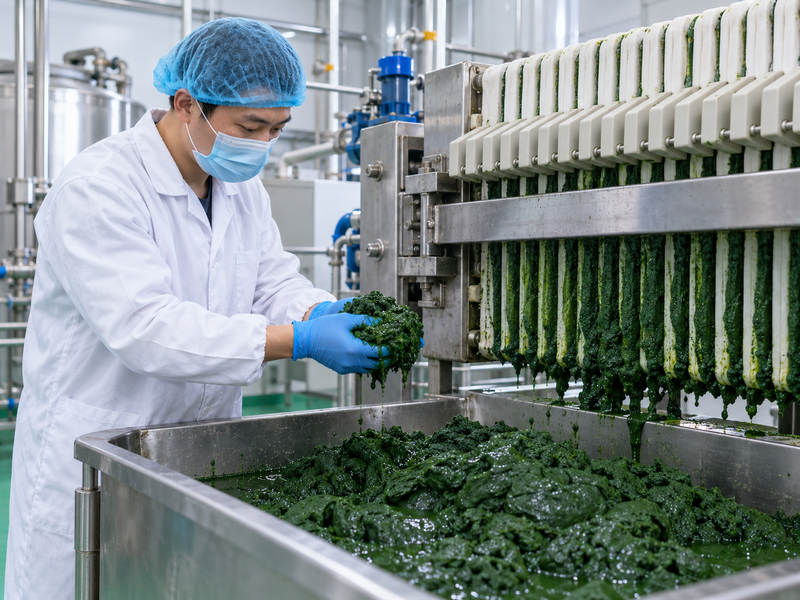
Traceability begins before a carton is labeled. A phycocyanin preparation may combine extracted pigment with a carrier and then be dried or blended. The site describes cultivation, extraction and quality functions, but a buyer needs the batch-specific record showing how those functions connected for the purchased lot. Ask how incoming biomass, extraction batches, carrier lots, drying runs, blending and final packaging are linked. The full manufacturing record may stay confidential, but the supplier should be able to retrieve a documented genealogy when a quality issue arises.
Record rework or reblending rules. If material from several runs enters one saleable batch, the genealogy should list those contributing runs and the test basis used for release. A lot code that changes at every handling step is acceptable only when the cross-reference is maintained. Ask who owns that cross-reference and how quickly it can be produced. This is a supplier-qualification question rather than a claim that every manufacturing step must appear on a public COA. The buyer needs confidence that a targeted hold or recall can identify affected units without guessing.
4. How should a COA match the physical shipment?
Compare codes, quantities and test scope
The certificate of analysis should name the exact product, batch, specification and actual measured release results. The code on the COA must match the code on each drum or be connected by a written packing cross-reference. Compare the number of packages, net weights and shipment references with the packing list. If the shipment contains multiple lots, request separate batch documents and identify which package belongs to which lot. One COA attached to a mixed-lot shipment is not enough unless its scope is clear.
Review method and limit revisions as well as pass/fail language. A lot can pass a new broad specification while differing from the material R&D approved. The site’s product page offers batch COA and quality documents as part of supplier support, but the buyer should inspect the actual documents before release. Keep the original report if a third-party laboratory performed a critical test. A clean match between the physical package, COA and purchase order is the core of a usable trace record.
| Match point | If it does not match |
|---|---|
| Product SKU | Hold for identity review |
| Batch code | Request documented cross-reference |
| Package count | Reconcile with shipper |
| Net weight | Investigate shortage or error |
| Spec revision | Confirm approved limits still apply |
5. What changes when material is repacked?
Preserve the source lot and new pack event
Repacking can be legitimate for small trial quantities or foodservice pouches, but it creates a new point where identity and exposure must be controlled. Ask who performs the operation, under what quality system, and whether the repacker keeps the original manufacturer lot on the new pack. If a new repack code is assigned, the record must map it back to the source lot and show dates, quantities, package materials and any losses or splits. A small pouch should not become an anonymous “blue spirulina sample.”
The Spirulina CN OEM page describes several packaging formats as possible services, subject to project confirmation. Do not assume one facility or standard pack for every order. Define the requested format in the quotation and specification, then ask for the actual packer and lot mapping. Repacking may also change opened-pack handling and storage. Quality should decide whether a repacked sample is representative of the bulk package that production will use. If the material is blended during repacking, it is a new formulation event that may need new testing and approval.
6. How should receiving record the lot?
Capture identity before the drums move
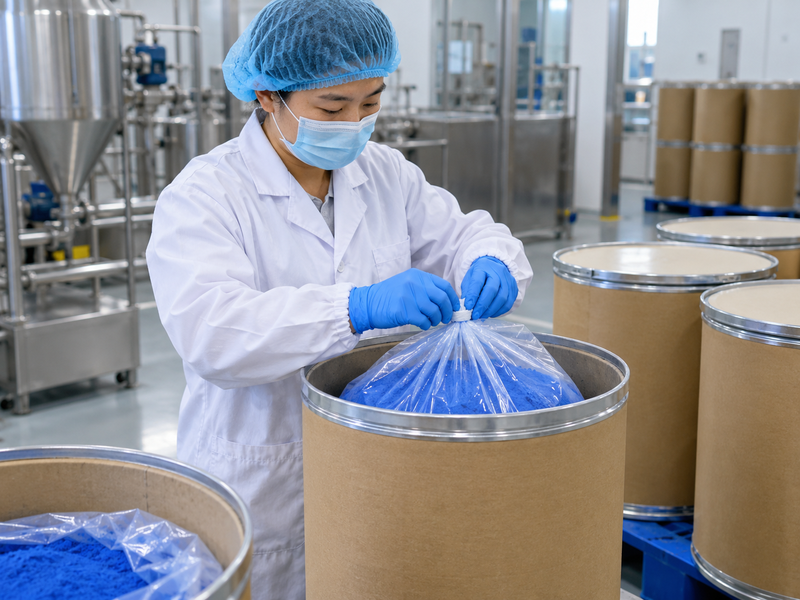
At receipt, record supplier, seller, SKU, manufacturer lot, package codes, quantities, seal condition, delivery date and storage location. Photograph damaged packs before opening them. Match the shipment to the purchase order, packing list and batch documents, then assign the buyer’s internal receiving reference. If multiple lots share a pallet, segregate them in the system and physically where needed. The aim is to prevent one lot from disappearing into an inventory total that cannot be traced to a production batch.
Quality should set a quarantine-and-release status. Incoming testing, if used, must follow a documented sampling plan; a single scoop from a convenient drum may not represent a large shipment. Retain the sample reference and test result with the receiving lot. A barcode can help, but the system should still work if a scanner fails or a label is damaged. Train operators to record the supplier code exactly rather than shortening it. A small transcription change can break the chain when a customer complaint arrives months later.
| Receipt record | Reason |
|---|---|
| Package identifiers | Distinguishes mixed lots |
| Seal and damage note | Documents exposure risk |
| Warehouse location | Locates remaining stock |
| Quarantine status | Prevents premature use |
| Internal lot link | Connects to production issue |
7. How can finished products be linked back?
Record material issue at batch level
When production draws blue powder, record the supplier lot and quantity against the finished-product batch. If two supplier lots are used in one run, both must appear in the batch record. If a premix is prepared and used over several runs, give that premix its own identity and link it to its ingredient lots and use dates. The finished product’s pack code should then lead back to the production record, premix and original phycocyanin lot. This forward-and-backward link permits a focused investigation rather than holding every blue product the plant has ever made.
The FDA’s lot-code explanation illustrates why linking codes to records matters in food tracing where that rule applies. Even where the specific rule does not apply, a buyer can use the same practical design. Test the record by selecting a finished carton and asking which color lot went into it, then starting from a supplier lot and asking which finished cartons used it. If either answer requires memory rather than records, the system needs repair before scale-up.

8. What should a retain-sample program preserve?
Keep evidence from both sides of the handoff
Retain a sealed sample of each received ingredient lot under defined conditions and for a period set by the buyer’s quality program. Label it with SKU, supplier lot, internal lot, receipt date and storage location. The sample can help investigate a shade complaint or compare a later delivery with the original approved material. A finished-product retain from the same production batch provides the other half of the picture. Without both, a color change may be blamed on powder when the actual cause was processing or package exposure.
The retain plan should define package size, seal, access control and when a sample may be opened. Once opened, its condition can change. Do not treat a retain as a perfect record of the delivered lot unless storage has been controlled and documented. For color investigations, keep the test method and lighting conditions with the reference data. A physical blue powder sample is useful, but a photo of it under uncontrolled light is weak evidence. Record who removed a retain and what remained afterward.
| Retained item | Investigation it supports |
|---|---|
| Approved development sample | Original grade choice |
| Incoming lot sample | Shipment comparison |
| Premix sample | Addition-stage diagnosis |
| Finished-product pack | Process and storage outcome |
9. How should a trace exercise be run?
Test the record chain before it is needed
Choose one supplier lot and ask the team to identify all unopened inventory, work in progress, finished batches and shipments that used it. Then choose one finished-product code and trace backward to the ingredient lot, COA and source purchase order. Time how long the exercise takes and record missing links. This is not a claim that every situation requires a particular regulatory recall speed; the target belongs to the company’s risk plan and applicable rules. A drill shows whether the records can support a real decision.
Include commercial and quality contacts at the manufacturer, packer, exporter and importer where those roles are separate. Ask who can supply the production genealogy after office hours and how it will be transmitted securely. If two codes differ, resolve the mapping rather than assuming they refer to the same lot. Close the exercise with corrective actions and a repeat test. A traceability chart displayed during an audit is less convincing than a successful retrieval using an actual shipment from the past year.

10. When is the lot record good enough to release?
Release a matched shipment with a usable genealogy
Receiving can release a lot when package identity, purchase order, current specification, COA, required test results and storage condition are reconciled under the buyer’s procedure. Any repack or code change should have a documented cross-reference. The buyer must be able to identify where the material is stored, what finished products used it and who to contact for upstream records. If a link is missing, quarantine or controlled deviation may be needed until quality resolves it. A passing color value alone does not repair an identity gap.
Set change notification in the supply agreement. A new carrier, manufacturing site or color method can affect whether the approved application trial still represents the delivered lot. Spirulina CN’s About page describes factory and international sales roles; request named contacts for lot queries from both. The final record should let a receiving clerk, QA reviewer and production scheduler reach the same answer about what the lot is and whether it can be used.
Frequently asked questions
Q1. Is the batch number on a COA enough? No. It must match the physical packs and connect to production and shipment records.
Q2. Can a repacker assign a new code? Yes, if the new code has a documented link to the original lot and repack event.
Q3. Must every spirulina extract follow the FDA Food Traceability Rule? Do not assume that. Applicability depends on the food and activities covered by the rule; use counsel or regulatory review.
Q4. Why keep a finished-product retain? It helps separate ingredient variation from processing or storage effects.
Q5. What is the first traceability question for a supplier? Ask what quantity its lot code covers and how that code links extraction, blending, packing and COA records.
Request a traceable sample and batch file
Send the target SKU, intended application and projected volume through Spirulina CN’s Blue Spirulina page. Ask for a labeled sample, current specification, matching COA and a description of lot-code mapping before placing a repeat-supply order.