
A small jar of green powder can look right and still fail on a production line or arrive without usable lot records. Spirulina wholesale trial orders should test the offered whole-biomass product under conditions that resemble a repeat purchase. This guide sets a paid pilot’s questions, evidence and sign-off. The FDA supplier-evaluation resources describe risk-based verification in applicable U.S. food programs; a pilot supplies useful performance evidence but does not replace formal supplier approval.
Contents: 1 · 2 · 3 · 4 · 5 · 6 · 7 · 8 · 9 · 10
1. What should the pilot answer before it starts?
Write measurable acceptance questions
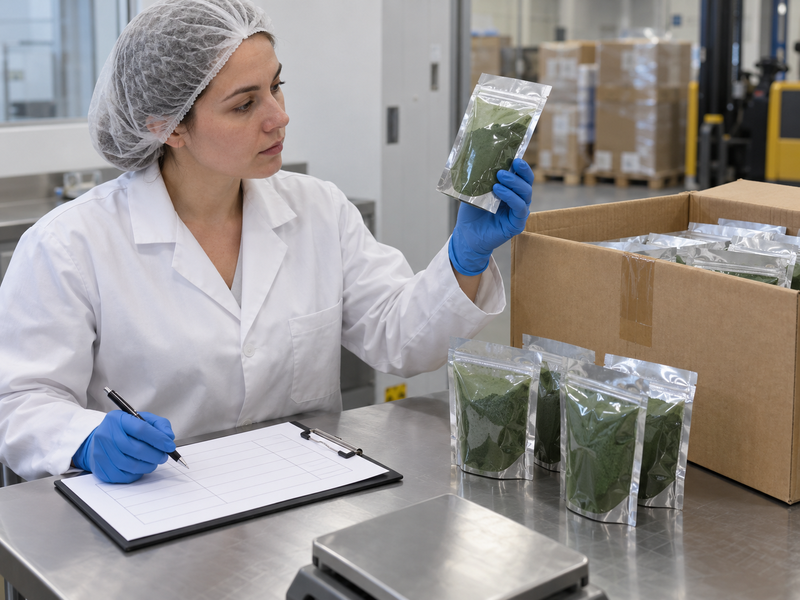
A useful trial begins with a decision, not a request for free material. State whether you are qualifying a new supplier, changing pack size, comparing powder with tablets or checking a specific line problem. List the proposed product name, botanical identity, whole-biomass form, intended food or supplement use and destination. Then define success for identity, documentation, handling, sensory performance, line yield and transport condition. Make each item observable. “Works well” cannot guide a purchasing decision.
Ask the commercial question too: would a passing trial lead to a defined repeat-order size and schedule? A seller can then choose a representative production lot and pack rather than a polished display sample. Agree who owns analytical costs and whether trial material may be used in saleable product. Quality must determine that last point under your own release rules. The pilot should produce a signed report that a later buyer can understand without relying on conversations.
| Trial question | Measurement | Owner |
|---|---|---|
| Is the grade correct? | Specification and identity check | Quality |
| Will it feed the line? | Run record and yield | Operations |
| Does the pack survive? | Receipt inspection | Warehouse |
| Are records usable? | Lot-to-COA match | Quality |
2. How large should the paid pilot be?
Size it for the real process step
Trial quantity should cover incoming sampling, at least one meaningful production run and any repeat needed to confirm an uncertain result. A handful of grams may support bench sensory screening but not hopper loading, tablet count checks or commercial packing. Ask production for the minimum run size that exposes normal equipment behavior. Add material for laboratory samples and retains. Round to the proposed commercial pack multiple where possible so the trial also tests unpacking and storage.
Use a labeled example: a line that normally charges 18 kg of powder per run might need two 20 kg bags for one run plus receiving samples and a short repeat. That is an illustrative design, not a recommended universal pilot size or supplier MOQ. Do not buy a full truck merely because the future forecast is high. If the supplier cannot offer a representative small run, document what the alternative sample can and cannot prove. The MOQ planning guide helps separate pilot quantity from routine order size.
Before finalizing that quantity, ask how much material each test consumes and whether the same unopened pack can serve more than one check without losing traceability. A laboratory retain, sensory panel and production run may all need material from the same lot, but their handling rules differ. Build a small material balance: received, sampled, issued, retained, rejected and left over. Agree what happens to unopened residual stock after the trial. That plan prevents a pilot from becoming an untracked partial inventory purchase and gives finance a complete view of trial cost.
| Trial use | Quantity basis | Why it matters |
|---|---|---|
| Incoming samples | Approved sampling plan | Lot release |
| Main production run | Normal charge size | Handling evidence |
| Repeat run | Decision risk | Reproducibility |
| Retain | QA retention rule | Dispute evidence |
3. Which SKU and commercial pack should arrive?
Make the trial representative
Specify exact grade, form, mesh or tablet weight where relevant, net pack size, liner and closure. A trial in a laboratory pouch cannot prove that the seller’s commercial bag protects powder through ocean transport. Ask if pilot material came from the same cultivation, drying, milling and packing route intended for regular supply. If any step differs, mark it as a limitation in the report and plan a bridging check before approval.
Look beyond appearance: whole biomass is not the same as an isolated blue phycocyanin extract. Check the COA product description and ingredient declaration. A product sold under a broad “spirulina” label may have a different composition or carrier than your formula permits. The FAO spirulina review describes cultivation and drying as distinct stages; that process context supports asking how the offered sample maps to commercial production. No single photograph or marketing sheet can establish equivalence.
4. Which records should accompany the trial lot?
Build the expected document packet
Before dispatch, request the current product specification, actual lot COA, manufacturing and expiry dates, packing list, traceable lot code and storage instructions. Add origin or export documents if the trial crosses a border. Ask which tests are performed for each lot, the methods, reporting limits and laboratory identity. A report for a different lot does not release this one. The trial is a chance to see whether paperwork arrives when operations need it, not weeks after material reaches your dock.
Test document linkage: the bag code, packing list and COA must refer to the same lot. Review whether split lots are clearly identified. For a covered U.S. importer, FDA FSVP guidance describes supplier verification duties; the exact regulatory path depends on the buyer’s role and product. Record missing or late documents as trial outcomes. A convenient powder should not advance while its traceability remains unresolved.
| Document | Match field | Trial observation |
|---|---|---|
| Bag label | SKU and lot | Correct or discrepancy |
| COA | Lot, method and result | Complete or gap |
| Packing list | Pack count and net mass | Reconciled or short |
| Storage note | Pack and condition | Applicable or unclear |
5. How should a powder handling trial be run?
Observe the normal line, not a staged demo
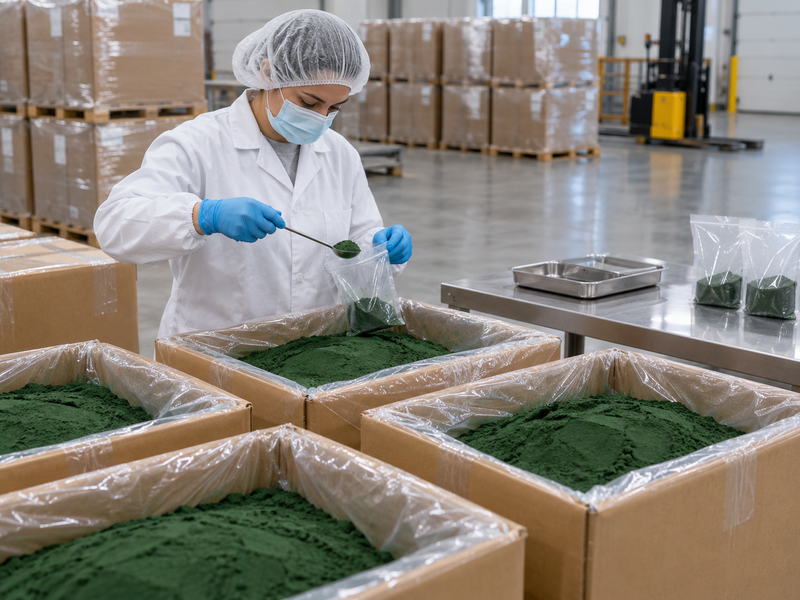
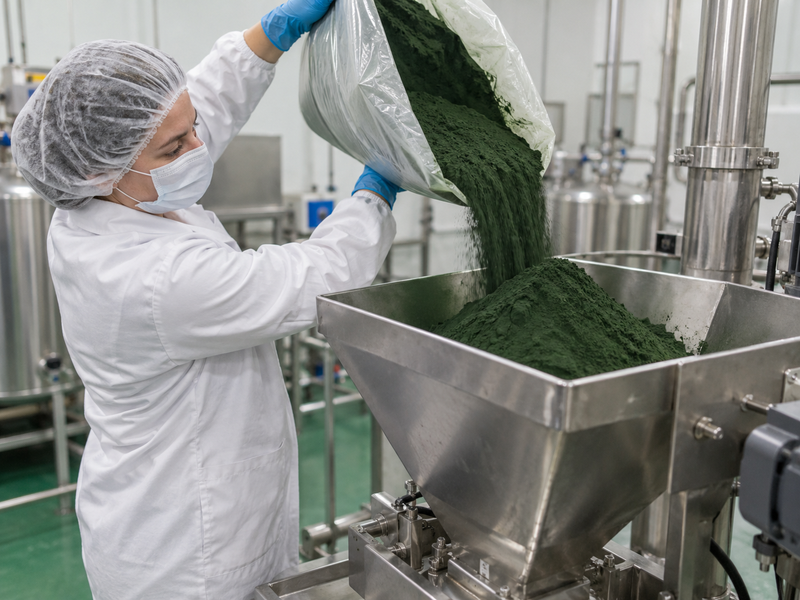
Use your ordinary receiving, opening, dispensing and blending equipment. Record flow from the pack, dust, clumping, screening residue, line stops and actual issued-to-finished yield. Note ambient conditions and whether the pack was opened immediately or after storage. If the formulation contains other powders, follow the usual addition order and mixing time. A bench cup can reveal color and taste but cannot establish a commercial line’s repeatable behavior.
Capture numbers and operator notes: weigh input and recovered material, document any cleaning or filter loading and photograph unusual residues. Compare results with the existing approved ingredient under the same process settings if possible. If the pilot uses a special sieve or manual intervention, price that work before claiming equivalence. Do not infer long-term performance from one smooth run. Decide whether the result is strong enough for approval, needs another run or requires supplier process changes. The powder-flowability topic can guide later qualification.
For a meaningful comparison, record line speed, batch size, addition order and room conditions. A slow trial with extra operator attention may hide a blockage that appears at commercial throughput. If the product is packed into transparent consumer containers, check color and dispersion after the normal hold period, not only at the mixer outlet. Ask production whether a new cleaning step affects the next product on the line. These observations can change both cost and scheduling, even when the powder meets every laboratory number on its specification.
6. What does a receiving rehearsal reveal?
Test the path from truck to quarantine
Have the warehouse treat the pilot as a commercial receipt. Check seals, external damage, odor from outside packaging, pallet condition, pack count and lot legibility. Record arrival time, storage location and any temperature or humidity observations required by your own procedure. Confirm the lot enters a quarantined status until quality releases it. If an importer or distributor receives material before your plant, obtain its receiving and traceability record as well.
A small issue can be revealing: a label that smears during routine handling, a torn inner liner or an unmatched lot suffix can make repeat supply difficult. A trial gives the seller time to fix such details before a production-critical shipment. Use the FDA preventive-controls overview for relevant supply-chain context, while following your own risk-based receiving plan. Record corrective actions and verify the revised pack or label on a later lot. A promise alone does not close a trial finding.
| Receipt check | Pass evidence | Escalation |
|---|---|---|
| Outer condition | Photos and count | Damage claim |
| Inner seal | Intact closure | Quarantine |
| Label | Readable SKU and lot | Traceability review |
| Document match | Same lot across records | Hold release |
7. How should the team record acceptance?
Use a controlled pilot report
Bring quality, operations, product development, purchasing and logistics findings into one record. Include raw data, sample IDs, lot code, dates, deviations and the version of the formula or line settings used. Separate a passed test from an accepted supplier: one result cannot answer every qualification question. Assign each criterion a status such as pass, fail or inconclusive, with a short rationale. Someone outside the pilot team should be able to see what evidence supports the decision.
Make the next gate explicit: “approved for another trial,” “approved for a limited first commercial lot” and “approved for routine orders” are different outcomes. State the maximum order and any conditions, such as a revised liner or independent contaminant panel. If an external laboratory is used, ISO/IEC 17025 provides a competence benchmark; verify method scope rather than assuming accreditation covers every test. File the pilot record with the supplier approval and purchase specification.
8. What should happen when the pilot fails?
Diagnose the failure before changing the grade
If the powder clumps, the tablets break or the COA does not match the lot, hold the material and record the failure. Identify whether the cause is product, pack, route, line setting or a documentation error. Ask the supplier for an investigation with evidence, proposed correction and affected-lot scope. A simple replacement may be appropriate for transit damage; a repeated identity or contaminant problem calls for deeper supplier review. Do not blend a failed trial into saleable stock just to recover pilot cost.
Preserve the comparison: keep samples, photographs and run settings so a revised lot can be tested against the same criteria. If the supplier changes drying, milling or packing, require a new version of the specification and consider whether other tests must be repeated. If your own process caused the issue, document the adjustment and verify it with a repeat run. The goal is a defensible learning loop, not a binary scorecard with no explanation. A failed pilot can save a much larger commercial loss.
Give each failure a disposition date. A missing report can sometimes be corrected without replacing powder; a broken inner seal usually cannot. An analytical result near a specification boundary may need a pre-agreed confirmatory method and retained sample. Avoid multiple ad hoc retests until a desired number appears. Ask the supplier to identify other potentially affected lots if the cause concerns a shared process. Record whether the next purchase remains blocked, allowed only as a second pilot or permitted with a specific corrective condition. That keeps commercial pressure from obscuring an unresolved quality finding.

| Finding | Immediate action | Evidence for closure |
|---|---|---|
| Damaged seal | Quarantine packs | Revised pack trial |
| Flow blockage | Hold run and inspect | Repeat with controls |
| Missing COA item | Request method/result | Correct lot report |
| Sensory mismatch | Compare reference | Approved formula trial |
9. When can a successful pilot scale to a routine order?
Check that nothing material changed
Before scaling, compare the trial lot with the proposed repeat supply: production site, cultivation source, dryer, mill, pack, specification, testing plan and lead time. A seller may have made the pilot on a small line and plan the main order on another. Any meaningful change needs a bridging evaluation. Confirm that the supplier can deliver conforming quantities across the intended calendar, not just one excellent sample. Review monthly capacity, maintenance windows and replacement route.
Link quality and cash: the first routine order should still respect realistic demand and remaining shelf life. A passed pilot does not justify a year of stock in one shipment. Use the demand-forecasting guide and annual-contract guide to plan releases. Agree when the supplier will send lot documents, how buyer QA will accept each lot and what happens if a lot fails. A controlled scale-up makes the pilot’s evidence useful beyond its own small volume.
10. What belongs in the next purchase order?
Convert trial findings into binding details
State exact approved SKU, specification revision, pack construction, net mass, lot count rules, certificate requirements, minimum remaining life, delivery term and named place. Add agreed corrections from the pilot with objective acceptance checks. Specify whether a pre-shipment sample or document packet is required and when the buyer may reject nonconforming packs. Confirm payment milestones and claim procedure. A friendly email summary is not enough for a repeatable order.
The final handoff: quality retains the pilot report and supplier approval; purchasing issues a purchase order that references them; operations reserves capacity only after the delivery and release plan makes sense. Spirulina wholesale trial orders pay off when their observations change commercial terms and receiving instructions. Ask the seller to acknowledge the order against the approved specification. Then compare the first commercial lot with the pilot reference before treating the source as routine. That step turns a good sample into dependable procurement.

| Purchase-order field | Pilot-derived input | Verification |
|---|---|---|
| Grade and specification | Signed trial version | COA comparison |
| Pack | Tested liner and mass | Receipt inspection |
| Delivery window | Observed lead time | Confirmed schedule |
| Remedy | Documented failure path | Supplier acknowledgement |
Next step: write a pilot brief before requesting material. Buy enough of the exact commercial product to test receiving, line use and records, then sign a decision with clear limits before scaling.
FAQ
Q1: Is a free sample enough for supplier approval? Usually not for commercial packing and line performance. Define what a sample proves and what remains untested.
Q2: Must pilot material match the final pack? It should where pack performance matters. Document any difference and bridge it before routine supply.
Q3: Can trial stock enter production? Only under your approved release and intended-use procedures.
Q4: What if one test fails? Hold the lot, investigate cause and repeat the affected check with a controlled plan.
Q5: Should a passed pilot trigger a large order? Size the next order against demand, lead time and remaining shelf life.