
A supplier’s minimum can look attractive while leaving your warehouse with more whole spirulina than production can use. Spirulina wholesale MOQ planning starts with actual formula demand, commercial pack sizes, qualified shelf life and cash exposure. This guide gives a purchasing team a practical worksheet for negotiating an opening order. The FAO review of spirulina production describes how cultivation and processing feed into a finished ingredient; the offered lot still needs its own specification and release evidence.
Contents: 1 · 2 · 3 · 4 · 5 · 6 · 7 · 8 · 9 · 10
1. What does an MOQ actually cover?
Pin the threshold to an exact offer
An MOQ is the smallest quantity a seller will accept under particular commercial conditions. It might refer to kilograms of powder, cases of tablets, a production run or a complete pallet. Never store a standalone number in your sourcing sheet. Record the exact whole-biomass grade, package, Incoterms rule, named place, order date and whether several lots can fill the total. A 100 kg quotation in sealed 25 kg bags differs from 100 kg packed in retail-ready sachets. Neither figure says anything about how fast your factory will consume the material.
The practical question is this: which constraint produces the minimum? It might be a milling run, a packaging setup, a freight unit or a seller’s policy. Ask whether the same unit price applies when you commit to a larger annual volume but request smaller scheduled releases. Keep any proposal subject to lot approval and minimum remaining shelf life at each delivery. An MOQ becomes useful only when the quote states what the buyer actually receives.

| MOQ item | Confirm in the quote | Why it changes the decision |
|---|---|---|
| Product | Whole powder or tablets, grade and specification | Prevents mixing unlike SKUs |
| Unit | Net kg, bags, cases or pallet | Reveals pack multiples |
| Lot basis | One lot or several | Affects sampling and traceability |
| Delivery | Rule, named point and release date | Changes freight and stock coverage |
2. How should finished-product demand become powder demand?
Calculate from an approved formula
Start with finished units scheduled during the period the order must cover. Multiply those units by the approved grams of whole spirulina per unit. Divide by measured manufacturing yield when line losses occur. Keep separate formulas, markets and stock-keeping units separate until their approved ingredient specifications match. Powder used as a green ingredient cannot automatically substitute for a phycocyanin color extract. A batch record gives a stronger input than a marketing forecast because it shows issued quantity and actual recovery.
Try a transparent example: 80,000 units each month at an illustrative 1.2 g per unit require 96 kg of ingredient in finished product. At an illustrative 96% issue-to-finished yield, purchasing must plan for 100 kg of usable powder monthly. These are demonstration inputs, not recommended dose or observed loss values. Record assumptions, their owners and the date each will be refreshed. If a launch forecast doubles while production remains unapproved, do not let the optimistic sales case silently set the first order.
| Calculation step | Illustrative input | Result |
|---|---|---|
| Monthly units | 80,000 | 80,000 |
| Approved dose | 1.2 g/unit | 96 kg net need |
| Measured yield assumption | 96% | 100 kg issued |
| Three-month use | 100 kg/month | 300 kg before buffer |
3. Why do pack multiples change the practical minimum?
Order in unopened units you can release
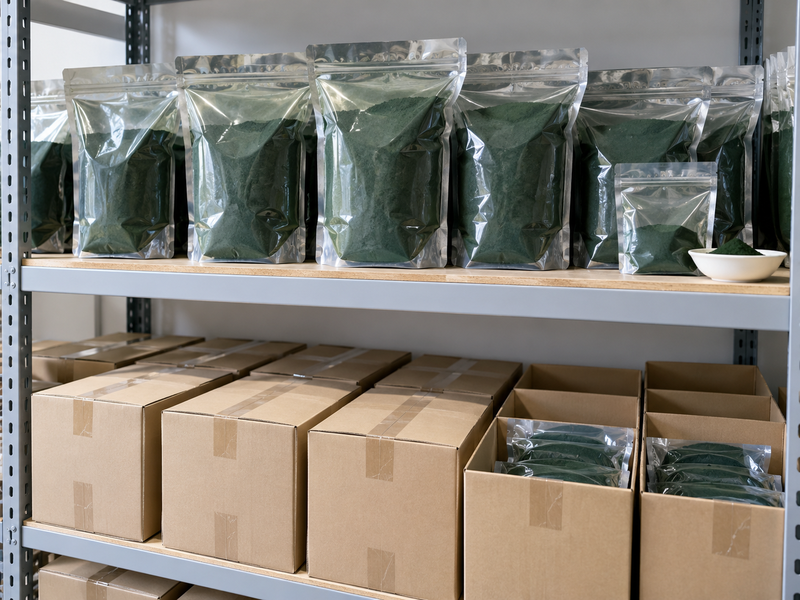
The commercial pack often sets a more meaningful increment than a headline MOQ. If powder arrives in lined 20 kg cartons, a 95 kg requirement becomes five cartons, or 100 kg, unless the supplier offers a smaller qualified pack. Ask whether the liner, closure and outer carton have been validated for your transport route and storage period. Opening a bulk bag for a small production run may create handling loss and a shorter in-use life that the unopened shelf-life statement does not cover.
Check the receiving side: can your warehouse quarantine, sample and label each pack without breaking more seals than necessary? A supplier might offer a lower quoted MOQ by combining leftover material from several lots. That may increase certificate review, sampling and changeover work. Compare the cost of each workable pack configuration, including pallets, warehouse space and packaging waste. A smaller bag might cost more per kilogram but reduce residual open-pack inventory. Record that trade-off explicitly rather than negotiating only the nominal minimum.
For a buyer making short weekly runs, pack design can decide whether a nominal minimum is workable at all. Map one bag from receipt through sampling, dispensing, resealing and eventual emptying. Note who records an opened pack’s remaining mass and how a partial pack is protected between runs. If a distributor repacks powder, its first commercial process may use a different amount from the manufacturing forecast. These details should be documented before asking a supplier to reprice a smaller pack, because the buyer can then explain the operational value of the request.
4. How much coverage should the opening order carry?
Match coverage to the launch risk
Opening stock should cover demand through the next dependable replenishment and any justified buffer. It need not cover an entire annual forecast. Define the clock from purchase order approval to buyer release, not from dispatch to arrival. Production scheduling, supplier laboratory work, freight, customs, receiving inspection and your own quality decision can all consume time. The FDA supplier-evaluation framework reinforces why an incoming lot cannot simply be counted as usable on the day a truck arrives.
A simple opening model: expected use over replenishment time plus safety stock plus the next production batch, rounded to a pack multiple. If the commercial forecast is unstable, test low, base and high cases. A buyer with two weeks of firm production and three months of speculative sales should not treat all those volumes as equal commitments. Document what would trigger another release or order. This keeps the initial buy small enough to learn from real consumption while retaining a deliberate stockout response.

| Coverage input | Evidence | Decision |
|---|---|---|
| Firm production | Approved schedule | Core order |
| Replenishment interval | Recent supplier and route data | Pipeline need |
| Demand variation | Sales scenario history | Buffer range |
| Pack multiple | Current offer | Order rounding |
5. Where does remaining shelf life set a ceiling?
Work back from the last planned use
An unopened-bag shelf-life claim does not mean every kilogram can be used until its printed expiry. Your customer may require a minimum life on finished goods, while your own production plan needs time for quarantine, consumption and contingency. Ask for shelf-life evidence applicable to the actual product and pack, then specify a minimum remaining life at receipt. Calculate the last practical production date. Material that will sit beyond that date has no economic value in your opening-order model.
Here is the check: divide accepted kilograms by realistic monthly use and compare the resulting months of coverage with the usable window after receipt. Use the low-demand case, not just the expected case. If the order covers ten months but your approved window is seven, negotiate staged releases, smaller bags or a lower first purchase. The FDA water-activity guide explains that moisture-related stability needs measurement and control; it does not validate any supplier’s exact shelf life. Obtain pack-specific evidence from the seller.
Also model the time between your ingredient issue and the finished product’s sale. A brand may need the finished goods to retain a minimum life for distribution and retail, so the last practical ingredient-use date can precede the raw material expiry. Ask quality to set that rule using product stability and customer requirements. If the supplier offers older stock at a discount, calculate its value using the shortened usable period. A discounted lot that forces rushed production may consume more cash and capacity than a fresher, full-price release.
6. How should buyers value unused stock and tied-up cash?
Price the inventory you can actually use
A price break can lower invoice cost per kilogram while raising total cost. Add cash carrying cost, storage, sampling, insurance, damage exposure and the chance of slow-moving stock. Then estimate kilograms likely to be consumed inside the usable window. A 500 kg order at an illustrative lower unit price may still be worse than a 300 kg order if only 320 kg can be used. Do not treat this example as a market quote. Your finance team should supply its own cost of capital and stock policy.
Make the comparison visible: show total cash paid, expected accepted kilograms and expected used kilograms in adjacent columns. If a failed lot can be returned or replaced, write down who pays freight and disposal while a replacement moves through quality release. A refund that arrives after a line shutdown does not erase interruption cost. Evaluate supplier terms on their complete economics, including payment timing and release flexibility. Related decisions appear in the wholesale landed-cost guide and price-tier guide.
| Comparison | Smaller order | Larger discounted order |
|---|---|---|
| Invoice cash | Lower total | Higher total |
| Storage exposure | Shorter | Longer |
| Expiry exposure | Lower if demand slows | Potentially higher |
| Freight per kg | May be higher | May be lower |
| Review metric | Cost per used kg | Cost per used kg |
7. Can a trial order be below the regular MOQ?
Buy a commercial test, not a token sample
Many buyers need a pilot before they can estimate true consumption and handling losses. Ask whether a paid trial can use the same grade, pack construction, production route and documents intended for repeat orders. A laboratory jar can establish appearance and basic identity but cannot show whether a 20 kg bag flows through your hopper or survives your distribution route. Agree what data both parties want from the trial, including line yield, dust, sensory effect, packaging integrity and certificate turnaround.
The negotiation opening: pay a fair setup charge for a smaller first run in exchange for a clear path to routine volume. Keep a trial purchase separate from automatic approval for commercial release. The FDA FSVP explanation describes risk-based supplier approval for covered U.S. importers. Regardless of destination, your own quality group should approve the ingredient and intended use before scale-up. The trial-order guide provides a fuller protocol.
8. What can be negotiated when a quoted MOQ is too high?
Separate commitment from immediate delivery
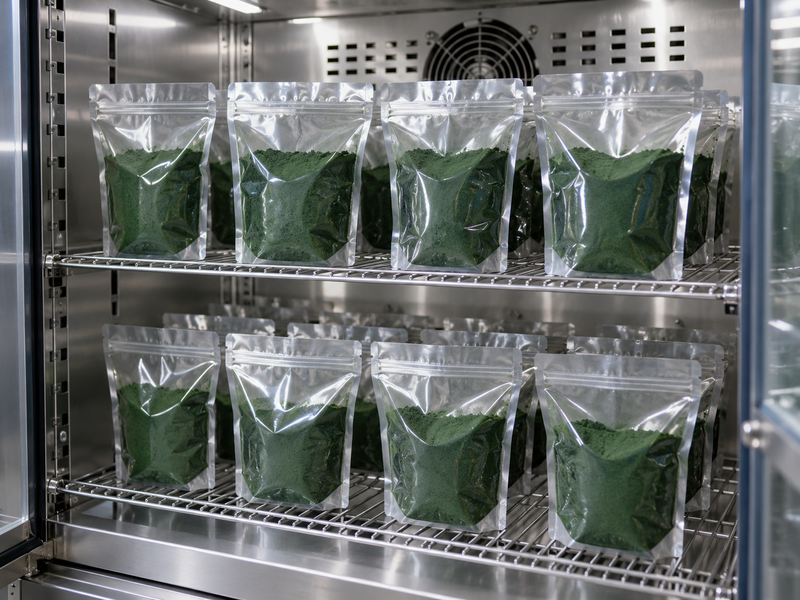
If the quoted minimum exceeds your safe buy, ask what the supplier truly needs: an annual commitment, a production batch, a shipping unit or a packing run. Possible structures include scheduled call-offs from one contract, a higher unit price for a smaller first release, a shared production window or a different approved pack. Each option changes risk. Supplier-held stock still needs ownership, insurance, storage conditions, lot identification and expiry rules in writing. A blanket purchase order does not solve those questions alone.
Keep the quality gate intact: state that each delivered lot must meet the approved specification and remaining-life rule. Ask whether the seller can reserve a production slot without manufacturing all material early. If a distributor can supply smaller domestic releases, compare its lot visibility and total delivered cost with a direct factory offer. The annual-contract guide explains how commitment and call-offs can be drafted. Avoid promises tied to an assumed universal MOQ; commercial thresholds vary by supplier and SKU.
| Negotiation lever | Benefit | Condition to document |
|---|---|---|
| Smaller pilot | Limits launch exposure | Exact trial specification |
| Scheduled releases | Reduces buyer stock | Ownership and expiry |
| Different pack | Fits batch size | Pack validation |
| Annual forecast | Helps planning | Nonbinding versus firm volume |
9. How do quarantine and rejected material affect usable quantity?
Count stock only after acceptance
Purchase quantity, physical quantity and released quantity are different numbers. A receiving team might quarantine every incoming lot until identity, seals, certificate and agreed test results pass. Damaged bags or a failed lot reduce usable stock. Build your model around accepted kilograms, then decide whether safety stock covers ordinary variability or exceptional rejection. Hiding a speculative rejection rate inside demand will make the MOQ calculation hard to audit. Use your own historical acceptance data when available.
Ask a useful operational question: when does the replacement clock start after a rejection? It may include complaint notice, investigation, new production, transit and another laboratory cycle. Specify a time for responding to a quality claim and a remedy in the purchase terms. The supplier’s COA is evidence but does not remove buyer acceptance duties. For sampling competence, ISO/IEC 17025 describes laboratory requirements; verify the particular method appears within the chosen lab’s accreditation scope. Hold inventory records in a status that prevents issue before release.
10. When is the proposed MOQ ready for approval?
Put the decision on one page
Bring purchasing, operations, quality and finance together around a one-page recommendation. It should show demand cases, approved dose, observed yield, pack multiple, total lead time, minimum remaining life, expected accepted quantity and cash at risk. Name the person who owns each assumption. Add the exact supplier quote and any deviations from the approved specification. An apparently neat number should not hide an unresolved question about tablet count, bag liners or lot splits.
A final decision rule: approve a quantity only if it can be received, released, stored and consumed inside the agreed window under the base case, with an explicit response to the low case. Record a date to revisit the calculation after the trial and first commercial run. This turns spirulina wholesale MOQ planning into a repeatable buying control rather than a negotiation slogan. For the next cycle, connect the decision to demand forecasting and reorder points.
Keep the rejected alternative on the approval sheet as well. When demand changes later, the team can see why it chose a smaller opening lot or a different pack rather than repeating the same negotiation from scratch.

| Sign-off field | Responsible evidence | Approver |
|---|---|---|
| Demand and use | Forecast plus batch record | Operations |
| Specification | Approved grade and lot tests | Quality |
| Delivery and pack | Quote and route | Purchasing |
| Cash exposure | Used-kg scenario | Finance |
Next step: request a written offer for the exact whole-spirulina grade and pack, then compare its minimum with your usable-stock ceiling. A manageable first order protects production while giving the team real data for the next commitment.
FAQ
Q1: Is there a standard wholesale MOQ for spirulina? No. It depends on supplier, format, pack, production route and contract terms. Ask for a current written quote.
Q2: Should the MOQ equal annual demand? Usually the opening order should cover a defined release period. Annual demand can support negotiation without immediate delivery.
Q3: Does a COA make the full order usable? No. Match the offered lot and method to your approved specification, then complete receiving release.
Q4: Can powder and tablets share one MOQ? Do not assume so. Their production, packing and acceptance requirements differ.
Q5: Which number matters most? Cost per kilogram actually accepted and used before its practical last-use date is more informative than invoice price alone.