
Spirulina vs moringa is a common decision for people who want one green powder and brands planning a clean-label blend. Broad nutrient charts make that choice harder because they often mix dried powders, fresh leaves and unrealistic 100-gram portions. This guide compares whole green spirulina with dried moringa leaf using serving size, flavor and verifiable lot data, so the ingredient decision matches the product you intend to make.
Contents
- What exactly is being compared?
- How do realistic servings change the picture?
- What can protein figures tell a buyer?
- How should mineral and vitamin claims be checked?
- Which flavor works in a finished product?
- Do processing methods change the result?
- What safety records should suppliers provide?
- Can the two powders work together?
- How should brands write benefit language?
- What is the better purchase decision?
1. What exactly is being compared?
Identify the physical ingredient
Green spirulina powder consists of dried whole Arthrospira biomass, commonly called a blue-green algae ingredient. Moringa powder, in this comparison, means dried and milled leaves of Moringa oleifera, a land plant. Neither should be confused with a concentrated extract or a finished multivitamin mix. A label showing “moringa” without the plant part could describe leaf, seed or extract. A label showing “spirulina” may mean whole biomass or a blue pigment extract, and those materials serve different purposes.
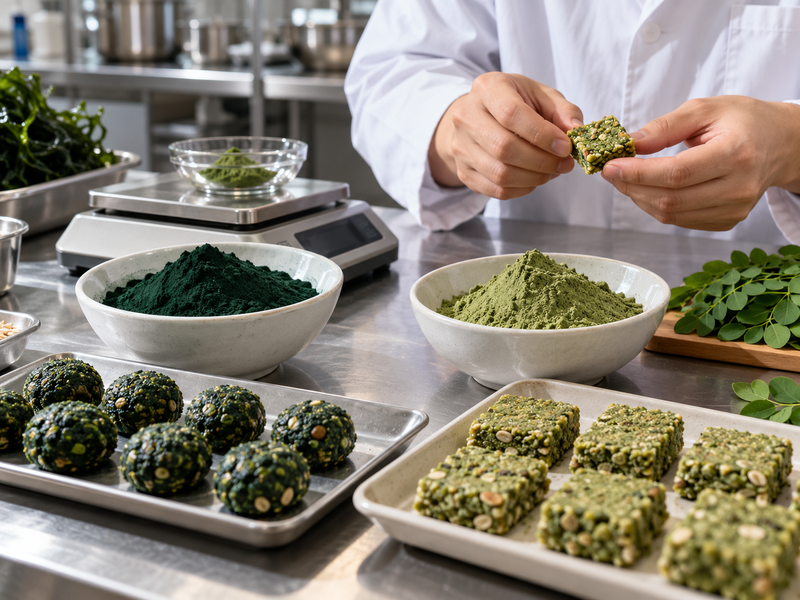
The starting point is identity: compare whole biomass against dried leaf at matched serving weights. The whole spirulina product category provides a useful example of why form matters: it is a dark green ingredient used for nutrition and formulation, while extracted blue pigment has another use. Buyers should request species, plant part, processing description and full ingredient statement. A clear specification prevents a nutrition or price comparison from quietly switching product categories.
2. How do realistic servings change the picture?
Compare equal grams and actual use rates
Many online comparisons report nutrients per 100 grams. That number may describe a useful laboratory reference, but it seldom resembles a scoop added to yogurt or a drink. Take the intended serving weight from each label and compare the nutrient contribution at that weight. A hypothetical three-gram portion supplies only three percent of a per-100-gram reference amount before product variation and rounding.
If one powder is normally used at one gram because its flavor dominates, while the other works at five grams, an equal-weight chart alone still misses the final application.
Use USDA FoodData Central to understand reference foods, then ask the supplier for current lot values and labeling support. A quick reality check: place the ingredient’s gram weight next to the complete recipe weight. A green powder may be nutritionally concentrated as a dry material yet contribute a modest amount to a large smoothie. Brands should calculate the finished serving rather than imply that a spoonful delivers the same nutrition as a plate of vegetables.
| Comparison | Misleading shortcut | Better practice |
|---|---|---|
| Nutrients | Per 100 g only | Per intended serving |
| Portion | Level teaspoon | Weighed grams |
| Product | Generic web average | Identified lot or label |
3. What can protein figures tell a buyer?
Translate percentage into absolute grams
Whole spirulina is commonly selected for relatively high protein concentration in the dry powder. Dried moringa leaf contains protein too, but a supplier’s protein percentage needs context: growing conditions, drying and testing method can affect a reported result. An impressive percentage does not make a small serving a complete protein solution for a meal. Calculate actual protein grams by multiplying the tested percentage by the powder weight in the finished product.
Then compare that result with the protein supplied by milk, yogurt, oats or other main ingredients.
This matters for B2B copy because a formulation might add a green powder at a low level for color, flavor or ingredient recognition. What changes the label decision? The finished food’s measured protein and the legal criteria in the destination market. A source ingredient can be rich in protein while the end product fails to meet a “source of protein” threshold. If your proposed claim depends on a narrow margin, arrange finished-product analysis and test routine production lots, not just a pilot sample.
4. How should mineral and vitamin claims be checked?
Ask for the nutrient and its method
Both powders attract broad descriptions such as “packed with iron and vitamins.” That wording hides whether a specific nutrient was measured in a specific product. A moringa leaf study found that drying changed several plant constituents, which is one reason a generic reference value cannot guarantee a current lot’s profile. Spirulina composition also varies with cultivation and processing. Mineral content, active vitamin form and actual serving size each deserve separate checks before a label claim is approved.
Request the laboratory method, units and date for every nutrient used in marketing. For iron, distinguish total iron measured in powder from the amount a consumer absorbs; those are different questions. For vitamin B12, avoid treating every measured corrinoid signal as proof of active human vitamin B12. A workable rule: if a number cannot be traced to a tested lot or defensible dataset and then scaled to the intended serving, keep it out of consumer-facing copy.
A precise, smaller claim is more useful than an attractive but unsupported list.
| Proposed statement | Evidence needed | Common gap |
|---|---|---|
| Contains iron | Tested iron per serving | Using per-100-g chart |
| Rich in vitamin X | Active-form assay and threshold | Assuming all forms count |
| More nutritious | Defined nutrients and same dose | Comparing unlike products |
5. Which flavor works in a finished product?
Taste the matrix, not the powder alone
Spirulina’s savory, sometimes marine character differs from moringa’s leafy, grassy and potentially bitter notes. Neither description means a powder is defective. In smoothies with citrus or fruit, the two may blend into the base quite differently than in plain water. A cereal bar can also expose an aftertaste that a chilled drink hides. For a buyer, the right question is not which ingredient tastes “better” in isolation but which works at the dose needed for the recipe’s purpose.
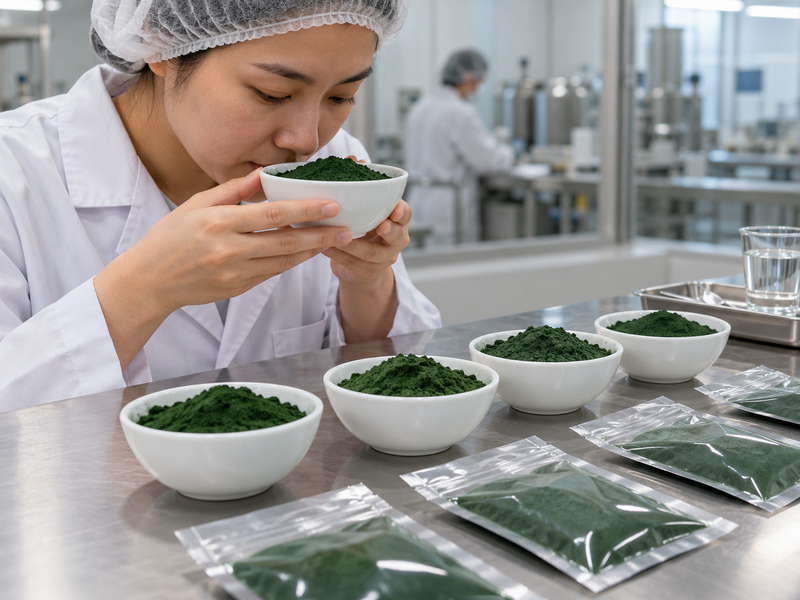
Prepare blind samples at at least two weighed inclusion levels and use the same sweetener, acid and temperature. Ask tasters to rate aftertaste after several minutes. One revealing step: taste again when the product reaches its expected consumption temperature. Green powders can seem mild straight from a cold blender yet become prominent later. For a commercial launch, include a second lot in the trial and document the sensory acceptance range.
That gives purchasing staff a useful standard when future deliveries do not match the first sample perfectly.
6. Do processing methods change the result?
Follow each ingredient from harvest to pouch
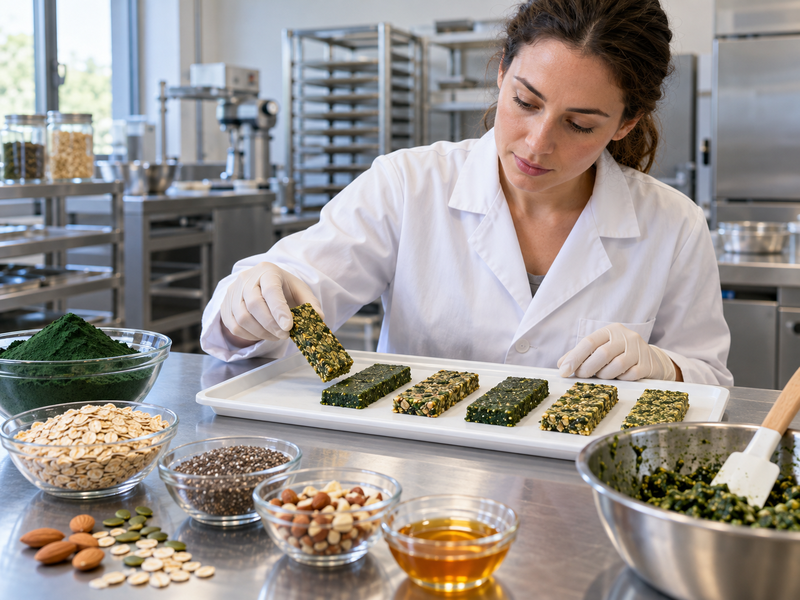
Drying is central to both products. For moringa, leaf age, harvest handling, cleaning and drying influence color and measured components; milling affects texture in drinks. For spirulina, cultivation controls, harvesting, drying and packaging likewise affect appearance and stability. The moringa drying research linked earlier illustrates that measured constituents can change with processing. That does not establish a single best process for every product, but it shows why the process description belongs alongside a nutrient table.
Ask whether the quoted specification applies to the current processing route, not merely a historical trial. Measure moisture and observe caking or off-odor after normal handling. The buying implication: two powders sharing a common name can behave differently in a mixer because particle size, surface properties and moisture differ. If a brand needs uniform color or low sediment, pilot the exact grade and packaging proposed for supply. A low price per kilogram has little value if the material needs more inclusion or causes rejects.
| Process point | Spirulina question | Moringa question |
|---|---|---|
| Raw material | Cultivation traceability | Leaf source and plant part |
| Drying | Color and moisture consistency | Leaf color and constituent change |
| Milling | Dispersibility | Grit and sediment |
7. What safety records should suppliers provide?
Ask for evidence tied to the shipment
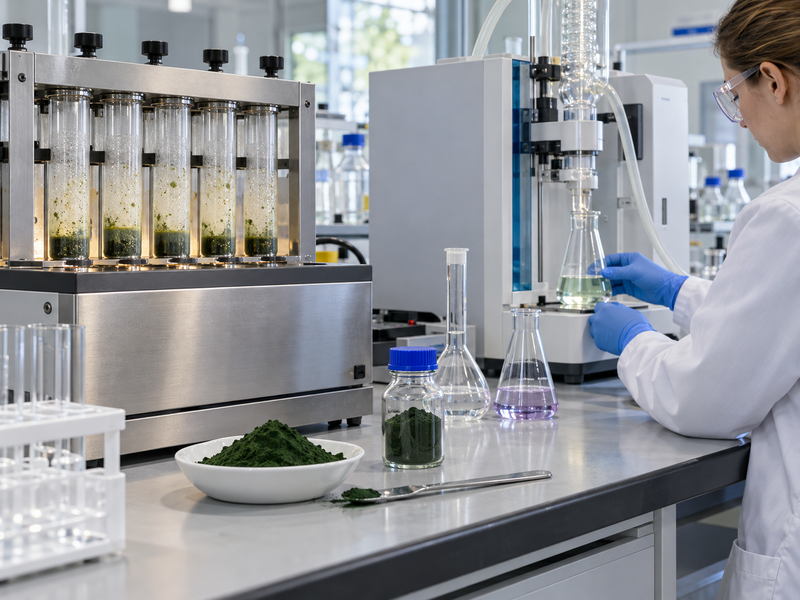
Food safety cannot be inferred from deep green color, organic language or a picturesque farm photograph. Ask for a certificate of analysis identifying the production lot and the tests relevant to each material and destination market. Microbiological results, heavy metals, pesticide residues where relevant, moisture and traceability documents are common starting points. For spirulina, cultivation oversight and any relevant cyanotoxin assessment deserve explicit discussion; a generic statement that “all algae are clean” does not answer the question.
For moringa, field practices and leaf cleaning matter as much as the finished powder test.
The FDA’s supplement overview makes clear that supplements can carry risks and are not preapproved for safety and effectiveness before sale. Ask one more question: who investigates an out-of-specification result, and how is an affected lot held? A factory-level quality overview can show the kinds of records available, but a current, lot-specific document is what supports a particular shipment.
8. Can the two powders work together?
Blend for a defined sensory or formulation purpose
A spirulina–moringa blend can make sense if each ingredient contributes something useful at its declared dose. It can also combine two challenging flavor notes and make the label harder to interpret. Start with a single-ingredient control for each powder, then test a few ratios at a fixed total green-powder weight. Compare color, aroma, bitterness, sediment and cost. If a blend wins only because its total inclusion is higher, that is not evidence of a special interaction between ingredients.
For a retail product, state individual amounts when practical so buyers can judge what they receive. A blend earns its place when it improves a measurable attribute such as taste acceptance or consistency without inflating benefit claims. Confirm that the final mix remains stable in the intended package and that its microbiological controls cover both inputs. If one ingredient dominates the formula, do not let a tiny second addition carry most of the front-label story.
| Trial | Keep constant | Record |
|---|---|---|
| Spirulina only | Total powder grams | Taste, color, sediment |
| Moringa only | Total powder grams | Taste, color, sediment |
| Mixed ratio | Total powder grams | Same scores and cost |
9. How should brands write benefit language?
Connect each sentence to a defensible fact
There is a wide gap between saying a powder contains a measured nutrient and saying it corrects a medical condition. The FDA’s overview of food and supplement claims explains that claims must meet different requirements depending on the product and wording. Neither spirulina nor moringa should be described as treating anemia, diabetes or another disease on the strength of an ingredient name or a small study. Buyer-facing pages can still be specific and persuasive without a cure narrative.
Write from a claim ledger: ingredient identity, serving amount, measured nutrient, test source and intended market. A cleaner sentence: “Made with three grams of whole green spirulina per serving” gives the reader a verifiable fact. “Moringa adds a leafy flavor” describes sensory intent. Compare only like-for-like products and make the denominator visible. If marketing wants to say one powder is superior, require a stated criterion such as sensory preference in the tested drink, not an undefined overall health ranking.

10. What is the better purchase decision?
Choose against the intended job
Spirulina suits a product brief seeking whole algal biomass, its characteristic blue-green tone and a documented protein-rich raw ingredient. Moringa suits a brief seeking dried leaf identity and a grassy botanical note. Either can fail if its flavor clashes with the base or its supplier cannot document current lots. At small serving sizes, neither powder should be treated as a shortcut around a balanced diet. A product’s value comes from the dose people can actually enjoy and the evidence behind its label.
Set your decision criteria before the sales samples arrive: acceptable flavor, weighed inclusion, target color, cost per serving and test documentation. Then run the small trial. Use identical preparation conditions and review the actual customer experience rather than isolated nutrient percentages. For shoppers, choose a clearly identified single-ingredient powder with a serving you understand. For brands, select the ingredient that passes a reproducible formulation test and supports copy you can stand behind.
| Buyer priority | Likely starting point | Final check |
|---|---|---|
| Whole algal ingredient | Spirulina | Lot assay and taste |
| Dried leaf ingredient | Moringa | Leaf identity and taste |
| Broader green blend | Test both | Transparent amounts |
Frequently asked questions
Is spirulina a plant like moringa?
No. Spirulina is cultivated cyanobacterial biomass; moringa powder usually comes from dried leaves of a land plant.
Is one powder automatically more nutritious?
No. Nutrient profiles differ, and the amount consumed matters. Compare named nutrients at matched, realistic serving weights.
Can either powder replace vegetables?
No. A small powder serving does not replace the variety and volume of ordinary vegetables in a healthy diet.
Can I mix spirulina and moringa?
Yes. Test flavor, color and individual ingredient amounts before deciding whether the blend improves the final product.
What should a buyer request from a supplier?
Ask for identity, full ingredient statement, current lot certificate, relevant safety tests and a sample of the grade you will purchase.
Conclusion
The useful spirulina vs moringa comparison starts with product identity and ends with a finished serving. Whole algae and dried leaf bring different flavor, processing and sourcing questions; neither wins through a generic nutrient chart. Weigh the intended dose, taste the final recipe and check the current lot documents. That work gives buyers a clear decision and gives brands a stronger foundation for honest copy.