
Matcha vs spirulina can look like a simple contest between green powders, yet a buyer choosing a beverage ingredient needs a more useful answer. Matcha supplies a tea experience with caffeine; whole green spirulina contributes a different flavor and nutrient profile. This comparison uses product identity, realistic portions and published evidence to help shoppers and formulators choose a powder that matches their drink rather than a broad health slogan.
Contents
- What are matcha and green spirulina?
- How do their caffeine profiles differ?
- What does each powder taste like?
- How should serving sizes be compared?
- Does spirulina provide useful protein per drink?
- Which powder gives a more reliable green color?
- What should a beverage brand test?
- How can a label avoid misleading claims?
- Which sourcing questions matter most?
- Which powder should you choose?
1. What are matcha and green spirulina?
Start with ingredient identity
Matcha comes from finely milled tea leaves. You drink a suspension of the leaf, rather than just an infusion poured away after steeping. Green spirulina powder is dried whole Arthrospira biomass, a cultivated cyanobacterium commonly sold as a food or supplement ingredient. Those origins explain why one behaves like concentrated tea and the other like a savory algae powder. They also change what a realistic claim can say about each product.
A powdered latte with matcha has a tea identity; a spirulina smoothie does not become a tea just because both ingredients look green.
Here is the practical distinction: whole green spirulina also differs from extracted blue spirulina, which is sold primarily for its blue pigment. Do not apply a blue extract’s color behavior or nutrition description to whole biomass. A purchasing specification should state botanical identity, ingredient form and intended application before price comparisons begin. Otherwise two invoices can appear comparable while describing materials with completely different use rates.
2. How do their caffeine profiles differ?
Treat caffeine as a measurable design variable
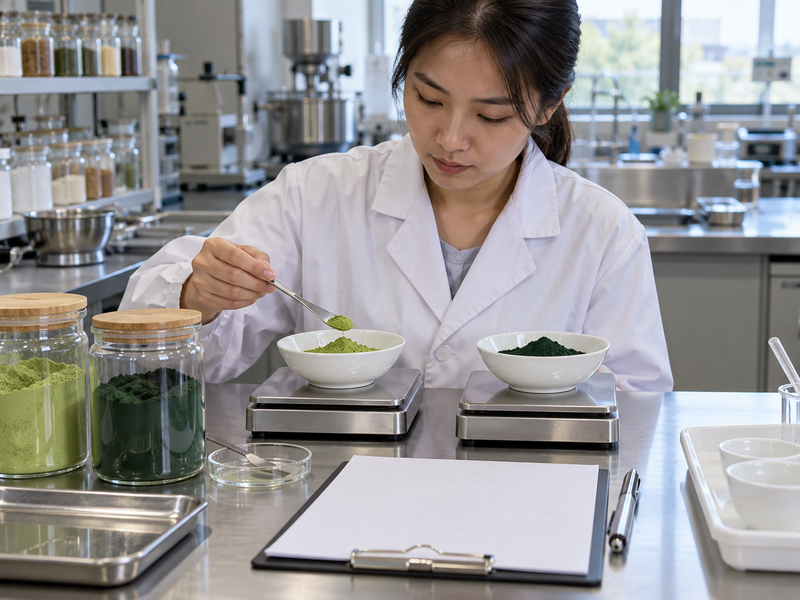
Tea leaves naturally contain caffeine. Spirulina is not a tea plant, so a pure, unfortified spirulina powder is normally chosen without a tea-derived caffeine contribution. A blended spirulina product may contain added tea, guarana or caffeine, however, so the finished product label still matters. In a study measuring commercial tea products, matcha samples differed in caffeine concentration.
That variation makes a generic claim such as “one scoop equals one coffee” unreliable without a measured serving and a tested powder.
For a morning café menu, caffeine can be the point of matcha. For an evening smoothie or a product marketed without stimulants, spirulina may fit better if every other ingredient is also checked. The decision changes with the brief: define your target caffeine range in milligrams per prepared drink, then request an assay or credible supplier value for the actual matcha lot. A caffeine-sensitive buyer should also count other sources in the formulation, including chocolate or added extracts.
| Product concept | Likely caffeine role | Check before launch |
|---|---|---|
| Matcha latte | Expected tea caffeine | Milligrams per drink |
| Pure spirulina smoothie | No tea ingredient | All added components |
| Matcha–spirulina blend | Matcha remains a source | Combined serving amount |
3. What does each powder taste like?
Run a blind test in the finished drink
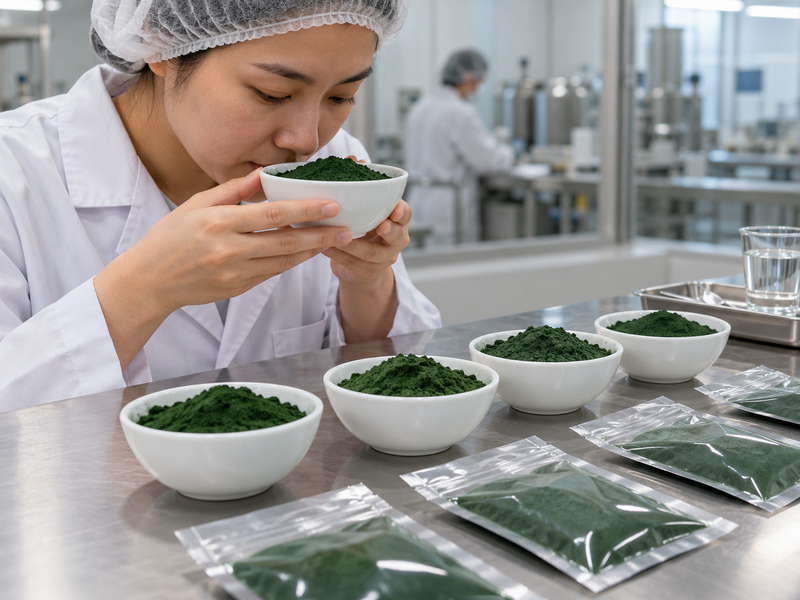
Matcha typically gives vegetal, tea-like notes with some bitterness and astringency. Whole spirulina often reads as savory, marine or earthy. These are sensory descriptions, not quality grades; a fresh, well-handled powder can still have its characteristic flavor. Sweeteners, acidity, dairy proteins, plant milks and serving temperature can shift perception dramatically. A dry sniff of the jar says little about how a 300-milliliter drink will taste after ice and fruit are added.
Build a simple trial with a control drink, a low inclusion and a higher inclusion, using weighed portions rather than different spoon shapes. Have tasters rate aftertaste as well as the opening sip. A useful question: which note remains after the drink warms slightly? Spirulina that feels balanced in a cold mango smoothie may stand out in plain water; matcha that is pleasant in milk may taste sharp in citrus.
For businesses, repeat the test after typical holding time so an attractive first pour does not hide later sediment or flavor drift.
4. How should serving sizes be compared?
Put every figure on the same gram basis
Internet charts often compare nutrients per 100 grams of powder. Few drinks use anything close to that amount. Start with the proposed grams in one finished serving and the amount a buyer would actually consume. A two-gram addition represents two percent of a per-100-gram reference value before variation in processing, moisture and analytical method. The USDA FoodData Central database is helpful for identifying reference foods, but it cannot replace the label or certificate of analysis for a commercial lot.
Do not compare a teaspoon of fluffy matcha with a tightly packed teaspoon of spirulina as though volume gave equal mass. Weigh each ingredient, then evaluate cost, caffeine and nutrients per drink. The honest comparison begins here: a supplier’s strong protein percentage can still translate into a modest absolute amount at a small inclusion. If a label makes a nutrient claim, verify the finished recipe and the applicable market rule rather than transferring a raw-powder value uncritically.
| Comparison unit | Why it can mislead | Better unit |
|---|---|---|
| Per 100 g | Much larger than a drink dose | Per finished serving |
| One teaspoon | Powders pack differently | Weighed grams |
| Supplier percentage | May describe another lot | Tested production lot |
5. Does spirulina provide useful protein per drink?
Convert concentration into a serving contribution
Whole spirulina biomass is protein rich on a dry-weight basis. That fact can be relevant for powder sourcing, yet the nutritional impact of a beverage depends on grams added. If a formula uses a small quantity mainly for color or flavor, its protein contribution may be too small to position the finished drink as a protein product. Matcha also contains some protein in the leaf, but a normal matcha serving is usually chosen for tea flavor and caffeine rather than protein delivery.
Neither powder replaces an adequate meal protein source at a tiny dose.
Ask for a production-lot protein result, then multiply the declared percentage by the actual addition weight. For example, a hypothetical powder at 60 percent protein would contribute 1.2 grams from a two-gram serving before processing and label rounding; that calculation is an illustration, not a guarantee about every lot. The key question is simple: would the resulting number matter beside the rest of the recipe? If the drink also contains milk or soy, distinguish protein from those ingredients from protein attributable to spirulina.
6. Which powder gives a more reliable green color?
Measure the prepared drink, not the raw powder
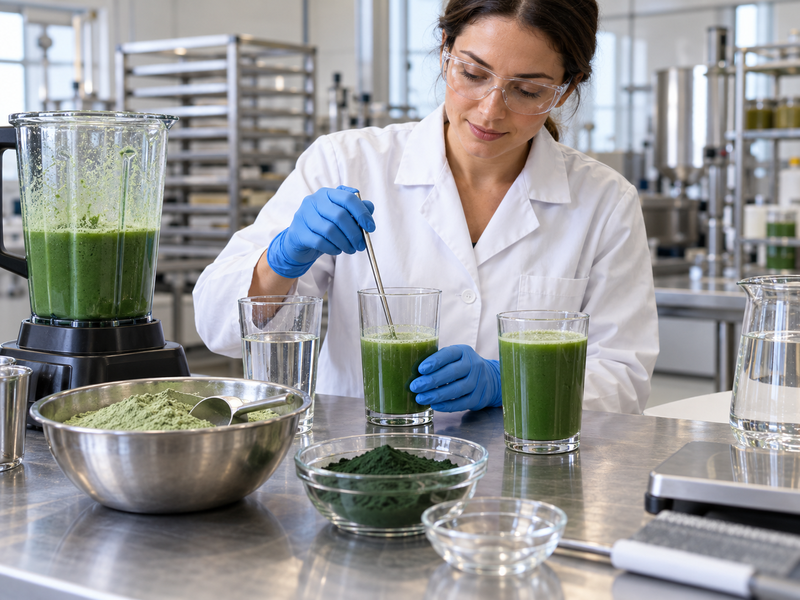
Both powders look green in a package, but their pigments and physical behavior differ. Matcha contributes a tea-green, often muted shade; whole spirulina can give a deeper blue-green appearance. Neither guarantees a vivid result in every liquid. Milk opacity, fruit pigments, acidity, oxygen exposure and holding time affect what a consumer actually sees. A thick smoothie can hide small color differences that look striking in clear water. Sediment can also change the apparent color near the bottom of a cup.
Photograph matched samples under the same light immediately after mixing and again at the expected point of sale. Set a pass range rather than choosing a favorite image from one trial. Watch the category error: if the concept requires a brilliant blue hue, extracted phycocyanin is a different ingredient and deserves its own stability test. A green spirulina supplier’s factory specifications can help define identity and color expectations, but final-drink testing decides whether the ingredient works in your matrix.
| Matrix | Matcha question | Spirulina question |
|---|---|---|
| Oat milk | Does tea green turn gray? | Does biomass settle? |
| Fruit smoothie | Does fruit mask tea flavor? | Does fruit mask marine notes? |
| Clear water | Does powder disperse evenly? | Is sediment acceptable? |
7. What should a beverage brand test?
Write a short bench protocol
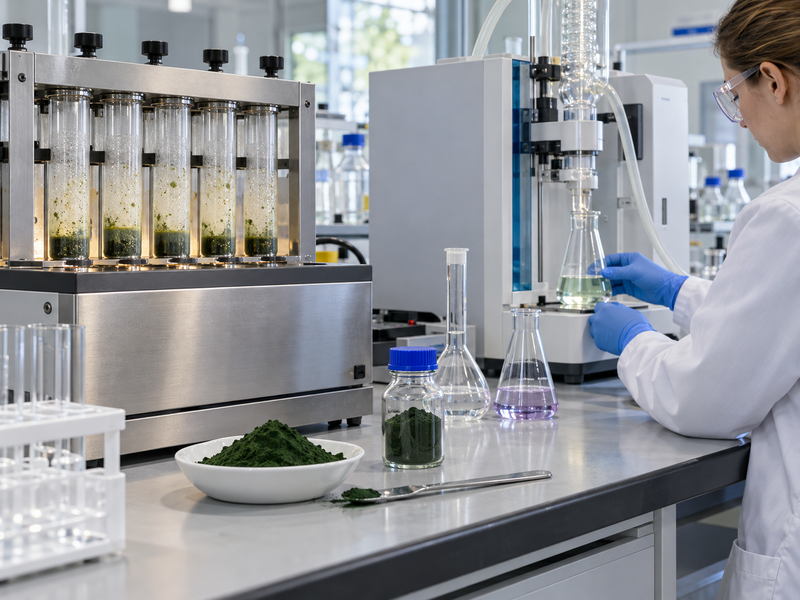
A useful trial specifies powder lot, weighed addition, mixing method, base recipe, serving temperature and holding period. Prepare control, matcha, spirulina and blended versions in the same session. Record caffeine information for matcha, color at fixed times, sediment, aroma, taste and ingredient cost per cup. If the beverage will be bottled, include the packaging and storage conditions that consumers will experience. One enthusiastic tasting at the bench does not predict appearance after distribution.
Give panelists questions they can answer consistently: Is the flavor recognizably tea-like? Does an aftertaste remain? Would the color signal the intended product? One more check helps: repeat the preferred recipe using a different raw-material lot. If the result changes sharply, tighten the purchasing specification or adjust the formulation tolerance. For a retail label, also compare the front-of-pack promise with what the formulation truly contains. A drink sold as “spirulina” should disclose enough ingredient information that the customer can understand its role.
8. How can a label avoid misleading claims?
Describe the ingredient and its tested contribution
“Contains matcha” and “contains spirulina” identify ingredients. A caffeine number, protein claim or structure/function statement demands more evidence. The FDA’s label-claims overview explains that supplement and conventional-food claims have different requirements, while disease treatment promises are outside ordinary food marketing. Brand copy should not turn a laboratory antioxidant assay into a claim that a drink prevents disease.
Check the classification of the finished product in each market before approving copy. Then keep a file linking every numerical statement to a specification, finished-product test or suitable calculation. Plain wording works best: name the powder, state the serving and describe the sensory reason for choosing it. If a formula uses matcha for its recognizable tea taste and spirulina for its distinctive green character, say that. Avoid “superfood winner” language that suggests a single powder can meet every nutrition objective.
| Claim | Evidence to request | Safer editorial choice |
|---|---|---|
| Caffeine amount | Finished serving calculation or test | State measured range |
| Protein source | Product analysis and legal threshold | Give actual grams |
| Disease benefit | Drug-level evidence and authorization | Remove claim |
9. Which sourcing questions matter most?
Buy against a written product brief
For matcha, specify tea origin, grade appropriate to the drink, sensory profile, color, contaminant documentation and caffeine information. For spirulina, specify whole biomass identity, cultivation and drying controls, moisture, microbiology and relevant contaminant results. A certificate of analysis should identify the actual lot rather than show a generic catalog promise. Ask for sample retention and a process for handling variations between shipments. These questions are more revealing than comparing color photographs on supplier websites.
Request packaging that protects powders during normal handling and distribution. Small retail pouches, café packs and industrial drums face different open-and-close cycles. The purchasing test: can a supplier explain what changed between lots and provide documents for the batch you will use? Ask whether any carriers, flavorings or additives are present. A “spirulina powder” line item can describe a pure ingredient or a premix; the ingredient statement and specification should make that distinction unmistakable.

10. Which powder should you choose?
Match the ingredient to the job
Choose matcha when a recognizable tea flavor and caffeine belong in the product brief. Choose whole spirulina when the aim is a non-tea green biomass ingredient and its savory character works in the recipe. Use both only if the blend improves a tested product rather than making the ingredient list longer for its own sake. Neither powder automatically wins on “health”; at practical serving sizes, composition, processing and label rules shape what you can responsibly promise.
For a buyer, the next action is a small side-by-side trial with weighed doses and a written pass threshold for taste, color, cost and claim support. For a shopper, compare the listed grams and any added ingredients before choosing a jar. A sensible final filter: would you still like the finished drink if the marketing adjectives disappeared? A product that tastes good, states its composition plainly and comes with credible lot records has a stronger case than one built on an unsupported comparison chart.
| Your main goal | Starting choice | Confirm with |
|---|---|---|
| Tea ritual and caffeine | Matcha | Serving caffeine and taste |
| Green biomass ingredient | Spirulina | Identity and lot results |
| Complex blended drink | Trial both | Sensory and stability data |
Frequently asked questions
Does spirulina contain caffeine?
Pure whole spirulina is not tea and is not normally used as a caffeine source. Check blended product labels for added caffeine-containing ingredients.
Can matcha and spirulina go in one smoothie?
Yes. Weigh both, then taste the combination and account for caffeine from matcha. A blend is useful only when it improves the final drink.
Is blue spirulina the same as green spirulina powder?
No. Blue spirulina generally means a pigment-rich extract; green spirulina powder refers to whole biomass. Their formulation roles differ.
Which has more protein in one serving?
Compare the actual grams on the two product labels. Dry spirulina may be protein rich, but a small drink addition offers a limited absolute amount.
Should brands claim either powder treats a condition?
No. Food and supplement claims must follow the rules for the selling market, and ingredient presence alone does not support a treatment promise.
Conclusion
Matcha and spirulina answer different beverage briefs. Matcha brings tea flavor and measurable caffeine; whole spirulina brings a distinct green biomass ingredient whose value depends on the tested dose and final recipe. Choose with weighed samples, transparent labels and lot-specific documents. That simple discipline makes a drink easier to enjoy, easier to describe honestly and easier to reproduce at scale.