
A tablet that survives shipping may still break apart too slowly for its intended use. Spirulina tablet disintegration testing gives manufacturers and brand buyers a repeatable way to observe tablet breakup under defined conditions. For example, the result depends on formulation, compression and method. USP’s chapter on disintegration describes a standardized method, but buyers must confirm which standard and product category actually apply to their tablets.
Contents
- What does disintegration measure?
- How should a buyer define the test method?
- Why do hardness and breakup pull in different directions?
- Which ingredients change tablet behavior?
- How should compression be controlled?
- Where should samples come from during a run?
- How do coating and storage affect results?
- What belongs in a tablet specification?
- How should a failed result be investigated?
- What evidence should buyers request before launch?
1. What does disintegration measure?
Observe breakup under stated conditions
In practice, disintegration measures whether a tablet breaks into smaller particles within a stated time in a defined medium and apparatus. However, it is not the same as dissolution, which concerns how a substance goes into solution. Whole spirulina biomass itself contains insoluble structures, so a dispersed tablet can leave visible green particles. As a result, the endpoint must follow the chosen method and product specification rather than a buyer’s assumption that the water becomes clear. Tell the manufacturer whether the tablet is meant to be swallowed, chewed or dispersed in a drink; each use may call for different evaluation.
The distinction matters. A hard tablet that passes a breakage test in a shipping simulation may fail a disintegration limit. A fast-breaking tablet may chip in packaging. Neither result alone demonstrates clinical benefit or nutrient absorption. A published food-tablet study examined hardness, friability and disintegration in formulations containing spirulina and other food powders. Its results are formulation-specific; use the measured trade-off as a reason to test your own product. Keep disintegration in the larger quality picture with identity, content, microbial limits and shelf-life performance.
2. How should a buyer define the test method?
Write more than a time limit
Next, the specification should state apparatus, medium, temperature, number of units, endpoint rule and maximum time. A line that says “disintegrates in 30 minutes” is incomplete if one laboratory tests in room-temperature water and another uses a controlled bath. Next, identify whether the product is an ordinary food tablet, dietary supplement or another regulated dosage form in the destination market. USP <701> is a recognized general chapter in relevant contexts; its existence does not mean every spirulina tablet must meet one universal USP time limit.
Ask for a method transfer check. Have the brand and contract manufacturer test the same pilot lot using the proposed procedure. Then, compare unit results, not only pass/fail labels. Define whether disks are used and how fragments caught in a screen are interpreted. If a product is chewable, an oral-use claim may change which breakup test is suitable; obtain qualified regulatory advice for the market. Keep the method revision on the COA and laboratory worksheet. If the manufacturer changes bath, basket or endpoint interpretation, document equivalence before comparing new data with historical trends.
| Method element | Specify | Why it matters |
|---|---|---|
| Medium | Type and volume | Alters breakup |
| Temperature | Controlled range | Affects swelling |
| Apparatus | Basket or other method | Changes agitation |
| Endpoint | Defined observation | Prevents subjective calls |
3. Why do hardness and breakup pull in different directions?
Balance handling strength with release behavior
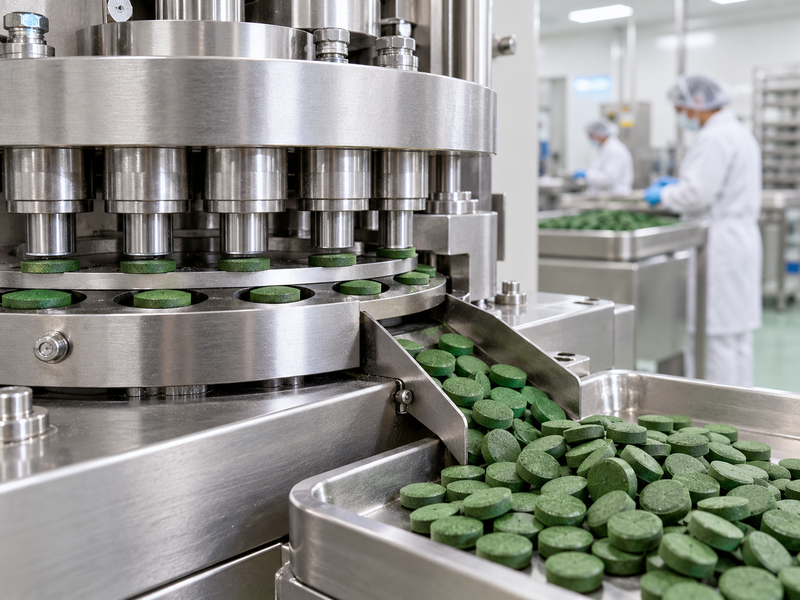
During manufacture, compression joins particles into a robust tablet. More force often improves resistance to handling damage, yet it can reduce pore space and delay liquid entry. That relationship is not universal; formulation, granule properties and elastic recovery matter. As a result, test hardness, friability and disintegration together rather than tuning only one number. A tablet can pass a hardness target while showing unacceptable edge chipping, and a low friability result may still hide slow breakup. Then, plot results from planned compression settings to identify a workable window.
Consider the full route. A pilot tablet might disintegrate well immediately after pressing but become harder after time in a humid warehouse or hot container. Conversely, a loose tablet might break during bottle filling long before a consumer uses it. A spirulina-containing tablet formulation study reports formulation effects on hardness, friability and disintegration, without providing a universal commercial target. Set acceptance against your own formulation and intended packaging. If increasing compression solves broken tablets but fails disintegration, revisit binder, granulation or disintegrant choices under a controlled trial rather than quietly relaxing the breakup limit.
4. Which ingredients change tablet behavior?
Review the whole formula, not spirulina alone
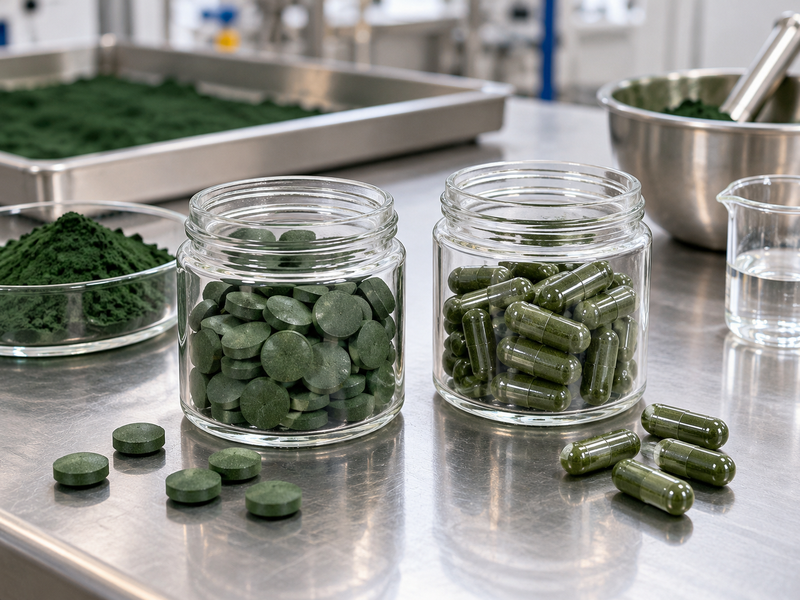
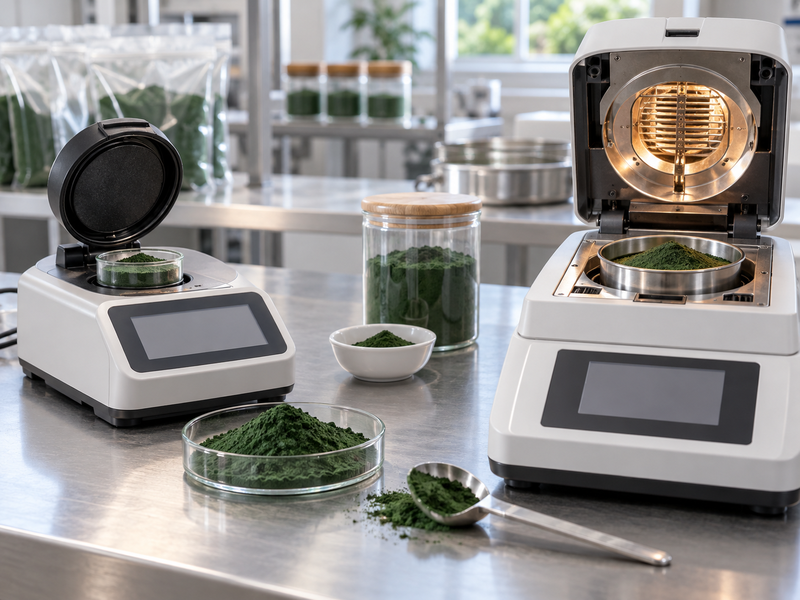
Spirulina powder particle size, moisture and density can vary by lot. Also, binders, lubricants, fillers and disintegrants change how water enters a compressed tablet. For example, a small increase in lubricant mixing time may alter wetting even when the declared formula stays the same. If a product is advertised as “pure spirulina,” confirm whether any processing aids or added ingredients are present and how the claim is defined for the destination market. Keep a controlled bill of materials that matches the label, master record and supplier specifications.
Start with a comparison lot. When a new raw powder causes a slower test, compare its moisture, particle size and compaction behavior with the approved lot before changing the tablet recipe. Then, trial one controlled factor at a time where practical. A starch-based disintegrant may help one formulation but not another; do not import a published setting without testing. The FDA’s dietary-supplement CGMP guide describes specifications and production records for products subject to Part 111. Food tablets in other markets may follow different rules, so match the control plan to the actual classification and sales territory.
| Material factor | Possible effect | Check |
|---|---|---|
| Spirulina particle size | Compaction and wetting | Sieve profile |
| Powder moisture | Binding and stability | Lot test |
| Binder amount | Strength and breakup | Formula trial |
| Lubricant exposure | Wettability | Mix time record |
5. How should compression be controlled?
Define a process window and monitor drift
Next, record tablet weight, press speed, compression setting, tooling condition and in-process hardness or thickness checks. A single machine dial setting does not guarantee equal tablet force after tooling wear or powder-flow changes. Next, sample at start-up, after adjustments, across normal running and near the end of the lot. Document who approved each change and whether affected tablets were segregated. If feed density drifts, the press can deliver tablets with different weights and structural strength even with unchanged instructions.
Watch the edges of the batch. Powder at the end of a hopper may flow differently from material at the start, particularly after vibration or segregation. Do not qualify a run using only the easiest middle segment. Then, compare disintegration at press settings representing the allowed upper and lower bounds. If the window is narrow, tighter monitoring may be needed or the formula may need revision. Maintenance and line clearance records help explain unexpected drift. Buyers need not receive every press log with a shipment, but the manufacturer should be able to retrieve the actual lot’s settings and deviations during a complaint. An unrecorded operator adjustment breaks that evidence trail.
6. Where should samples come from during a run?
Cover time, tooling and packed stock
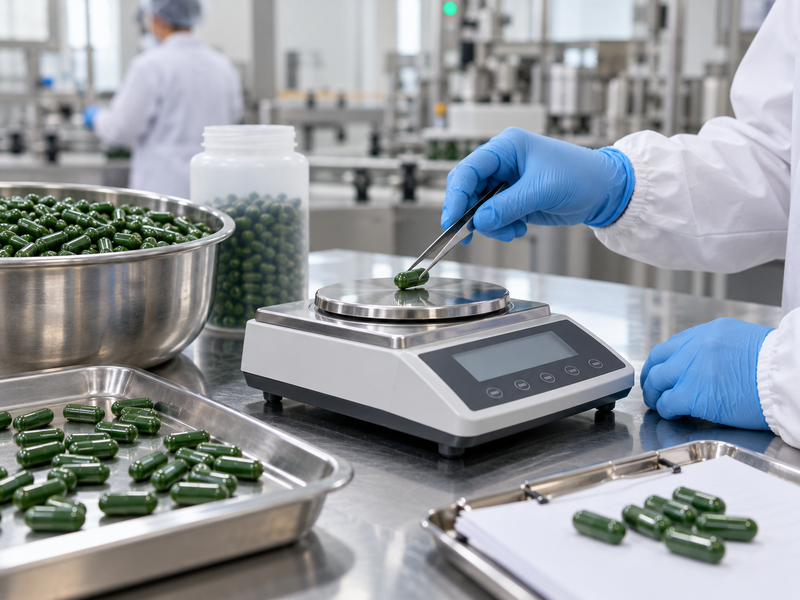
Next, take units across the compression period, including start, middle, end and after meaningful setting changes. A multi-station press may justify samples from different tooling positions when failures cluster. Also, keep units linked to their sampling time and batch record; one anonymous bottle of retained tablets cannot show whether a brief excursion affected a segment. Then, test enough units under the agreed method to support the acceptance decision. Avoid combining tablet fragments from different times into a single sample that hides variation.
Carry sampling through packaging. Bottle filling, desiccant placement, cap torque or blister sealing can influence storage exposure. Retain finished packaged units for stability checks rather than storing every sample loose in a laboratory bag. The USP disintegration chapter describes apparatus and unit-based observations in applicable compendial testing; a commercial food-tablet sampling plan should also capture the process variation that your release decision must represent. If early units fail while later units pass, do not release the entire batch using a later sample alone. Define the affected time window and evaluate that stock separately.
| Sample stage | Reason | Link to keep |
|---|---|---|
| Press start | Start-up variation | Time and settings |
| Press middle | Routine operation | Tooling and hopper |
| After adjustment | Changed force | Deviation record |
| Finished pack | Shelf-life exposure | Pack lot |
7. How do coating and storage affect results?
Test the finished product through shelf life
For example, a coating can slow liquid entry or change the appropriate test procedure. Even an uncoated tablet may absorb humidity and alter hardness or breakup during storage. As a result, test tablets in the commercial bottle or blister at planned time points under justified storage conditions. Record moisture, package integrity and sensory changes alongside disintegration. A short accelerated study can help screen risk, but it does not automatically prove the full claimed shelf life. Market and product classification determine which formal stability expectations apply.
Look at the pack design. A moisture-barrier bottle with sound closure can perform differently from an unlined bulk pouch. If a desiccant is used, verify its placement and consumer warning where needed. Check incoming packaging materials and sealing records. A failed end-of-life disintegration result may be a formulation problem, a moisture ingress problem or both. Then, compare stored retain samples with fresh tablets and inspect the actual package before raising press force or changing ingredients. The FDA’s water-activity technical guide explains why moisture availability matters in foods; it does not set a universal spirulina-tablet disintegration limit.
8. What belongs in a tablet specification?
Join performance with identity and release
Next, state tablet identity, appearance, target weight, permissible variation, hardness or friability method, disintegration method and limit, microbial limits, applicable contaminants, packaging and shelf-life conditions. Also, each numerical limit needs a reason and a method. A product meant to be chewed may not use the same acceptance logic as a swallowed tablet. Identify whether the specification governs an ingredient tablet, a dietary supplement or a drug dosage form; using drug terminology casually can mislead a buyer. Then, put the approved revision on the purchase order and COA.
Keep a change pathway. A new spirulina source, binder, coating, press, tablet size or bottle can alter breakup. Require notice before substitution and decide whether comparability testing or fresh stability data are needed. The FDA dietary-supplement CGMP guide offers a regulatory reference for U.S. supplements; for other categories, ask the relevant specialist to confirm obligations. A useful commercial specification is precise enough that two competent laboratories can reach the same result and two production teams know what material may ship.
| Specification item | Define | Buyer risk if vague |
|---|---|---|
| Method | Apparatus and medium | Incomparable results |
| Limit | Time and unit rule | Disputed release |
| Packaging | Format and barrier | Shelf-life drift |
| Change notice | Materials and process | Silent reformulation |
9. How should a failed result be investigated?
Hold stock before repeating the test
Next, quarantine affected tablets and review the original laboratory record. Check apparatus qualification, medium, temperature, sample identity and operator observations. Repeat testing only under a predefined investigation procedure; a passing retest does not automatically erase the original failure. Then, compare hardness, weight, moisture, press settings, powder properties and packaging history. Look for clustering by time or press station. If stored retain tablets fail while fresh ones pass, investigate package integrity and environmental exposure. Expand the hold to connected lots if a shared formula or equipment change is implicated.
Separate causes from excuses. A misloaded test unit might explain a laboratory error, but that finding needs evidence. If tablets really break up slowly, decide whether rework is technically feasible and legally appropriate. Do not crush and re-press without checking identity, microbial exposure, label and new batch genealogy. Tell the brand buyer what material shipped, what is held and what evidence will determine disposition. A preventive-controls framework supports evaluation of affected food and correction where applicable; the exact legal regime depends on the product. Document the final cause, actions and effectiveness checks on later lots.

10. What evidence should buyers request before launch?
Make the trial and release package reviewable
Next, ask the contract manufacturer for the approved formula, tablet specification, test method, pilot data across the press run, package qualification and a stability plan. Request representative records from both a passing lot and a handled deviation if available. Then, for commercial production, require lot-specific COA results, actual pack code and controlled change notices. Align the test medium and endpoint with the use described on your label. If tablets are expected to disperse in a drink, add a practical consumer-use trial rather than assuming a laboratory basket predicts cup behavior.
The buyer’s final check: can quality, purchasing and marketing describe the same product without contradicting its tested performance? Avoid claims about absorption or health effects from disintegration data alone. Spirulina tablet disintegration is one measured quality attribute among several. As a result, agree the method and limit, confirm the compression window and test finished packs through the intended shelf life before committing to a large launch.
| Launch evidence | Owner | Approval question |
|---|---|---|
| Pilot range study | Manufacturer | Is process robust? |
| Method agreement | Both quality teams | Are results comparable? |
| Pack/stability plan | Brand and manufacturer | Does performance persist? |
| Commercial COA | Supplier | Does this lot pass? |
FAQ
Q1: Does a fast disintegration result prove higher absorption? No. Breakup alone does not establish bioavailability or a health outcome.
Q2: Must every spirulina food tablet follow USP <701>? No. Confirm product classification and the agreed or required method in each market.
Q3: Can more compression fix shipping breakage? It may help, but it can also delay breakup; qualify both outcomes together.
Q4: Should the test use loose tablets or finished packs? Release may test sampled tablets, while shelf-life work should include commercial packaging.
Q5: What if one unit fails? Follow the defined acceptance and investigation procedure rather than replacing the result informally.