
Spirulina stick pack formulation promises a convenient single serving, yet a good laboratory blend can bridge in a narrow filler or taste harsh in water. Define the intended drink or food use, then test fill, seal, reconstitution and storage with the commercial powder lot. For US dietary supplement positioning, FDA labeling guidance treats a packet as a possible serving unit; classification and directions still require market-specific review.
Contents: 1 · 2 · 3 · 4 · 5 · 6 · 7 · 8 · 9 · 10
1. What job should one stick pack perform?
Define use before setting grams
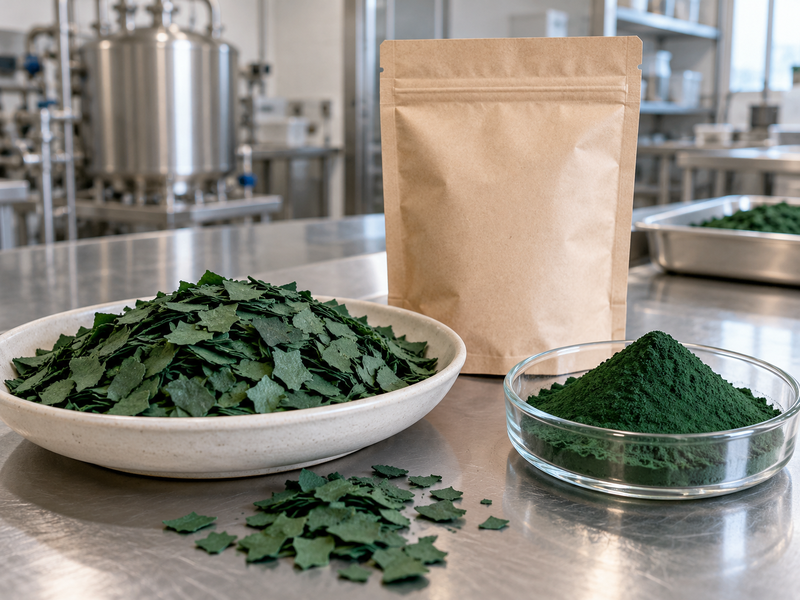
Is the product meant to be stirred into water, blended into a smoothie or sprinkled over food? Each use changes the practical dose, flavor target and instructions. A powder that works in a fruit smoothie may sediment noticeably in plain water. Write a one-sentence use brief with liquid volume, serving frequency, flavor expectation and target market. Do not let pack capacity dictate the portion before testing the consumer experience.
Set an ingredient target per stick and a maximum pack mass that the filling line can run. If the proposed dose needs multiple sticks daily, include that burden in the launch decision. A single-use pack can reduce repeated exposure of a bulk pouch, but it does not make a moisture-sensitive powder stable by itself. Ask quality to identify applicable food or supplement controls from the outset. The useful starting sample: one finished stick emptied into the exact vessel and liquid shown in the directions.
2. How should spirulina dose be selected?
Balance sensory and label objectives
Create a dose ladder in the planned base: for example, several coded amounts of whole spirulina powder in one fixed drink volume. Record color, aroma, taste, sediment and user acceptance after the normal preparation time. If a flavor system is planned, test both flavored and unflavored controls to see what the flavor actually changes. A spirulina beverage formulation study found sensory outcomes depended on its particular fruit and wheat-germ matrix. Its preferred concentration cannot be imported as a universal stick-pack dose.
Calculate any intended nutrient claim using finished-serving data rather than extrapolating from powder composition alone. Changes in serving mass affect price, pack size and label declarations. Freeze the dose before packaging artwork. If the product will be used with variable liquid volumes, state directions clearly and test the smallest and largest recommended amounts. The decision test: an amount must satisfy both the proposed claim and an acceptable prepared experience.
| Dose check | Measure in | Question answered |
|---|---|---|
| Sensory | Prepared serving | Is the use pleasant? |
| Distribution | Dry blend | Is spirulina uniform? |
| Label | Finished stick | Is declared amount supported? |
| Pack | Filled sachet | Can it fill and seal? |
3. Which dry ingredients belong in the blend?
Choose components by function
Every sweetener, acid, flavor, carrier and flow aid should have a defined role. Acid can make a fruit profile brighter but can also change the appearance or taste of whole green spirulina. A carrier may improve flow while diluting spirulina content per gram. A flavor that tastes convincing at bench scale may fade after storage. Build a quantitative formula and record ingredient lot, particle size and mixing order. Check allergen and additive status for the destination market.
Use a small designed trial instead of changing all components simultaneously. Keep spirulina constant while screening flavor, then hold flavor while testing flow aid if filling is poor. Evaluate dry smell as well as prepared taste because users encounter the pack before dilution. An odor-characterization study of spirulina processing stages supports treating aroma as a measurable product attribute, not a vague “fresh” claim. A clean formula review: if an ingredient has no documented function or label rationale, question its inclusion.
4. How can dry-blend uniformity be shown?
Sample across a real batch
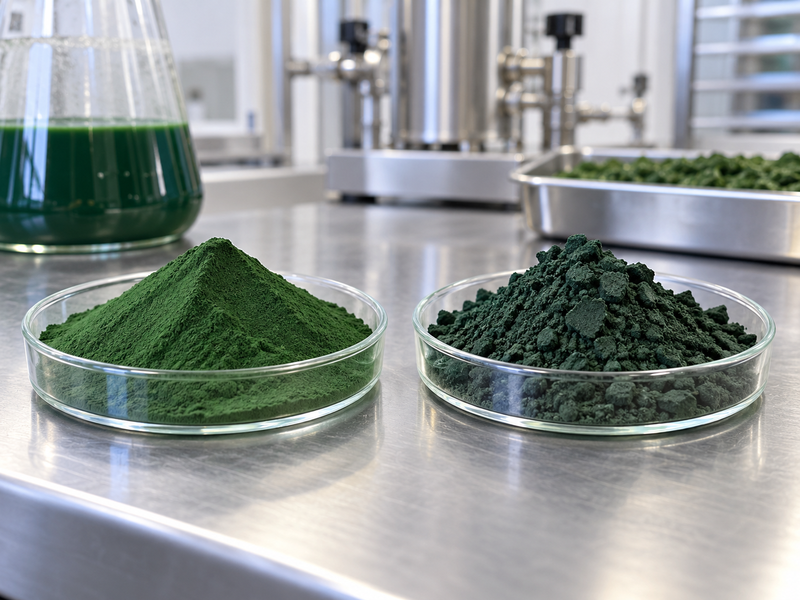
Mixing a small jar by hand says little about a commercial blender. Define sequence, loading level and mixing time. If spirulina contributes a small fraction, consider a premix step that can be reproduced at scale. Sample from multiple blender locations and after transfer to the filler. Pick a suitable method for the relevant component or marker, and verify that visual green color is not being mistaken for quantitative uniformity.
Watch for segregation when ingredients have different sizes or densities. A blend may pass at the end of mixing and separate during vibration or hopper refill. Compare individual stick masses and, where appropriate, spirulina content early and late in a run. If a flavor or sweetener changes grade, repeat the evaluation. US supplement 21 CFR Part 111 requires process controls and specifications for products within its scope. The practical evidence: samples must reflect where powder travels before sealing.
| Sampling point | Risk checked | Record |
|---|---|---|
| Blender top and bottom | Incomplete mixing | Location and result |
| Transfer bin | Segregation | Movement history |
| Filler hopper | Settling | Time and level |
| Finished sticks | Delivered serving | Individual mass and assay |
5. What affects filling accuracy on a stick-pack line?
Test powder and machine together
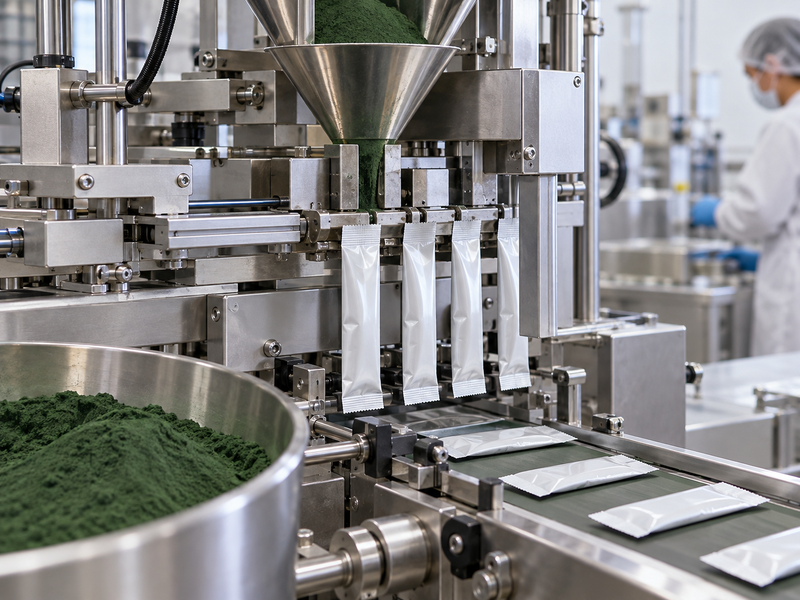
Filling equipment may meter by volume or weight, with auger geometry, speed and hopper conditions influencing each portion. Powder density and flow change after transport or a different drying run. Characterize commercial lots using stated methods, including bulk and tapped density where useful. Then run the selected blend on the actual stick-pack machine. A hand-filled pouch cannot establish fill precision.
Record individual pack masses through startup, steady running, hopper refill and restart. Weigh empty film or tear down packs when needed to separate product from package mass. Track dust at seal areas and powder left in hoppers. Set alert and action limits based on validated capability, declared content and applicable rules. An average fill above target is not a substitute for acceptable individual units. The pilot question: can the line deliver the labeled portion without excessive overfill or rejects?
6. How should film and seals be evaluated?
Treat the package as a functional component
Choose film using moisture and oxygen performance, sealability, tear behavior and food-contact suitability for the intended market. Ask for a full laminate specification rather than a general “high barrier” label. FDA states that food-contact material compliance depends on applicable authorization and use conditions. A film approved for one use should not be assumed appropriate for every product or destination.
Test seals at the planned line speed and fill mass. Powder caught in the seal can produce leaks even when the film itself is sound. Include seal strength or integrity checks, visual inspection and a transport simulation. Check opening behavior: a tear notch that scatters powder makes an inconvenient product. Store trial packs under realistic conditions and examine clumping, odor and color. The key distinction: barrier data for flat film does not prove integrity of a filled, heat-sealed stick.
| Film or seal feature | Request | Trial endpoint |
|---|---|---|
| Barrier | Measured material data | Stability outcome |
| Seal window | Temperature and dwell range | Leak rate |
| Tear notch | Finished-pack samples | Clean opening |
| Print area | Artwork proof | Readable directions |
7. What should reconstitution testing include?
Simulate the directions exactly
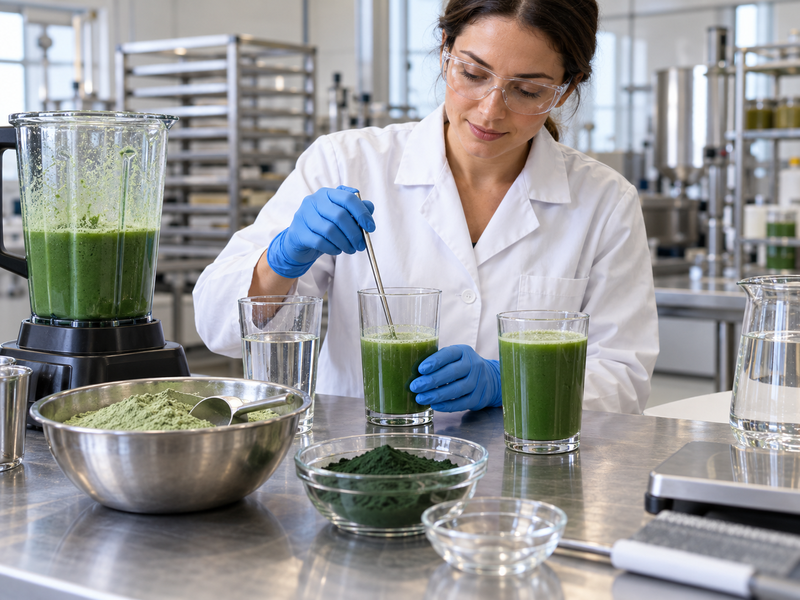
Test a full stick in every recommended liquid and preparation method: spoon stirring, shaker or blender if these appear on the label. Measure wetting time, floating powder, lumps, sediment and appearance after several minutes. Whole spirulina biomass may disperse without truly dissolving; avoid promising complete solubility unless a validated method and formulation support it. Include temperature and liquid-volume ranges likely in use.
Ask a panel to follow only printed instructions, without coaching. Their mistakes can reveal wording that needs revision. If the mix requires vigorous shaking, say so and choose a pack size that empties cleanly. Check how an acidic juice changes color and taste compared with water. A product intended for smoothies can use a different acceptance target from a plain-water drink. The useful record: photographs at defined times plus panel comments tied to a named ingredient lot and formula version.
8. Which stability checks matter for dry sticks?
Study filled packs, not open powder
Create a real-time shelf-life plan with retained packs from a representative pilot or commercial lot. Track pack integrity, net mass where relevant, powder clumping, moisture, odor, color and prepared-serving performance. Add microbiological or nutrient tests based on the formula’s hazard and claim assessment. Accelerated storage can help screen film choices, but it should not replace suitable real-time evidence for the marketed shelf life.
Compare sticks from the start and end of a filling run to catch seal contamination or fill differences. Include the intended carton and shipping configuration if abrasion or pressure could damage seals. Record storage conditions and methods. A formula with fruit powders or hygroscopic sweeteners may behave differently from plain spirulina. A defensible expiry date: it belongs to the exact formula, film, seal process and storage instruction that reach customers.
| Stability endpoint | Possible signal | Decision |
|---|---|---|
| Clumping | Moisture ingress | Review film or seal |
| Off-odor | Ingredient change | Review raw material or pack |
| Seal leak | Process weakness | Hold and investigate |
| Poor dispersion | Formula shift | Revise instructions or blend |
9. What must label and artwork teams verify?
Reconcile one packet with one serving
Check whether the stick is marketed as a conventional food or dietary supplement in each destination. That classification affects panel format, claim review and some manufacturing obligations. For a US supplement, FDA’s general labeling guide lists required statements. The ingredient list must reflect every formula component; pack directions should match the reconstitution trial and intended serving.
Run a final proof against approved formula, fill target, carton count, net quantity and lot coding. Small stick dimensions make readable text challenging, so check a printed prototype rather than only a screen image. If directions say “one pack daily,” the declared quantity and carton servings must agree. Avoid copying a nutrient or health claim from ingredient marketing. The avoidable delay: artwork approved before formulation or packaging trials finish often needs costly revision.

10. What belongs in a manufacturing handoff?
Lock the formula and its decision points
Transfer the ingredient specification, quantitative recipe, blending sequence, sample plan, filling settings range, film structure, seal checks, pack count, label version and stability protocol. Identify owner and approval status for each. Include a change-control trigger for new spirulina grades, flavors, film suppliers, seal tooling or carton format. Record pilot yield and reasons for rejects so procurement can compare offers on released packs.
Ask the manufacturer for batch records that link every finished carton to ingredient and packaging lots. For US supplements, FDA’s Part 111 guidance describes master manufacturing records and batch production records. Before purchase, review a finished pilot stick in the actual use setting. The handoff standard: operations should be able to reproduce both the dry packet and the prepared serving the brand approved.
| Handoff item | Acceptance evidence | Change trigger |
|---|---|---|
| Formula | Signed quantitative version | Ingredient change |
| Fill | Individual pack data | Machine or powder change |
| Seal | Integrity results | Film or tooling change |
| Directions | Home-use test | Serving or use change |
Consider an illustrative launch in which a brand approves a mango-flavored green powder after tasting a blender-prepared sample. The printed stick, however, tells customers to stir it into cold water. Those are different use conditions. Before artwork approval, ask uncoached users to prepare the exact retail stick with the stated water volume and an ordinary spoon. Record clumps, flavor, film opening and powder left in the packet. If results fail, revise the recipe or directions and rerun the test. The same exercise should be repeated after a supplier changes fruit powder grade, because particle size and moisture behavior can alter both filling and drink texture. This simple check connects the promise on the pack with what the line produces and what a customer can actually make.
FAQ
Q1: Can plain spirulina fill a stick pack? It may, but test flow, fill accuracy, opening and intended use before launch.
Q2: Does high-barrier film guarantee shelf life? No. Seal quality and the filled product’s stability also matter.
Q3: Should powder dissolve completely? Whole biomass commonly disperses; use a test and accurate wording for the chosen formula.
Q4: Can one stick be one serving? Yes if directions and label declarations support that choice in the target market.
Q5: Is a hand-filled sample enough for approval? No. Run representative filling and sealing trials.
Next step
Treat a spirulina stick pack as a product system: powder, blend, machine, film and directions. Approve it only after a lot-linked pilot passes fill, seal, reconstitution and stability checks. Request actual samples and records from the intended manufacturing route. A small packet should make the serving easier for customers without making quality harder to prove.