
Spirulina snack bar formulation can look straightforward until green powder changes binder behavior, color or aftertaste. Brands need a bar that cuts cleanly, survives distribution and tastes acceptable after storage. Build that outcome through a controlled dose ladder and pilot line, then test the packaged bar. A 2025 fruit-cereal-bar study measured color and sensory effects of dried Arthrospira powder; its formula offers trial ideas, not a guaranteed commercial recipe.
Contents: 1 · 2 · 3 · 4 · 5 · 6 · 7 · 8 · 9 · 10
1. What type of bar are you designing?
Name the matrix and use occasion
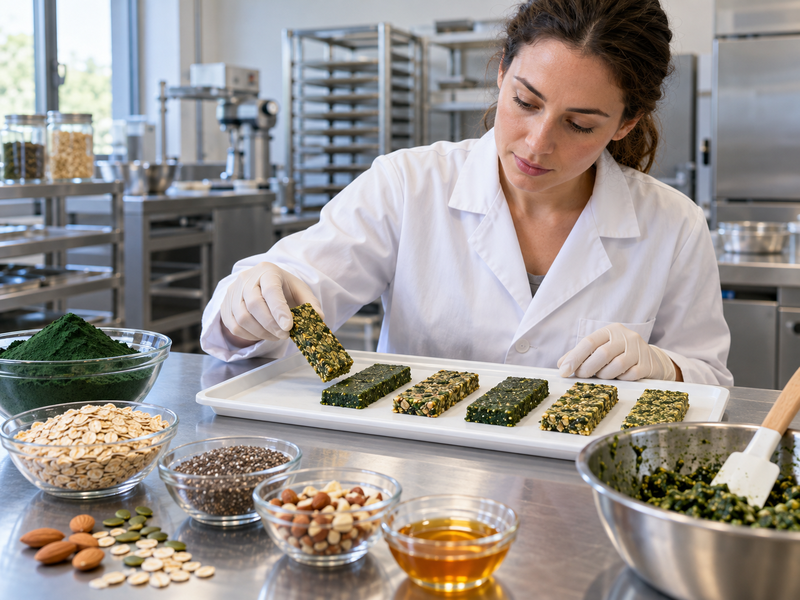
A chewy fruit bar, baked cereal bar and dense protein bar expose spirulina to different moisture, temperatures and background flavors. Define the exact base before comparing powder lots or doses. Record bar mass, intended serving, bite texture, sweetness and target shelf life. Decide whether green color should be visible across the whole bar or appear in a layer or inclusion. That decision changes how evenly powder must disperse and how consumers judge appearance.
Make a control bar without spirulina using the same line conditions. Assess the control’s taste, cut quality and storage behavior before attributing a defect to added biomass. Ask a relevant panel to review realistic wrapped samples rather than warm pieces taken off a bench tray. For a conventional food, review manufacturing and hazard controls under the applicable market framework; US 21 CFR Part 117 is a reference for covered human-food facilities. The useful product brief: describe the bite and package customers will actually receive.
2. How should the spirulina dose be screened?
Use a fixed recipe and coded ladder
Add several measured spirulina levels to one fixed base and process them identically. Compare green hue, aroma, taste, aftertaste, texture and appearance after a day of equilibration. A bar may look darker when warm or when the binder coats powder. Study results cannot be copied as a recommended dose: the fruit-cereal-bar research used a particular fruit and cereal matrix, panel and process. Your ingredient grade and customer segment may respond differently.
Weigh cost per acceptable bar, not just cost per kilogram of powder. A dose that meets a nutrient positioning goal but creates rejection in sensory testing is not ready. If the bar is sold with protein or other nutrient claims, calculate from finished-bar analysis and market rules. Keep the daily serving and bar size in view; a tiny added amount may have little nutritional significance. The right gate: choose a dose that passes taste, process and label checks together.
| Dose observation | Possible cause | Follow-up |
|---|---|---|
| Strong earthy note | Powder or dose | Compare lots and levels |
| Uneven green | Poor distribution | Adjust mixing sequence |
| Soft bar | Binder balance | Recheck moisture and solids |
| Claim shortfall | Serving composition | Revise claim or recipe |
3. How does binder choice affect the result?
Evaluate adhesion and flavor release
Syrups, fruit pastes, nut butters and fat-based binders coat particles differently. A wet binder can disperse spirulina yet increase moisture and stickiness. A fat-rich binder may soften earthy notes but make a greasy bite or affect wrapper compatibility. Compare binder systems at matched solids and bar weight. Observe how the mixture forms, cuts and holds inclusions. If an acid fruit paste is used, check finished flavor and green appearance after storage rather than predicting behavior from pH alone.
Record binder temperature and inclusion order. Adding spirulina to a hot binder changes its exposure compared with mixing powder into dry ingredients. A process change introduced for color may also alter microbial controls or bar structure, so involve quality and production staff. Test a scaled-down version of actual mixing and forming equipment, then confirm on the pilot line. The real question: does the binder keep texture and flavor acceptable across the proposed shelf life?
4. Which flavors and inclusions deserve trials?
Build a balanced profile, not camouflage
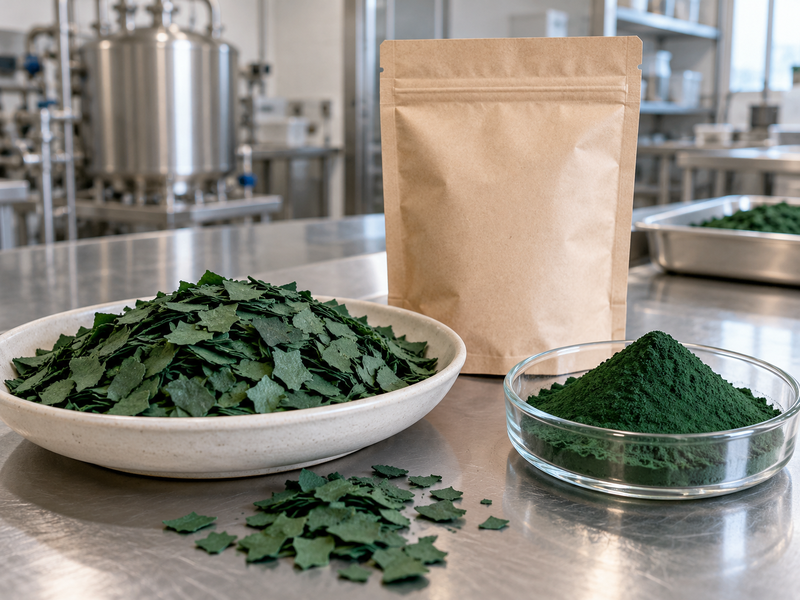
Fruit, cocoa, nuts and seeds can change perceived spirulina flavor and visual contrast. Test each within the intended nutrition and allergen brief. A cocoa bar can mask green color, which may be acceptable if the product story does not depend on a bright appearance. A berry bar can look attractive initially yet shift color as ingredients contact one another. Whole seeds can make cutting irregular, while dried fruit pieces can create localized moisture.
Run paired sensory tests: the same base with and without spirulina, then a small set of flavor variations at the selected dose. Ask panelists about aftertaste as well as immediate liking. Keep ingredient-lot information because fruit and cocoa profiles vary. A study of spirulina processing odors supports treating aroma as a real formulation variable. A disciplined screen: change one flavor lever at a time so the team knows which improvement to scale.
| Flavor route | Possible gain | Possible cost |
|---|---|---|
| Cocoa | Strong background note | Hides green cue |
| Berry | Familiar fruit profile | Acidity and color shift |
| Nut | Richness | Allergen review |
| Citrus | Brightness | Aftertaste interaction |
5. What does mixing order change?
Prevent pockets of intense powder
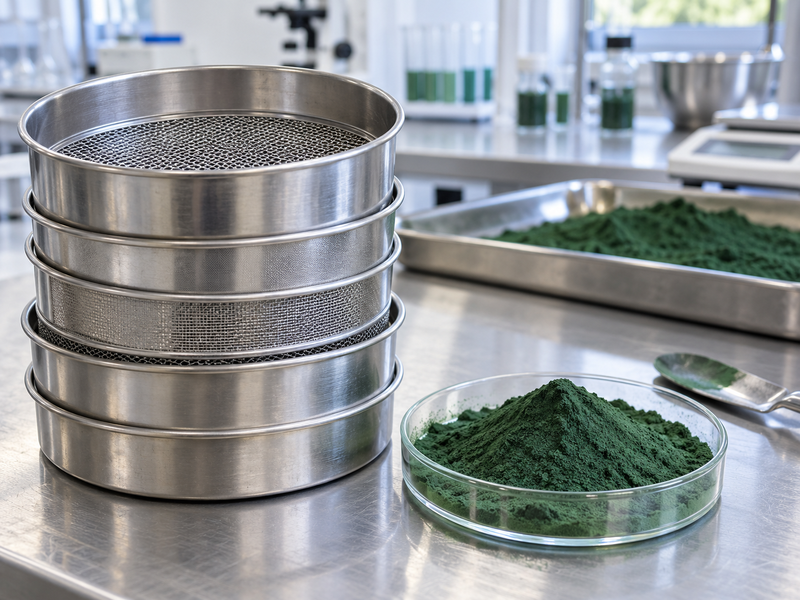
Green streaks can reveal poor distribution, but a visually even bar does not prove quantitative uniformity. A dry premix with smaller ingredients may help distribute spirulina before the binder enters. In other systems, controlled dispersion into the binder may work better. Compare both routes at the same dose and mixing energy. Measure mass balance and sample from multiple points before forming. Watch for powder remaining on vessel walls.
Record mixer type, batch load, mixing time and temperature. A small bowl can make a process look easy because the operator scrapes constantly; commercial mixers have larger dead zones. Add inclusions at a defined stage so their breakage and distribution remain consistent. Assess early and late pieces from the forming line. The practical control: a recipe is not complete until production can reproduce the same distribution without informal hand mixing.
6. How do forming and heat affect bar quality?
Measure exposure through the actual line
The process may include cooking binder, baking, extrusion, pressing, cooling and cutting. Record product temperature and residence time at each stage, not just equipment setpoints. Test color, flavor and bar integrity before and after each meaningful exposure. Research on spirulina-enriched bakery products shows that processing questions require measurement in a specific matrix. A baked bar cannot borrow results from a cold-formed fruit bar.
At pilot scale, monitor density, height, edge cracking, stickiness and cut loss. A strong press may make bars compact but hard to bite. A lower pressure can produce crumbling and high wrapper waste. If heat is reduced to protect color, check whether the process still meets food safety and texture requirements. The line-trial outcome: identify a workable range that maintains acceptable bar quality after cooling and wrapping.
| Stage | Sample | Decision |
|---|---|---|
| Mixed mass | Before forming | Distribution and handling |
| Formed slab | Before cutting | Density and thickness |
| Cut bar | Before wrap | Edges and weight |
| Packed bar | After storage | Shelf performance |
7. Why do moisture and water activity matter?
Measure both for the finished bar
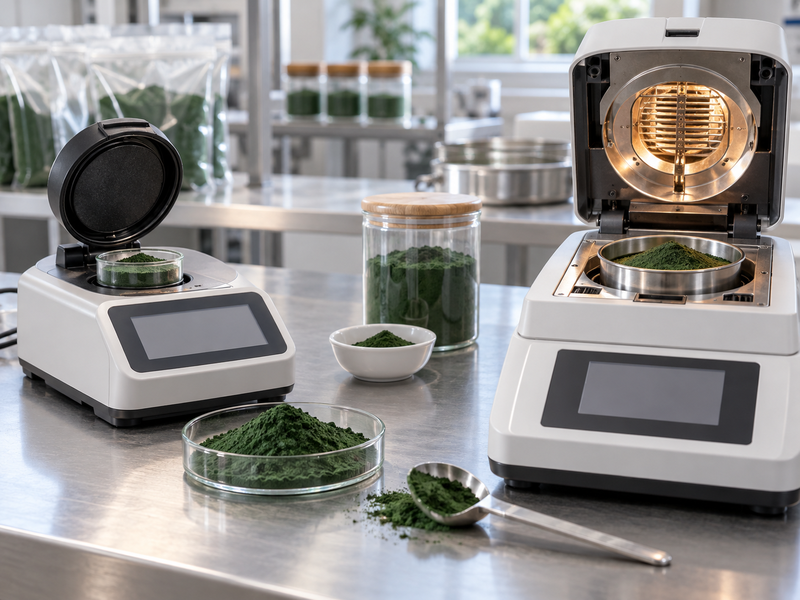
Moisture describes how much water is present; water activity reflects water available for certain microbial and chemical processes. Bars with dried fruit, syrups or humectants can have similar total moisture yet behave differently in storage. Measure relevant values on equilibrated finished bars and at multiple points if the bar has layers. Use them within a hazard and shelf-life assessment rather than treating a single number as a safety guarantee. FDA’s preventive-controls guidance discusses water activity in the context of microbial growth and product categories.
Watch migration between inclusions and matrix. A dry crisp component can soften next to a moist fruit paste. Packaging must support the desired texture and microbial controls throughout distribution. If the formula changes binder or fruit source, repeat the assessment. The key point: a bar that tastes good on production day can fail through moisture movement long before its proposed expiry.
8. What should finished-pack stability include?
Track sensory, texture and safety endpoints
Wrap bars in the intended material on the intended equipment. Evaluate seal integrity, oxygen and moisture protection as relevant, plus food-contact status for each market. FDA explains that food-contact material authorization depends on use conditions. Inspect bars over a real-time study for odor, color, texture, oil migration, microbial changes and declared nutrient attributes where applicable.
Include shipping exposure because bar corners can deform or wrappers can abrade. A product can pass a laboratory stability shelf yet arrive crushed after distribution. Compare several production points and retain controls. If a flavor becomes stale or green darkens, log the change and decide against the preset acceptance criteria. Accelerated conditions can rank pack options but should not alone justify a market shelf life. A buyer should ask: which tested package, formula and manufacturing lot supports the printed date?
| Check | Why include it | Failure example |
|---|---|---|
| Seal | Protects product | Leak or loose wrapper |
| Texture | Customer acceptance | Hardening or softening |
| Aroma | Sensory life | Stale or intensified note |
| Microbiology | Safety plan | Out-of-limit result |
9. How should nutrition and allergen claims be handled?
Check the complete finished bar
Calculate composition from the full recipe, then confirm claims with appropriate finished-product data and destination-market rules. Spirulina powder’s protein percentage does not establish that a small inclusion changes the bar enough for a “high protein” claim. Nuts, milk, soy or wheat in the base introduce separate allergen obligations. Review cross-contact controls and supplier declarations, especially if a new flavor or binder is added late in development.
Keep marketing copy tied to measured facts. Avoid implying clinical benefits from an ingredient inclusion. Validate net quantity, ingredient order, nutrition panel and serving size against the approved formula. For US foods, FDA’s food labeling guide provides general direction, but a market-specific review remains necessary. The avoidable error: approving wrapper art from an early recipe and assuming later substitutions have no label effect.
10. What should a brand approve before a production order?
Use a signed pilot scorecard
Approve a quantitative formula, ingredient specifications, process route, line settings range, bar weight, sensory standard, packaging format and shelf-life plan. Demand a pilot report with yield, rejects, edge defects, individual weights and samples from beginning and end of the run. Keep a coded retain for future lot comparisons. A supply agreement should identify change notifications for spirulina grade, fruit, binder and wrapper.
Use pass/fail gates before cost comparison. A cheaper powder cannot compensate for a bar that fails taste, breaks in transport or lacks claim support. Ask the contract manufacturer how it handles rework and traceability; recycled offcuts need a documented, quality-approved policy. The next move: produce a small, fully wrapped pilot lot and evaluate it after storage, not only at the line exit.
| Approval area | Required evidence | Owner |
|---|---|---|
| Product fit | Coded sensory and texture | R&D |
| Process | Yield and line records | Operations |
| Safety | Hazard and test plan | Quality |
| Market | Final wrapper review | Regulatory |
Imagine a fruit bar that tastes balanced at pilot scale but grows firmer after several weeks. The problem might come from moisture movement between fruit pieces and cereal, from binder crystallization or from the wrapper’s barrier properties. A rational investigation holds two factors constant while changing one, then checks water activity, bite force and sensory response at several storage points. Simply adding more syrup can solve the immediate firmness complaint while increasing stickiness or changing shelf behavior. Likewise, a stronger flavor may hide an emerging off-note without addressing its cause. Document each revision as a new formula version and repeat any affected label and stability review. This is why the wrapped pilot lot, rather than a warm unwrapped sample, should drive the purchase decision.
FAQ
Q1: Can any snack bar accept spirulina? No. Matrix, process and flavor change its performance; test the actual bar.
Q2: What is a universal inclusion level? There is none. Use a dose ladder and finished-bar evidence.
Q3: Does green appearance prove uniformity? It can reveal gross streaks but does not replace an appropriate sampling plan.
Q4: Is a low-moisture bar automatically safe? No. Evaluate water activity, hazards, process and storage together.
Q5: Can bench samples set shelf life? Use representative packed product and suitable real-time evidence.
Next step
Build a spirulina snack bar that works as a wrapped commercial food. Fix the base, select a sensory-acceptable dose, prove the line process and study moisture behavior in the final pack. Ask suppliers for current lot documents and manufacturers for full pilot records. Those steps give the brand a credible product rather than an attractive green prototype.