
Spirulina pasta manufacturing adds a green ingredient to a process built around dough structure and cooking performance. A dry strand may look promising while cooked pasta loses color or becomes soft. Define a target product, then run side-by-side trials through mixing, shaping, drying, cooking and storage. Original research on spirulina-enriched pasta tested color, hardness, cooking properties and sensory response across doses; its findings are useful questions for a factory trial, not a formula guarantee.
Contents: 1 · 2 · 3 · 4 · 5 · 6 · 7 · 8 · 9 · 10
1. Which pasta product is being made?
Distinguish fresh, dried and instant formats
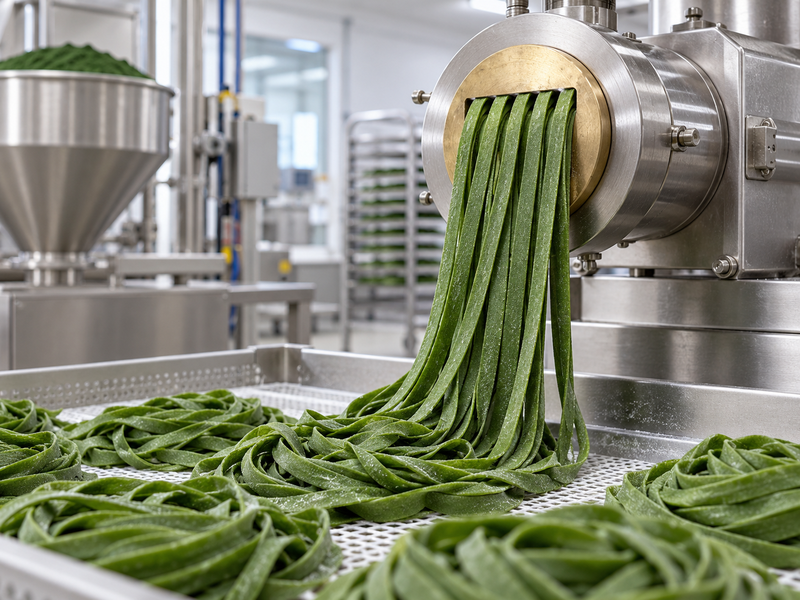
Fresh pasta, shelf-stable dried pasta and quick-cooking shapes have different water content, thermal history and distribution needs. Record whether the base is durum semolina, another wheat flour or a gluten-free system. Define shape, serving size, target cooking time, texture and green appearance before adding spirulina. An ingredient level that works in fresh spaghetti may not suit a dried extruded shape or a thick noodle.
Produce a control with no spirulina on the same line. Measure its hydration, extrusion pressure, drying behavior and cooked texture. If the control already fails, the green ingredient is not the starting problem. Establish intended market and food classification with quality and regulatory staff. For a US conventional food, 21 CFR Part 117 provides the human-food manufacturing framework for covered operations. The starting brief: specify what a shopper cooks, rather than only what a factory extrudes.
2. How should spirulina dose be selected?
Test the cooked result at several levels
Replace or add measured amounts of spirulina using one base formula and fixed process conditions. Assess raw dough, dried product and cooked pasta separately. Published 2026 pasta research tested multiple inclusion levels and found changes in color, hardness and sensory scores. Another fresh semolina pasta study examined higher replacement levels with a different system. These studies show why dose affects several endpoints; their preferred levels should not be copied without a commercial trial.
Choose an amount that fits both customer experience and truthful nutrition positioning. A stronger green color can bring a stronger characteristic taste. Calculate cost per finished serving and account for line loss. Keep spirulina lot and drying method fixed during the initial screen. If marketing wants a visible green cue, compare color under the light in which product will be sold and after cooking. The decision gate: a dose only wins when cooked flavor and texture remain acceptable.
| Dose sample | Check before cooking | Check after cooking |
|---|---|---|
| Control | Dough and dry color | Texture baseline |
| Low | Distribution | Subtle flavor and hue |
| Middle | Processability | Color and cooking loss |
| High | Extrusion stress | Sensory ceiling |
3. How does spirulina change dough hydration?
Measure water uptake instead of guessing
Whole spirulina biomass contributes particles and solids to the dough. Its moisture and particle size can change how a semolina mix takes up water. Start from the control’s water input, then adjust in small measured steps while holding mixing time and temperature. Record dough cohesion, crumb structure, extrusion feed and surface defects. An apparently dry mix may still produce sticky strands after resting, so assess over time.
Use commercial spirulina lots and report water on a clear basis. If a supplier changes powder moisture or milling, reassess the dough. In gluten-containing pasta, replacing semolina also changes the proportion of gluten-forming material; texture changes cannot be assigned solely to green pigment. If a gluten-free base is used, evaluate binders within that system rather than importing semolina settings. The useful trial: a hydration curve links water input with extrusion stability and cooked quality.
4. What should mixing and extrusion trials record?
Follow material through the line
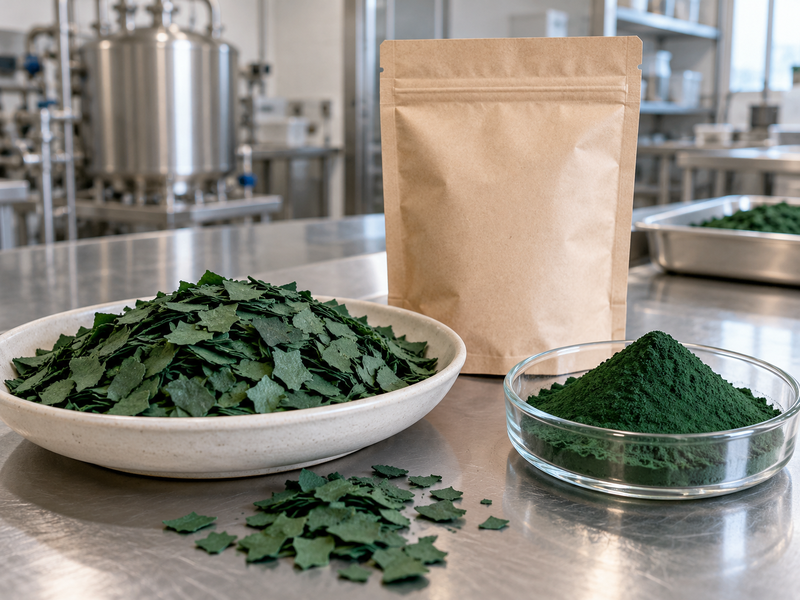
Set ingredient inclusion order and premixing method to prevent green specks. At production scale, sample at the blender, extruder feed and finished strands. Record mixing load, time, water temperature, extrusion pressure, die condition, cut rate and scrap. A color streak may reveal poor distribution, but a visually even strand does not prove quantitative composition. Choose a sampling method suitable for the intended claim and formulation.
Watch for die build-up and surface roughness as run time increases. A single clean start-up sample can misrepresent production. Test several shapes if the brand plans a range; thin spaghetti and thick penne have different drying and cooking behavior. Document any machine adjustment made to protect throughput because it may change strand density. A study of spirulina in semolina fresh pasta measured physical outcomes after incorporating biomass; a factory should record analogous endpoints on its own equipment. Pilot success: stable continuous output with traceable conditions, not just a good photograph.
| Line point | Record | Why |
|---|---|---|
| Mix | Time and water | Reproduce dough |
| Feed | Bridging or segregation | Prevent variation |
| Die | Pressure and surface | Spot build-up |
| Cut | Weight and scrap | Estimate yield |
5. How can drying affect quality?
Map time, temperature and airflow
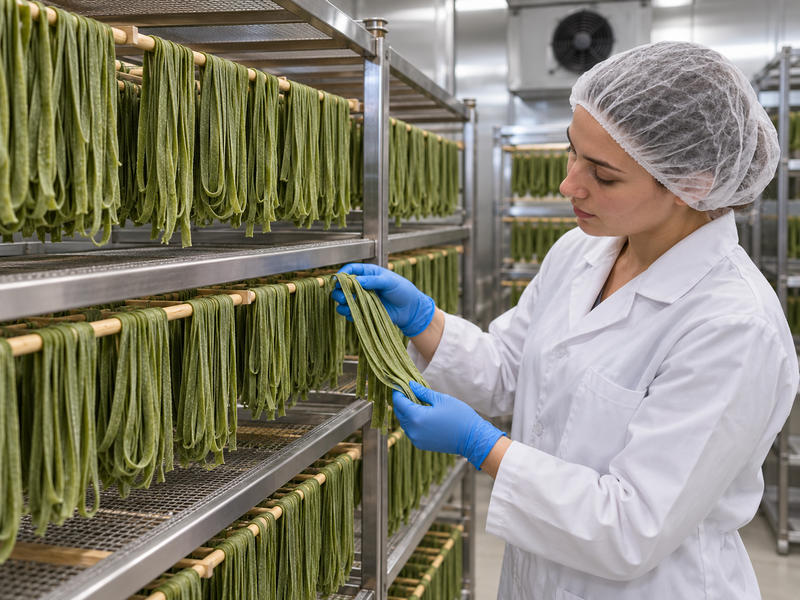
For dried pasta, record product temperature and moisture change across the dryer, not only its setpoint. Uneven drying may crack shapes or leave variable texture. A high-temperature schedule can change color and flavor differently from a gentler schedule, yet slower drying also has process and safety implications. Hold dough formula constant while comparing feasible dryer profiles. Include the control pasta in the same study.
Measure final moisture and water activity where relevant, shape breakage, color and cooking behavior. Then inspect samples after storage in the intended package. Do not assume that a bright green raw strand stays bright after drying or cooking. If the plant changes shape or pack size, reassess the schedule and finished result. The operational question: which drying profile gives stable product quality and acceptable line capacity while meeting the site’s food safety plan?
6. What should a cooking trial measure?
Use one reproducible kitchen method
Cook each pasta sample with a fixed water-to-pasta ratio, water quality, heat setting and endpoint method. Record target cooking time, cooking loss into water, weight gain, firmness and stickiness. Examine both pasta and cooking water color. A pasta study using microencapsulated spirulina found that treatment changed technological and sensory properties in its research formula; it illustrates the need to measure cooking outcomes, not to promise retention for ordinary powder.
Taste samples immediately and after a realistic plate hold. Sauce can hide some color or flavor changes, so include plain pasta in evaluation. Compare the approved control and a market reference using coded samples. Ask a trained panel for texture descriptors as well as general liking. A credible selling point: cooked performance matters more than the dry pack photo because customers buy pasta to eat after boiling.
| Cooking endpoint | Observation | Business use |
|---|---|---|
| Time | Minutes to target bite | Package directions |
| Cooking loss | Solids in water | Structure comparison |
| Weight gain | Water absorption | Portion behavior |
| Color | Cooked strand | Product promise |
7. How should flavor and color be evaluated?
Separate raw appearance from eating quality
Green intensity can make a product stand out, but consumers also judge aroma and taste. Evaluate dry, freshly cooked and held pasta under consistent light. Record color with a reference method if the brand needs an objective tolerance, then pair instrument readings with sensory review. A greener number does not indicate better acceptance. Different flour lots can change the background shade and mask or amplify spirulina.
Test sauce pairing after the plain sample passes. A light oil sauce may reveal characteristic flavor while tomato sauce changes perceived color. Do not call an earthy note a defect automatically; define the target market and sensory standard. Published studies report mixed outcomes across formulas and dose levels, including the 2026 dose study. The useful specification: specify an acceptable range of cooked appearance and taste with a retained approved reference, rather than “bright green” alone.
8. Which package and shelf checks belong in the plan?
Protect shape and sensory quality
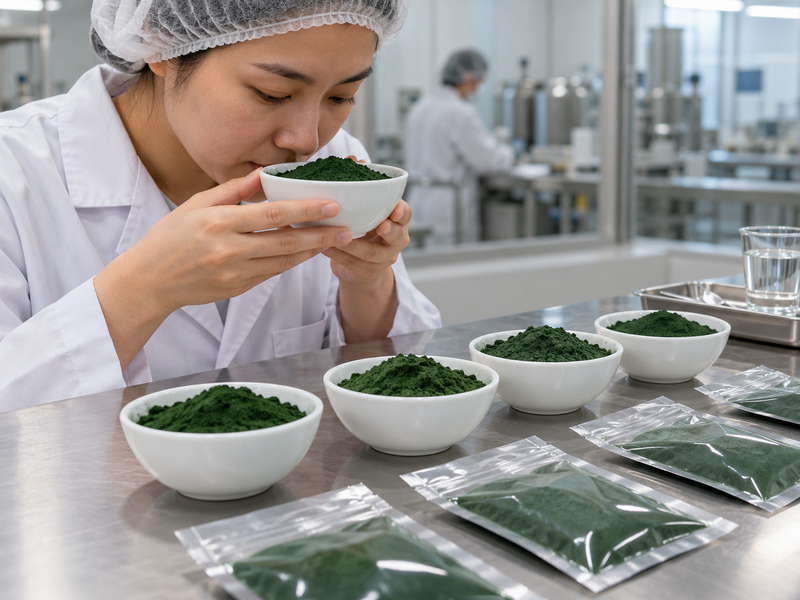
Dry pasta packaging must survive transport without excessive breakage while protecting the product according to its stability needs. Fresh pasta needs a separate, more demanding shelf-life and safety plan. Test the exact bag, carton or tray intended for sale. Record seal integrity, package damage, breakage, color, odor and relevant microbiological results over time. The packaging material also needs food-contact review for each intended market; FDA’s food-contact guidance explains the US framework.
Cook stored samples at each checkpoint. A product may look unchanged dry yet produce a different texture after months in distribution. If a transparent pack is selected for visual appeal, include light exposure in the study. Compare shipping configurations and fill levels because brittle shapes can crush under load. The shelf-life basis: finished pasta in its commercial package under relevant storage conditions, not loose product in a laboratory jar.
| Pack check | Dry pasta | Fresh pasta |
|---|---|---|
| Seal and damage | Breakage protection | Leak and safety control |
| Color | Light exposure | Color and moisture |
| Microbiology | Risk-based | Product-specific plan |
| Cooking test | Stored texture | Stored texture |
9. What must be checked on the pasta label?
Tie declarations to the finished recipe
Review ingredient order, allergen statements, net quantity, cooking directions and nutrition panel against the approved formula. Wheat or egg in a pasta base creates allergen obligations separate from spirulina. A protein or other nutrition claim should use finished-product evidence and the rules of each destination. Replacing a portion of semolina with spirulina does not automatically qualify the pasta for any nutrient claim.
If artwork describes “spirulina pasta,” confirm the actual inclusion level and naming rules with regulatory staff. Avoid health claims borrowed from supplement marketing. Cooking instructions need data from the selected shape and manufacturing process; a change in die or drying can change time. FDA’s food labeling guide is a general US reference, while export markets need separate review. The final proof: line-run formula, measured serving, ingredients and instructions must agree on one signed version.

10. What should procurement request before scale-up?
Approve a lot-linked trial dossier
Request spirulina identity and lot documents, powder physical specifications, pasta formula, water basis, process settings, yield, cooking results, sensory notes, package specification and shelf-life protocol. Compare at least an early and late line sample. Ask how a new spirulina lot or semolina source triggers a recheck. Retain approved dry and cooked reference images with the actual samples where feasible.
Quote cost per released pack and usable serving, accounting for scrap and breakage. A low raw-material quote can be overwhelmed by a slow dryer schedule or excessive off-spec shapes. Set approval gates before a bulk order: stable extrusion, acceptable cooked texture, supported label and packaged life. The next move: run a representative line trial with a control and at least two spirulina levels, then cook blind-coded samples before deciding.
| Dossier item | Decision informed | Owner |
|---|---|---|
| Raw material | Repeatability | Supplier quality |
| Line data | Scale-up | Operations |
| Cook test | Consumer experience | R&D |
| Label and pack | Market fit | Regulatory |
An illustrative line trial might find that a thin green noodle passes a brief cook test while a thicker shape from the same dough turns soft at the center and loses more color into water. The difference does not imply that one ingredient lot is defective. Shape changes surface area, drying path and cooking exposure. Keep the powder lot and base formula fixed while adjusting the thick shape’s water input, die or dryer profile within approved controls. Then repeat blind-coded cooking and sensory tests for both shapes. If the brand plans a family of green pasta products, write separate cooking directions and quality ranges for each SKU. A single approved formulation does not make every shape interchangeable once drying and boiling enter the picture.
FAQ
Q1: Does green dry pasta remain green after cooking? Not necessarily. Measure both states in the chosen formula and process.
Q2: Can a research inclusion level become a factory recipe? No. Recheck hydration, cooking and taste on the commercial line.
Q3: Why test cooking loss? It helps assess how the pasta structure holds during boiling.
Q4: Does spirulina replace gluten? It changes solids in the mix but does not provide the same gluten network as wheat.
Q5: Can one cook time serve every shape? Determine directions for each shape and process.
Next step
Plan spirulina pasta manufacturing from the cooked plate backward. Fix a product brief, test powder dose and hydration, then verify continuous line performance, cooking quality and shelf behavior. Ask prospective partners for line-run samples and records rather than dry-strand photos alone. The resulting evidence supports a repeatable pasta customers will enjoy cooking.