
Spirulina side effects depend on the person, the product, and its quality controls. Most people shopping for spirulina want a straightforward answer to “Is it safe for me?” The answer depends on the product, the amount used and individual circumstances. This guide distinguishes reported symptoms from proven causes, explains which supplier documents matter, and shows when a personal medical question needs a clinician rather than a product page.
Contents
- What side effects have users reported?
- How do contamination risks differ from ingredient intolerance?
- Can spirulina affect the liver?
- Who needs individualized advice before taking it?
- How should a consumer test personal tolerance?
- What makes a certificate of analysis useful?
- Does organic or natural mean side-effect free?
- How do storage and kitchen handling affect risk?
- How should a brand respond to adverse-event complaints?
- What is a sensible safety decision at purchase?
1. What side effects have users reported?
Describe symptoms without assuming a cause
Reports of stomach upset, nausea, headache or rash after a supplement deserve attention, but timing alone does not establish that spirulina caused them. A blend may contain other ingredients; a damaged or contaminated lot can differ from an earlier purchase. Ask when the symptom began, how much was taken, whether anything else changed and whether it improved after stopping.
The NIH LiverTox spirulina monograph says controlled studies generally have not shown significant adverse events, while rare liver-injury reports exist with uncertain attribution. That is a balanced starting point: neither a blanket guarantee nor a claim that every symptom is caused by spirulina.
A useful next step
If a concerning reaction follows use, stop the product and seek appropriate medical advice. Keep the package, lot code and a dated use record. A seller needs those details for a meaningful quality investigation.

2. How do contamination risks differ from ingredient intolerance?
Investigate the source before generalizing
An individual’s intolerance is not the same issue as a contaminant in a product. Cyanobacterial toxins, microbial contamination or toxic elements would be quality failures, not ordinary properties of correctly made spirulina. The FDA microcystins page explains that some toxin-producing cyanobacteria can coexist with harvested algae and that FDA evaluates food products case by case. Its examples particularly concern AFA products; do not transfer a recall to all cultivated Arthrospira.
Still, a buyer should demand traceable production and fit-for-purpose testing. “Pure” on a label does not show the testing method, detection limit or actual lot result.
A useful next step
Request species identity, cultivation controls, the current lot certificate and test methods. Check whether the certificate names microcystins or only general microbial counts; they answer different questions. Hold a questionable lot until the discrepancy is resolved.
| Question | Ask for | Why it matters |
|---|---|---|
| Identity | Species and source | Avoid substitution |
| Microcystins | Lot test and detection limit | Toxin control |
| Microbes | Named organisms and counts | Hygiene |
| Elements | Lead and other relevant results | Exposure review |
3. Can spirulina affect the liver?
Use case reports with proper caution
The LiverTox review describes rare published and registry reports of liver injury associated with spirulina products, but the contribution of spirulina, other medicines and possible contaminants is unresolved. Controlled trials cited there did not show a consistent liver-injury signal. A case report is a reason to take symptoms seriously, not a reliable estimate of population risk. Yellowing skin or eyes, dark urine, severe persistent nausea or unusual fatigue after starting any supplement warrants prompt medical evaluation.
A brand should not explain away a complaint as “detox.” That word can delay appropriate care and obscures the need to investigate a lot.
A useful next step
Capture start and stop dates, other medicines and supplements, the package photograph and lot number. Send suspected serious adverse events through applicable reporting channels and preserve samples for investigation.

4. Who needs individualized advice before taking it?
Consider medicines and health circumstances
A person on prescription medicines, with a chronic condition, before surgery, or during pregnancy or breastfeeding has questions that a generic serving recommendation cannot settle. The NIH supplement consumer guide advises discussing supplement use with health care providers, including all products and medicines taken. The point is not to invent a spirulina-specific interaction list when evidence is incomplete. It is to disclose the actual ingredient, dose and intended use to someone who knows the person’s health history.
A powder incorporated into food and a multi-ingredient capsule can pose different decision problems.
A useful next step
Bring the complete label, serving size and planned frequency to a clinician or pharmacist. For a child, use a pediatric professional rather than scaling down an adult portion by guesswork. Document advice relevant to the particular product.
| Context | Information to bring | Decision owner |
|---|---|---|
| Medicines | Full list and timing | Clinician or pharmacist |
| Pregnancy | Label and lot details | Prenatal clinician |
| Child use | Age and formulation | Pediatric clinician |
| Surgery | Supplement history | Care team |
5. How should a consumer test personal tolerance?
Use the label as a ceiling, not a challenge
A product’s labeled use is a starting reference for the named formulation, not an invitation to increase intake until something happens. For a food powder, note the measured amount added to a normal meal and avoid changing several supplements at once if you are trying to identify a reaction. Never use a trial of tolerance to override medical advice. Check the ingredient list for flavors, sweeteners, carriers or allergens that may be present in a blend.
If the package has no clear serving directions, supplier identity or lot code, choose a better documented option. There is no universally established therapeutic spirulina dose for all adults.
A useful next step
Keep a simple diary with date, product, lot, amount, other new foods and symptoms. Stop if an unwanted effect appears and consult a professional if symptoms are persistent or serious. Do not restart merely to prove causality.
6. What makes a certificate of analysis useful?
Match the document to the package
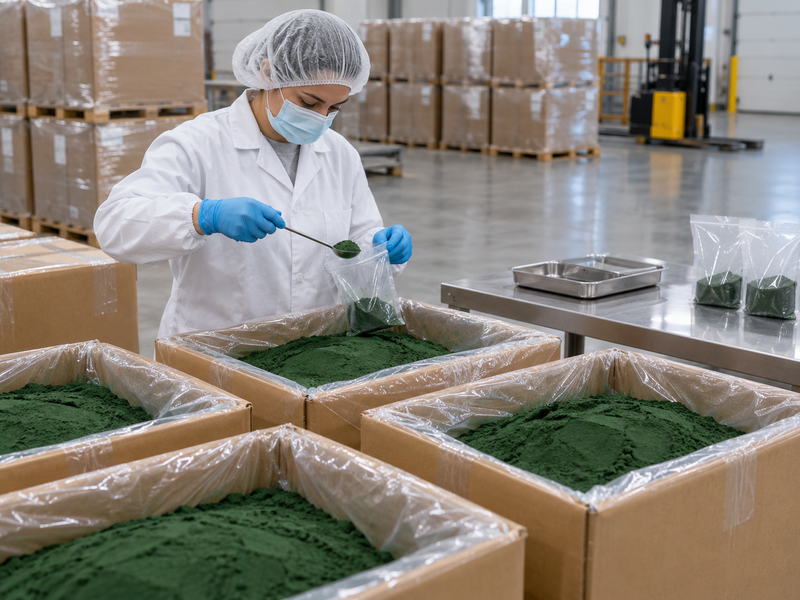
A certificate of analysis should identify the product, production lot, testing laboratory or responsible quality unit, methods, units, results and release date. “Pass” alone is hard to interpret if the acceptance limit is missing. Compare the certificate with the actual package code and current specification. Different hazards require different methods: an ordinary total plate count cannot demonstrate the absence of microcystins, and a generic statement about heavy metals does not reveal individual element concentrations.
For a brand, the finished product may need additional controls after the powder is opened, blended or repacked. Documentation must follow the material through that chain.
A useful next step
Ask the supplier to explain any analyte missing from the risk assessment and how samples were selected. Keep the signed specification and certificate together. If units do not match, request clarification before deciding the lot passed.
| Certificate field | Check | If absent |
|---|---|---|
| Lot identity | Matches package | Hold |
| Test method | Suitable for analyte | Clarify |
| Result and unit | Comparable to limit | Clarify |
| Release signoff | Authorized and dated | Verify |
7. Does organic or natural mean side-effect free?
Treat marketing terms and safety tests separately
Organic certification addresses a defined production standard; it is not an assay for every toxin, microbe or element. “Natural” likewise tells little about personal tolerance or production hygiene. A carefully managed conventional lot can have better evidence for a particular safety question than an organic product with no accessible certificate. The meaningful comparison is between identified lots tested for relevant hazards under defined methods. Packaging, moisture control and storage can also affect condition after release.
Consumers should read the ingredient list and expiration information, while commercial buyers should check quality records and change control.
A useful next step
Compare two products on traceability and current test coverage before comparing badges. Ask whether the claim belongs to the exact item sold. Avoid inferring medical safety from cultivation or branding alone.
8. How do storage and kitchen handling affect risk?
Keep the opened powder in good condition
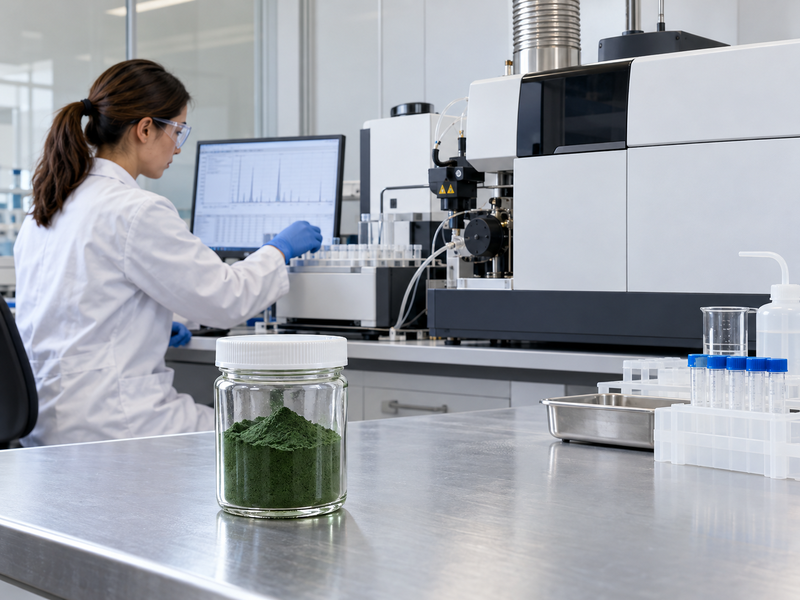
Store a dry powder according to its label in a tightly closed container, away from moisture and heat. Use a clean dry utensil; repeated contact with wet spoons can change a powder even if the sealed product met specification. Once powder is mixed into a perishable smoothie, yogurt or other food, follow the storage rules for that finished food. The FDA safe food handling guidance emphasizes clean handling and prompt chilling of perishable foods.
An expired, damp, clumped or strangely smelling container deserves caution, though appearance alone cannot prove microbiological safety.
A useful next step
Write the opening date on the container and follow the maker’s use period. Do not assume a cold smoothie remains safe all day because its ingredients are marketed as healthy. Discard a product with compromised packaging.
| Observation | Practical response | Reason |
|---|---|---|
| Damaged seal | Contact seller | Unknown exposure |
| Wet clumps | Do not use pending review | Moisture concern |
| Off odor | Compare lot and contact seller | Quality change |
| Prepared smoothie | Chill as perishable food | Food handling |
9. How should a brand respond to adverse-event complaints?
Investigate without prejudging
A customer report requires empathy, traceability and a defined escalation route. Collect product name, lot, amount, timing, symptoms, concurrent products and any medical evaluation the customer volunteers. Preserve privacy and avoid asking for unnecessary sensitive details. Quality should check the retained sample, production record, distribution history and similar complaints. Medical or regulatory teams may need to assess reportability in the destination market. Do not post a confident statement that the ingredient could not have caused the event before the evidence is reviewed.
Nor should marketing issue a broad recall based solely on an unverified anecdote.
A useful next step
Set a response owner and timeline. Separate immediate customer guidance from technical root-cause work. Record disposition, corrective action and communication decisions so the next complaint can be evaluated consistently.

10. What is a sensible safety decision at purchase?
Combine personal fit with product evidence
A well-documented spirulina product states what it is, how to use it, what else it contains and how to identify the lot. A commercial buyer can go further with a signed specification, certificates and supplier audit information. No document guarantees zero risk, but traceable controls make concerns investigable. Compare products for the specific hazard that matters: contamination, allergy to another ingredient, medication context or storage conditions. A confident product page should help a reader distinguish these issues.
When the question is personal medical suitability, a clinician has information that the seller does not.
A useful next step
Choose the candidate with complete labeling and a credible route to lot results. Save the lot code after purchase. If a necessary test is missing, request it before routine use or choose another product.
| Evidence | Consumer check | Brand check |
|---|---|---|
| Identity | Ingredient list | Species confirmation |
| Lot | Code on pack | Traceability exercise |
| Quality | Contact for test records | Signed COA |
| Use | Clear directions | Label review |
Frequently asked questions
Is nausea always caused by spirulina?
No. Timing may raise suspicion, but other foods, ingredients or illness can contribute. Stop use and seek advice for persistent or serious symptoms.
Can a good test result rule out every risk?
No single test covers every hazard or personal reaction. Use a relevant panel, traceable lot and responsible handling.
Should I take more if I feel no effect?
No. Lack of a felt effect is not a reason to exceed the label or seek a therapeutic response from a food supplement.
Is microcystin the same as a microbial count?
No. Microcystins are toxins; standard microbiological counts measure different things. Ask for the specific analyte and method.
What information helps a complaint investigation?
Keep product name, package, lot code, dates, amount and symptom timeline. Share urgent medical symptoms with a clinician promptly.
Conclusion
Spirulina side effects should be evaluated through both personal context and product evidence. Reported symptoms deserve attention, while rare case reports should not be generalized to every lot. Choose traceable material, use it as labeled, handle it well and seek individualized care when health circumstances or concerning symptoms require it.
For ingredient documentation, compare the whole spirulina range, the biomass microcystin testing plan and the microbiological specification guide. These product pages can start a supplier discussion; final nutrition and safety statements still require the chosen lot and finished-product evidence.