
Water reuse in spirulina cultivation means returning selected water or spent medium to a defined process step after its suitability has been assessed. Buyers face a hard question: water savings can alter nutrient balance, introduce unwanted organisms or conceal a source change. Spirulina production water reuse controls solve that problem through separate water streams, justified treatments and records linked to finished lots. The Codex water reuse guidelines support a fit-for-purpose, risk-based assessment rather than one rule for every use.
Contents
- Which water streams can a plant reuse?
- How should intended use set the acceptance criteria?
- What makes returned culture medium different?
- How should source and treatment be mapped?
- Which tests belong in routine monitoring?
- How should storage and piping prevent mixing?
- What happens when a water result fails?
- How should a reuse change be validated?
- Which records should buyers review?
- How can a supplier maintain control over time?
1. Which water streams can a plant reuse?
Separate streams before judging them
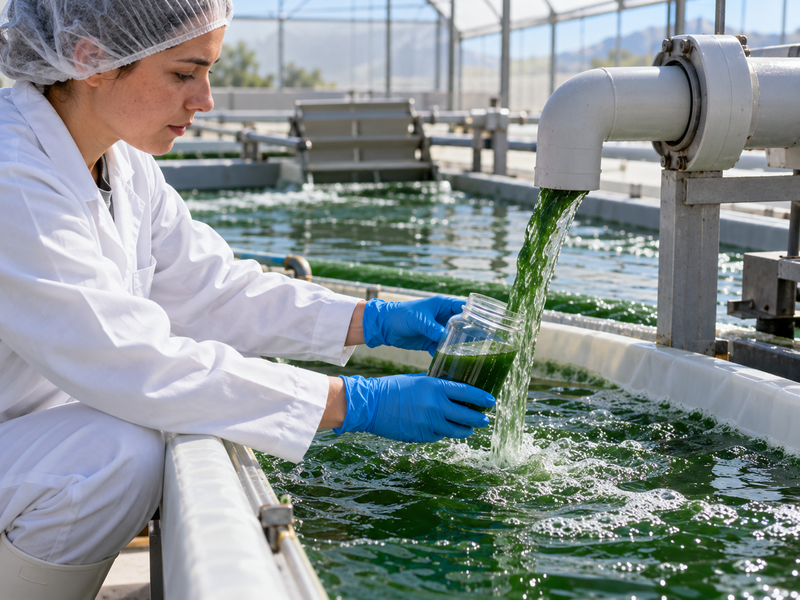
Begin with a water balance. Fresh make-up water, harvested cultivation medium, equipment rinse water, condensate and utility water have different histories. A return line from a harvested culture carries residual nutrients, cells and soluble organics. A final food-contact rinse has a different exposure path. Cooling water that never contacts food might be suitable for a utility loop under a separate assessment. Calling all three “recycled water” hides those distinctions. Start at the pipe: identify its source, collection point, treatment, storage tank and destination on a dated drawing.
A supplier may return screened medium to the same cultivation system while forbidding its use for a final rinse. It may use reclaimed condensate for cleaning only after demonstrating suitability. For a buyer, the request is a stream register with permitted uses and prohibited cross-connections. The Codex guidance explicitly considers direct and indirect contact with food.
2. How should intended use set the acceptance criteria?
Write a fit-for-purpose specification
Acceptance criteria need to follow exposure. Water touching biomass or food-contact equipment needs an assessment of sanitary quality, source hazards and any later process that could reduce risk. Water confined inside a closed cooling circuit presents a different product-contact risk. For facilities subject to US food CGMP rules, 21 CFR 117.37 requires water contacting food, food-contact surfaces or packaging materials to be safe and of adequate sanitary quality. That language does not create a universal numeric reuse limit for spirulina ponds.
Ask the supplier to name each parameter, its reason, sampling point, method, action limit and response. Microbial indicators can help assess sanitary control, while conductivity, alkalinity and nutrient measurements describe culture-medium suitability. Neither group substitutes for the other. A passing total count cannot show that nutrient carryover will support stable growth. A useful test: can the team explain why each number belongs at that specific use point? If not, revise the plan before relying on the result.
| Intended use | Main concern | Evidence to request |
|---|---|---|
| Return to cultivation | Organisms and medium drift | Culture trend and chemistry |
| Final equipment rinse | Food-contact sanitary quality | Point-of-use results |
| Noncontact utility loop | Cross-connection or leak | Segregation and maintenance record |
3. What makes returned culture medium different?
Track what remains after harvest
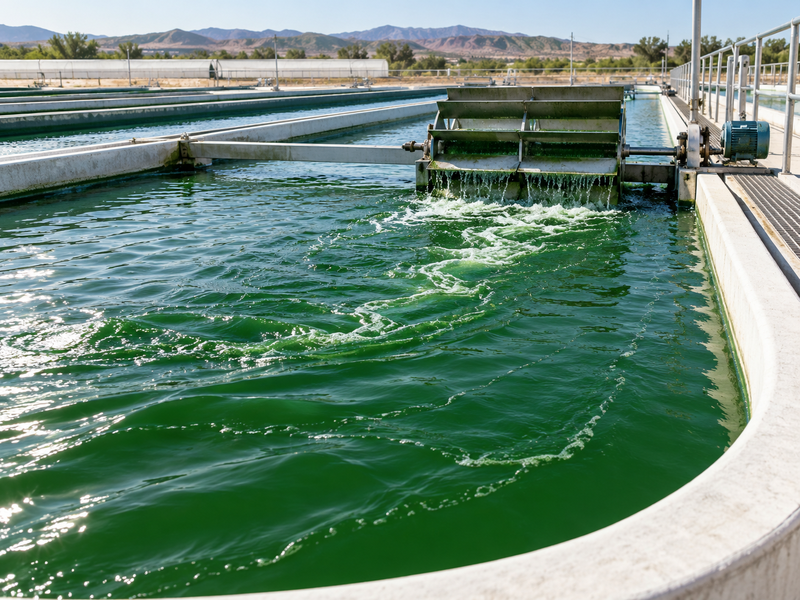
Harvesting removes biomass but leaves dissolved components behind. Carbonate, nutrients, salts, secreted organic matter and small uncollected cells can change with each return cycle. In an experimental comparison of fresh and recycled Arthrospira medium, repeated recycling reduced growth and affected filtration performance as organics accumulated. That finding is a warning about process drift, not a fixed maximum number of cycles for every factory. The study conditions cannot be copied directly into a supplier specification.
Request a cycle history: which pond supplied the medium, how much returned, how much fresh water and nutrient solution was added and where the next lot received it. Compare biomass growth, color, harvestability and finished-powder results against a fresh-medium baseline. Watch the trend, not one sample. A recycled medium may pass today’s chemistry check while its dissolved organic load rises over successive cycles. A producer can set a bleed-and-replace trigger or treatment step, then verify that chosen trigger against actual product and process outcomes. Link these records to the broader spirulina cultivation water quality program.
4. How should source and treatment be mapped?
Follow water through the whole loop
A flow diagram should show every point where water can enter, collect, receive treatment, wait and re-enter production. Include valves, bypasses, filters, tanks, backwash discharge and manual hose connections. A treatment unit described only as “filtration” leaves specific questions unanswered: what particle size does it remove, what is the integrity check and where does bypassed water go? For microbial control, show the validated treatment sequence and the monitoring instrument that confirms it ran correctly. Do not assume a filter designed for suspended solids also manages dissolved chemicals or microorganisms.
The map should also include start-up and shutdown states. During maintenance, operators may temporarily route water through a hose or hold it in an auxiliary tank. That temporary path needs a documented decision before production resumes. Here is the practical check: select one recent finished lot and trace its reused water backward through tank, treatment and source records. If the diagram cannot explain an actual flow path, it is not current. Record supplier boundaries too; water bought from a outside supplier still needs a stated source and receiving test plan.
| Mapping item | Question for operations | Buyer-facing record |
|---|---|---|
| Collection | Which process produced the stream? | Source log |
| Treatment | What ran and how was it checked? | Equipment trend |
| Storage | How long and under what conditions? | Tank log |
| Return | Which batch received it? | Batch genealogy |
5. Which tests belong in routine monitoring?
Match the test to a failure pathway
No single laboratory panel proves a reuse loop safe. Begin with hazards identified for that source: incoming water quality, contamination from open cultivation, chemical additions, cleaning residues, corrosion or material carried from a prior lot. Choose microbial indicators and any organism-specific tests through that assessment. For recycled cultivation medium, add process measurements such as pH, conductivity, alkalinity, nutrient balance and a useful indicator of organic accumulation where justified. A turbidity result may reveal solids but says little about dissolved material. A growth curve or harvest rate can show functional drift that a one-time water test misses.
Sampling points matter. Pair periodic laboratory results with in-line records and point-of-use checks. Record methods, sample IDs and who reviewed exceptions. Keep the question narrow: each test should answer whether this water remains fit for the named use. The Codex water guidance provides a framework for choosing microbiological criteria in context, while the plant must justify its own chemical and operational checks.
6. How should storage and piping prevent mixing?
Control the interval between treatment and use
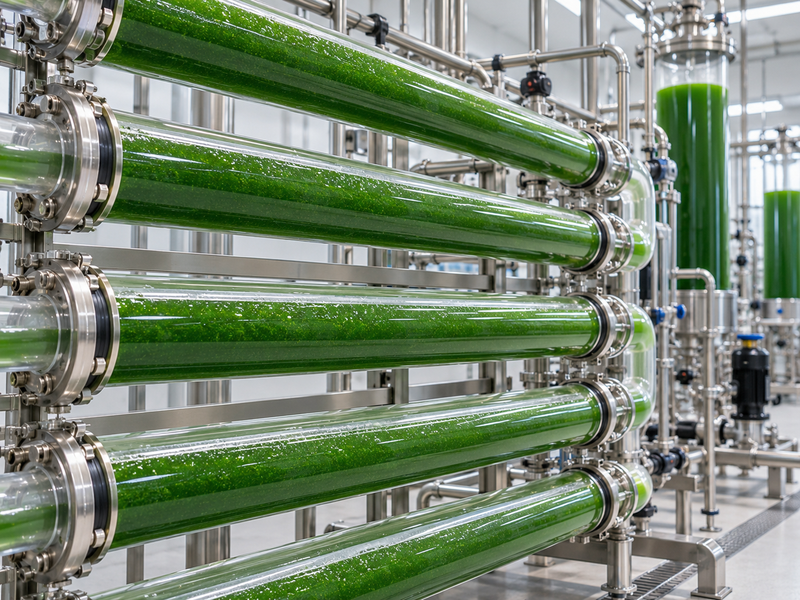
Storage can undo a well-run treatment step. Document tank cleaning, vent protection, covers, drainage, hold time and inspection. Avoid dead legs where stagnant water remains between campaigns. After a repair, test the intended route before returning it to service. These are practical controls that should be adjusted to the plant’s design and local requirements.
At the receiving end, check whether the return point can splash into an adjacent line or bypass a treatment step. Review temporary connections during cleaning and maintenance; they often exist outside the permanent drawing. Ask for a walk-through: have an operator follow a water parcel from source through the final use point and name every stop. A discrepancy between the walk-through and record deserves correction. Buyers do not need every pipe photograph, but they should see a credible segregation plan and evidence that operators use it.
| Potential mix-up | Preventive control | Verification |
|---|---|---|
| Reuse tank feeds rinse line | Dedicated line and backflow device | Piping inspection |
| Untreated bypass stays open | Locked position or interlock | Valve check log |
| Stagnant transfer hose | Managed cleaning and storage | Pre-use inspection |
7. What happens when a water result fails?
Hold affected material before repeating the test
An out-of-limit water sample calls for a defined hold, not an automatic retest until a passing result appears. Stop the affected return route and identify the last acceptable check. Trace all cultures, wash steps, equipment rinses or finished lots exposed since that point. The hold scope depends on the sampling location and line design. Record the time, valve state and operator action before the system changes.
Investigate whether the source changed, treatment lost performance, a sampling error occurred or storage allowed recontamination. A repeat result can help investigate, but it does not erase the initial observation. Decide product disposition using the actual hazard, downstream controls and applicable specifications. Close the gap: document cleaning or repair, a restart sample and an effectiveness check after normal operation resumes. The finished-lot linkage should remain available within spirulina lot traceability records, even when no product ultimately needs rejection.
8. How should a reuse change be validated?
Test the proposed loop at working scale
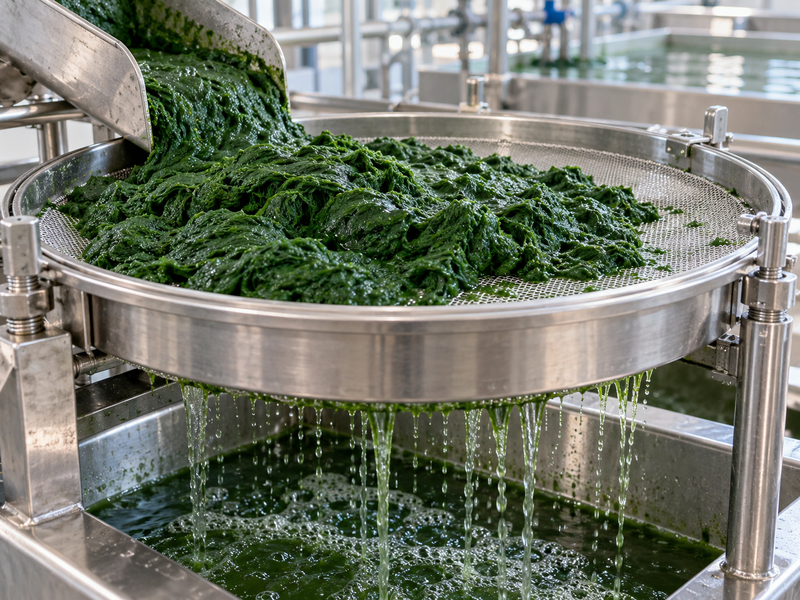
Adding a filter, raising a reuse fraction or extending storage time changes the water’s history. A change plan should state the old route, proposed route, reason, hazards, trial design and approval roles. Run trials across conditions that challenge the system: early and late harvests, expected seasonal temperatures, routine shutdowns and the highest planned recycle proportion. Compare water measurements and culture performance with a suitable baseline. If the new loop increases soluble organics or changes drying behavior, evaluate the downstream powder too.
Validation should specify acceptance criteria before trials start. For example, a producer might choose a culture-growth comparison, relevant microbial results, treatment-function checks and harvest filtration performance. Those measures are examples, not universal limits. One good run is a beginning. Record who authorized commercial use and what condition would trigger rollback. For a buyer, a concise validation summary is often more informative than a vendor brochure about treatment equipment.
| Change | Trial question | Evidence |
|---|---|---|
| New treatment unit | Does water meet its intended use? | Challenge and routine results |
| Longer tank hold | Does quality drift before use? | Time-point samples |
| Higher recycle fraction | Does culture or harvest change? | Paired production trends |
9. Which records should buyers review?
Request a focused evidence pack
Buyers need enough evidence to judge control without collecting every daily worksheet. Request the current water-flow diagram, stream register, intended-use specifications, treatment description, monitoring schedule, deviation procedure and recent trend. Select a production lot and ask for its source-water, reused-medium and treatment records. A sample trace exposes gaps in batch genealogy more clearly than a polished annual summary. The supplier should identify which results were measured at source, after treatment and at point of use.
Check whether laboratory methods, action limits and review signatures match controlled documents. If a tank was cleaned, seek the work order and return-to-service check. If a test failed, request the hold and disposition record rather than a passing result alone. A simple buying question: what evidence would make your quality team reject or delay the next lot? Put that trigger in the quality agreement. Where a supplier claims water savings, ask for a measured water balance and its time period; such claims must be separate from the sanitary-suitability judgment.
10. How can a supplier maintain control over time?
Review the loop as a living process
Once approved, a reuse loop needs periodic review of test trends, chemical additions, filter changes, cleaning events and product complaints. Seasonal heat or a new cultivation strain may shift a previously stable balance. Consider whether returned medium affects crop growth, filtration, biomass washing or final ash content. Compare trends by pond and campaign rather than combining them into one plant average. Revisit the hazard assessment after a source change, treatment change, prolonged shutdown or unexplained culture failure.
For a buyer, the strongest annual review is a short explanation of what changed and what the data showed. Ask the supplier to identify any limit excursions, how many lots were held and what corrective work was verified. Make the next order specific: agree the permitted reuse route, records supplied with each lot and notice required before a change. Spirulina production water reuse controls work when water has a known history, a justified destination and a traceable decision. That gives procurement a clearer basis for approving supply while the plant manages resources responsibly.
| Review signal | Possible meaning | Follow-up |
|---|---|---|
| Rising organic indicator | Medium accumulation | Review bleed or treatment |
| Repeated tank alarms | Storage weakness | Inspect tank and controls |
| Shift in harvest rate | Culture or filter effect | Compare medium and batch data |
| Unexplained powder change | Downstream effect | Expand lot review |
FAQ
Q1: Can a supplier reuse harvested spirulina medium indefinitely? No fixed cycle count fits every process; the supplier needs trend data and a defined replacement or treatment trigger.
Q2: Does filtered water automatically qualify for a final rinse? No. Filtration scope, sanitary quality and point-of-use exposure must be assessed for that specific rinse.
Q3: Which document should a buyer request initial? Ask for the current water-flow diagram and stream register so later test results have context.
Q4: Is a passing finished-powder COA enough? No. A COA cannot show whether a reuse line was bypassed or a tank result failed during production.
Q5: What event should trigger buyer notification? Agree in advance on source changes, treatment failures and deviations that may affect supplied lots.