
Spirulina powder for vegetable cream soup manufacturers must work in a cooked, viscous matrix. It can change a soup’s green shade, spoon feel and flow after heat treatment, while a superficially smooth batch can later show water separation or off-odor. The buyer’s decision should be based on a named powder lot in the actual recipe, heat process and package, with Bostwick flow, viscosity, color, syneresis and storage criteria agreed before a commercial order.
A 2021 vegetable-cream study tested specific microalgae additions in a standard cream formulation, and a 2025 stability study followed particular microalgae vegetable creams over time. Neither establishes your shelf life or a universal dose. Use them to frame questions for the offered green spirulina powder, then verify on your own line.
Contents
- What soup must the powder fit?
- Which ingredient evidence should be requested?
- How should a formulation ladder be built?
- When should powder be hydrated and added?
- What does Bostwick flow reveal?
- Will heat treatment change color or odor?
- How should syneresis be measured?
- What storage program is necessary?
- How do suppliers compare on total cost?
- Which evidence releases a scale order?
1. What soup must the powder fit?
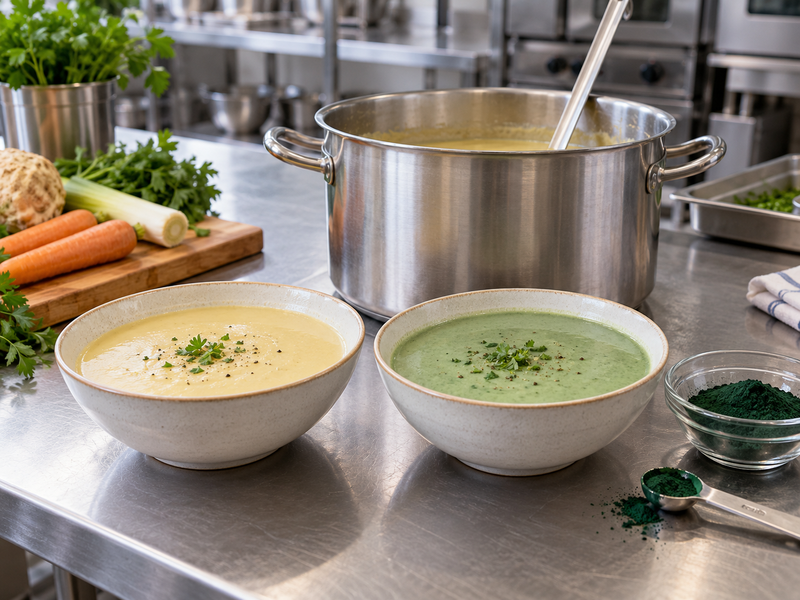
Describe the base vegetable cream, including vegetable solids, starch, fat, salt, acid, protein, particle size and target serving temperature. A pumpkin cream, pea soup and tomato-based cream have different colors and pH values; a result in one cannot be moved to another without a new pilot. Record control viscosity, Bostwick distance, color, visible separation and serving quality. Define whether the soup must pour from a carton, be pumped hot or hold a spoonable bowl texture.
Set the intended process and packaging: chilled hot-fill, retort, aseptic or another validated method. The term “heat-treated” does not identify a single thermal exposure. Write acceptance at process exit and through intended storage. If the brand wants a nutrient message, calculate it from the finished soup and check destination requirements; whole-biomass inclusion alone does not establish a label claim. A plain control prepared on the same line is essential to distinguish powder effects from normal vegetable-lot variation.
| Soup brief | Control measure | Candidate gate |
|---|---|---|
| Flow | Bostwick and viscosity | Fits fill and serving |
| Appearance | Color and smoothness | No objectionable specks |
| Stability | Free water and texture | Within storage limits |
2. Which ingredient evidence should be requested?
Request a lot-matched sample, technical data sheet, current lot COA, identity and ingredient declaration, proposed commercial specification, particle-size distribution, moisture, color reference and storage instructions. Confirm whether the offered material is whole green biomass. A blue extract or protein fraction is a different purchasing and formulation decision. The supplier page does not establish the properties of the exact lot; ask for documents rather than assuming them.
Review microbiological and contaminant reports against the facility hazard plan and destination requirements. Note test methods, reporting limits, units and lot numbers. In a soup that receives validated heat treatment, the ingredient still needs proper incoming control, and post-process additions would change the hazard analysis. Screen dry powder aroma because heat may intensify a note that is subtle at room temperature. Retain an unopened reference of the trial lot.
If a later commercial lot has a different shade or odor, repeat a focused soup pilot before treating it as interchangeable.
| Supplier item | Why it matters | Buyer check |
|---|---|---|
| Identity and TDS | Material definition | Match whole-biomass brief |
| Lot COA | Quality evidence | Review methods and limits |
| Size and moisture | Hydration behavior | Test in soup base |
| Color and odor | Finished-soup fit | Compare with retain |
3. How should a formulation ladder be built?
Run a plain control and several measured additions selected by R&D to bracket the intended green shade and taste. Keep vegetable solids, starch, fat, water, salt and heating profile constant in the first screen. Specify whether spirulina displaces another solid or is added to the total formula. A higher solids level can change viscosity regardless of any special effect from the powder. The 2021 formulation study used specific microalgae and inclusion levels; these are trial examples, not commercial targets.
Measure every arm before and after heat treatment. If a formulation needs more water or a stabilizer adjustment, make that a separate controlled trial and recheck final product quality. Choose the lowest addition that meets the real product goal while passing flow, sensory and storage gates. Record mixing order, hold time, temperature and shear, because a recipe percentage alone cannot reproduce hydration. Repeat the finalist on the actual equipment and with the intended powder grade.
A bench ladle photograph should not be the sole release evidence.
| Arm | Kept constant | Question |
|---|---|---|
| Control | Base and process | Reference |
| Low | Same formula | First visible/sensory effect |
| Mid | Same formula | Working balance |
| Upper screen | Same formula | Failure boundary |

4. When should powder be hydrated and added?
Test prehydration in a defined portion of water or soup base if the line can support it. Record temperature, time and mixing energy; then inspect for clumps in a thin spread sample and in the filled product. Direct addition to a hot, thick soup may form dry centers, while a long prehydration hold may alter color or increase process risk. Select the addition point with R&D, production and quality teams rather than relying on generic advice.
Map whether powder is added before the validated thermal step or after it. A post-heat addition can invalidate the existing safety design unless it is separately controlled and validated. Sample the tank at top, middle and bottom and early, middle and late filling. Fine particles may be evenly colored yet still change flow; coarse specks may be visible in a pale base. If a candidate only works with unrealistic bench shear, its fit for the plant is poor.
Put the accepted hydration and addition sequence in manufacturing instructions.
5. What does Bostwick flow reveal?
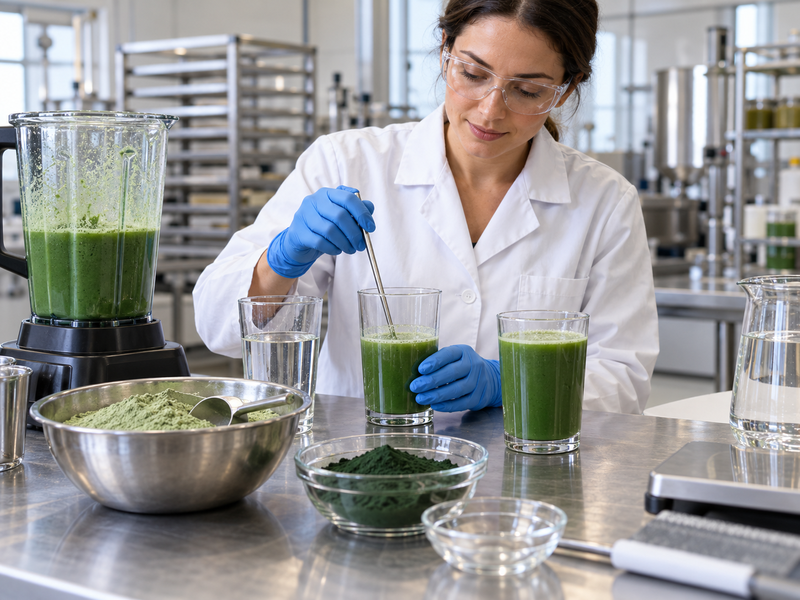
A Bostwick consistometer records how far a sample flows down a level trough in a fixed time. Measure soup at a defined temperature and fill volume, and repeat under the same protocol for control and candidate. A longer distance generally indicates a more fluid sample under those conditions, but it is not a complete description of mouthfeel or pumping behavior. Pair it with viscosity at defined shear and a hot-pour or spoon test relevant to the package.
The 2021 vegetable-cream work measured Bostwick consistency and rheology for its own recipes. Use that as a reason to collect both, not as a numerical target for your line. Record results before heat, immediately after and after equilibration, because starch swelling and cooling can shift apparent thickness. If flow falls outside range, determine whether water balance, shear or powder is responsible before changing supplier. A saleable soup must fill reliably and deliver the intended bowl texture.
| Flow test | Control condition | Decision use |
|---|---|---|
| Bostwick distance | Same temperature/time | Pourability |
| Viscosity | Same shear history | Pump and mouthfeel |
| Spoon or pour | Serving condition | Consumer fit |
6. Will heat treatment change color or odor?
Compare the same sample before treatment, at process exit, after cooling and during storage under fixed lighting. Record surface and bulk color; vegetable pieces or air bubbles can distort a single instrument reading. Note the exact thermal history, including come-up and hold, because “heated” covers very different exposures. Taste at serving temperature, when volatile algae notes may be more evident than in a chilled sample. An attractive preheat green is not a commercial result.
Run the validated process first. Any gentler heat profile proposed to protect color must be reviewed and validated for food safety and shelf life before use. The 2025 vegetable-cream study investigated physicochemical and sensory stability for specific formulations; it cannot promise heat tolerance for this powder or recipe. Set a final color window in the filled soup, with a retained control, rather than a dry-powder swatch.
If odor changes, separate effects of the vegetable base, oil oxidation and algae lot through controlled samples.
| Stage | Record | Potential issue |
|---|---|---|
| Preheat | Dispersion and color | Clumps |
| Process exit | Color and hot aroma | Thermal change |
| Cooled pack | Final shade and flow | Delayed thickening |
7. How should syneresis be measured?
Syneresis is liquid separating from the thicker soup network. Inspect unopened packs after a fixed upright rest and after approved distribution handling. Photograph the free-liquid layer before stirring, and quantify it by a repeatable volume or mass method. Sample across the fill run. A smooth hot tank can settle or release water as starch and vegetable solids cool, so a same-day control and matched package are necessary.
Measure separation alongside viscosity, water content and pH. If free liquid increases, investigate formulation, heat history, homogenization and package handling before blaming the powder alone. A stabilizer adjustment may hide separation but alter mouthfeel or label; test it as a new formulation. Define a consumer-relevant threshold for visible liquid, not only a statistical difference. The brand should decide whether a shake instruction is acceptable before considering it a remedy. Confirm behavior through the intended shelf life in the actual pack.
| Check | How to observe | Reject signal |
|---|---|---|
| Unopened pack | Fixed rest and photo | Visible free-water layer |
| Poured serving | Controlled pour | Watery first fraction |
| Stirred bowl | Standardized mixing | Persistent lumps |
8. What storage program is necessary?
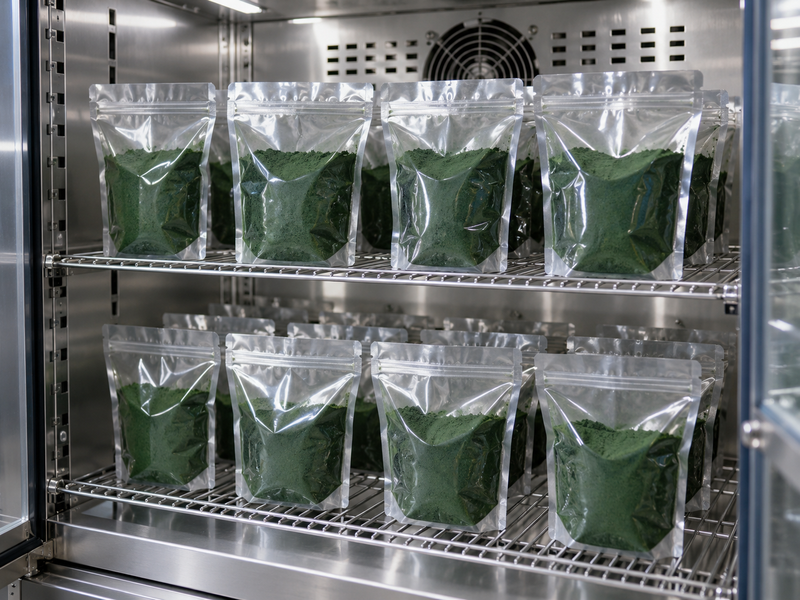
Store production packs under the intended chilled or ambient conditions and sample at predeclared intervals. Assess color, odor, taste, Bostwick flow, viscosity, syneresis, pH, seal integrity and microbiology as required by the validated product program. Include representative pack positions and batches. A control soup’s current shelf life cannot simply be transferred to a revised formula. Nor do published vegetable-cream stability observations establish the life of a commercial pack with different heat treatment and packaging.
Use unopened packs for primary observations and document light and temperature exposure. If a late off-note appears, investigate ingredient, vegetable base, oil and package interactions. If flow changes, check whether it is starch development or particle settling. Quality and regulatory teams should decide what evidence is required for the destination and process; purchasing should avoid a shelf-life statement until that work is complete. Define incoming powder attributes that will be monitored so subsequent lots remain within the demonstrated range.
| Storage point | Physical/sensory check | Safety check |
|---|---|---|
| Release | Color, flow, separation | Process records |
| Midpoint | Odor, texture, syneresis | Planned tests |
| End target | Consumer acceptance | Validated limits |
9. How do suppliers compare on total cost?
Request quotations for an identified grade, anticipated quantity, package and destination, with consistent delivery terms. Calculate cost per accepted soup pack after added mixing time, heat-processing changes, rejected color or syneresis and any extra testing. A low powder price may be offset by line slowing or loss of saleable yield. Compare only candidates that passed the same recipe and thermal protocol.
Ask whether the commercial shipment will match the pilot sample and how grade or process changes are communicated. Record the powder size and color ranges that affect hydration and finished appearance. Do not assign economic value to a protein or health message until it is supported by finished-product evidence and legal review for the destination. A higher-quality material is worth its premium only if its advantage survives in the packaged soup. The final RFQ should include the product specification as well as the delivery details.
10. Which evidence releases a scale order?
Assemble the accepted powder identity, lot COA and TDS, safety review, formulation level, hydration and addition method, thermal process, filled-pack flow and color, sensory results, syneresis and storage findings. A confirmation batch should run at intended throughput in commercial packaging. Sign-off should include production, quality, R&D, regulatory and procurement. The supplier’s documents support ingredient qualification but do not replace validation of the finished soup.
Keep retain samples of powder and packaged soup. Set incoming checks against color, odor, size and lot paperwork, and define requalification triggers for a changed vegetable base, starch, heat profile, powder grade or pack. If a later lot performs differently, hold it for a focused pilot rather than silently increasing water or changing process temperature. This protects both the consumer experience and the manufacturing record behind the approved purchase.
| Release component | Required evidence | Owner |
|---|---|---|
| Ingredient | Lot-linked documents | Quality |
| Process | Thermal and flow record | Production |
| Product | Color, sensory, syneresis | R&D |
| Storage | Finished-pack program | Quality/regulatory |

FAQ
Q1. Can a research addition level be copied? No. Its vegetable base, biomass and thermal process differ from yours.
Q2. Is Bostwick flow the same as viscosity? No. It is a practical flow measure that complements a controlled viscosity test.
Q3. Does preheat color predict packed-soup color? No. Measure after the actual heat process and during storage.
Q4. Can a powder COA prove shelf life? No. Test the finished, sealed soup under intended conditions.
Q5. Is a blue extract interchangeable with green powder? No. Blue spirulina is a distinct ingredient and decision.
For spirulina powder for vegetable cream soup manufacturers, contact SpirulinaCN with your soup application, target powder and finished-product specifications, anticipated quantity, destination, vegetable base, heat process and pack. Request a lot-matched sample, technical sheet, current COA and application-specific quotation.