
A spirulina powder sodium content specification matters when an ingredient is added to a lower-sodium product, a nutrition blend or a food with narrow label targets. Spirulina grown and processed under different conditions can yield different mineral profiles. Even when the ingredient dose is small, procurement should obtain the sodium result for the actual powder rather than assume that a green appearance or low ash figure proves low sodium.
An original cultivation and processing study reported variation associated with mineral-rich water and post-harvest washing in its own experimental material. Those values are not a benchmark for every commercial lot. Ask the spirulina supplier to identify the offered grade and provide current lot evidence.
1. What is the finished product’s sodium budget?
Start with the sodium target per finished serving and the share already contributed by salt, other ingredients and processing aids. Calculate the maximum amount of sodium that the spirulina ingredient may contribute at the highest proposed inclusion. This gives purchasing a relevant limit instead of an arbitrary “low sodium powder” request. If a marketing team wants a nutrient-content claim, have a regulatory specialist assess the final food and destination rules.
2. Is the figure sodium or salt?
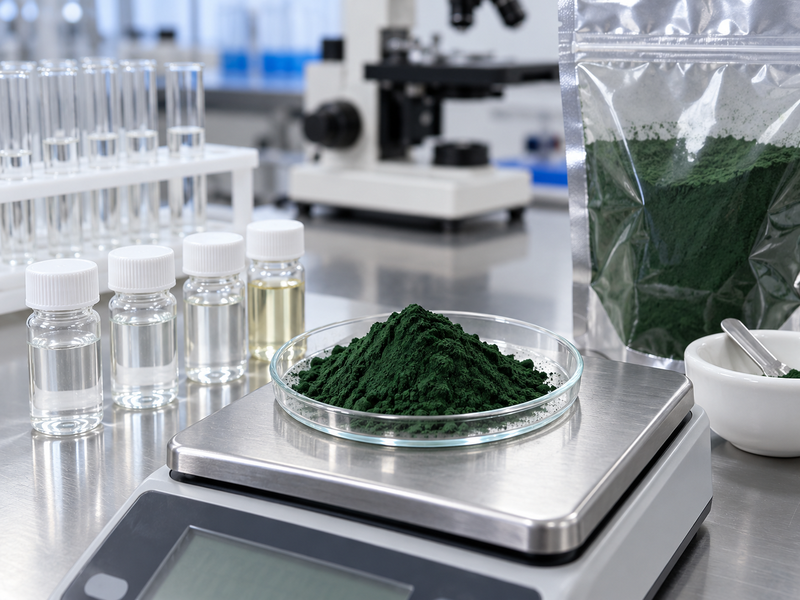
Ask the laboratory to state elemental sodium in mg per 100 g of powder, as received. Some documents report salt-equivalent calculations or mineral percentages instead. They cannot be copied into a formula as sodium without conversion. Note whether the result refers to dry matter or the actual delivered powder. Keep the original laboratory units alongside any spreadsheet conversion so reviewers can trace the calculation.
| Field | Request | Why it matters |
|---|---|---|
| Analyte | Sodium, not undefined “salt” | Avoids unit confusion |
| Basis | As-is powder and moisture | Supports serving calculation |
| Lot code | Commercial batch | Links result to delivery |
| Method | Named mineral assay | Makes retesting comparable |
3. Why do ash and sodium not mean the same thing?
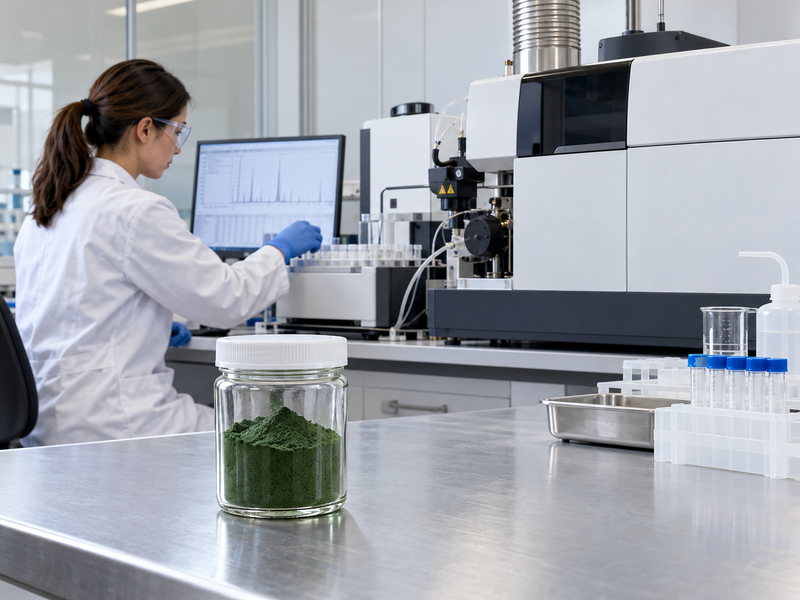
Ash is the total residue left after a prescribed burning test. Sodium is one element among multiple mineral constituents. A lower ash value does not automatically prove a lower sodium level, and a sodium number cannot characterize the whole mineral profile. If both appear on a COA, use each for its own purpose. Review potassium and other minerals separately if your product brief requires them; avoid inferring them from sodium.
4. Does the reported lot resemble the approved sample?
Compare the lot used for the formulation trial with the lot in the proposed shipment. Match product grade, code and production period. If a supplier changes its cultivation water, washing or drying conditions, ask whether sodium performance has been rechecked. The processing study demonstrates why post-harvest steps can matter, but only a current result tells you about the powder on your purchase order.
5. How do you calculate contribution per serving?
Convert the reported mg/100 g to mg/g by dividing by 100, then multiply by grams of spirulina in the serving. Recalculate at the largest permitted dosing tolerance as well as the nominal recipe. Include other sodium sources before deciding whether the final label or claim is supportable. For retail labeling, use finished-product verification where formulation and processing uncertainty are material.
6. What range belongs in an ingredient specification?
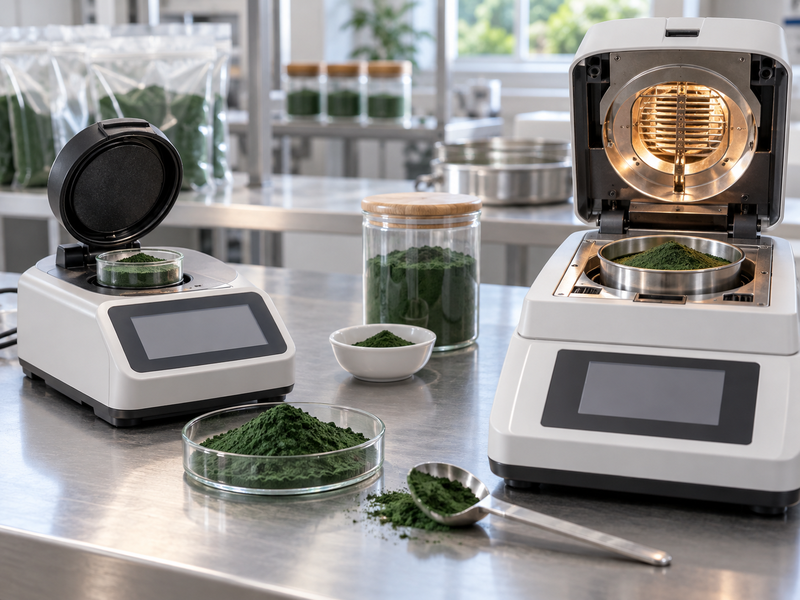
Set a maximum that protects the product, while allowing normal, verified lot variation. Check several recent commercial results before fixing the limit. A one-lot promise can fail at scale if the supplier has not controlled the relevant production step. Decide who pays for independent confirmation, which sampling rule applies, and what happens if a shipment is above limit.
| Stage | Decision | Record |
|---|---|---|
| Trial | Does dose fit sodium budget? | Formula calculation |
| Approval | Are repeat lots within proposed limit? | Trend sheet |
| Receipt | Does delivery meet limit? | Lot COA or independent test |
7. What other checks belong in the raw-material review?
Do not let a sodium requirement obscure ingredient safety. Verify identity, microbiology, relevant contaminants, moisture, packaging integrity and shelf life. A powder with excellent sodium performance may still be unsuitable because of taste, color or flow. Keep a retained sample from the selected lot and run the product trial with the exact grade you intend to buy.
8. How should the buyer brief the supplier?
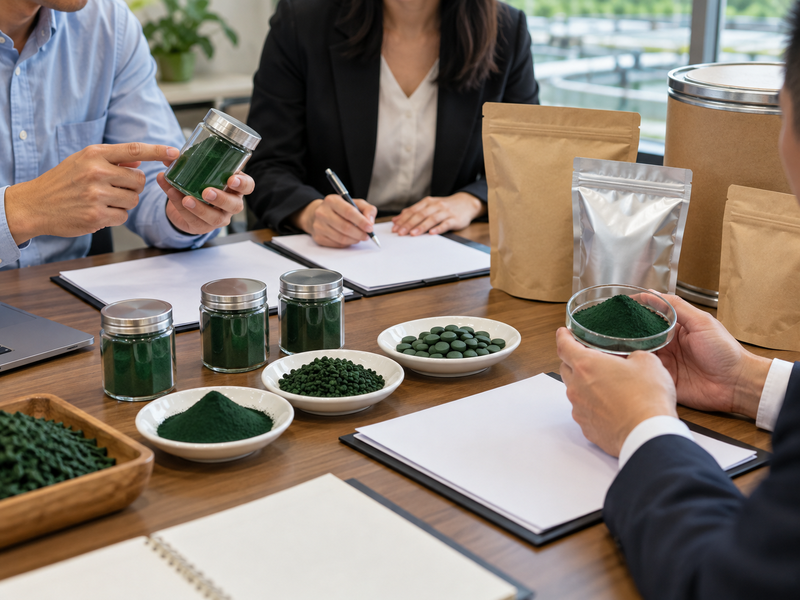
Send the application, dosing range, target sodium contribution, destination market, annual volume and any claim under consideration. Request a named-lot sodium report with method and units, not a generic statement that spirulina is “naturally low salt.” Then compare the approved sample, signed specification and first delivery before routine release.
FAQ
Can I use ash as a sodium result? No. Ash is a broader mineral residue measurement.
Should the limit be mg/100 g or percent? Use a unit that translates reliably into the finished formula; mg/100 g as-is is practical.
Does a study’s seawater-grown material describe every spirulina powder? No. It illustrates variability in one controlled setting.
Can I approve a low-sodium claim from a supplier COA? Review the finished food and destination rules first.
When should sodium be retested? At supplier approval and whenever lot variation, a process change or a tight formula target makes confirmation necessary.
Request a lot-matched spirulina sample, sodium result and quote with the formula’s dose and destination so the supplier can respond to a concrete specification.