
A spirulina powder carotenoid profile lot comparison is useful when pigment composition affects a raw-material specification or a finished product’s appearance. It is less useful when suppliers provide only a vague “total carotenoids” headline with no method. A buyer should distinguish individual compounds, whole-powder color, and color after the ingredient enters a real formula.
An original storage study of Arthrospira platensis biomass examined pigment changes under particular storage conditions. It establishes a reason to document handling, not a universal shelf-life guarantee. The offered spirulina powder needs its own lot result and application test.
1. What does “carotenoid profile” include?
Ask whether the report measures total carotenoids or separates beta-carotene, zeaxanthin and other named compounds. A total figure can be useful for trending but hides changes in composition. Have the lab name the extraction and chromatography or spectrophotometry method, units, reference standards and detection limits. Do not compare total values from one method with individual HPLC peaks from another as if they were equivalent.
2. Is the powder as received or dry basis?
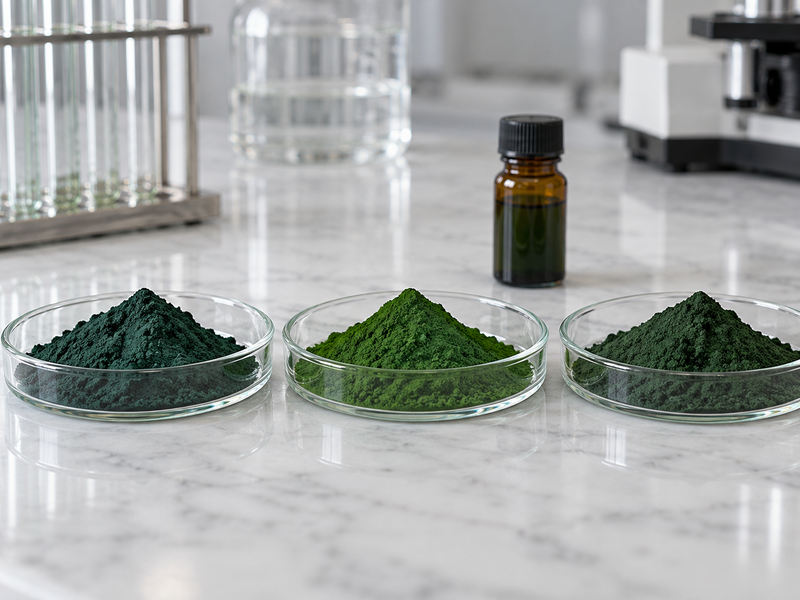
Check moisture on the same lot. A dry-basis pigment result can appear higher than an as-received figure even when the material is unchanged. Record mg per 100 g of powder, analytical basis, sample date and package condition in one comparison sheet. If a report is expressed per gram of extract, do not transfer it to whole biomass without a validated conversion.
| Question | Comparable answer |
|---|---|
| What was tested? | Whole biomass, named lot |
| Which analytes? | Total or named carotenoids |
| How reported? | Same units and moisture basis |
| When sampled? | Before or after stated storage |
3. Can raw-powder color substitute for an assay?
No. Powder shade reflects several pigments, particle size, moisture, lighting and packaging. Use standardized photography or instrumental color as a separate physical specification. A vivid green lot may contain less of one carotenoid than a duller lot. If marketing plans a carotenoid declaration, base it on appropriate analysis and finished-product calculations, not a photograph.
4. How should storage history be compared?
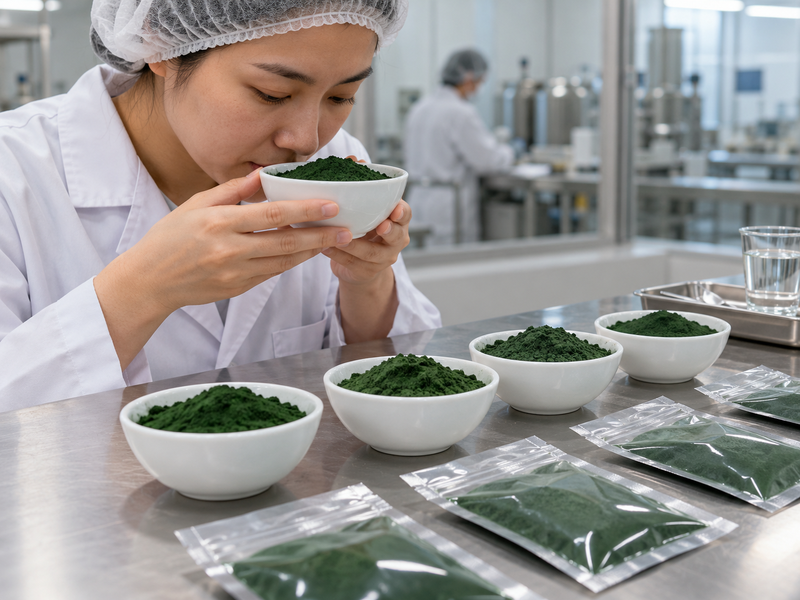
Request production and sampling dates, packaging type, seal status and storage conditions for each lot. Keep unopened controls and test at planned receipt and use points. The storage research shows that processing and storage can affect biomass pigments. If a supplier’s sample has been stored differently from its bulk stock, retest the lot that will actually ship.
5. What finished-product trial is worth running?
Make a control and at least two matched-lot prototypes at the same addition rate. Record powder dispersion, color before processing, color after processing, flavor and color after relevant shelf conditions. Product pH, heat and light can affect visible outcomes even if the raw-powder assay is stable. A pigment specification has commercial value only when it predicts the feature the customer buys.
6. What should trigger a second laboratory test?
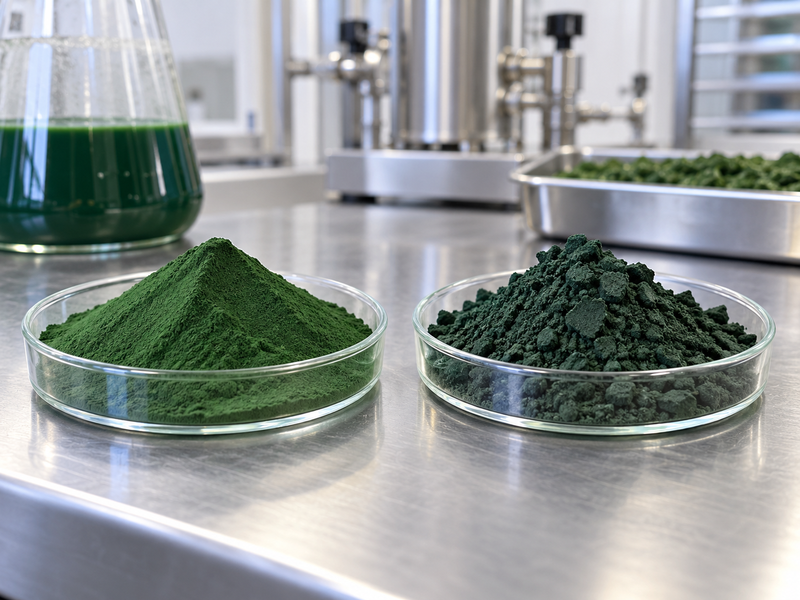
Retest when a guaranteed carotenoid claim, a major supplier switch or an unexplained lot-to-lot change depends on the result. Send sealed splits from the same homogenized lot, use one agreed method and record uncertainty. If two reports disagree, investigate extraction and calibration before rejecting the ingredient solely because the numbers differ. Keep raw assay evidence attached to the batch record.
| Trigger | First action | Decision evidence |
|---|---|---|
| Unexpected low result | Confirm sample and units | Repeat agreed assay |
| New supplier | Test both suppliers together | Same-method comparison |
| Color shift in food | Test product and ingredient | Application trial |
7. Which safety checks remain mandatory?
Pigment data do not replace identity, microbiological and contaminant checks. Confirm material as food-grade whole biomass and review the supplier’s current COA, not only a pigment brochure. If the product is intended for a regulated nutrient or color claim, confirm destination requirements separately. A carotenoid result from a research strain cannot establish the acceptability of another supplier’s powder.
8. How should the purchase specification be written?
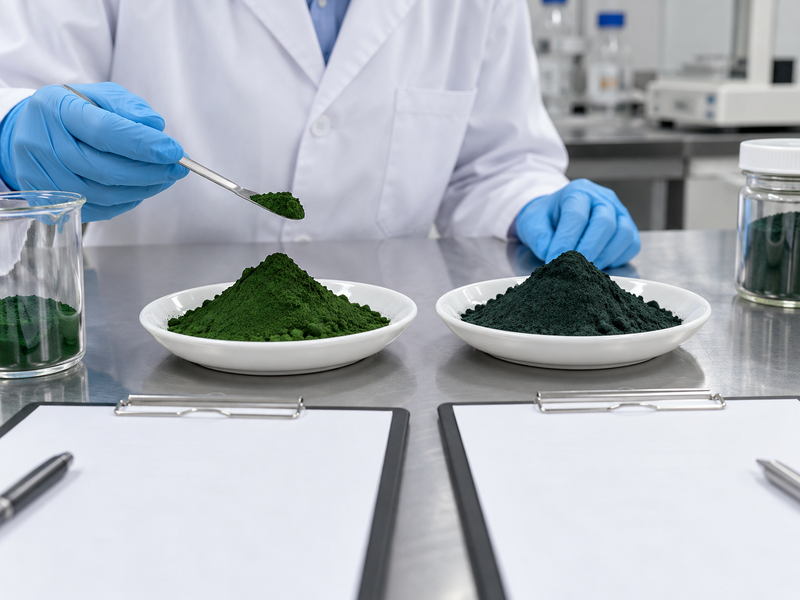
Specify which analytes matter, the method, units, basis, sampling stage and realistic acceptance range. If color in a food is the actual objective, include an approved application-color test alongside chemical assays. Ask the supplier for repeat-lot data before tightening a guaranteed number. Retain the approved physical sample so receiving staff can investigate a visibly different shipment.
For example, two lots can have similar total carotenoid results yet differ visibly after a heated process. In that case, write the purchasing gate around the approved finished-product color range and keep the laboratory number as a diagnostic. If the brand instead plans a named beta-carotene declaration, require that analyte’s result and a serving calculation. Put the reason for each limit in the specification. A future buyer can then tell which figures protect a claim, which protect process appearance, and which are simply recorded for trend analysis.
FAQ
Is beta-carotene the same as total carotenoids? No. It is one constituent of the broader group.
Can I judge content from green color? No. Use analysis for content and a separate color test for appearance.
Why might two COAs disagree? Their extraction, method, units, moisture basis or sampled lots may differ.
Does a raw-powder result predict product color? Only partly; run a trial in the intended formula and process.
Can a research paper set my supplier limit? Use your product requirement and repeat commercial-lot evidence instead.
Share your target formula, pigment requirement, sample quantity, forecast and destination to request a matched spirulina grade and supporting batch documents.