
Spirulina powder GLA content supplier testing matters when gamma-linolenic acid is part of a formulation brief. GLA is one fatty acid in the total lipid fraction; it is not the same as total fat, and a percentage of fatty acids is not a percentage of the whole powder. Buyers who overlook that distinction can overstate how much GLA a finished serving contains.
An original study of Arthrospira platensis measured GLA and showed that extraction and analytical routes affect reported yields. Its experimental values do not certify a commercial shipment. Ask a spirulina ingredient supplier for a lot-linked fatty acid report before building a price or claim around GLA.
1. Is the purchased material whole biomass or an oil extract?
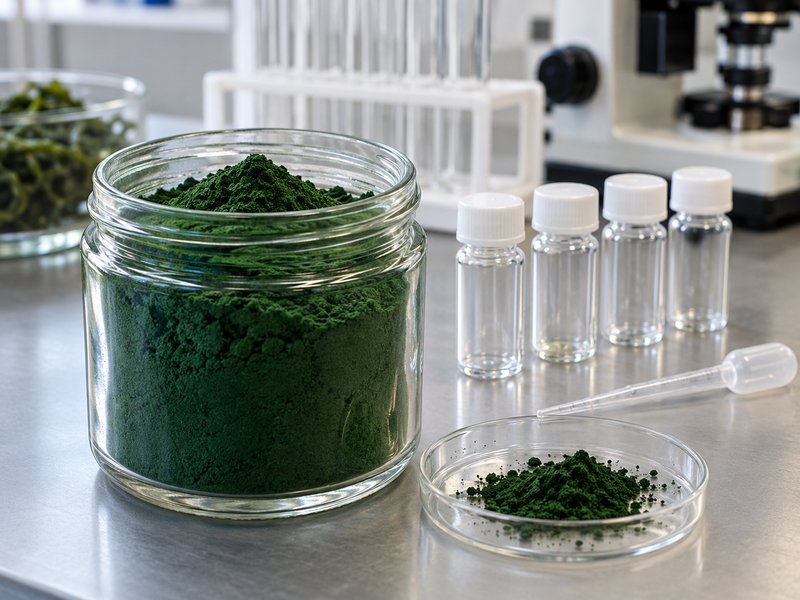
Confirm the material name on the report. Whole green spirulina powder contains protein, carbohydrates, minerals, pigments and a relatively small lipid fraction. A concentrated oil or laboratory extract has a different denominator. If purchasing whole biomass, require the result per gram or per 100 grams of the powder as received. Do not transfer a paper’s extract yield to a food ingredient without measuring the offered grade.
2. Which units make supplier reports comparable?
The most useful numbers are total fat per 100 grams of powder and GLA milligrams per 100 grams of powder. A laboratory may instead state GLA as a fraction of total identified fatty acids. Request the underlying chromatogram and total-fat result if you need to convert that fraction to a product-level quantity. Record whether the figures are on a dry or as-received basis and whether they include uncertainty.
| Reported figure | What it means | Buyer check |
|---|---|---|
| Total fat, g/100 g powder | All measured lipid | Match basis and extraction method |
| GLA, % of fatty acids | Relative fatty-acid distribution | Do not call it % of powder |
| GLA, mg/100 g powder | Ingredient-level contribution | Use in serving calculation |
3. What analytical method should be requested?
Fatty-acid profiling often converts fatty acids to methyl esters before chromatography. Ask the lab to state extraction, derivatization, instrument, calibration and identification standard for GLA. The research comparison illustrates why preparation choices matter. A single “GLA present” line is enough for identity screening but not for a quantitative purchasing limit. If two suppliers used unlike methods, retest retained samples at one laboratory.
4. How much reaches one finished serving?
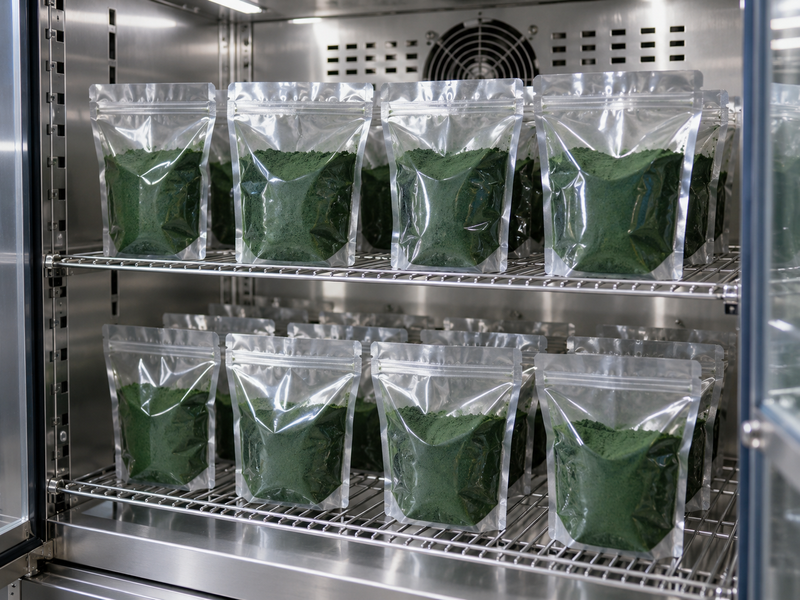
Multiply measured GLA milligrams per gram of powder by the grams of spirulina used in a serving. For example, a 2-gram addition contributes twice the measured per-gram amount before any processing loss; it does not contribute twice the percentage printed on a fatty-acid profile without conversion. Use a realistic upper and lower batch estimate to see whether normal lot variation affects the intended product brief. Confirm finished-product values analytically where a claim depends on them.
5. Can drying and storage alter the decision?
GLA is an unsaturated fatty acid. Exposure to oxygen, light, heat and time can change the lipid fraction and sensory quality. Ask for packaging barrier details, storage instructions, production date and a current retained sample. Compare opening odor and taste with an approved reference, but do not treat a pleasant smell as proof of quantitative GLA retention. If the ingredient will sit in a warm premix warehouse, include that condition in stability work.
6. What else belongs beside GLA on the COA?
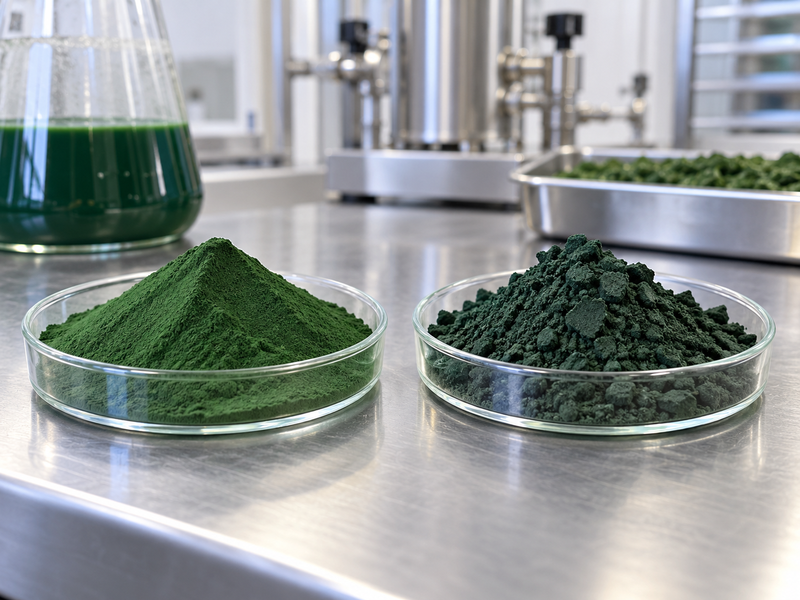
GLA should not displace basic food-safety and identity checks. Review organism identity, moisture, microbiology, relevant contaminants and the lot code. If a supplier markets a special high-GLA grade, obtain the manufacturing description and repeat-lot data supporting that distinction. Keep a separate form for color, taste, particle size and flow if those properties matter to the finished product.
| Decision | Evidence needed | Stop point |
|---|---|---|
| GLA contribution | Quantitative report on named lot | Units cannot be reconciled |
| Sensory fit | Approved trial and retained sample | Oxidized or unsuitable odor |
| Repeatability | Several commercial lots | Wide unexplained variation |
7. How should competing quotes be compared?
Compare landed cost per kilogram of accepted spirulina powder first. If GLA is a meaningful differentiator, also calculate cost per verified milligram of GLA delivered into the formula. Add costs for independent testing and losses from rejection or short shelf life. A cheap powder with an unverified percentage is not a better GLA buy. If GLA is not part of the product brief, avoid paying for an analytical parameter that does not change the decision.
8. What goes into the purchase order?
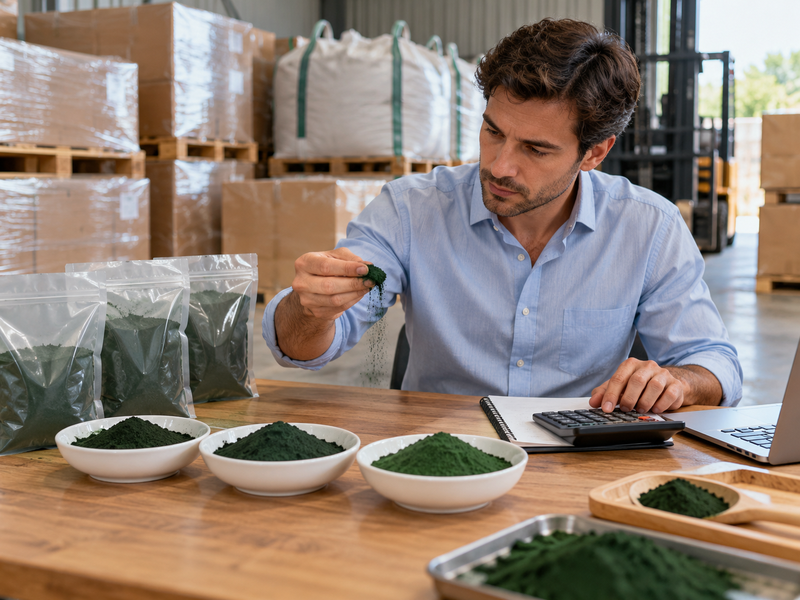
Specify material type, batch sampling, assay method, GLA unit and basis, minimum remaining shelf life, packaging and how disputed tests will be resolved. The acceptance threshold should come from your formula and repeat-lot evidence, not a single paper value. Keep a sealed reference sample from the approved lot and verify the first commercial delivery before releasing it to production.
FAQ
Is GLA the same as total fat? No. GLA is one component within the fatty-acid fraction.
Can I quote GLA as a percentage of powder from a fatty-acid chart? Only after converting with valid total-fat and assay data.
Is a published GLA value a supplier guarantee? No. Ask for a named commercial lot result.
Do I need a finished-product test? Use one when a finished-product claim or tight nutrient target depends on GLA.
What if two laboratory results disagree? Align sample identity, preparation, method and units before interpreting the difference.
To compare suitable lots, request a matched sample and current GLA test report with your intended dosage, target specification, annual quantity and destination.